ATI - RN Nutrition > A-Level Question Paper > 6__Nutrition_Lecture_Notes_Outline.docx (All)
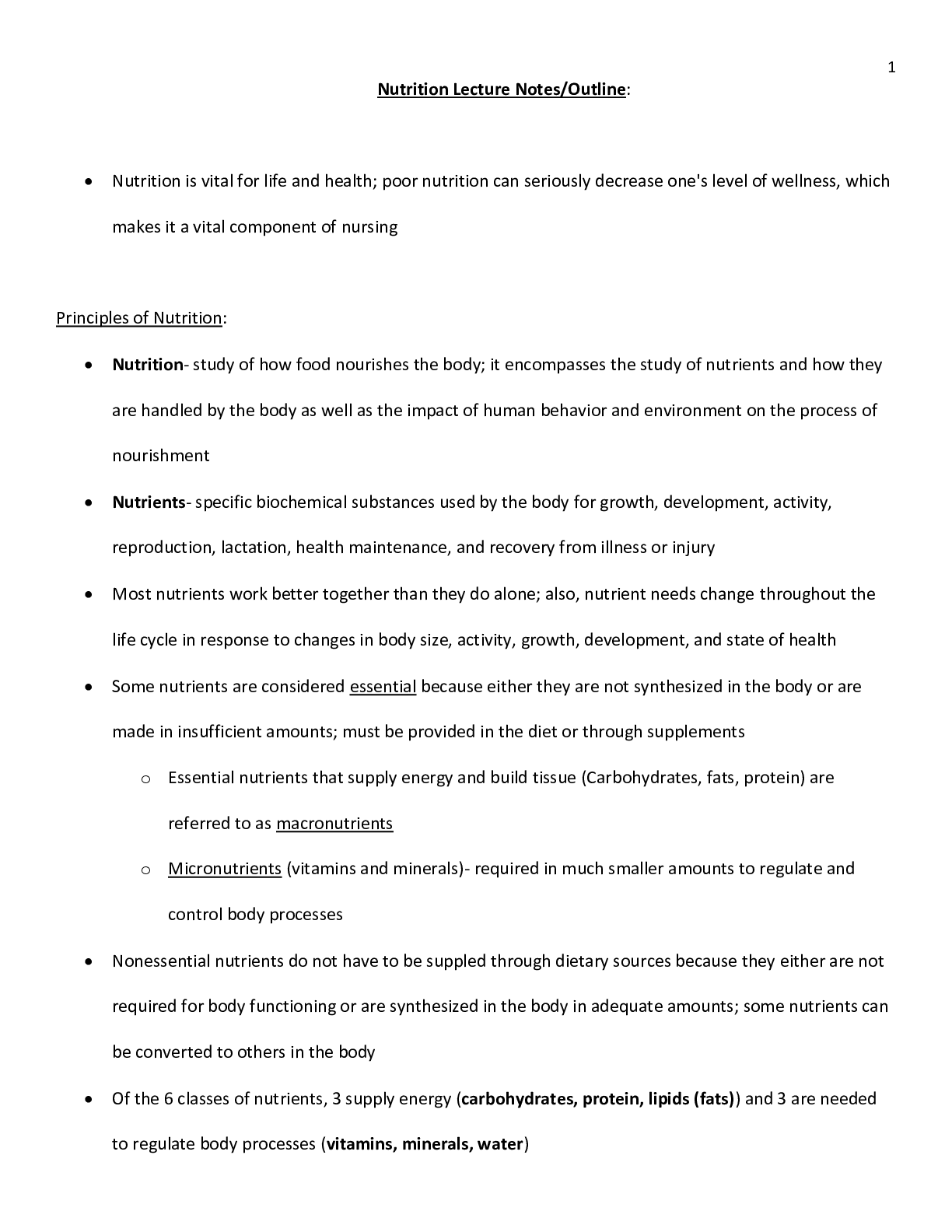
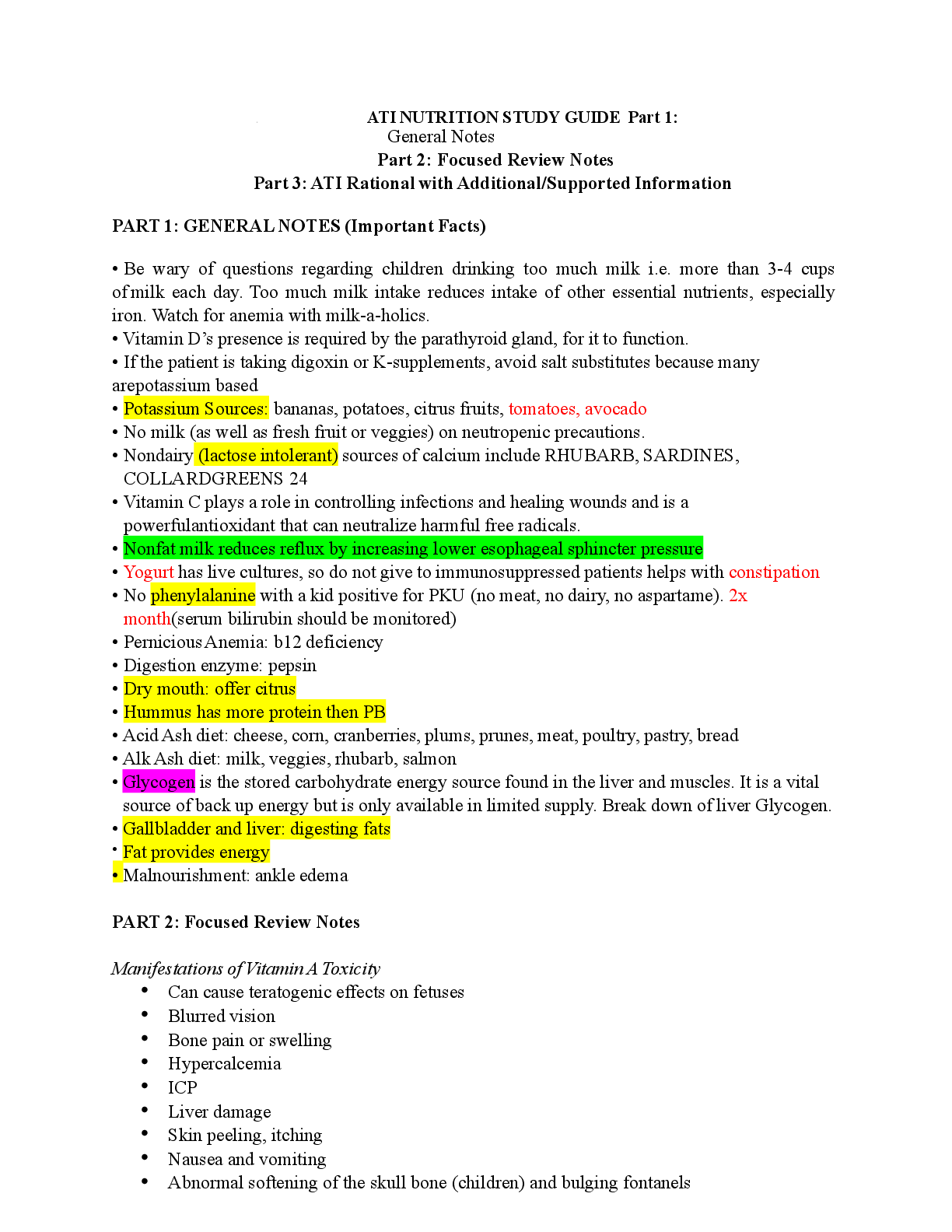
Nutrition is vital for life and health; poor nutrition can seriously decrease one's level of wellness, which makes it a vital component of nursing Principles of Nutrition: Nutrition- study of ... how food nourishes the body; it encompasses the study of nutrients and how they are handled by the body as well as the impact of human behavior and environment on the process of nourishment Nutrients- specific biochemical substances used by the body for growth, development, activity, reproduction, lactation, health maintenance, and recovery from illness or injury Most nutrients work better together than they do alone; also, nutrient needs change throughout the life cycle in response to changes in body size, activity, growth, development, and state of health Some nutrients are considered essential because either they are not synthesized in the body or are made in insufficient amounts; must be provided in the diet or through supplements o Essential nutrients that supply energy and build tissue (Carbohydrates, fats, protein) are referred to as macronutrients o Micronutrients (vitamins and minerals)- required in much smaller amounts to regulate and control body processes Nonessential nutrients do not have to be suppled through dietary sources because they either are not required for body functioning or are synthesized in the body in adequate amounts; some nutrients can be converted to others in the body Of the 6 classes of nutrients, 3 supply energy (carbohydrates, protein, lipids (fats)) and 3 are needed to regulate body processes (vitamins, minerals, water) 2 Energy Balance: Body needs energy to function; energy is derived or obtained from foods consumed; energy in the diet is measured in form of kilocalories, calories, or cal; only carbohydrates, protein, and fat provide energy; vitamins and minerals needed for metabolism of energy, do not provide calories Total energy intake for a meal, a day, or longer, can be calculated by using food composition tables Energy in the body is used to carry on any kind of activity, whether voluntary or involuntary; person's total daily energy expenditure is the sum of all the calories used to perform physical activity, maintain basal metabolism, and digest, absorb, and metabolize food If a person's daily energy intake is equal to total daily energy expenditure, the person's weight will remain stable; however, if the energy intake is less than the energy expended, the person's weight will decrease; if energy intake exceeds energy expenditure, weight will increase [Show More]
Last updated: 2 years ago
Preview 1 out of 42 pages
Buy this document to get the full access instantly
Instant Download Access after purchase
Buy NowInstant download
We Accept:
Can't find what you want? Try our AI powered Search
Connected school, study & course
About the document
Uploaded On
Nov 20, 2023
Number of pages
42
Written in
All
This document has been written for:
Uploaded
Nov 20, 2023
Downloads
0
Views
52
Scholarfriends.com Online Platform by Browsegrades Inc. 651N South Broad St, Middletown DE. United States.
We're available through e-mail, Twitter, Facebook, and live chat.
FAQ
Questions? Leave a message!
Copyright © Scholarfriends · High quality services·