Gerontology Study Guide: Exam 1
Chapter 1:
- Key Terms:
o Comorbidity: the simultaneous presence of multiple chronic conditions
o Compression of morbidity: delaying or compressing the years in which serious
illness
...
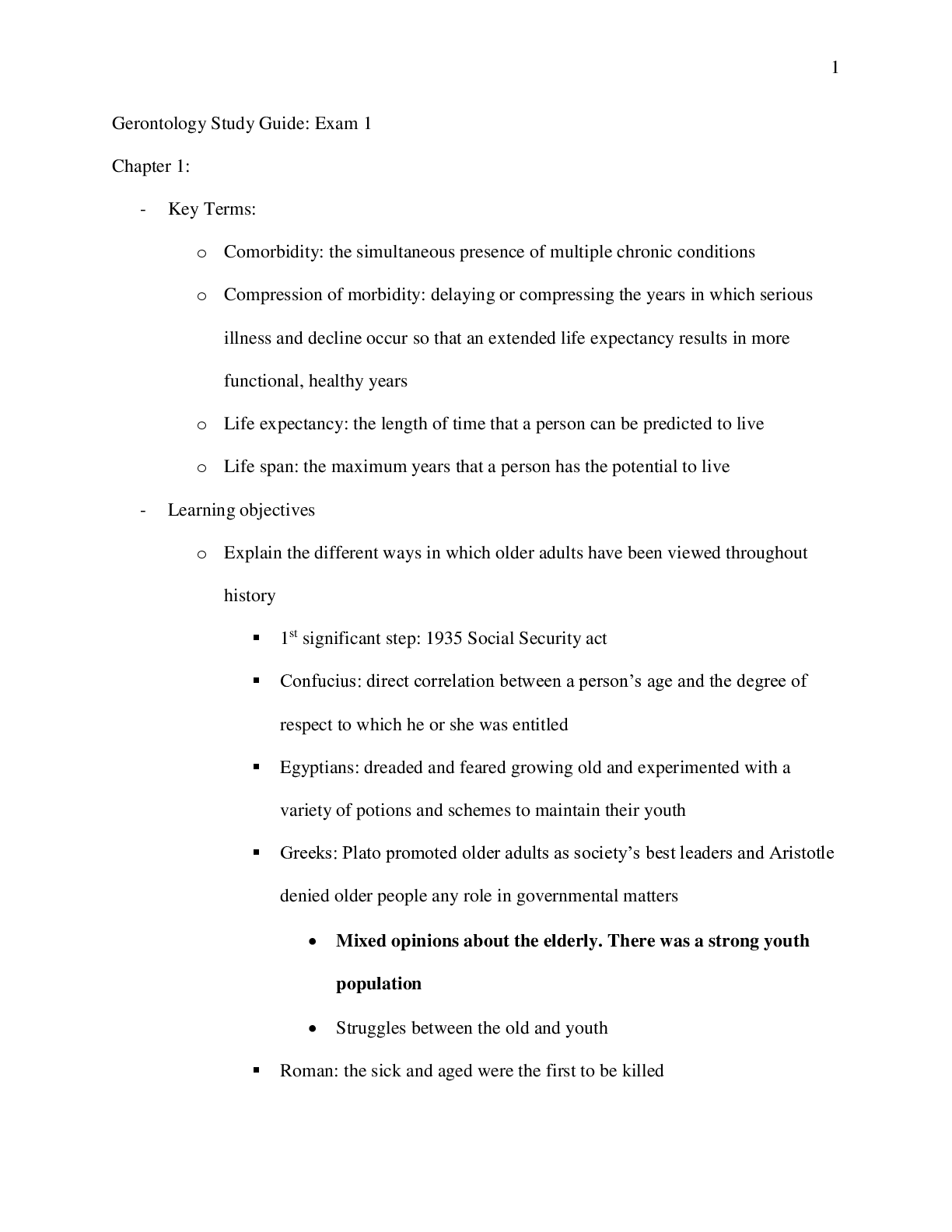
Gerontology Study Guide: Exam 1
Chapter 1:
- Key Terms:
o Comorbidity: the simultaneous presence of multiple chronic conditions
o Compression of morbidity: delaying or compressing the years in which serious
illness and decline occur so that an extended life expectancy results in more
functional, healthy years
o Life expectancy: the length of time that a person can be predicted to live
o Life span: the maximum years that a person has the potential to live
- Learning objectives
o Explain the different ways in which older adults have been viewed throughout
history
1
st significant step: 1935 Social Security act
Confucius: direct correlation between a person’s age and the degree of
respect to which he or she was entitled
Egyptians: dreaded and feared growing old and experimented with a
variety of potions and schemes to maintain their youth
Greeks: Plato promoted older adults as society’s best leaders and Aristotle
denied older people any role in governmental matters
Mixed opinions about the elderly. There was a strong youth
population
Struggles between the old and youth
Roman: the sick and aged were the first to be killed
2
Limited respect for elders
Bible: well-being of family, desire to honor and respect the elderly and
their wisdom
Medieval: strong superiority of youths
Industrial revolution: persons of advanced age left unprotected
o Describe characteristics of today’s older population in regard to:
Life expectancy
More people are achieving and spending longer periods of time in
old age than ever before in history
Differs according to gender and race
o Life expectancy of black people has declined
o Gender gap has shrunk (7 men to 10 women)
Population over 85 years = 40%
Marital status
More than half the women over 65 are widowed
Most males are married
Living arrangements
Most older adults live in a household with a spouse or other family
member
More than 2x the number of women than men live alone later in
later life
Income and employment
“Asset rich and cash poor”
[Show More]