Examination techniques of the Heart, Lungs,
and PV systems
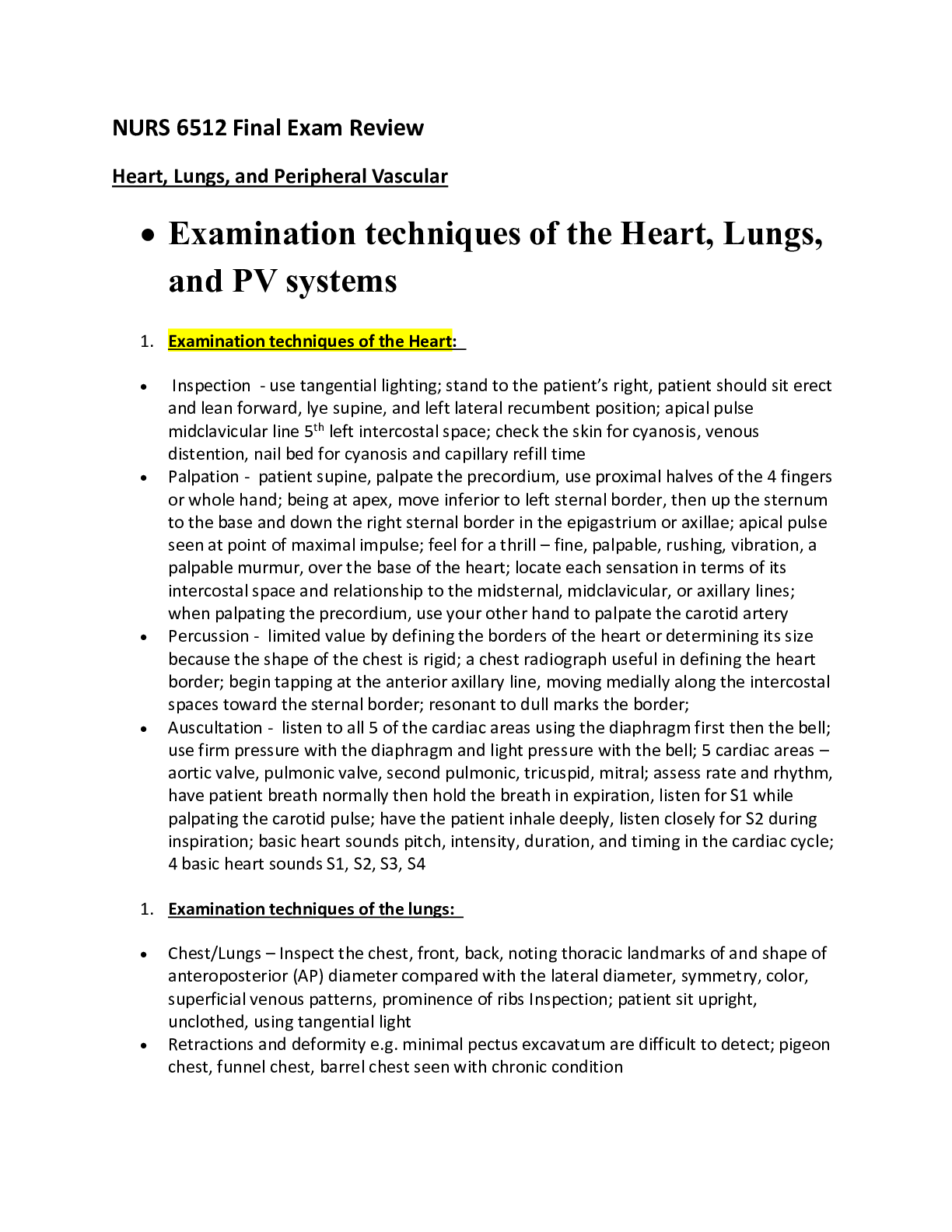
1. Examination techniques of the Heart:
Inspection - use tangential lighting; stand to the patient’s right, patient should sit erect
and lean forward, ly
...
Examination techniques of the Heart, Lungs,
and PV systems
1. Examination techniques of the Heart:
Inspection - use tangential lighting; stand to the patient’s right, patient should sit erect
and lean forward, lye supine, and left lateral recumbent position; apical pulse
midclavicular line 5th left intercostal space; check the skin for cyanosis, venous
distention, nail bed for cyanosis and capillary refill time
Palpation - patient supine, palpate the precordium, use proximal halves of the 4 fingers
or whole hand; being at apex, move inferior to left sternal border, then up the sternum
to the base and down the right sternal border in the epigastrium or axillae; apical pulse
seen at point of maximal impulse; feel for a thrill – fine, palpable, rushing, vibration, a
palpable murmur, over the base of the heart; locate each sensation in terms of its
intercostal space and relationship to the midsternal, midclavicular, or axillary lines;
when palpating the precordium, use your other hand to palpate the carotid artery
Percussion - limited value by defining the borders of the heart or determining its size
because the shape of the chest is rigid; a chest radiograph useful in defining the heart
border; begin tapping at the anterior axillary line, moving medially along the intercostal
spaces toward the sternal border; resonant to dull marks the border;
Auscultation - listen to all 5 of the cardiac areas using the diaphragm first then the bell;
use firm pressure with the diaphragm and light pressure with the bell; 5 cardiac areas –
aortic valve, pulmonic valve, second pulmonic, tricuspid, mitral; assess rate and rhythm,
have patient breath normally then hold the breath in expiration, listen for S1 while
palpating the carotid pulse; have the patient inhale deeply, listen closely for S2 during
inspiration; basic heart sounds pitch, intensity, duration, and timing in the cardiac cycle;
4 basic heart sounds S1, S2, S3, S4
1. Examination techniques of the lungs:
Chest/Lungs – Inspect the chest, front, back, noting thoracic landmarks of and shape of
anteroposterior (AP) diameter compared with the lateral diameter, symmetry, color,
superficial venous patterns, prominence of ribs Inspection; patient sit upright,
unclothed, using tangential light
Retractions and deformity e.g. minimal pectus excavatum are difficult to detect; pigeon
chest, funnel chest, barrel chest seen with chronic condition
AP diameter less than lateral diameter; if they equal each other, chronic condition
present – e.g. barrel chest related to chronic asthma, emphysema
Evaluate respirations for rate and rhythm – respiratory rate is 12-20 per minute;
respirations to heartbeats is a 1:4 ratio;
Rhythm – breathe easily, regularly, with no apparent distress; variations – to shallow or
to deep; tachypnea – rapid breathing, Kussmal – deep and rapid, Cheyene-Stokes –
regular periods of breathing with intervals of apnea followed by a
crescendo/decrescendo sequence of respiration
Inspect chest movement with breathing for symmetry and use of accessory muscles;
retractions are seen when the chest wall seems to cave in at the sternum
Palpate the chest for thoracic expansion, sensations such as crepitus (palpated and
heard) - gently bubbling feeling, grating vibrations,
Tactile fremitus (palpable vibration of the chest wall that occurs from speech), best felt
posteriorly, use phrase “99” or “Mickey Mouse”, palpate both sides simultaneously and
symmetrically; increased fremitus fluid or solid mass is present, decreased is excess air
in the lungs
Thoracic expansion evaluation – stand behind patient, place thumbs along spinal
process of the tenth rib with palms lightly in contact with posterolateral surfaces,
thumbs will diverge during quiet and deep breathing
[Show More]