Gerontology Exam 2- Chapters 2,3,4, 11, 12, 13 14, 15,
Chapter 14
● Delirium
- It’s treatable and preventable
- changes mental status: problems with attention, consciousness, and altered
sleep/wake patterns.
- shor
...
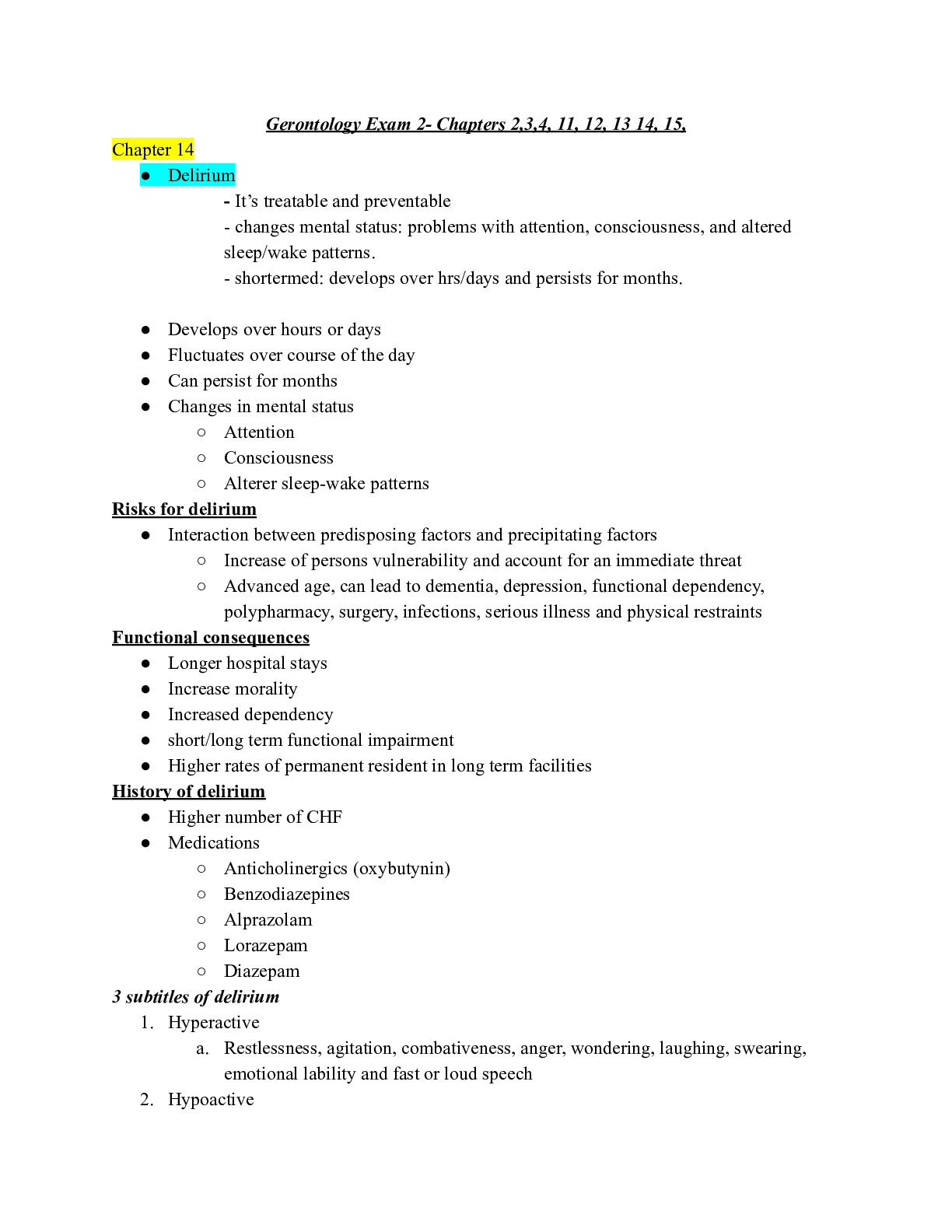
Gerontology Exam 2- Chapters 2,3,4, 11, 12, 13 14, 15,
Chapter 14
● Delirium
- It’s treatable and preventable
- changes mental status: problems with attention, consciousness, and altered
sleep/wake patterns.
- shortermed: develops over hrs/days and persists for months.
● Develops over hours or days
● Fluctuates over course of the day
● Can persist for months
● Changes in mental status
○ Attention
○ Consciousness
○ Alterer sleep-wake patterns
Risks for delirium
● Interaction between predisposing factors and precipitating factors
○ Increase of persons vulnerability and account for an immediate threat
○ Advanced age, can lead to dementia, depression, functional dependency,
polypharmacy, surgery, infections, serious illness and physical restraints
Functional consequences
● Longer hospital stays
● Increase morality
● Increased dependency
● short/long term functional impairment
● Higher rates of permanent resident in long term facilities
History of delirium
● Higher number of CHF
● Medications
○ Anticholinergics (oxybutynin)
○ Benzodiazepines
○ Alprazolam
○ Lorazepam
○ Diazepam
3 subtitles of delirium
1. Hyperactive
a. Restlessness, agitation, combativeness, anger, wondering, laughing, swearing,
emotional lability and fast or loud speech
2. Hypoactive
a. Lethargy, staring, slowed movement, paucity of speech, and unresponsiveness.
3. Mixed
a. Hypo and hyper
● Dementia
○ Medical term of group of brain disorders characterized by gradual decline in
cognitive abilities and changes in personality & behavior.
4 types of dementia?
● Alzheimer’s disease
● Vascular dementia
● Lewy body dementia
● Frontotemporal degeneration
● 1 or more called, mixed dementia
Alzheimer’s disease:
● Accounts for 60-80% of case of dementia
● Type of dementia with the strongest research base
● Path chart
○ Loss of neurons
○ Atrophy of large cortical neurons
● Brain atrophy
○ The person develops cognitive impairment
○ Mind to moderate stages
Vascular dementia: caused by reduction or block of blood flow to the brain
- Most preventable through intervention
- Mild to severe
- Risk factors: strokes, hypertension, hypercholesterolemia, obesity, diabetes, atrial
fibrillation.
Lewy body dementia: a progressive neurological disorder that results from abnormal deposition
of proteins in the nerve cells of the brain.
- Includes Parkinson’s disease
- Affects: cognitive, motor function, sensory function, sleep patterns, and autonomic
function
- Rapid cognitive decline
Frontotemporal degeneration: a spectrum of heterogeneous neurodegenerative disorders
involving the frontal or temporal lobes or both.
- Pick’s disease
- Young onset dementia
- Behavior and personality changes
- Language declines: speaking, writing, and comprehension
- Motor function changes: falls, movement disorders, muscle rigidity
What is BPSD: behavioral and psychological symptoms of dementia
Symptoms include
- Agitation
- Psychiatric symptoms
- Personality change
- Mood disturbances
- Motor function/ movement
- Changes is sleep, eating and appetite
- Hypersexual behavior
Sundowning
● When a pt becomes confused & agitated in the late afternoon/evening.
● Behaviors: agitation, aggression, wandering, resistance to direction, fatigue, fear or the
dark, and overstimulation.
● Cause: to circadian rhythms
Chapter 15
● Depression
○ A mental disorder that interferes with daily activities and changes your mood.
● Depression in Older Adults
○ Signs and symptoms of depression in older adults are on a continuum of severity
from major depression to subthreshold depression.
○ Depression is characterized by depressed mood and/or loss of interest, along with
additional manifestations, including weight loss, appetite change, sleep
disturbances, psychomotor agitation or retardation, fatigue, cognitive impairment,
feeling worthless or excessively guilty, and recurrent thoughts of death or suicide.
○ Late-life depression refers to the onset of depression after the age of 65 years.
● Theories About Late-Life Depression
○ Psychosocial
■ learned helplessness addresses depression in the context of the following
four areas: cognitive, motivational, self esteem and affective-somatic
■ cognitive triad - a psychosocial theory based on the premise that people
appraise themselves based on their self-image, environment or
experiences, and their future
○ Theories about the interrelationship between depression and pathologic conditions
(e.g., dementia, cerebrovascular disease, cardiovascular disease)
● Risk Factors for Depression in Older Adults
○ Demographic and psychosocial
■ Male whites have the highest prevalence of suicide
○ Medical conditions and functional impairment
■ Central Nervous System Disorders
● Dementia
● Stroke
● Parkinson’s disease
● Tumors
● Normal-pressure hydrocephalus
■ Cardiovascular Conditions
● Myocardial infarction
● Heart failure
■ Metabolic and Endocrine Disorders
● Diabetes
● Hypothyroidism/hyperthyroidism
● Renal disease
● Liver disease
● Adrenal disease
■ Miscellaneous
● Pain
● Rheumatoid arthritis
● Cancer
● Nutritional deficiencies (e.g., iron, folate, vitamin D)
○ Effects of alcohol and medications
[Show More]