Physiology > LECTURE SLIDES/NOTES > Gastrointestinal physiology- GI motility (All)
Gastrointestinal physiology- GI motility
Document Content and Description Below
Last updated: 2 years ago
Preview 1 out of 5 pages
Instant download
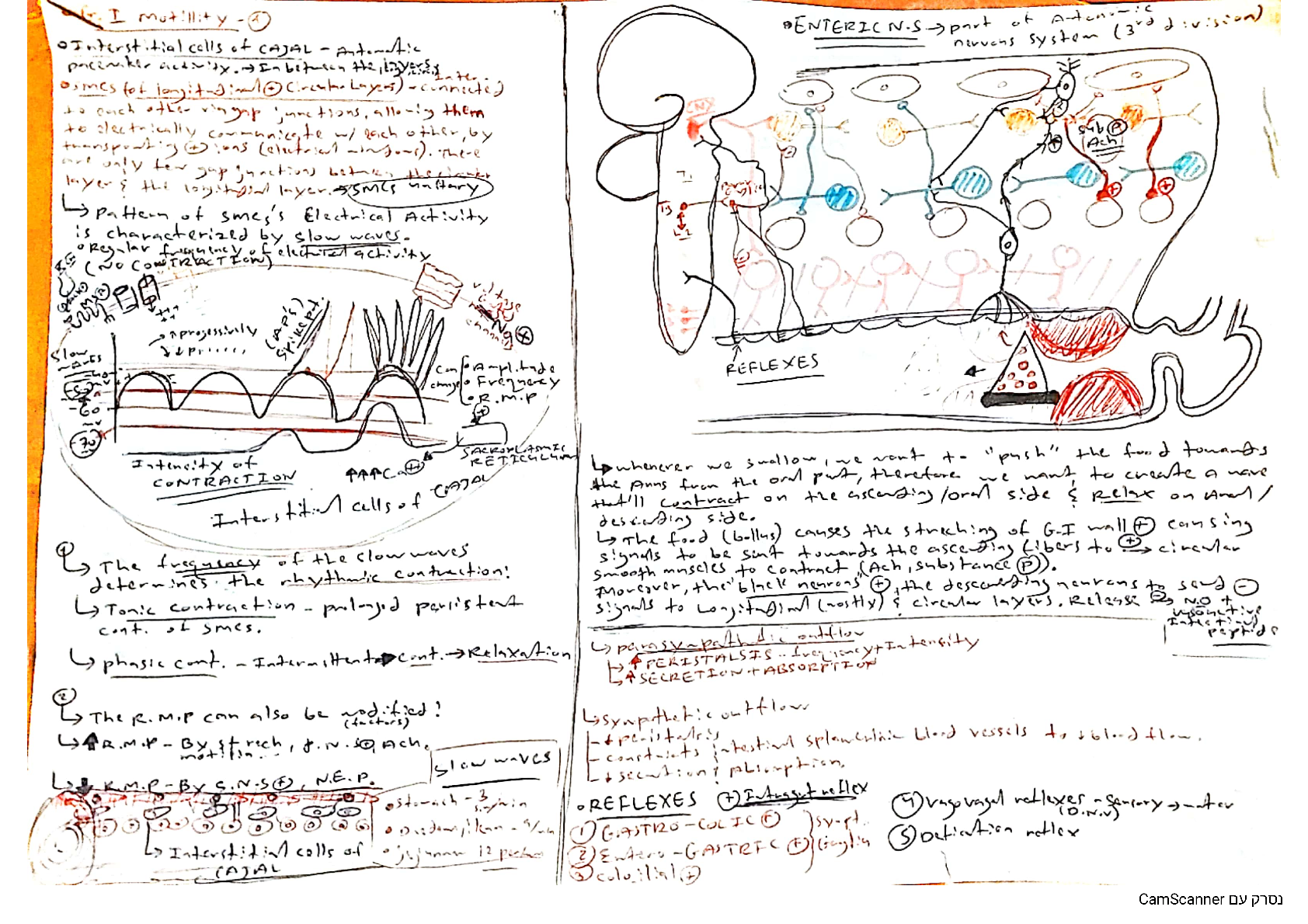
Buy this Document to get the Full Access Instantly
Provided by Students Who Aced it
We Verify Document Content to Gurantee Accuracy
Reviews( 0 )
Document information
Connected school, study & course
About the document
Uploaded On
Jan 17, 2024
Number of pages
5
Written in
All

Additional information
This document has been written for:
Uploaded
Jan 17, 2024
Downloads
0
Views
122
Topic Tags
Related Subjects & Courses
Explore similar study resources and related concepts.
Recommended For You
Get more on LECTURE SLIDES/NOTES »
Test Bank for Psychology in Your Life 2nd Edition by Sarah Gri...

eBook Psychology Contemporary Perspectives, 1st Edition By Pau...

Abnormal Psychology 1st Edition By Ann M. Kring et al (Test Ba...
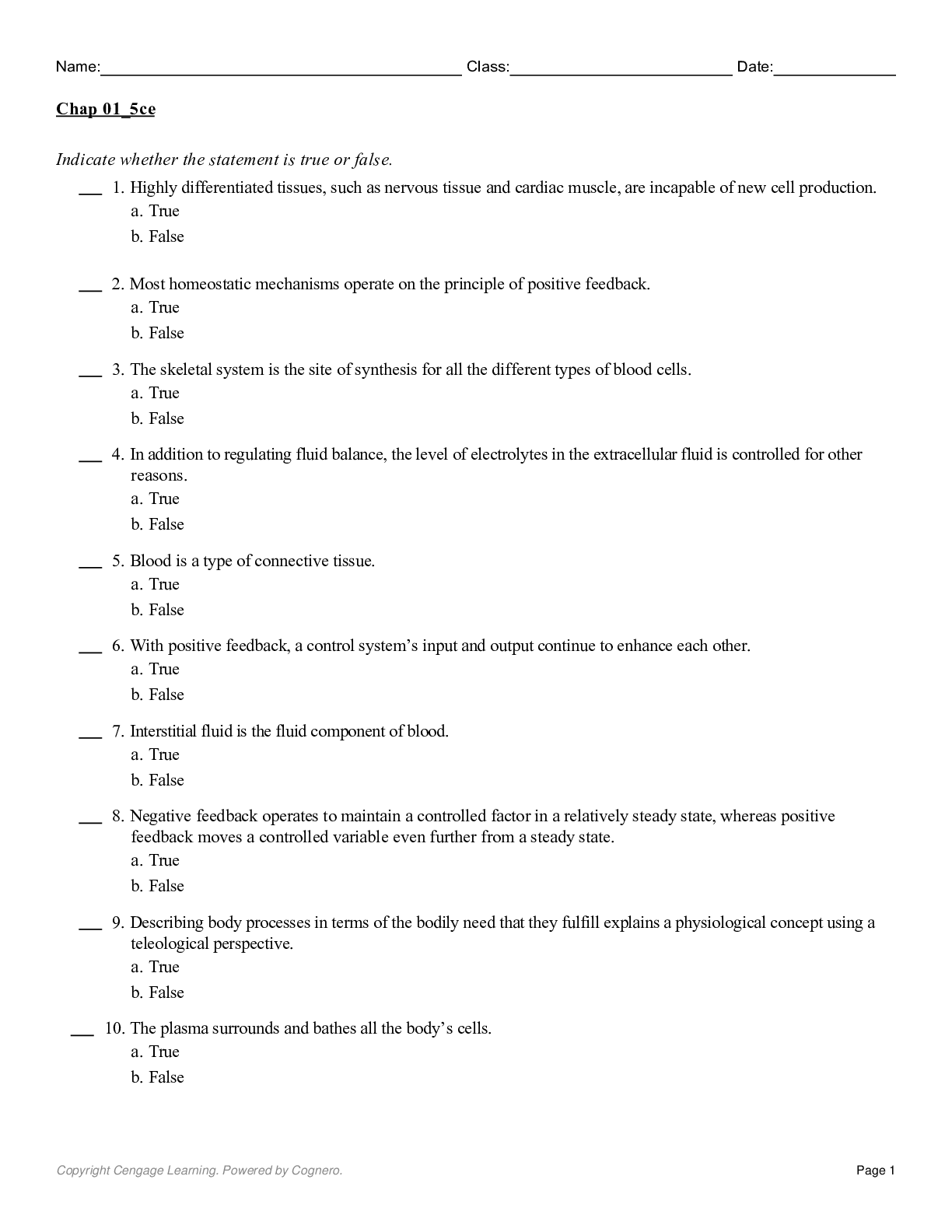
Test Bank for Human Physiology; From Cells To Systems, 5th Can...
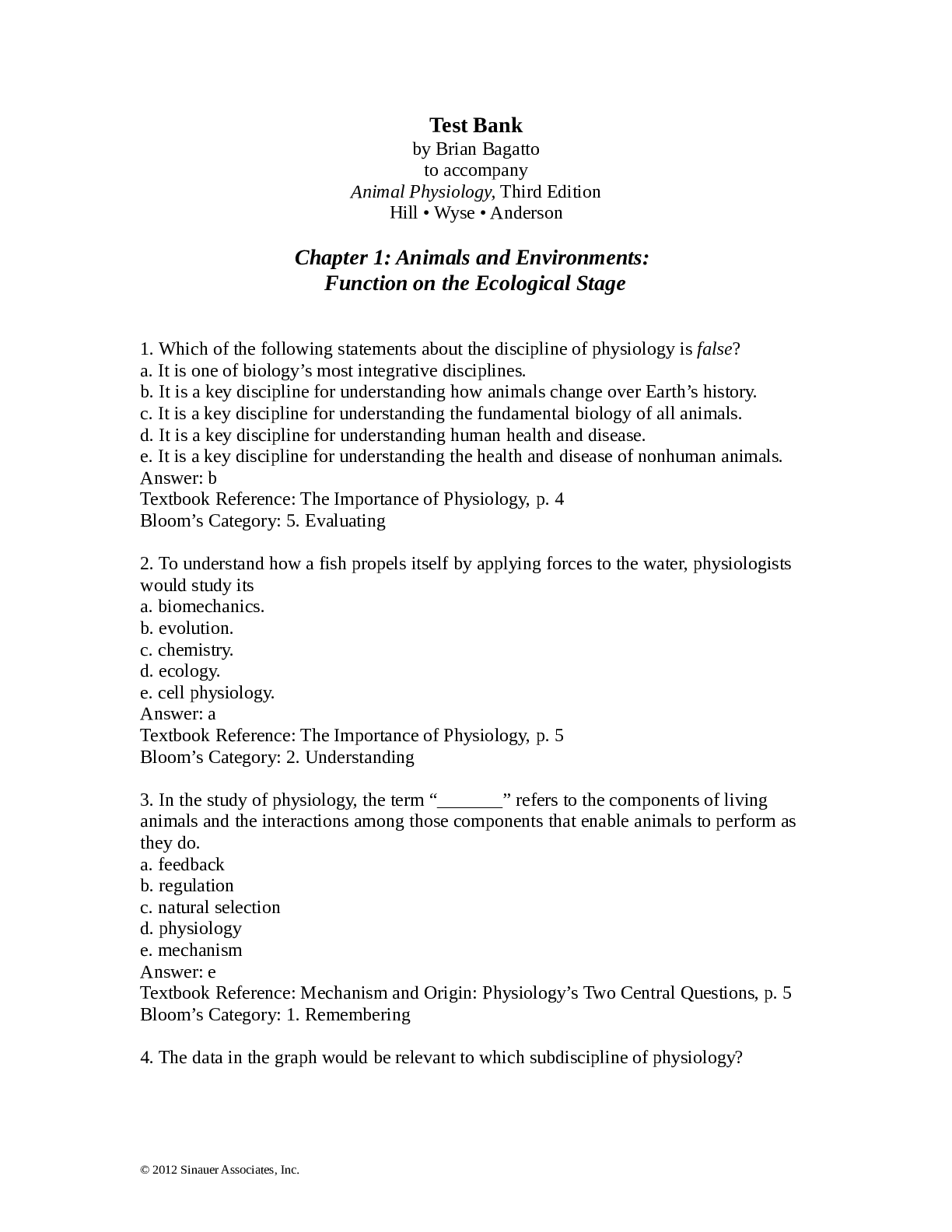
ANIMAL PHYSIOLOGY 4TH EDITION TEST BANK BY HILLS, WYSE, ANDERS...
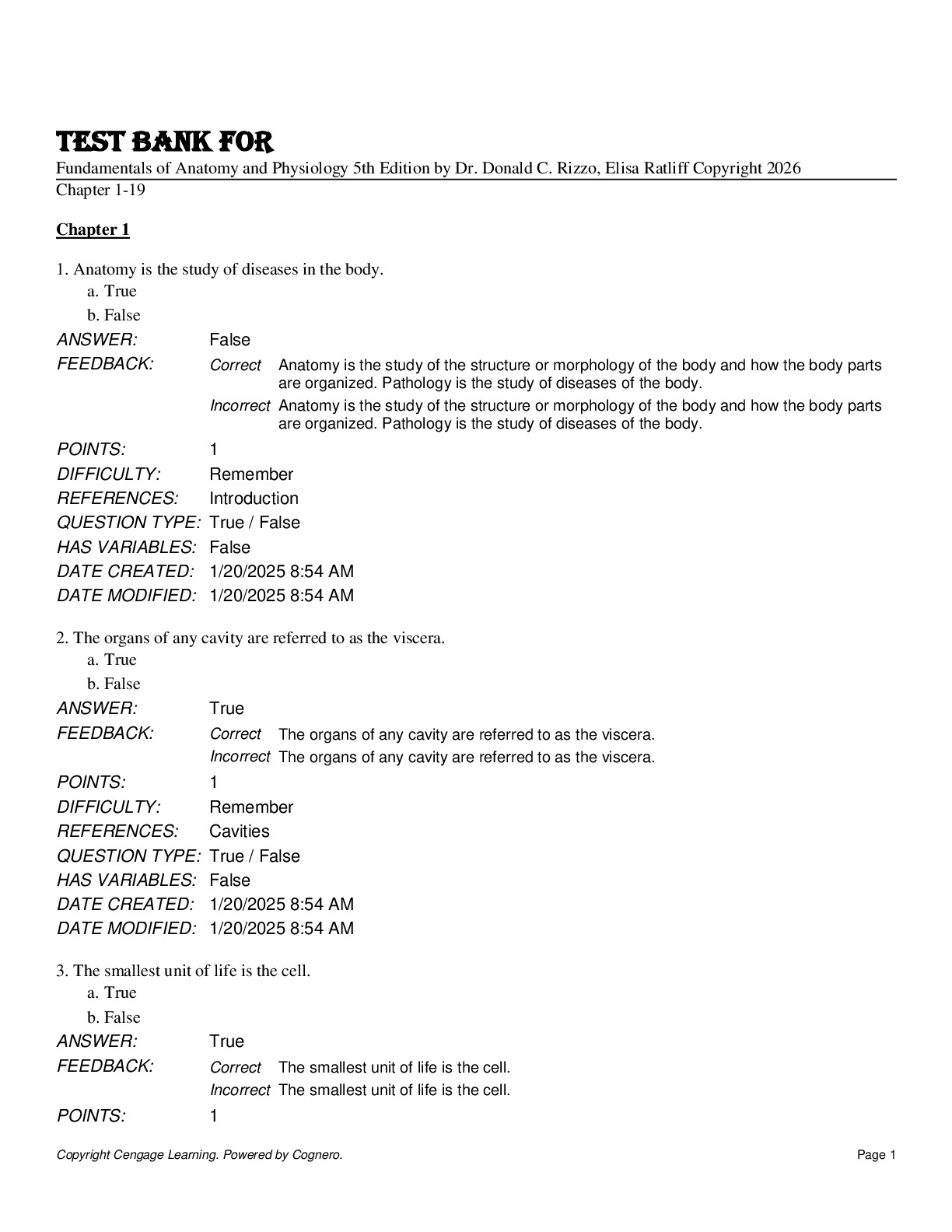
Test Bank For Fundamentals of Anatomy and Physiology 5th Editi...

Wheeler TB Psychotherapy for the Advanced Practice Psychiatric...


Focused Exam | Shadow Health Eric Ford- Schizophrenia | comple...

Focused Exam_ Schizophrenia _ Completed _ Shadow Health object...

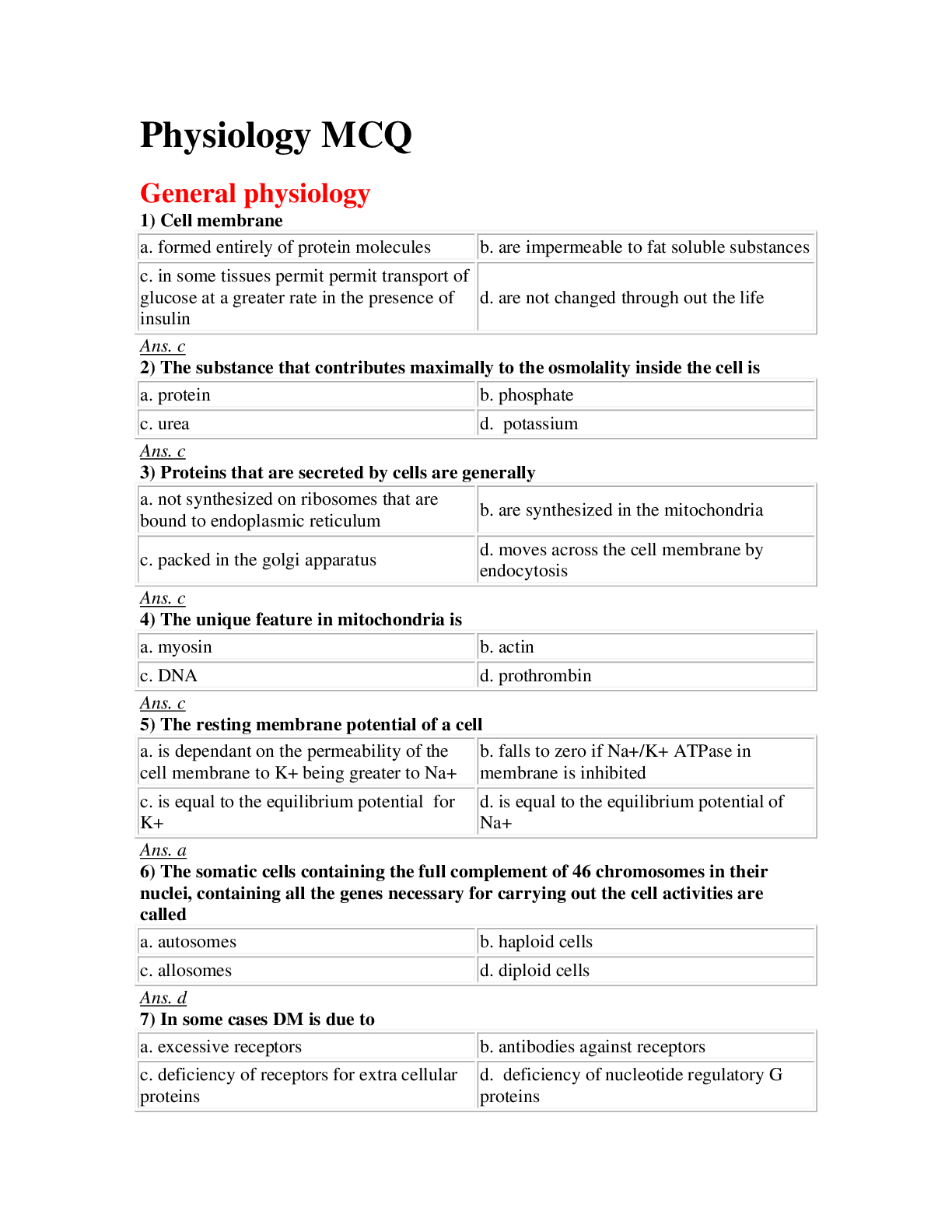
General physiology MULTIPLE CHOICE QUESTIONS ( ALL ANSWERS COR...

i-human BILLY JOHNSON Case Study; Latest 2020/2021 Complete So...