Relias ED RN A Questions With Correct Answers A+
What is the current recommended dose of intravenous or intraosseous epinephrine in adult patients
with cardiac arrest?
10 mg every 10 minutes
1 mg every 3-5 minutes
...
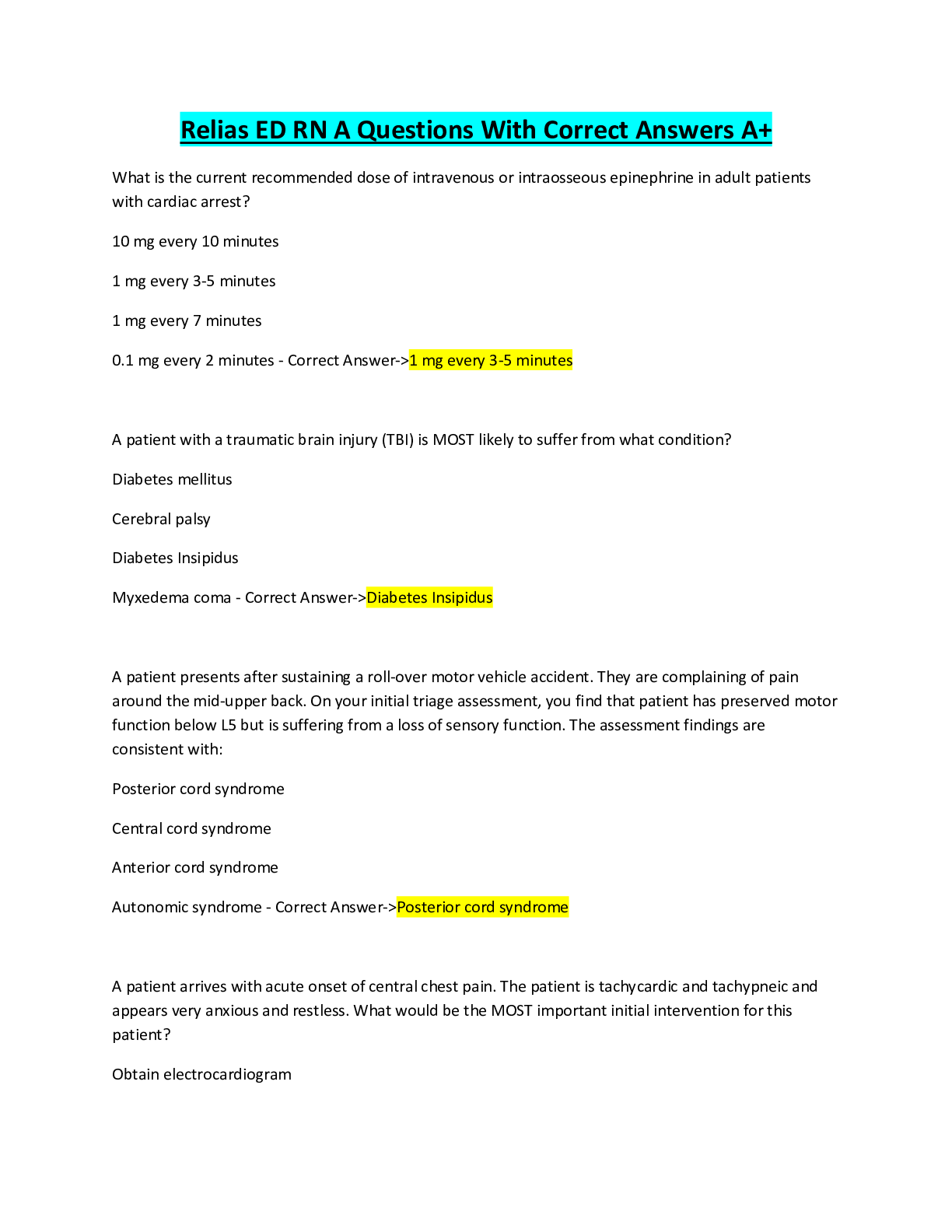
Relias ED RN A Questions With Correct Answers A+
What is the current recommended dose of intravenous or intraosseous epinephrine in adult patients
with cardiac arrest?
10 mg every 10 minutes
1 mg every 3-5 minutes
1 mg every 7 minutes
0.1 mg every 2 minutes - Correct Answer->1 mg every 3-5 minutes
A patient with a traumatic brain injury (TBI) is MOST likely to suffer from what condition?
Diabetes mellitus
Cerebral palsy
Diabetes Insipidus
Myxedema coma - Correct Answer->Diabetes Insipidus
A patient presents after sustaining a roll-over motor vehicle accident. They are complaining of pain
around the mid-upper back. On your initial triage assessment, you find that patient has preserved motor
function below L5 but is suffering from a loss of sensory function. The assessment findings are
consistent with:
Posterior cord syndrome
Central cord syndrome
Anterior cord syndrome
Autonomic syndrome - Correct Answer->Posterior cord syndrome
A patient arrives with acute onset of central chest pain. The patient is tachycardic and tachypneic and
appears very anxious and restless. What would be the MOST important initial intervention for this
patient?
Obtain electrocardiogram
Administer nitroglycerin
Administer oxygen
Obtain venous blood gas - Correct Answer->IDK, but its not administer nitroglycerin or obtain
electrocardiogram!!
A patient who is 27 weeks pregnant presents with painless bright red vaginal bleeding. What condition
correlates with the presenting symptoms?
Abruptio placenta
Placenta Previa
Ectopic pregnancy
Premature rupture of membranes (PROM) - Correct Answer->Placenta Previa
What is a common assessment finding in a patient with a tension pneumothorax?
Petechial chest rash
Distended neck veins
Equal chest wall expansion
Flattened neck veins - Correct Answer->Distended Neck Veins
A patient presents with a two-day history of fever, cough, mild shortness of breath (SOB), sore throat,
myalgia, and new onset of loss of taste and smell. What is the patient MOST likely suffering from?
Giardi...
[Show More]