Health Care > EXAM > MSN 610 Midterm Exam - Questions and Answers (All)
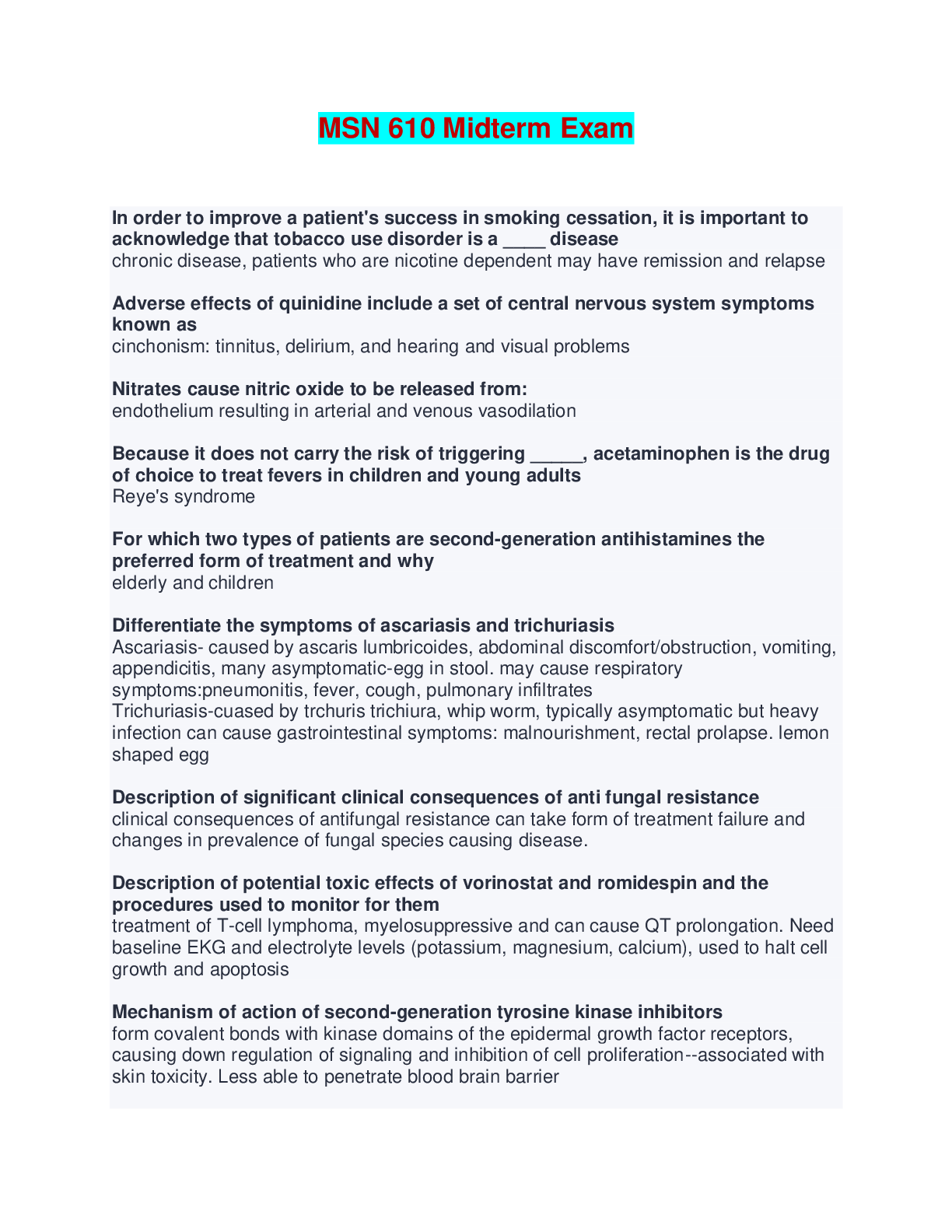
MSN 610 Midterm Exam - Questions and Answers
Document Content and Description Below
Last updated: 2 years ago
Preview 1 out of 5 pages
Instant download
Buy this Document to get the Full Access Instantly
Provided by Students Who Aced it
We Verify Document Content to Gurantee Accuracy
Reviews( 0 )
Document information
Connected school, study & course
About the document
Uploaded On
Feb 15, 2024
Number of pages
5
Written in
All

Additional information
This document has been written for:
Uploaded
Feb 15, 2024
Downloads
0
Views
56
Topic Tags
Recommended For You
Get more on EXAM » Latest Questions and Complete Solutions.png)
MSN 610 Diagnostic Reasoning & Advanced Physical Assessment, D...
.png)
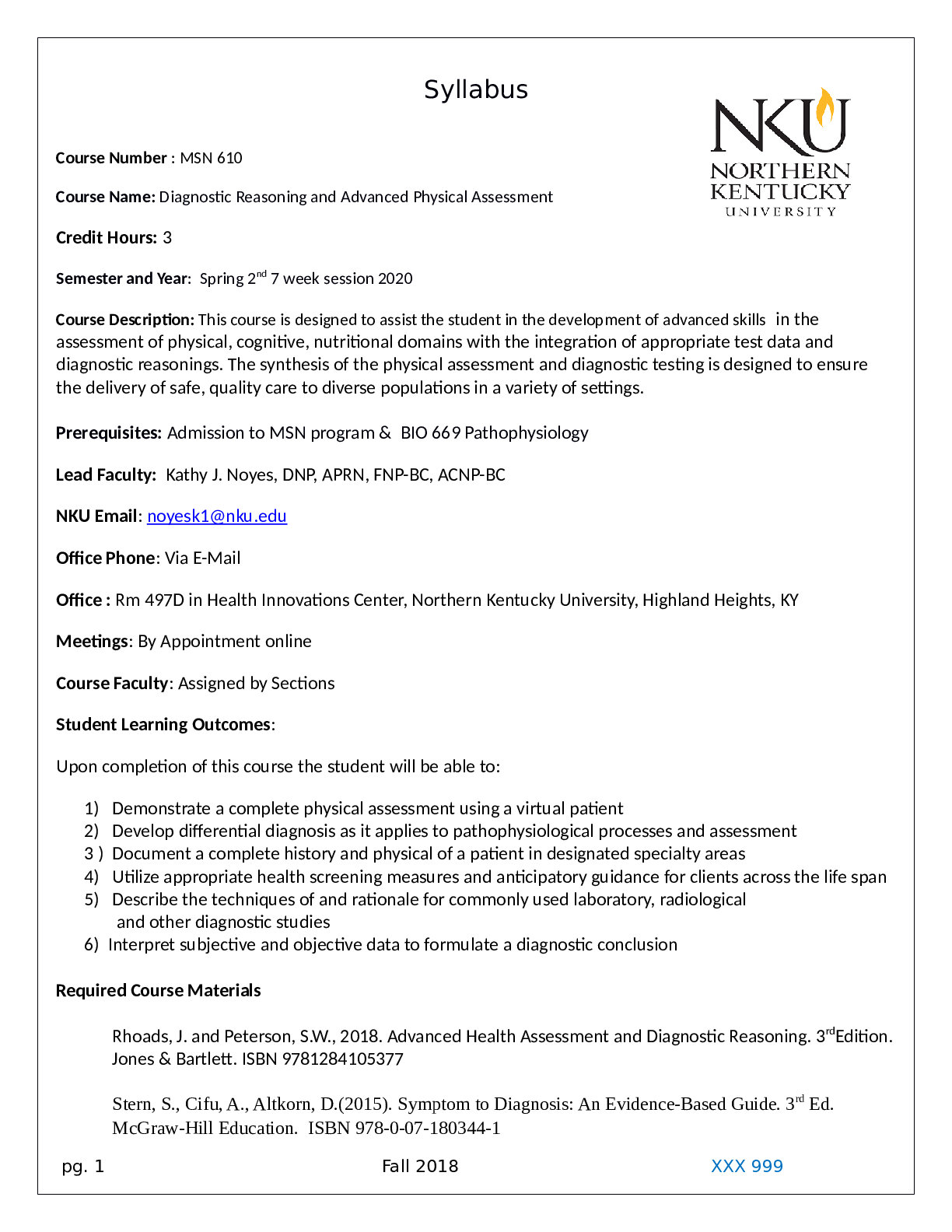
Northern Kentucky University MSN 610: Diagnostic Reasoning and...

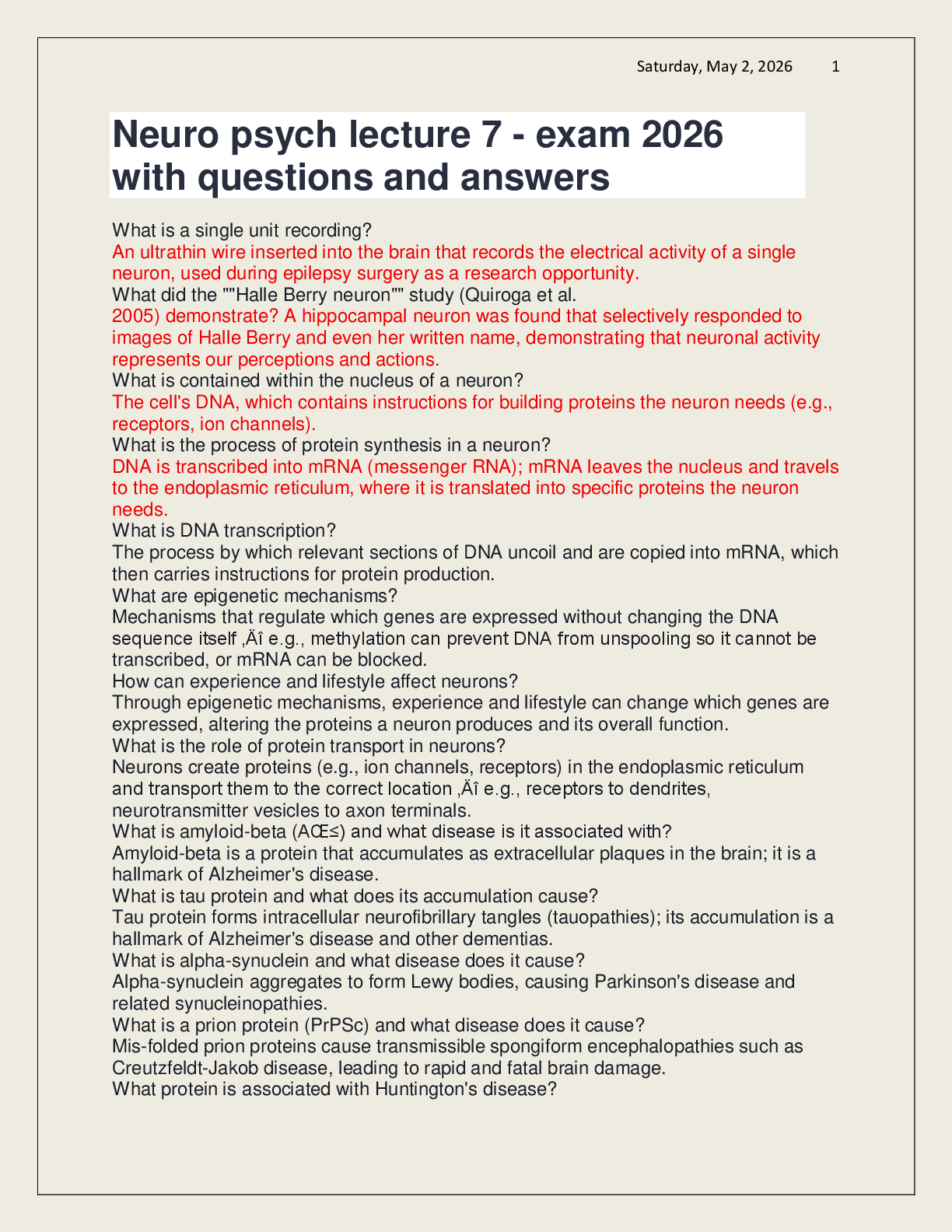
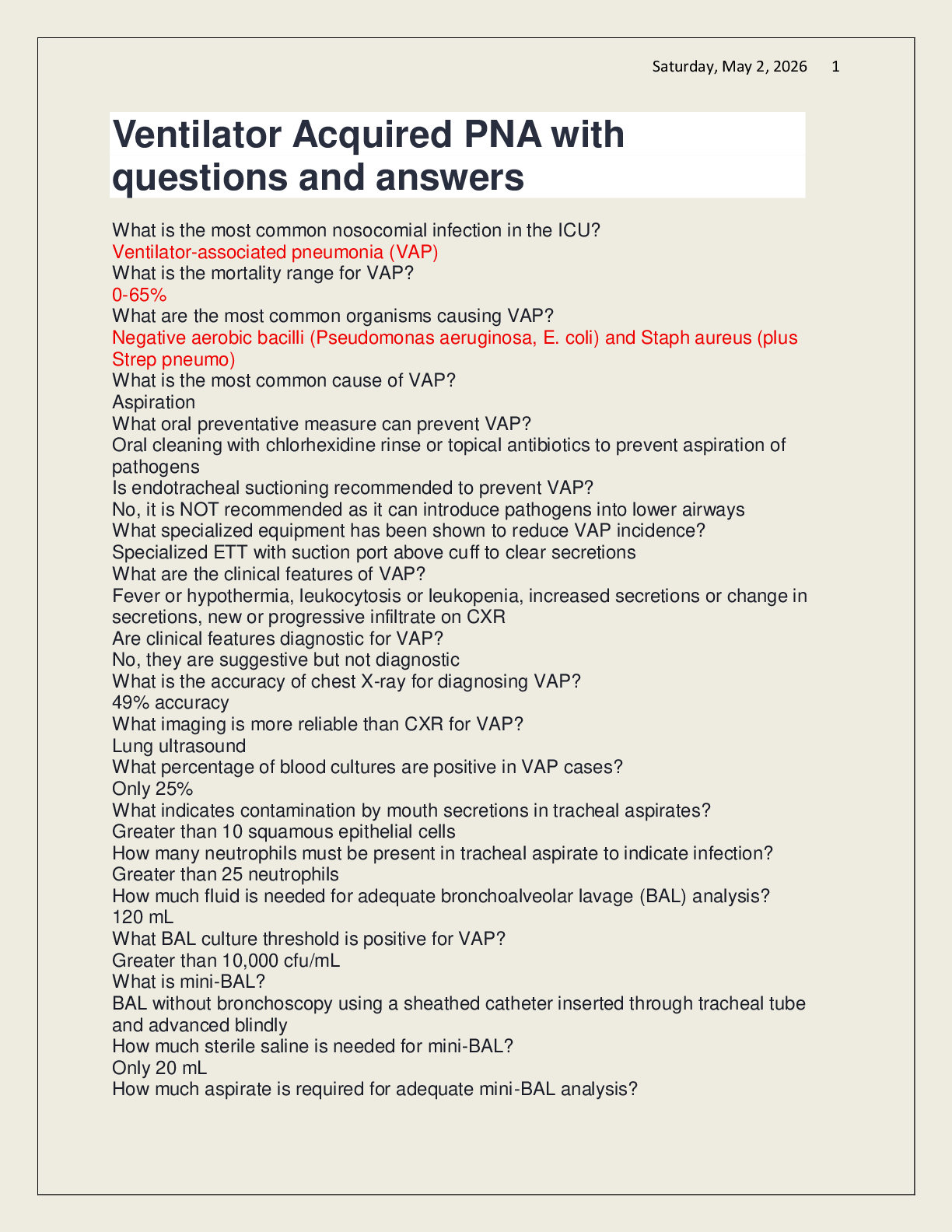
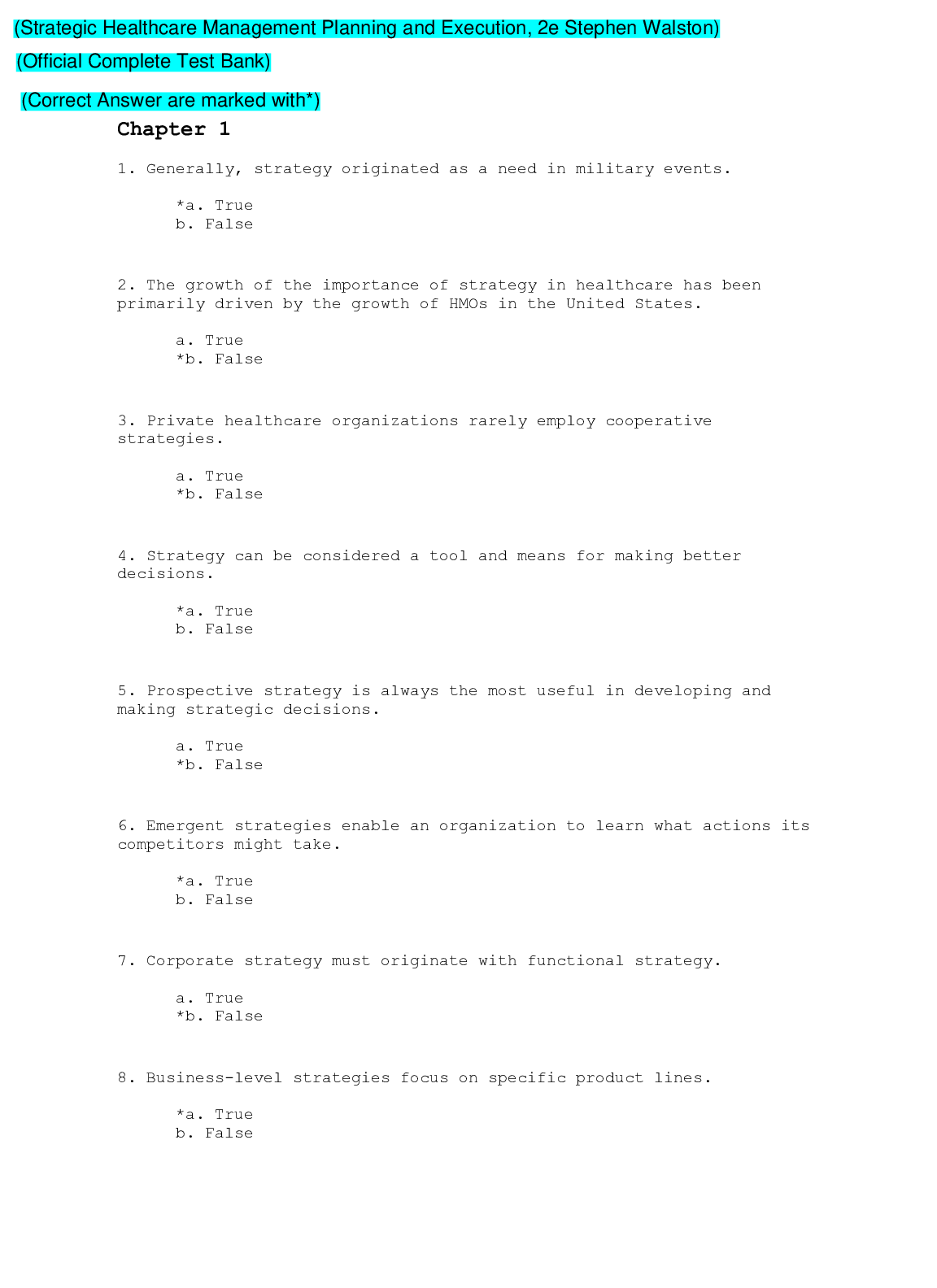
Strategic Healthcare Management Planning and Execution 2nd Edi...
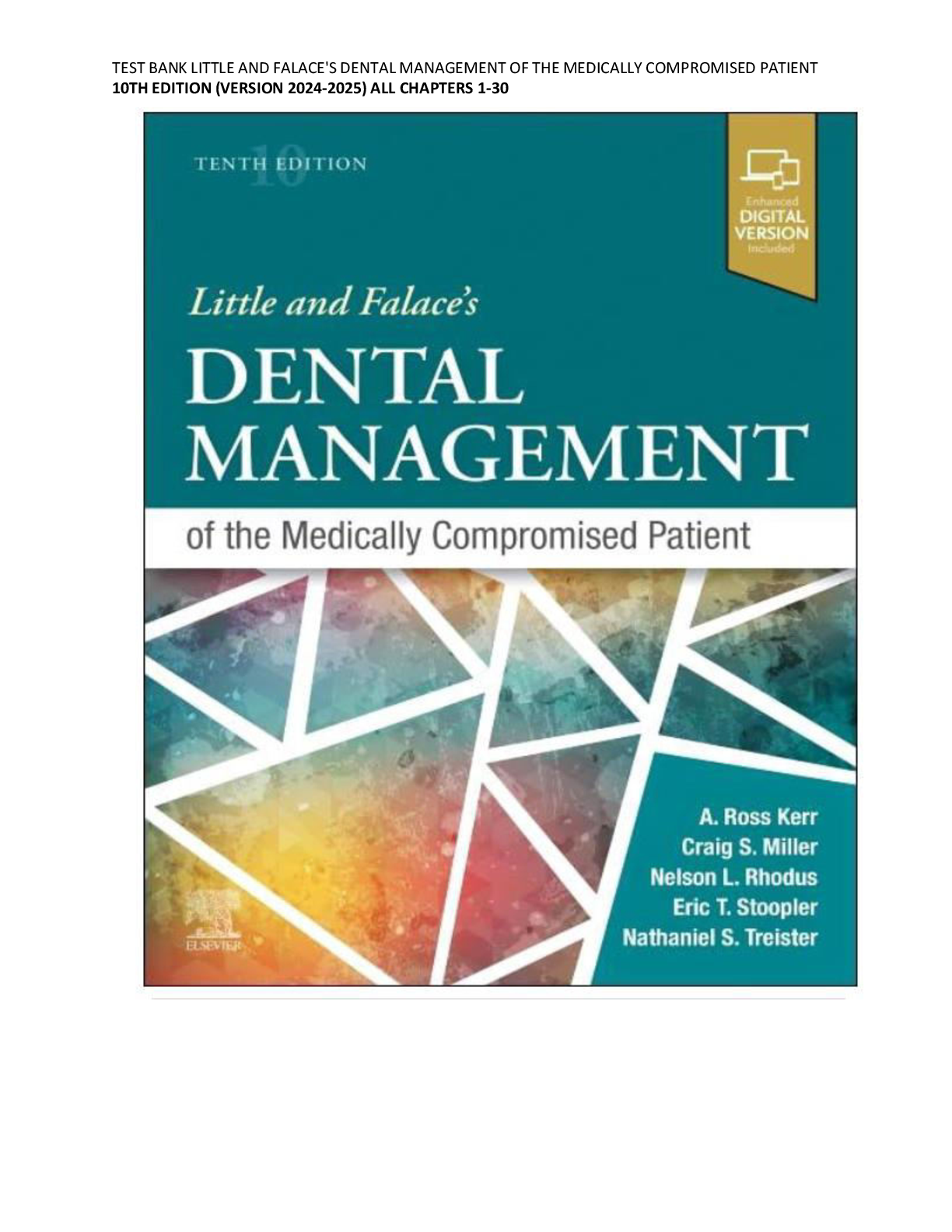
TEST BANK For Little and Falace's Dental Management of the Med...
Test bank for Medical Emergencies-Essentials for the Dental Pr...
Test Bank for Physical Examination and Health Assessment 9th E...
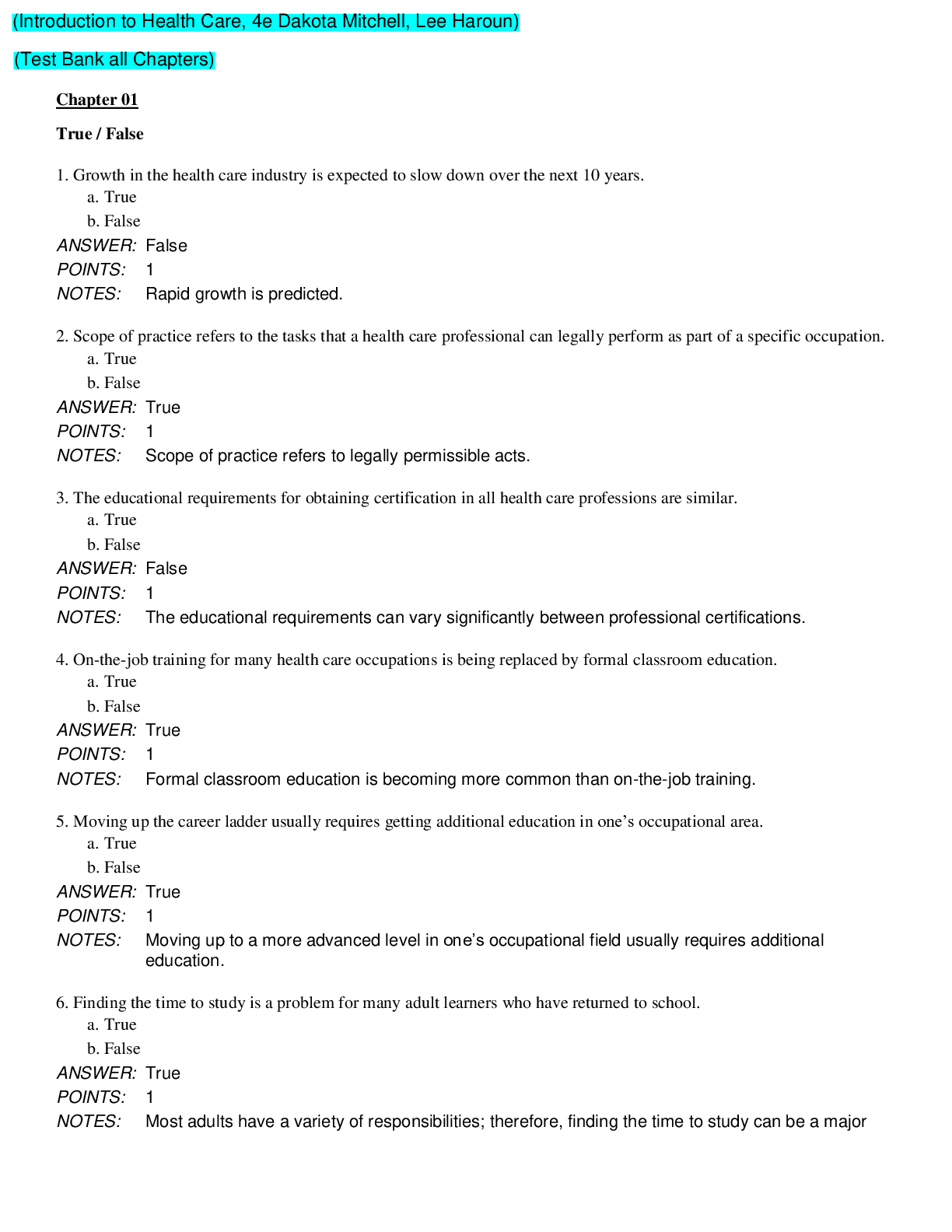
Introduction to Health Care, 4e Dakota Mitchell, Lee Haroun (T...