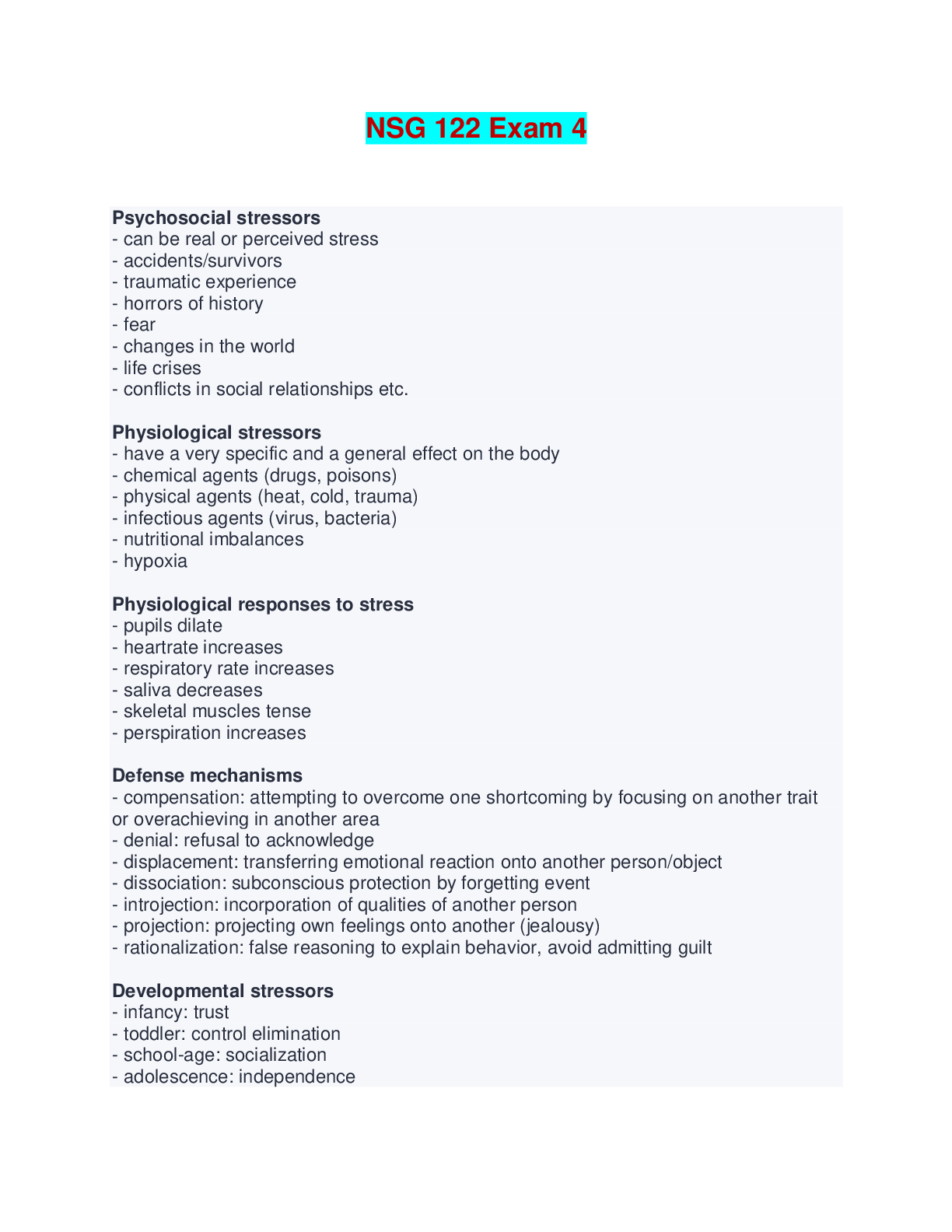
NSG 122 Exam 4 - Questions and Answers Psychosocial stressors - can be real or perceived stress - accidents/survivors - traumatic experience - horrors of history - fear - changes in the world - life crises - conflicts
...
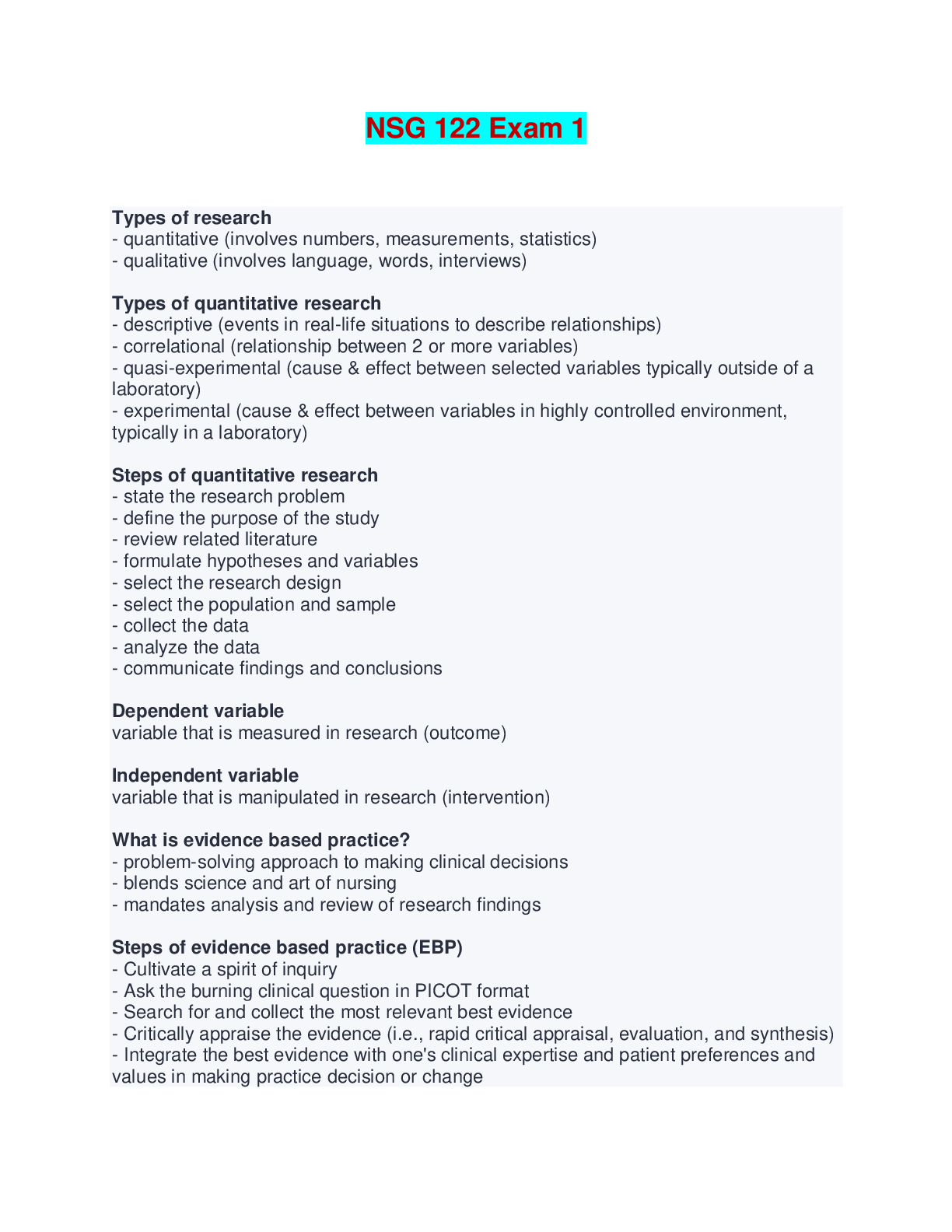
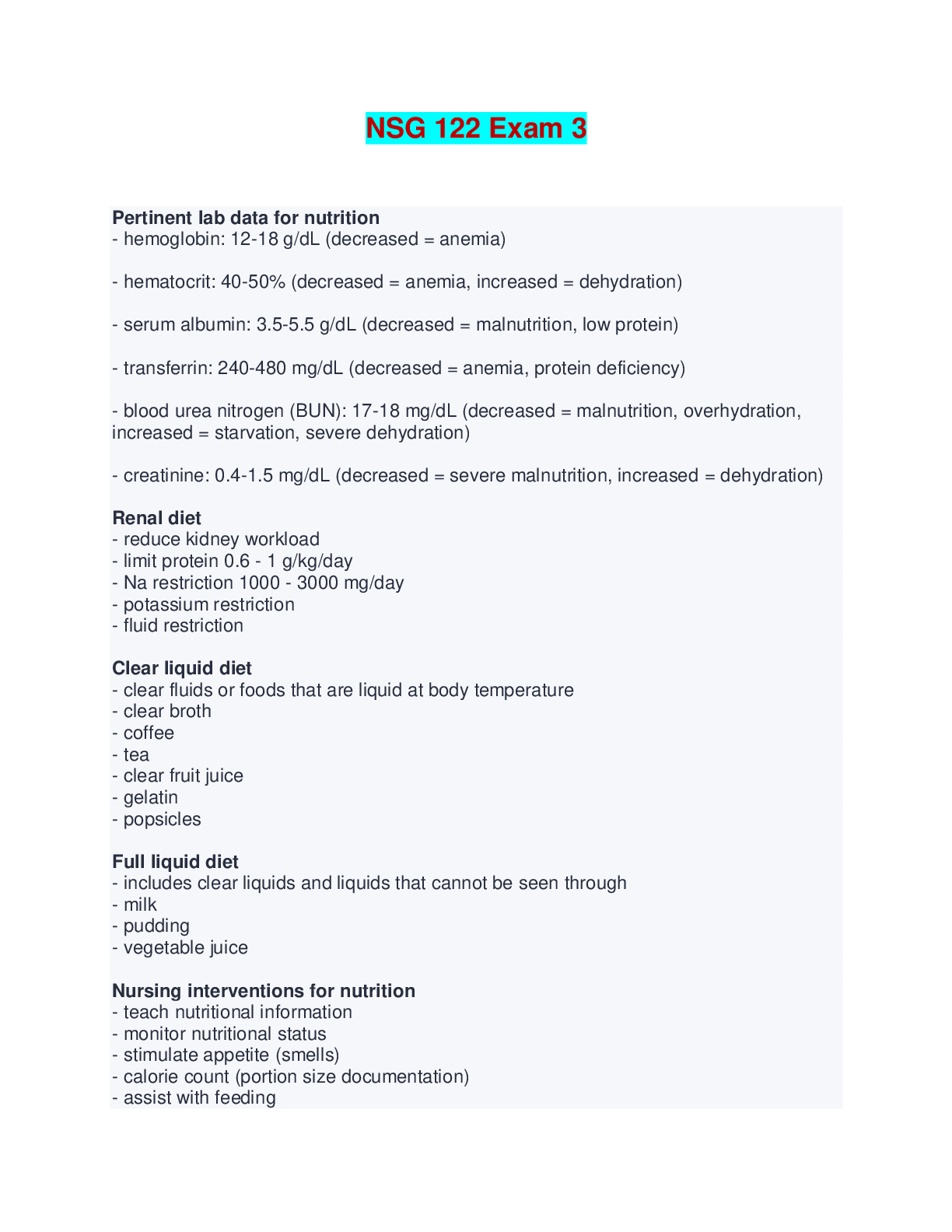
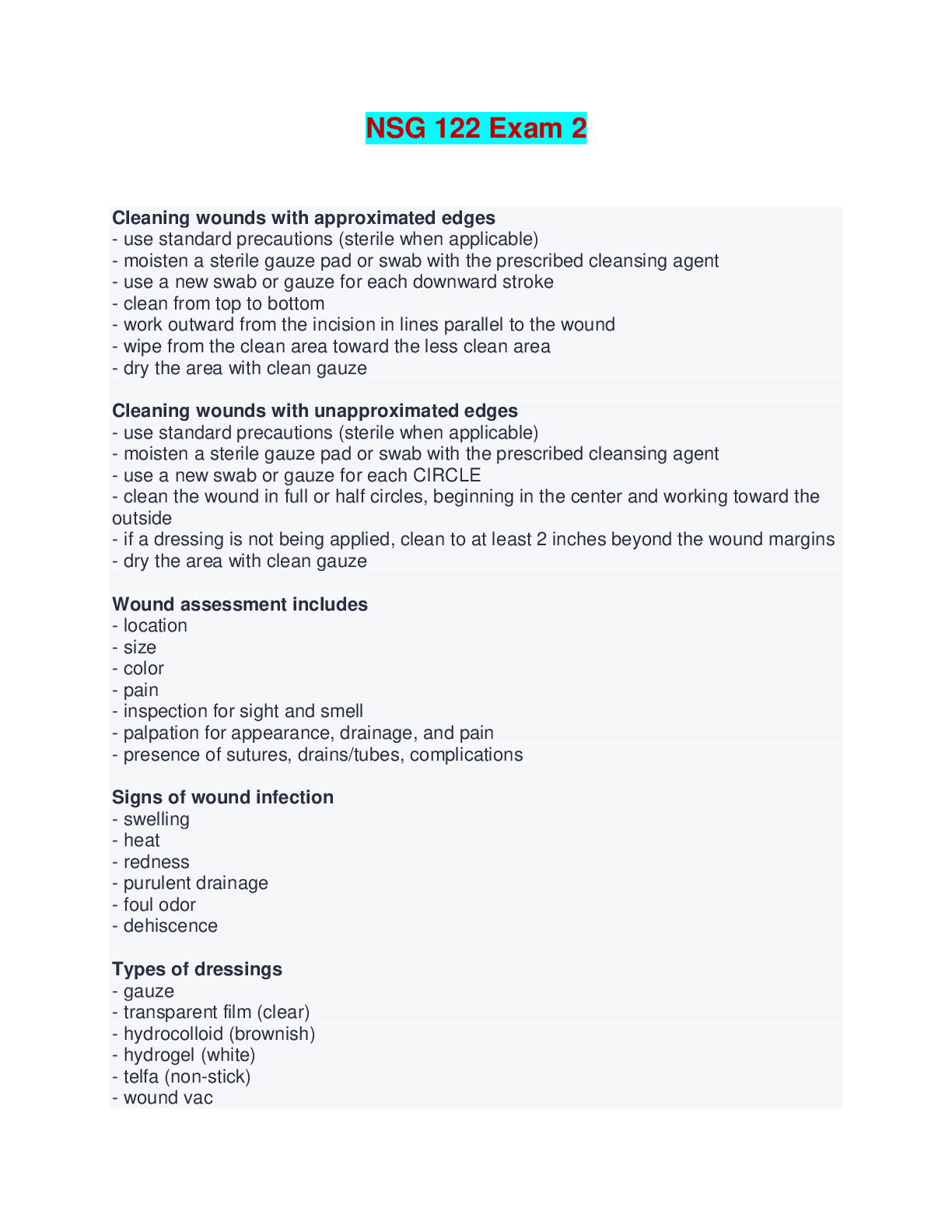
NSG 122 Exam 4 - Questions and Answers Psychosocial stressors - can be real or perceived stress - accidents/survivors - traumatic experience - horrors of history - fear - changes in the world - life crises - conflicts in social relationships etc. Physiological stressors - have a very specific and a general effect on the body - chemical agents (drugs, poisons) - physical agents (heat, cold, trauma) - infectious agents (virus, bacteria) - nutritional imbalances - hypoxia Physiological responses to stress - pupils dilate - heartrate increases - respiratory rate increases - saliva decreases - skeletal muscles tense - perspiration increases Defense mechanisms - compensation: attempting to overcome one shortcoming by focusing on another trait or overachieving in another area - denial: refusal to acknowledge - displacement: transferring emotional reaction onto another person/object - dissociation: subconscious protection by forgetting event - introjection: incorporation of qualities of another person - projection: projecting own feelings onto another (jealousy) - rationalization: false reasoning to explain behavior, avoid admitting guilt Developmental stressors - infancy: trust - toddler: control elimination - school-age: socialization - adolescence: independence - middle adult: accept physical signs of aging (menopause) - older adult: reflection Situational stressors - not predictable patterns - can occur at any developmental level but the reaction is influenced by one's developmental level - ex: illness, marriage, loss, role change, job change Transduction of pain first perception of pain, activation of pain receptors in the periphery Transmission of pain movement of pain impulses from the periphery to the spinal cord & then to the brain Perception of pain awareness of the characteristics of pain Modulation of pain process by which the sensation of pain is inhibited or modified, neuromodulators (endorphins) Sources of pain - nociceptive: peripheral/extremities - cutaneous: superficial, skin - somatic: muscles, bones, ligaments - visceral: organs - neuropathic: nerves - referred: felt in a different place than origin of pain - intractable: unrelenting, persistent Responses to pain - physiologic (involuntary): increased BP/HR/resp, nausea, vomiting, fainting - behavioral (voluntary): moaning, grimacing, crying - affective (psychological): stoicism, hopelessness, anxiety, depression Pain scales - 0-10 pain scale (> 9 years old) - Behavioral pain scale (unconscious patients) - Wong-Baker FACES (> 3 years old) - PAINAD (dementia patients) Pain assessment OPQRSTU - Onset - Palliative/Provoking factors - Quality
[Show More]