NSG 123 Exam 1 - Questions and Answers Pre-Operative Phase The preoperative phase begins when the decision to proceed with surgical intervention is made and ends with the transfer of the patient onto the operating room
...
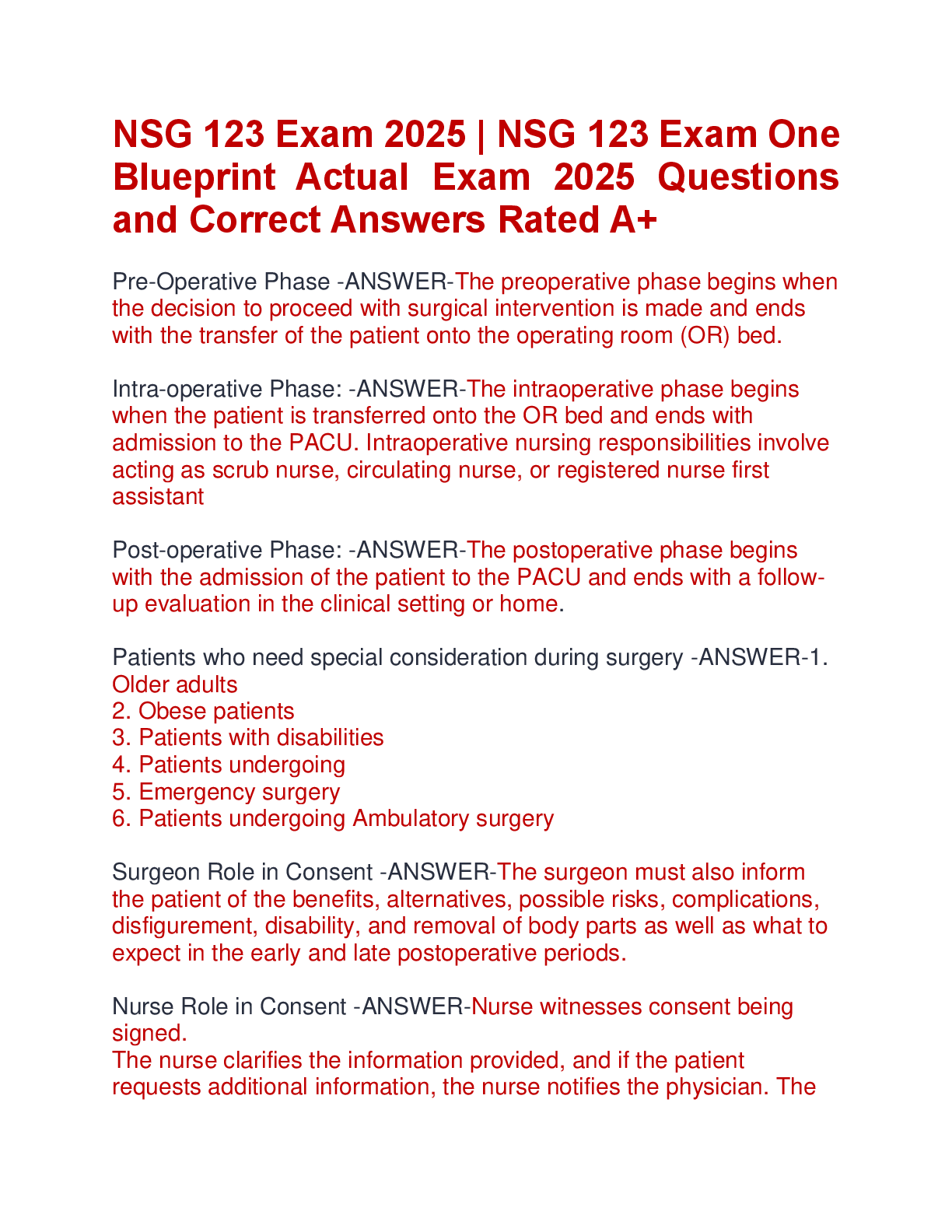
NSG 123 Exam 1 - Questions and Answers Pre-Operative Phase The preoperative phase begins when the decision to proceed with surgical intervention is made and ends with the transfer of the patient onto the operating room (OR) bed. Intra-operative Phase: The intraoperative phase begins when the patient is transferred onto the OR bed and ends with admission to the PACU. Intraoperative nursing responsibilities involve acting as scrub nurse, circulating nurse, or registered nurse first assistant Post-operative Phase: The postoperative phase begins with the admission of the patient to the PACU and ends with a follow-up evaluation in the clinical setting or home. Patients who need special consideration during surgery 1. Older adults 2. Obese patients 3. Patients with disabilities 4. Patients undergoing 5. Emergency surgery 6. Patients undergoing Ambulatory surgery Surgeon Role in Consent The surgeon must also inform the patient of the benefits, alternatives, possible risks, complications, disfigurement, disability, and removal of body parts as well as what to expect in the early and late postoperative periods. Nurse Role in Consent Nurse witnesses consent being signed. The nurse clarifies the information provided, and if the patient requests additional information, the nurse notifies the physician. The nurse ascertains that the consent form has been signed before administering psychoactive premedication What happens to a consent form once it is signed? The signed consent form is placed in a prominent place on the patient's medical record and accompanies the patient to the OR. Incompetent Patient Legal definition: individual who is not autonomous and cannot give or withhold consent (e.g., individuals who are cognitively impaired, mentally ill, or neurologically incapacitated). Ethical Considerations with Consent non-English speaking patients, cognitive impairment, emergency surgery, language barriers etc. Reasons surgery may be delayed or postponed 1. Poor nutrition or hydration status 2. Respiratory Infection (elective surgery) 3. Infection 4. Anesthetic Allergies 5. Drugs & Alcohol 6. Uncontrolled hypertension 7. Medications such as diuretics, steroids, insulins, opioids, anticoagulants Perioperative Patient Teachings Discontinue smoking 30 days prior Stop any OTC herbal medications 2 weeks prior Stop aspirin or anticoagulant 7-10 days prior Nothing by mouth What is done in the OR to maintain asepsis? All surgical supplies are sterilized All personal wash and scrub hands and arms with antiseptic soap Only those who have taken proper sanitary precautions can touch sterilized objects Surgical team members wear long-sleeved, sterile gowns and gloves. Head and hair are covered with a cap, and a mask Unrestricted Zone street clothes are allowed Semi-Restricted Zone where attire consists of scrub clothes and caps Restricted Zone where scrub clothes, shoe covers, caps, and masks are worn. The surgeons and other surgical team members wear additional sterile clothing and protective devices during surgery. Circulating Nurse Role: the circulating nurse manages the OR and protects the patient's safety and health by monitoring the activities of the surgical team, checking the OR conditions, and continually assessing the patient for signs of injury and implementing appropriate interventions. A foremost responsibility includes verifying consent; if not obtained, surgery may not commence. The team is coordinated by the circulating nurse, who ensures cleanliness, proper temperature, humidity, appropriate lighting, safe function of equipment, and the availability of supplies and materials. circulating nurse is responsible for ensuring that the second verification of the surgical procedure and site takes place and is documented.
[Show More]




.png)