NURSING > EXAM > Relias Quest Interview Prep | Complete Questions & Answers (Solved) 100% Correct ( Updated 2024 ) (All)
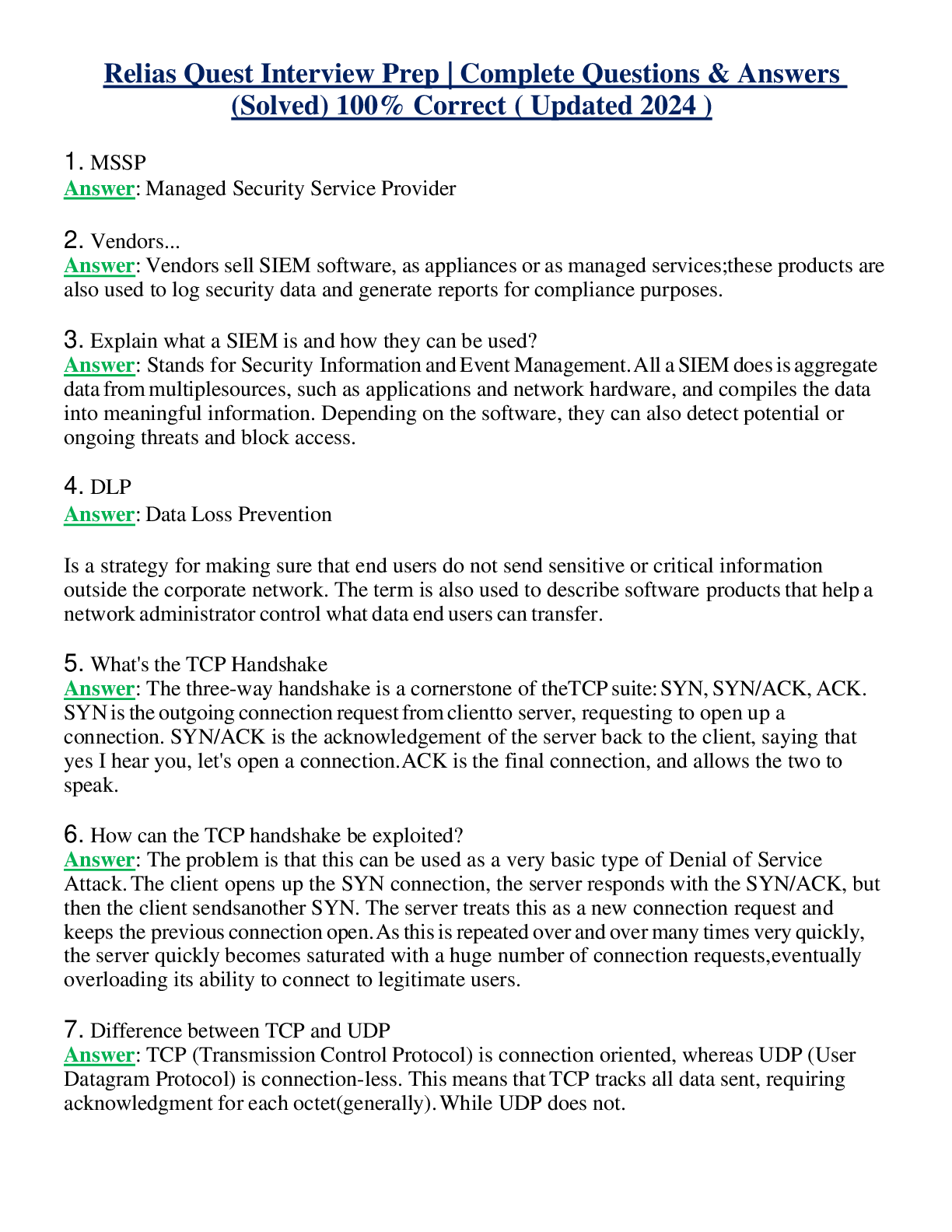
Relias Quest Interview Prep | Complete Questions & Answers (Solved) 100% Correct ( Updated 2024 )
Document Content and Description Below
Last updated: 2 years ago
Preview 1 out of 12 pages
Instant download
Buy this Document to get the Full Access Instantly
Provided by Students Who Aced it
We Verify Document Content to Gurantee Accuracy
Reviews( 0 )
Document information
Connected school, study & course
About the document
Uploaded On
Mar 22, 2024
Number of pages
12
Written in
All

Additional information
This document has been written for:
Uploaded
Mar 22, 2024
Downloads
0
Views
94
Topic Tags
Related Subjects & Courses
Explore similar study resources and related concepts.
Recommended For You
Get more on EXAM »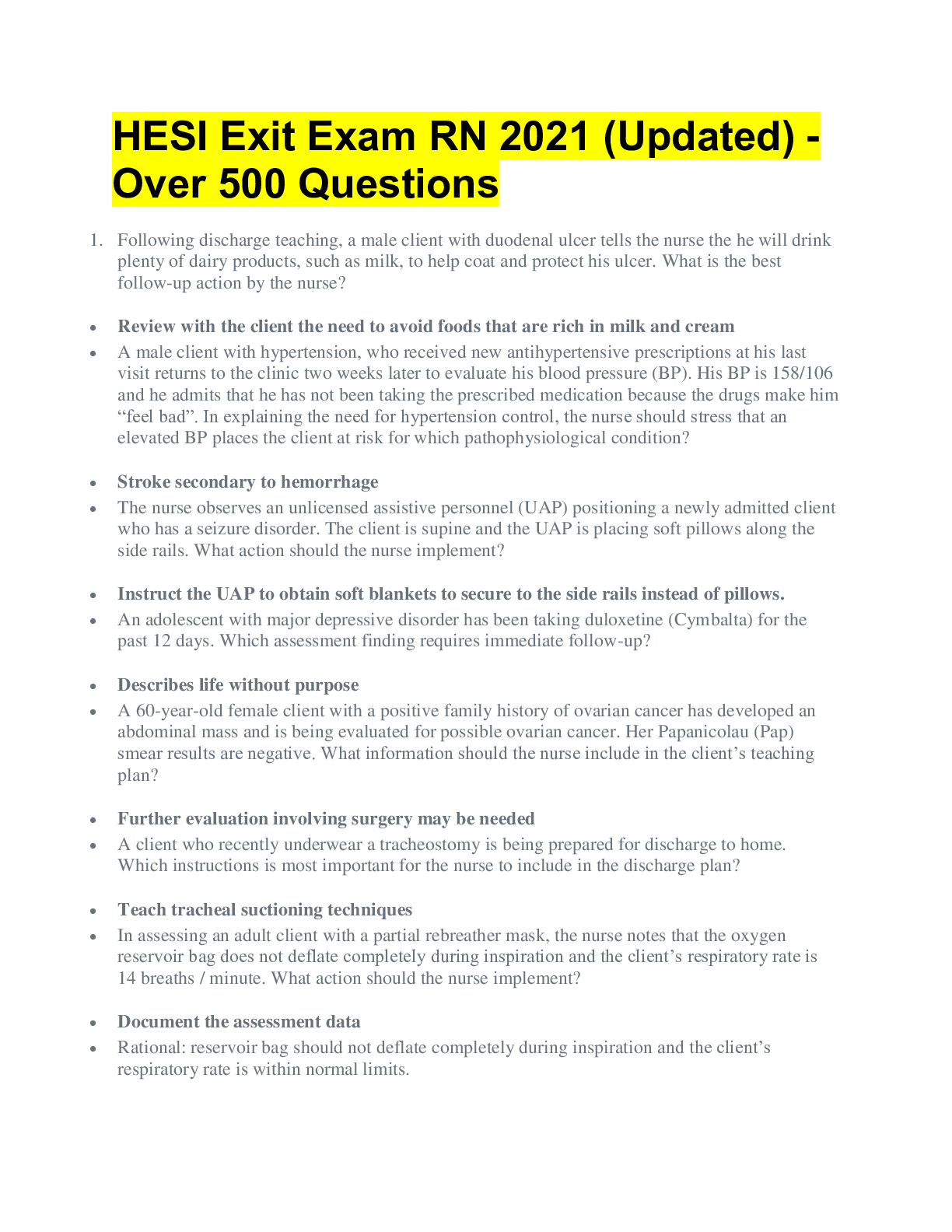
HESI Exit Exam RN (Updated 2024/20245) - Over 500 Questions

Test Bank for Theory and Practice of Counseling and Psychother...
NCSBN TEST BANK - for the NCLEX-RN & NCLEX-PN, Updated 2024/25...
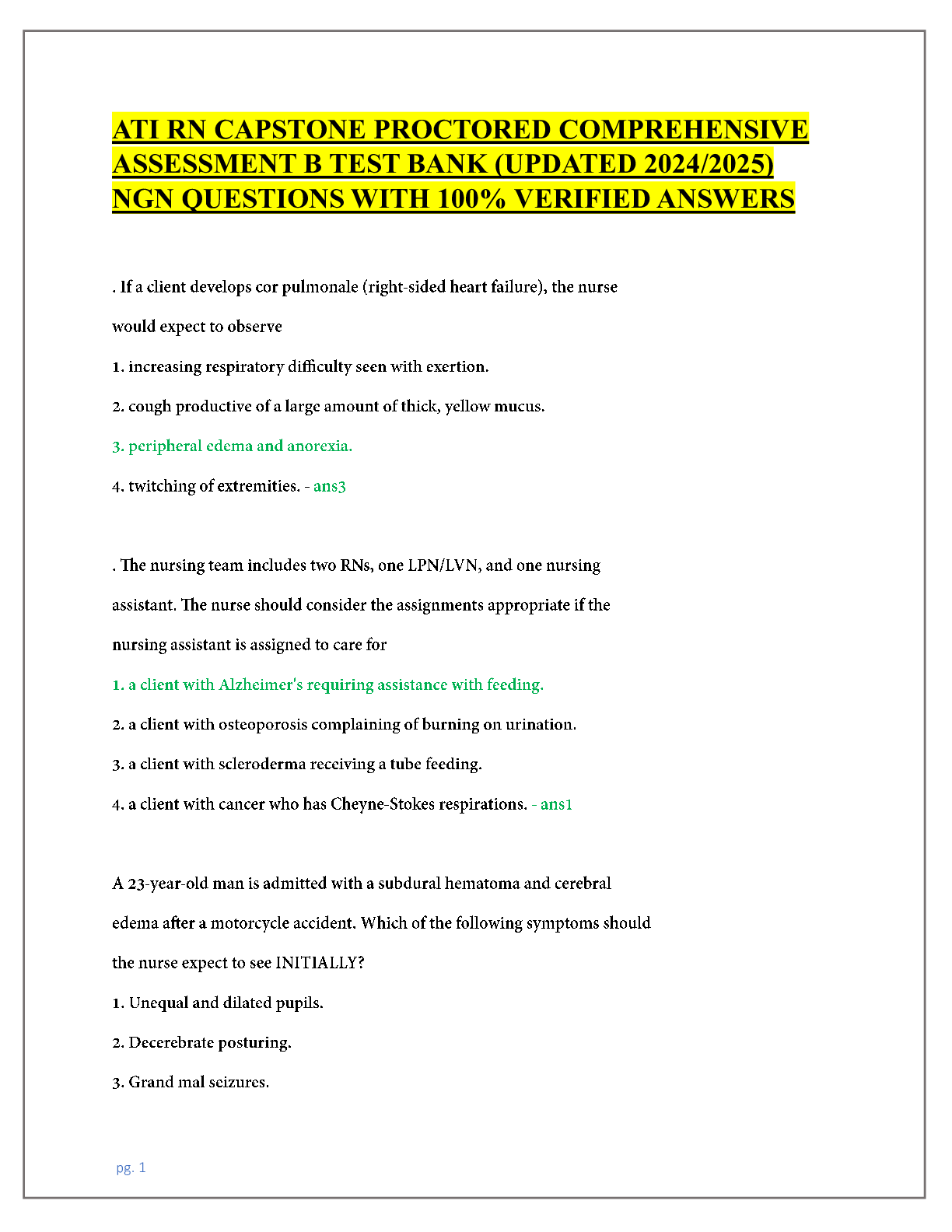
ATI RN CAPSTONE PROCTORED COMPREHENSIVE ASSESSMENT B TEST BANK...

VATI RN Comprehensive Predictor 2019 Form A (complete test ban...
A Concise Introduction to Logic, 12e Patrick Hurley (Instructo...
An Instructor’s Solutions Manual to Accompany Fundamentals of...

Business Data Networks and Security, 11e (Panko) > updated 2...