Political Science > EXAM > WGU C963 Test | Contains 25 Questions & Answers (All)
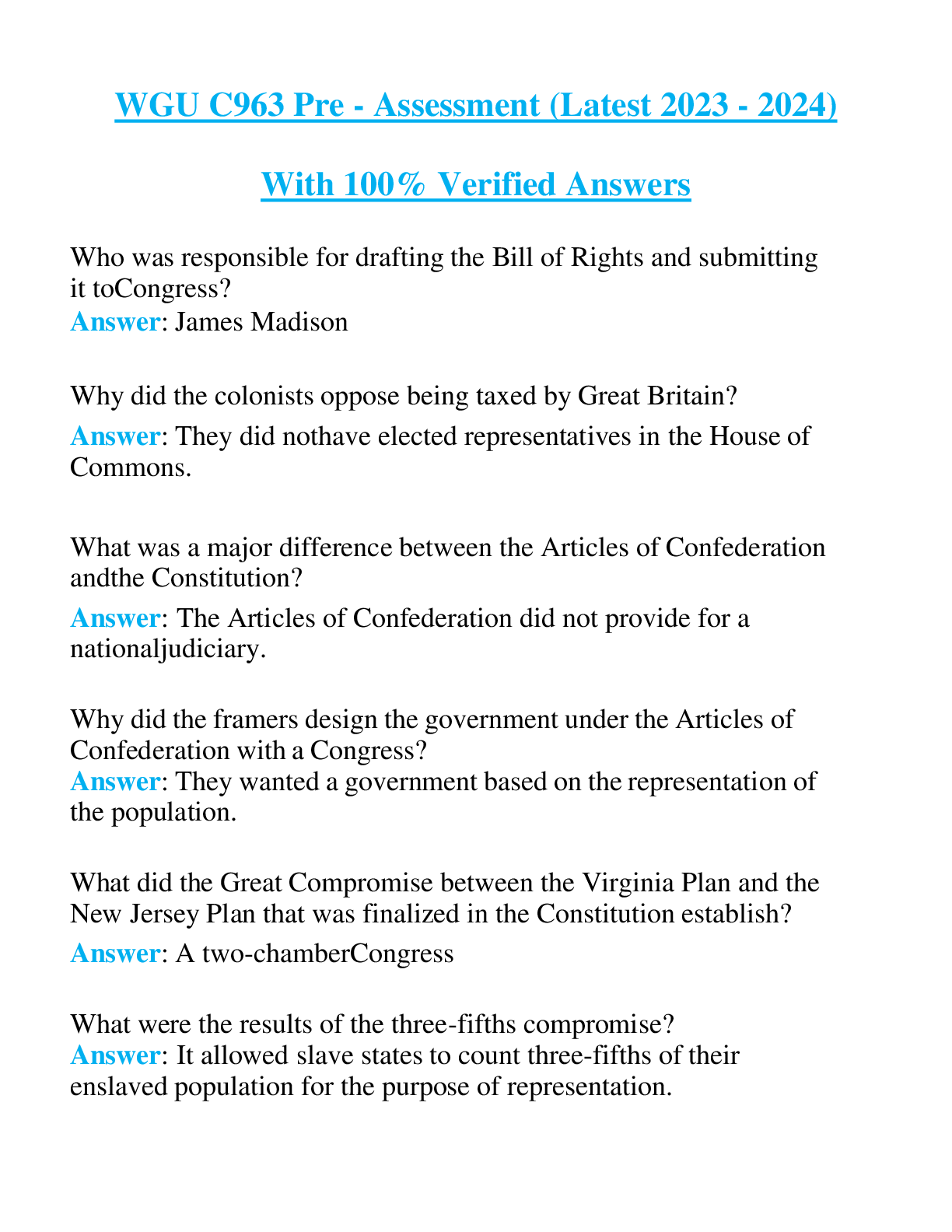
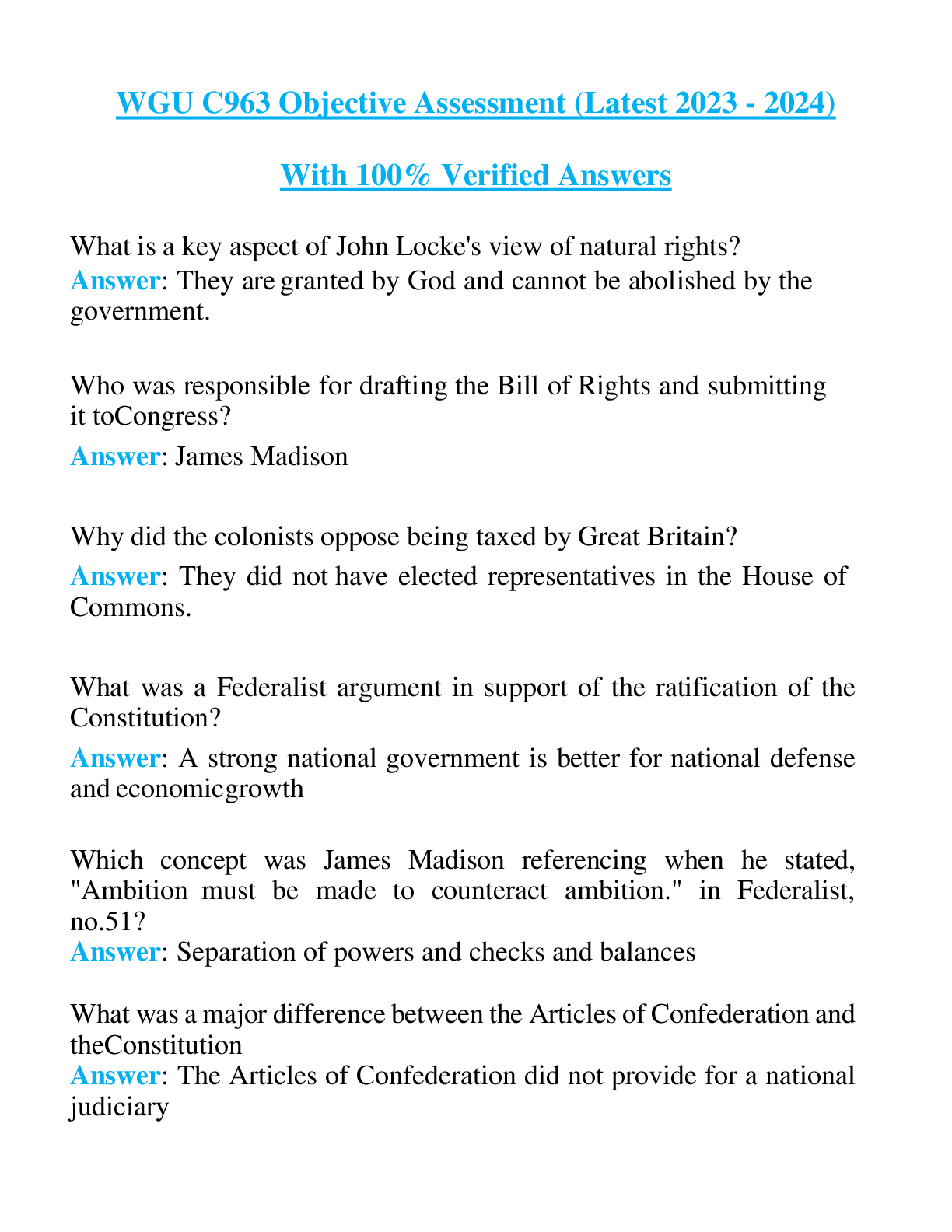
WGU C963 Test | Contains 25 Questions & Answers
Document Content and Description Below
Last updated: 1 year ago
Preview 2 out of 6 pages
Instant download

Loading document previews ...
Buy this Document to get the Full Access Instantly
Provided by Students Who Aced it
We Verify Document Content to Gurantee Accuracy
Reviews( 0 )
Document information
Connected school, study & course
About the document
Uploaded On
Apr 23, 2024
Number of pages
6
Written in
All

Additional information
This document has been written for:
Uploaded
Apr 23, 2024
Downloads
0
Views
271
Topic Tags
Recommended For You
Get more on EXAM »
WGU C963 Pretest | Actual Questions and Answers 100% Correct
WGU C963 Learning Check and Quiz | Actual Questions and Answer...
[PN PHARM] ATI PN Pharmacology Proctored Exam 25 Versions | Co...

FTCE PROFESSIONAL EXAM | Contains 256 Questions And Answers |...


C963 WGU American Politics and the US Constitution | Contains...

WGU C963 American politics and US Constitution | 100% Correct...

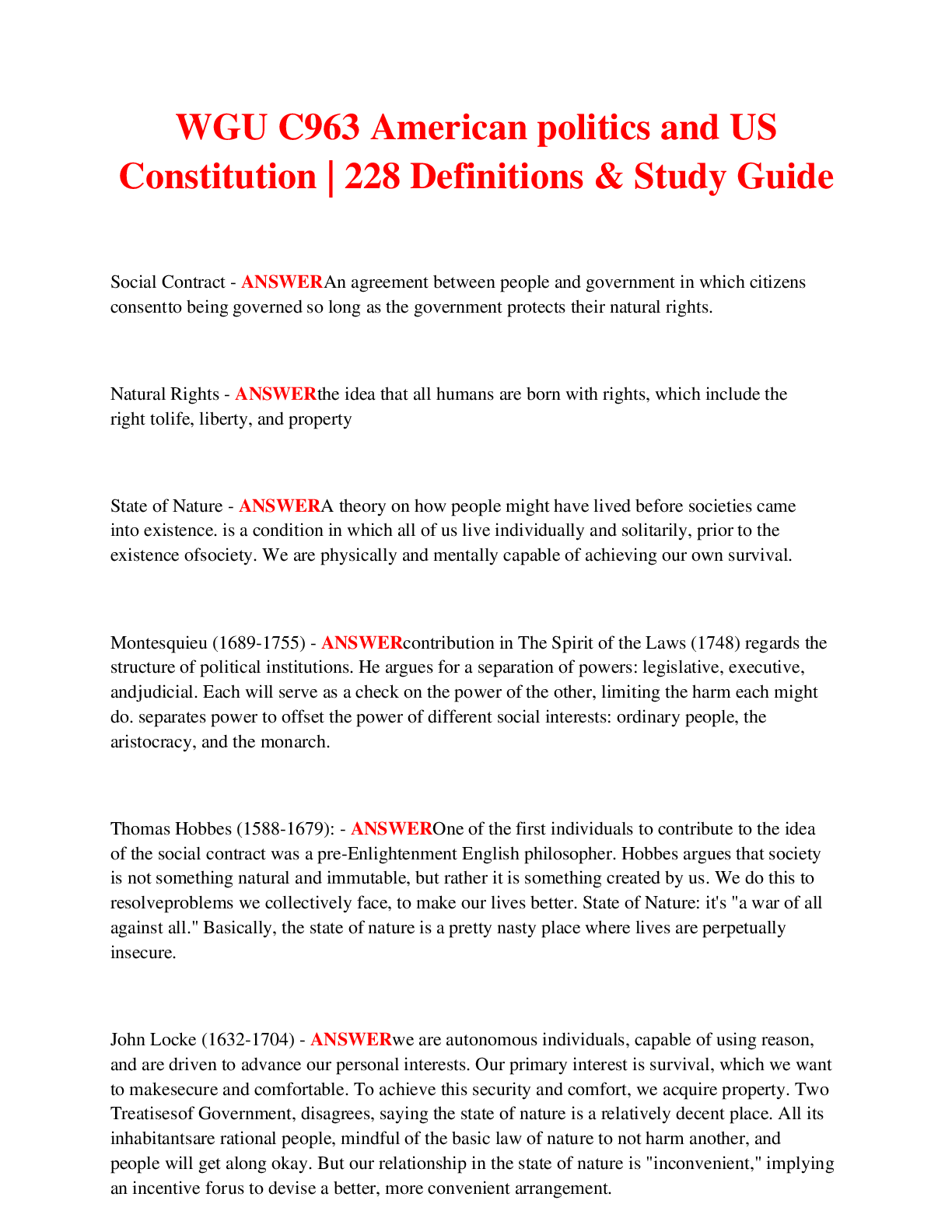
WGU C963 American politics and US Constitution | 228 Definitio...

WGU C963 |125 DEFINITIONS in American Politics and the US Cons...
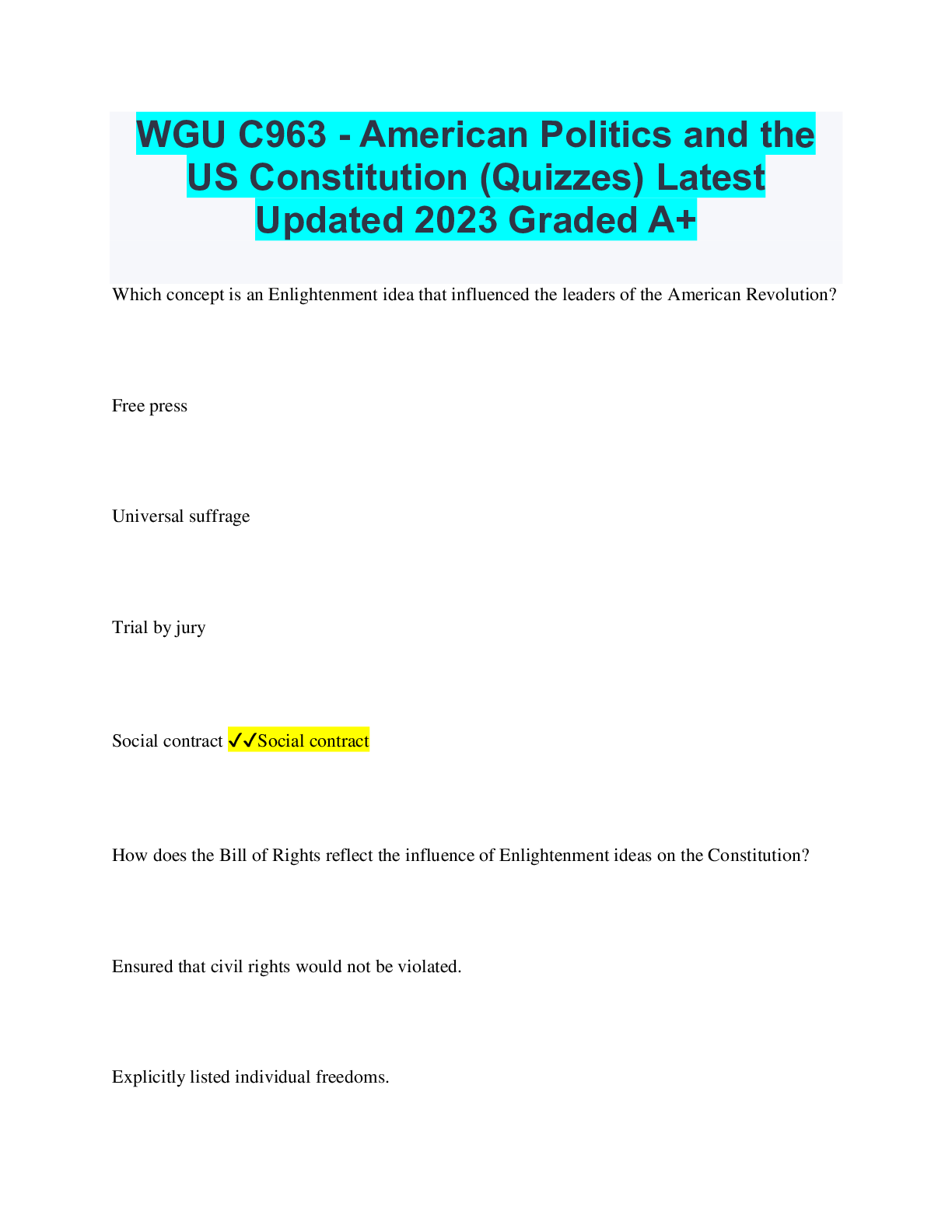
WGU C963 - American Politics and the US Constitution (Quizzes)
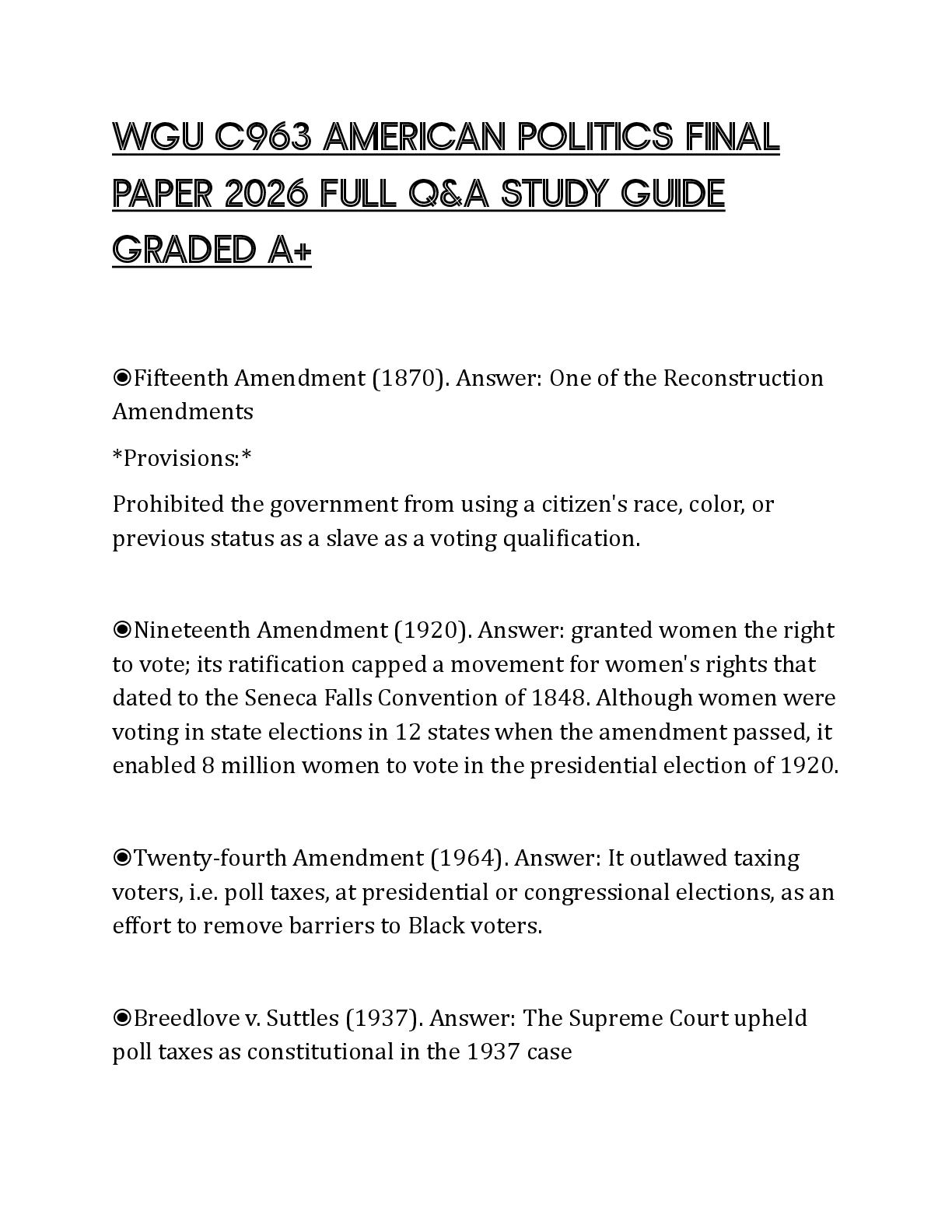
WGU C963 Objective Assessment Superset Study Guide 2025 – Comp...
We The People An introduction to American politics 10th Editio...

Analyzing Politics Rationality, Behavior, and Institutions, 2e...
 5e William Bianco David Canon.png)