Medicine  >  EXAM  >  Hematological & Immunological Problems Exam - Questions and Answers (All)

Hematological & Immunological Problems Exam - Questions and Answers

Document Content and Description Below

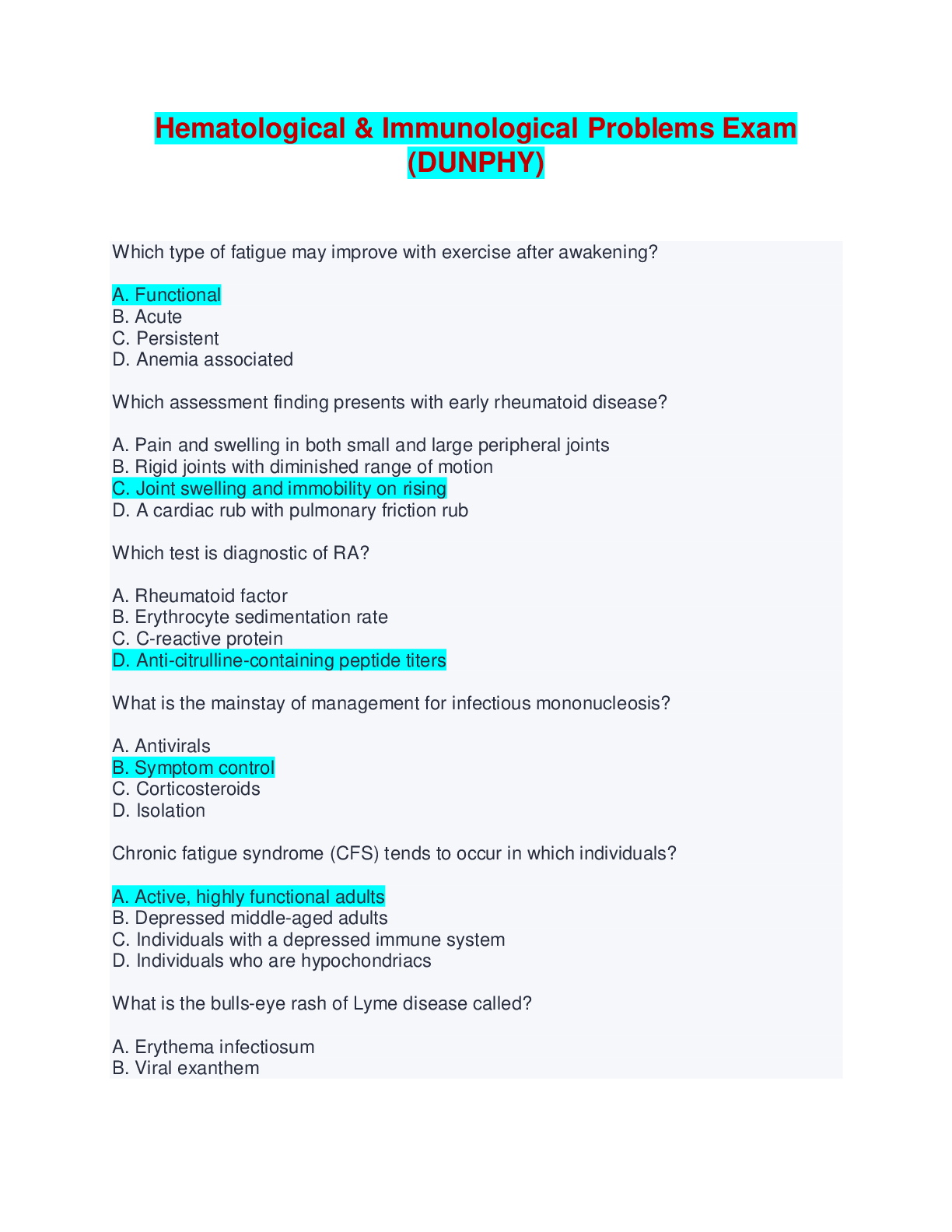
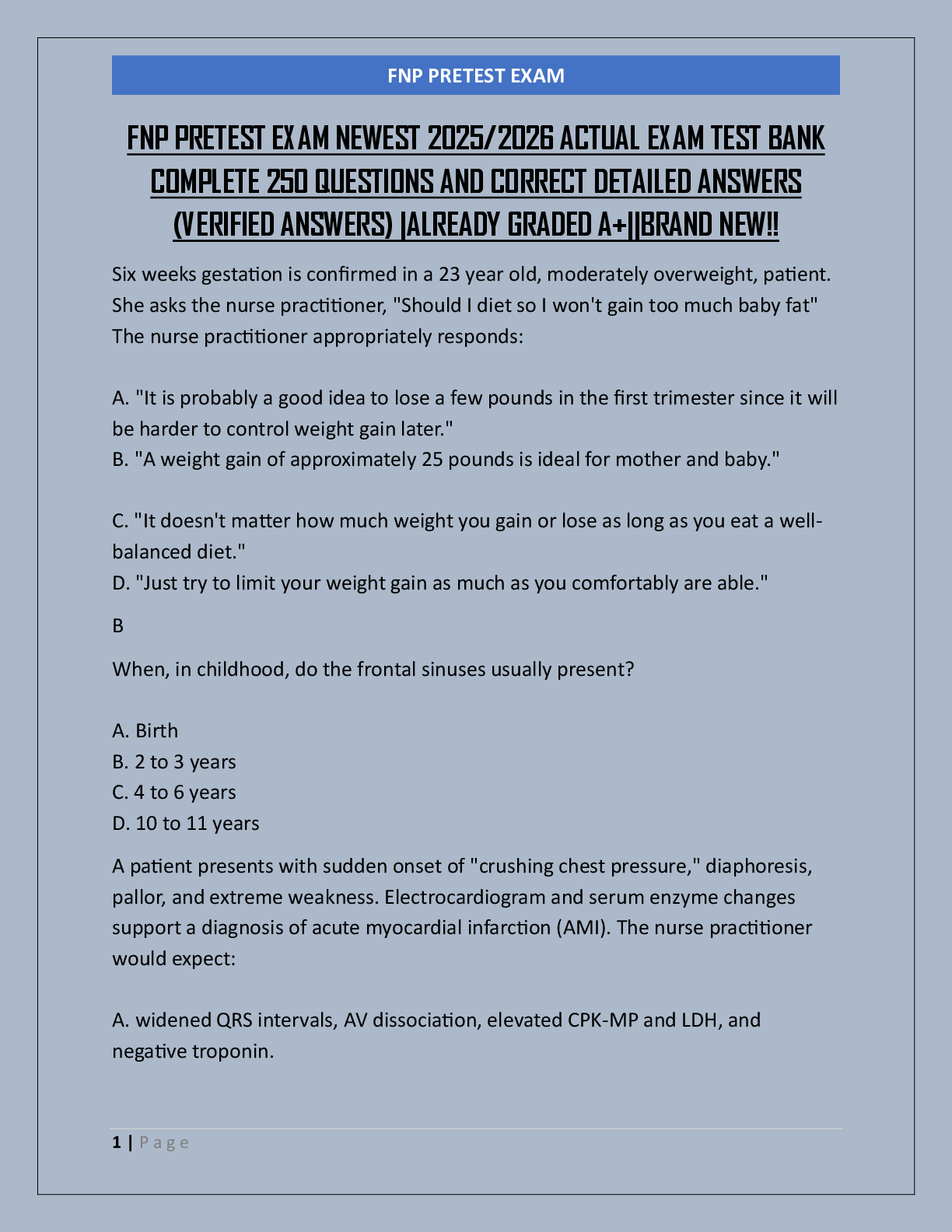
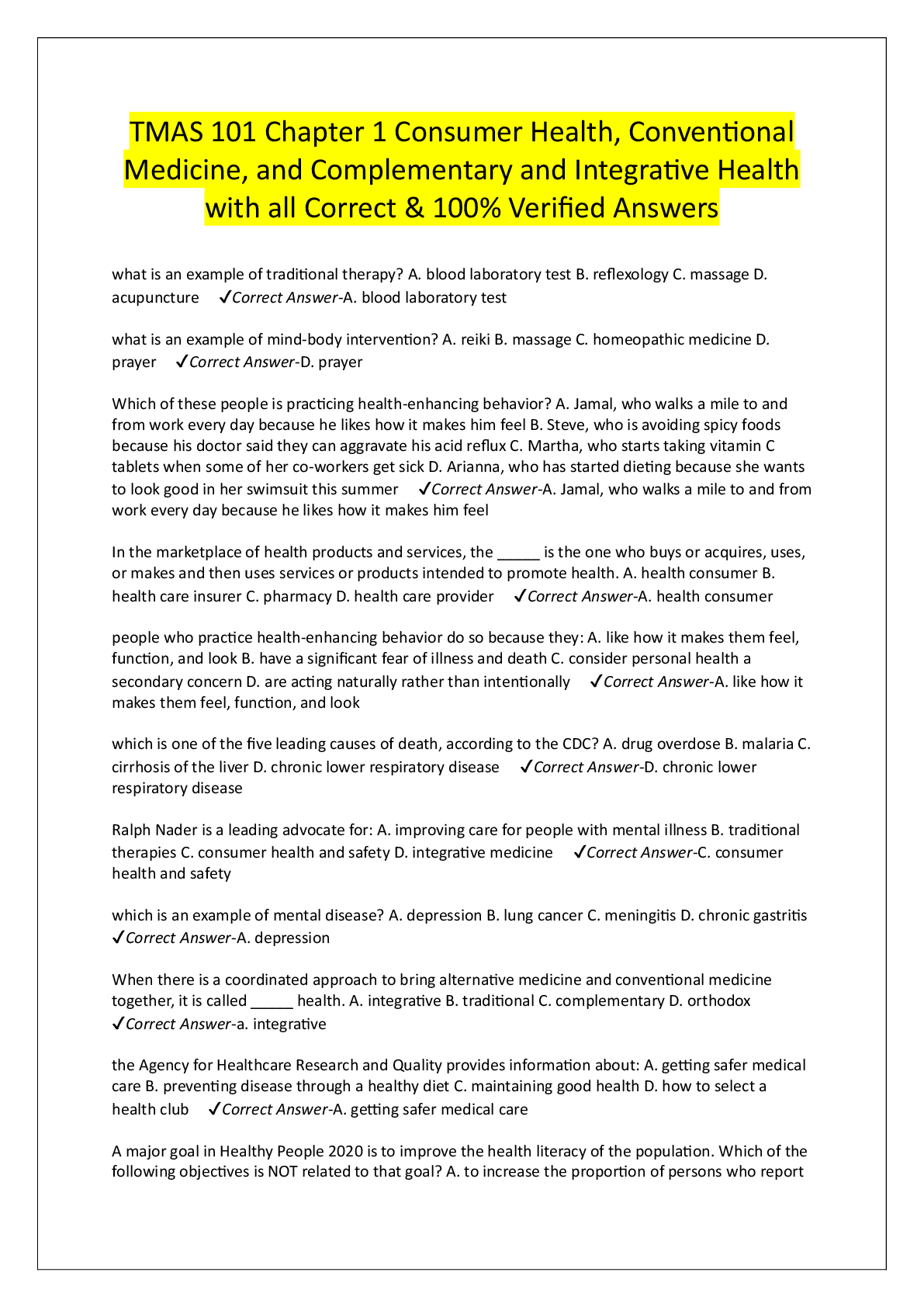
Hematological & Immunological Problems Exam - Questions and Answers Which type of fatigue may improve with exercise after awakening? A. Functional B. Acute C. Persistent D. Anemia associated Which a ... ssessment finding presents with early rheumatoid disease? A. Pain and swelling in both small and large peripheral joints B. Rigid joints with diminished range of motion C. Joint swelling and immobility on rising D. A cardiac rub with pulmonary friction rub Which test is diagnostic of RA? A. Rheumatoid factor B. Erythrocyte sedimentation rate C. C-reactive protein D. Anti-citrulline-containing peptide titers What is the mainstay of management for infectious mononucleosis? A. Antivirals B. Symptom control C. Corticosteroids D. Isolation Chronic fatigue syndrome (CFS) tends to occur in which individuals? A. Active, highly functional adults B. Depressed middle-aged adults C. Individuals with a depressed immune system D. Individuals who are hypochondriacs What is the bulls-eye rash of Lyme disease called? A. Erythema infectiosum B. Viral exanthem C. Erythema migrans D. Morbilliform exanthem Which condition if left untreated will progress to complaints that include multiple joint arthritis? A. Sjögren's syndrome B. HIV/AIDS C. Guillain-Barré D. Lyme disease Keratoconjunctivitis sicca is a classic sign of which condition? A. Systemic lupus erythematosus B. Sjögren's syndrome C. Fibromyalgia syndrome D. Lyme disease Which person is four times more likely to develop systemic lupus erythematosus (SLE) than a Caucasian? A. One of African descent B. An Asian C. A Hispanic D. One from the Middle East The older adult patient has an infection. The clinician should assess for which clinical manifestation? A. Fever B. Dementia C. Confusion D. Ecchymosis Which aspect should the clinician consider when trying to determine the cause of lymphadenopathy? A. Prothrombin time B. Marital status C. Patient's age D. Blunt trauma The patient has a fever of 104.2°F (40.1°C). Which condition should the clinician be considering as the etiology of the fever? A. Urinary tract infection B. Infectious hepatitis C. Tuberculosis D. Pancreatitis Which type of hypersensitivity reaction should the clinician suspect in a patient who has an elevated IgE level? [Show More]

Last updated: 1 year ago

Preview 1 out of 9 pages

Buy Now

Instant download

We Accept:

Payment methods accepted on Scholarfriends (We Accept)
Preview image of Hematological & Immunological Problems Exam - Questions and Answers document

Buy this document to get the full access instantly

Instant Download Access after purchase

Buy Now

Instant download

We Accept:

Payment methods accepted on Scholarfriends (We Accept)

Reviews( 0 )

$14.00

Buy Now

We Accept:

Payment methods accepted on Scholarfriends (We Accept)

Instant download

Can't find what you want? Try our AI powered Search

49
0

Document information


Connected school, study & course


About the document


Uploaded On

Mar 27, 2024

Number of pages

9

Written in

All

Seller


Profile illustration for Ajay25
Ajay25

Member since 5 years

133 Documents Sold

Reviews Received
25
4
1
0
4
Additional information

This document has been written for:

Uploaded

Mar 27, 2024

Downloads

 0

Views

 49

Recommended For You

Get more on EXAM »
$14.00
What is Scholarfriends

Scholarfriends.com Online Platform by Browsegrades Inc. 651N South Broad St, Middletown DE. United States.

We are here to help

We're available through e-mail, Twitter, Facebook, and live chat.
 FAQ
 Questions? Leave a message!

Follow us on
 Twitter

Copyright © Scholarfriends · High quality services·