2024 EMT JBL Medical Complete Questions & Answers (Solved) 100% Correct
Document Content and Description Below
1. A 50-year-old woman complains of a rash and itching to her trunk and armsthat began a day
aftershe started taking penicillin.Her breath sounds are clearto auscultation,she deniesshortness
of breath, her oxygen satur
...
[Show More]
Last updated: 2 years ago
Preview 1 out of 17 pages
Instant download

Buy this Document to get the Full Access Instantly
Provided by Students Who Aced it
We Verify Document Content to Gurantee Accuracy
Reviews( 0 )
Document information
Connected school, study & course
About the document
Uploaded On
Apr 15, 2024
Number of pages
17
Written in
All

Additional information
This document has been written for:
Uploaded
Apr 15, 2024
Downloads
0
Views
58
Topic Tags
Recommended For You
Get more on EXAM »
$12
33 Pages
2024 EMT JBL Medical Test Prep New Full Questions and Answers...

$12.5
47 Pages
NRNP 6635 FINAL EXAM QUESTIONS AND ANSWERS 2023! Rated A + Ans...
$12
6 Pages
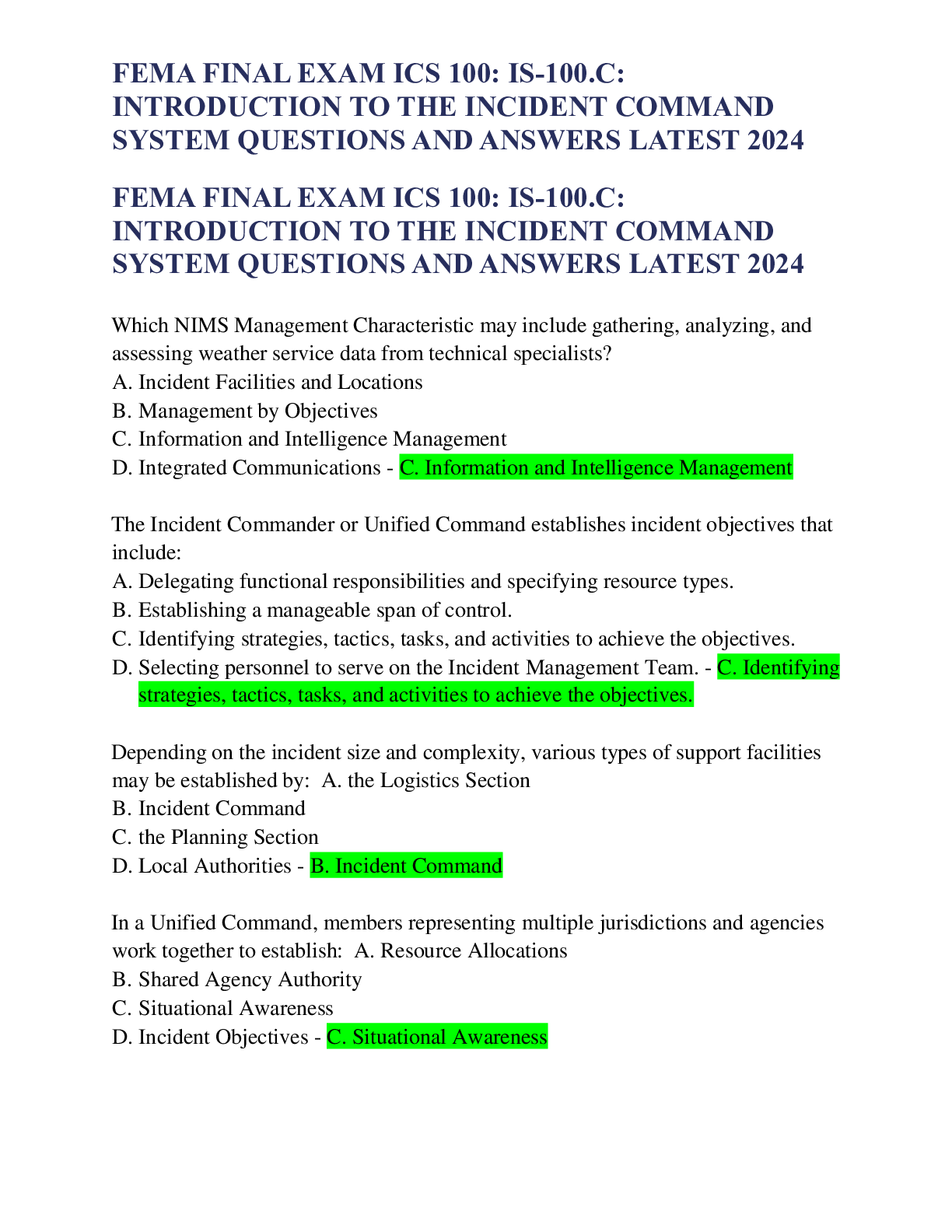
FEMA FINAL EXAM ICS 100: IS-100.C: INTRODUCTION TO THE INCIDEN...


$25
1116 Pages
[eBook] [PDF] Clinical Nursing Calculations 3rd Edition By S...
$10.5
3 Pages
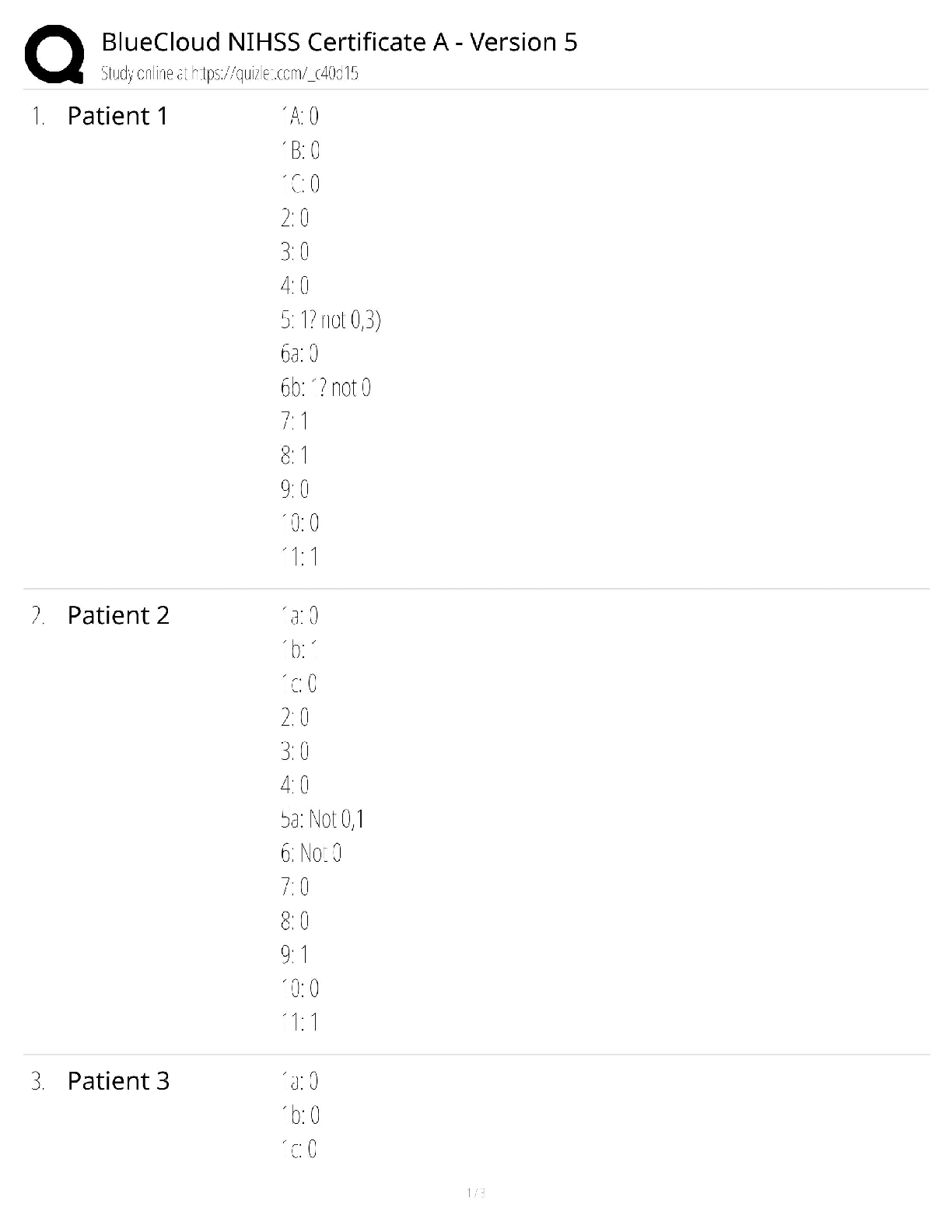
Blue Cloud NIHSS Certificate A (v5) Stroke Scale Certificatio...
More related documents below