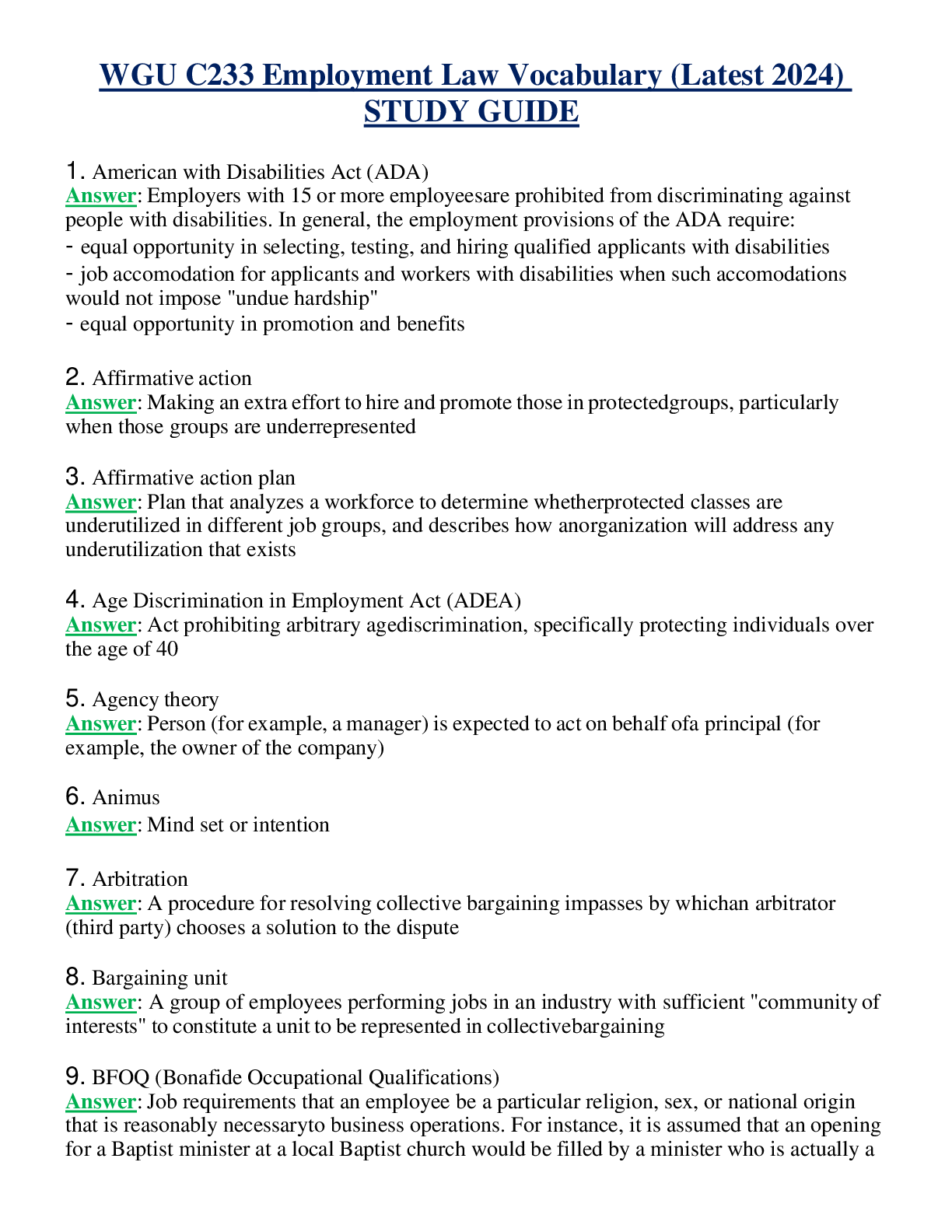
WGU C233 Employment Law Vocabulary (Latest 2024) STUDY GUIDE
Document Content and Description Below
1. American with Disabilities Act (ADA)
Answer: Employers with 15 or more employeesare prohibited from discriminating against
people with disabilities. In general, the employment provisions of the ADA require:
- equa
...
[Show More]
Last updated: 2 years ago
Preview 1 out of 9 pages
Instant download
Buy this Document to get the Full Access Instantly
Provided by Students Who Aced it
We Verify Document Content to Gurantee Accuracy
Reviews( 0 )
Document information
Connected school, study & course
About the document
Uploaded On
Apr 23, 2024
Number of pages
9
Written in
All

Additional information
This document has been written for:
Uploaded
Apr 23, 2024
Downloads
0
Views
86
Topic Tags
Recommended For You
Get more on EXAM »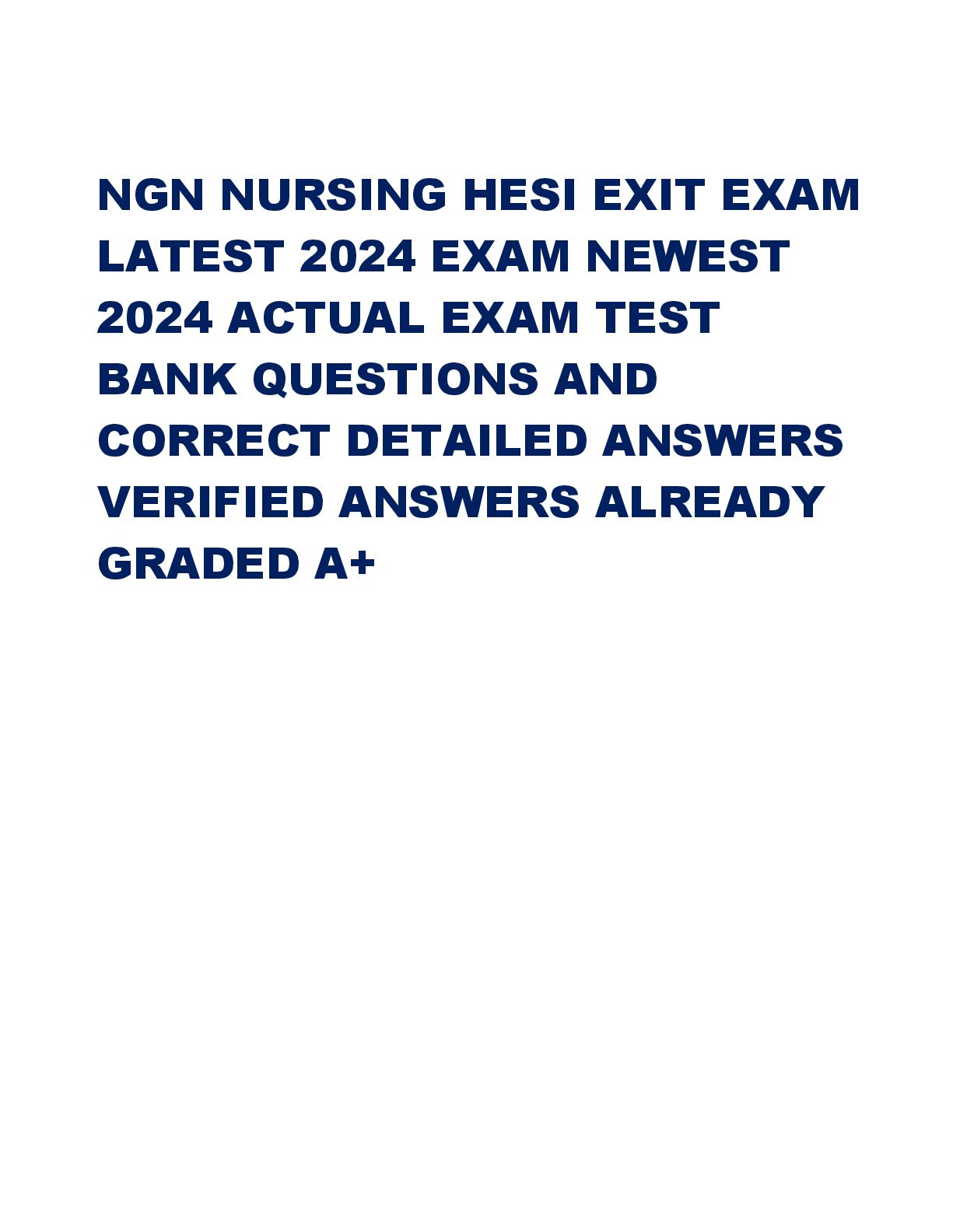
$18.5
34 Pages
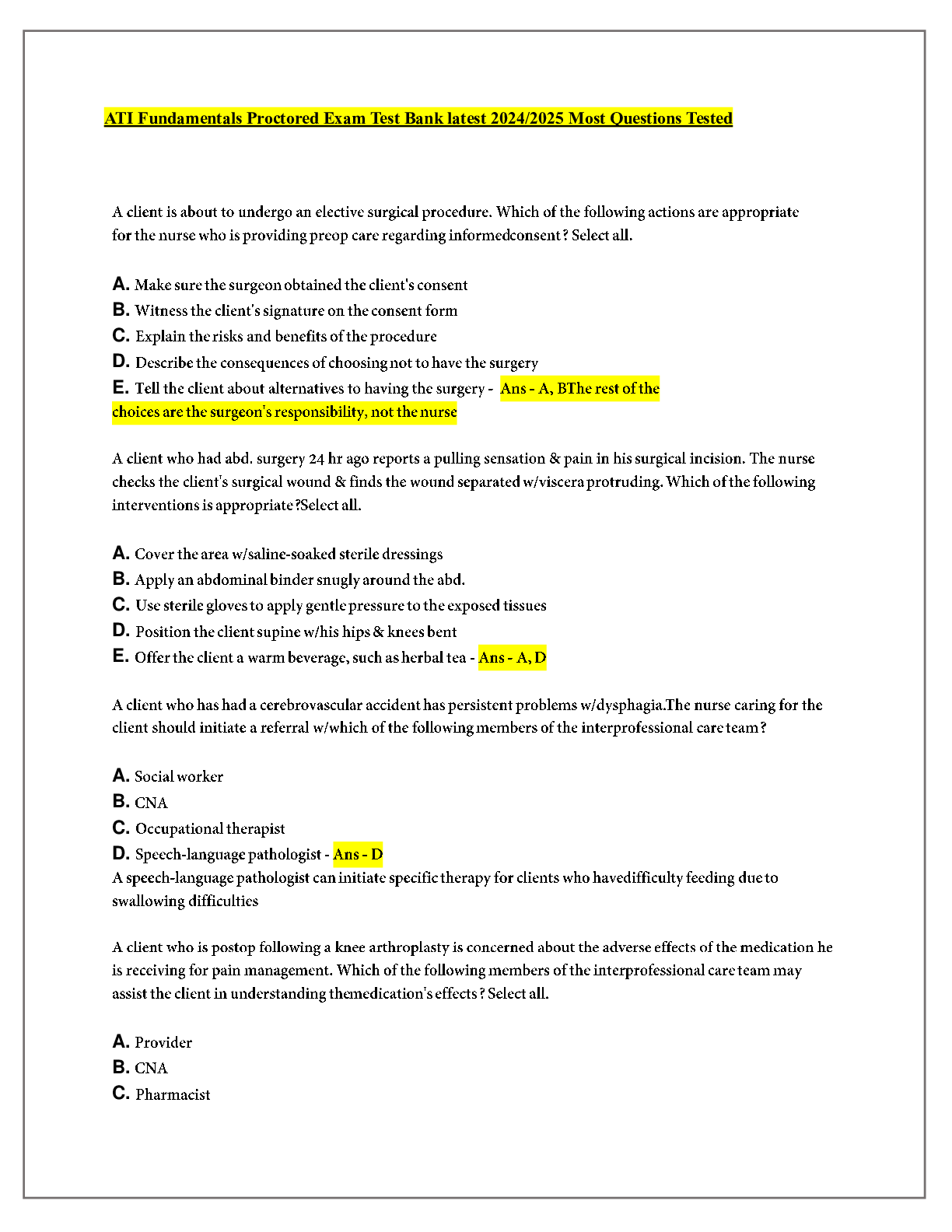
ATI Fundamentals Proctored Exam Test Bank latest 2024/2025 Mos...
$19.5
28 Pages
RCFE TEST PREPARATION CALIFORNIA EXAM LATEST 2024 TEST BANK A...
$7.5
9 Pages
PALS Red Cross Final Exam;Latest 2024 /Questions & Answers/Gra...


$18.5
79 Pages
ATI RN Fundamentals Proctored EXAM LATEST 2024/2025 ACTUAL 150...

$20
20 Pages
HESI A2: Exam2(Study Mode) Questions and Answers latest 2024/2...
$7.5
19 Pages
NR325 / NR-325 Exam 1 (Latest 2024 / 2025): Adult Health II Fu...

$20
69 Pages
NGN NURSING HESI EXIT EXAM LATEST 2024 EXAM NEWEST 2024 ACTUAL...



More related documents below