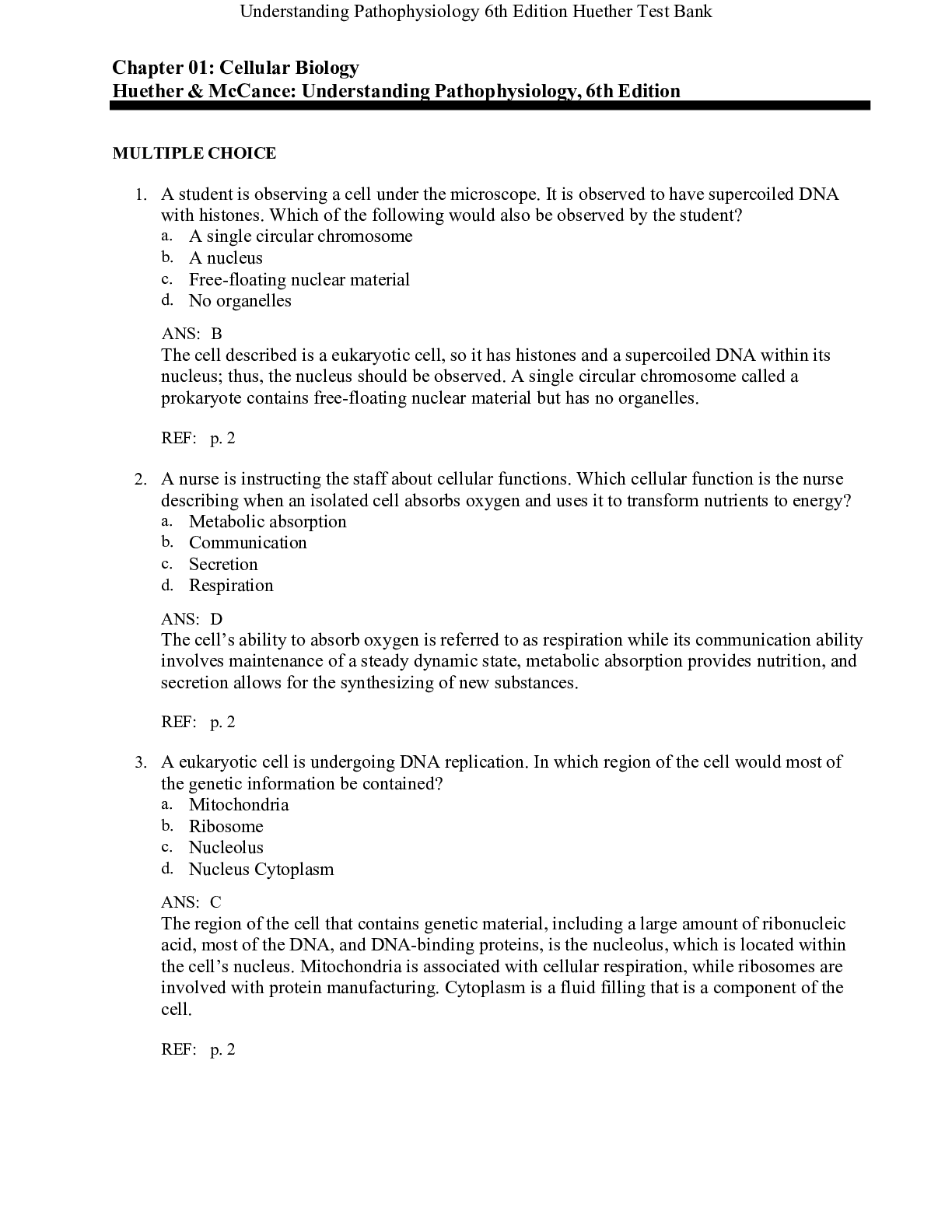
Psychology > TEST BANKS > TEST BANK FOR COGNITION EXPLORING THE SCIENCE OF THE MIND, 5TH EDITION, DANIEL REISBERG (All)
TEST BANK FOR COGNITION EXPLORING THE SCIENCE OF THE MIND, 5TH EDITION, DANIEL REISBERG
Document Content and Description Below
Last updated: 2 years ago
Preview 4 out of 16 pages
Instant download

Loading document previews ...
Buy this Document to get the Full Access Instantly
Provided by Students Who Aced it
We Verify Document Content to Gurantee Accuracy
Reviews( 0 )
Document information
Connected school, study & course
About the document
Uploaded On
Jun 08, 2024
Number of pages
16
Written in
All

Additional information
This document has been written for:
Uploaded
Jun 08, 2024
Downloads
0
Views
143
Topic Tags
Recommended For You
Get more on TEST BANKS »
Cognitive Psychology Applying The Science of the Mind 3rd Edit...
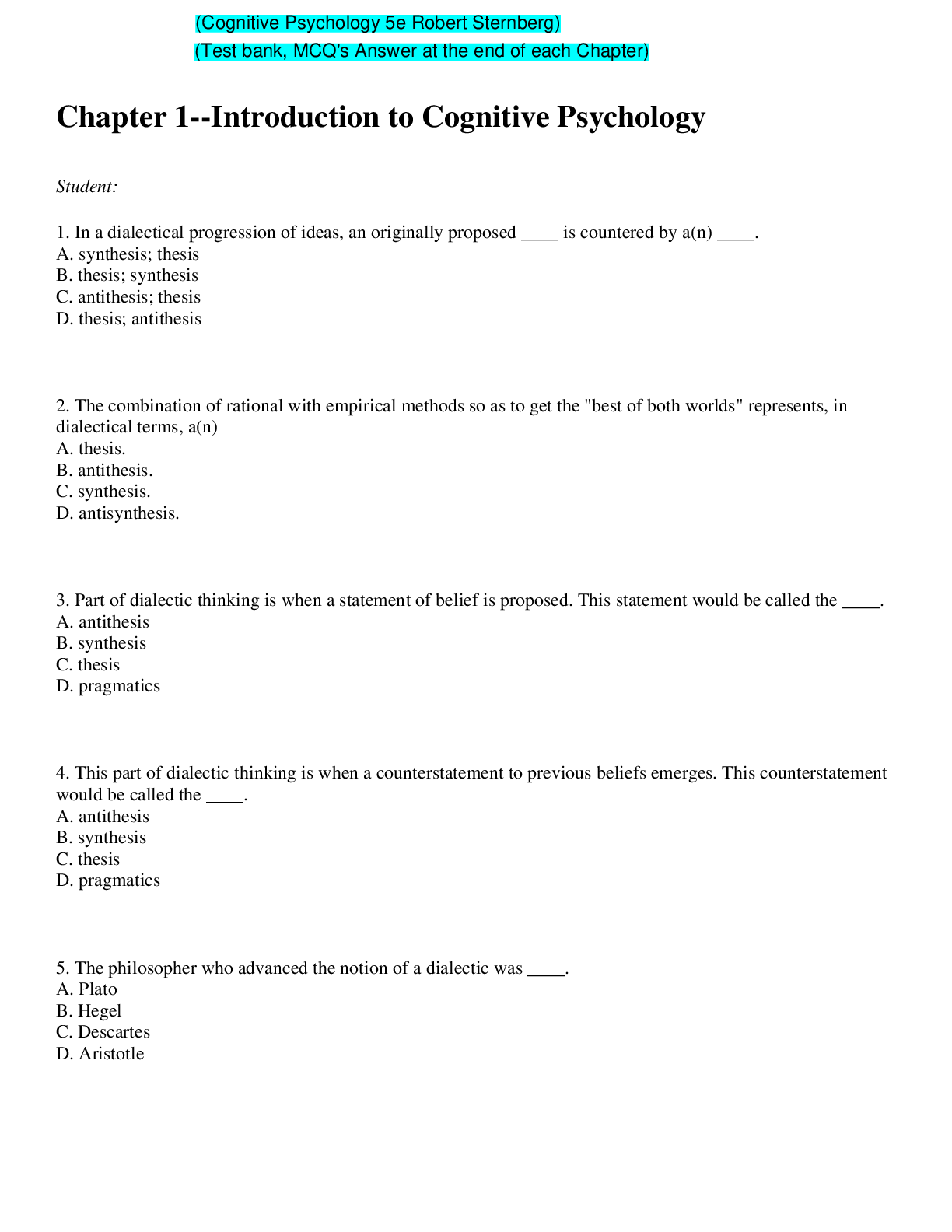
Cognitive Psychology 5th Edition by Robert Sternberg | Test Ba...
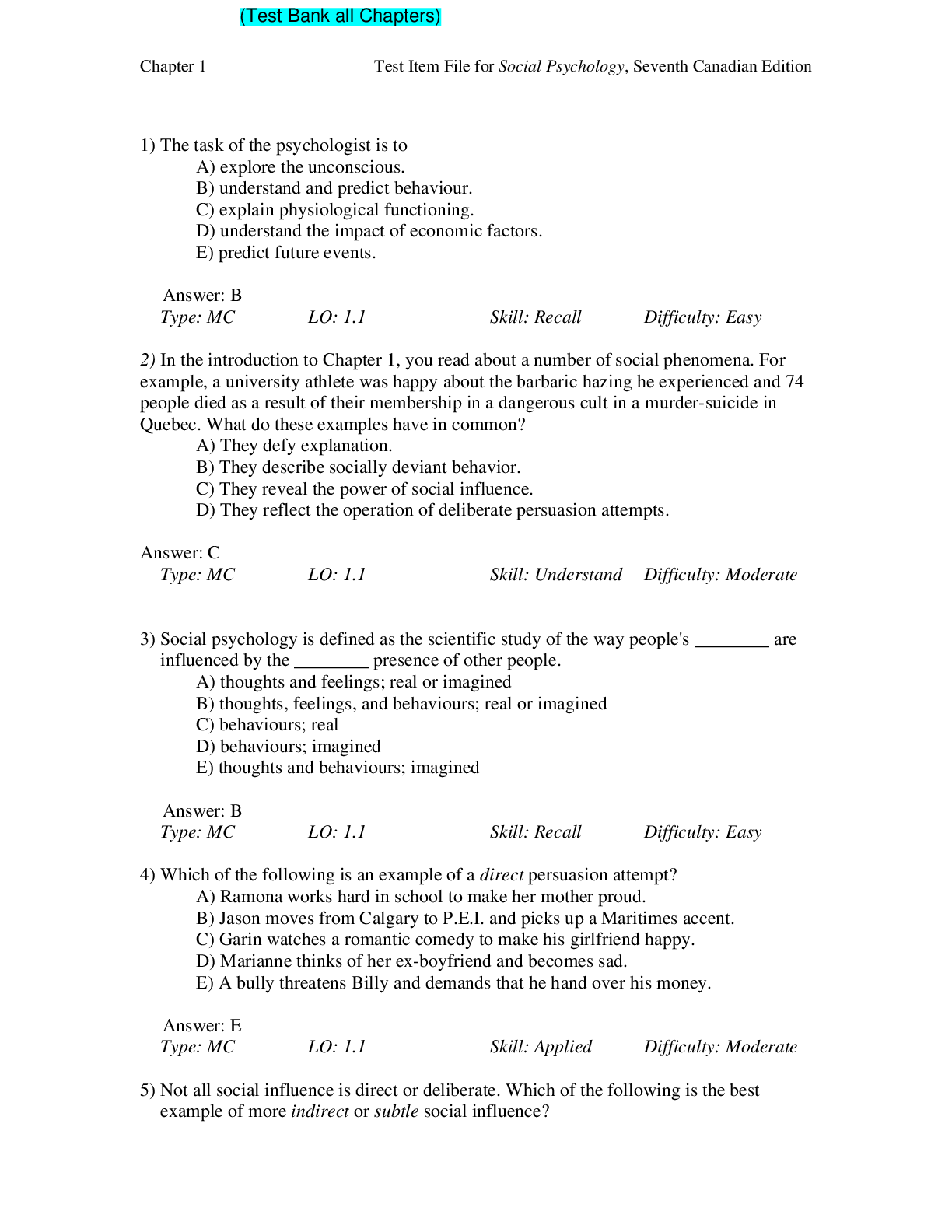
Social Psychology, Canadian Edition, 7th Canadian Edition, 7e...
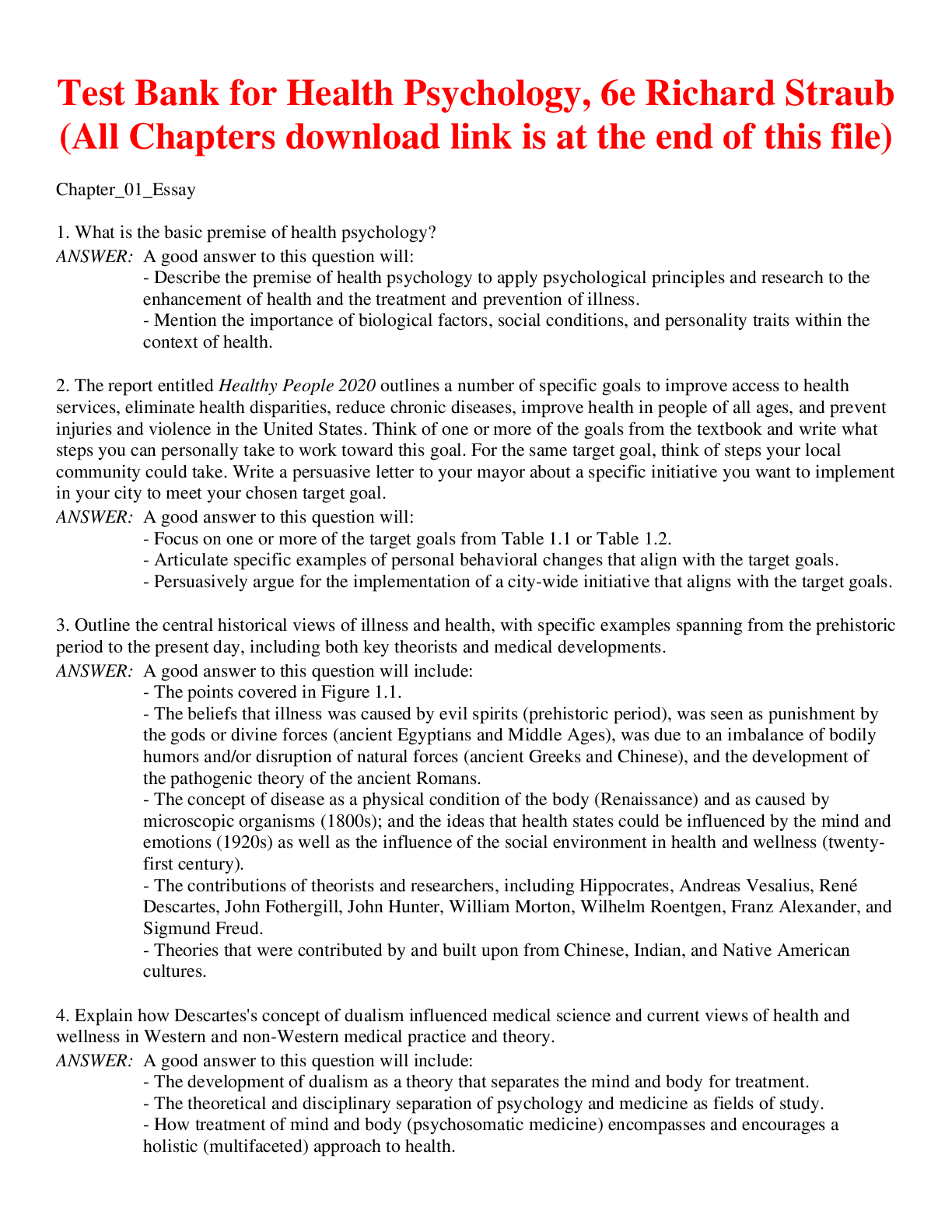
Health Psychology: A Biopsychosocial Approach 6th Edition by R...
Introduction to Psychology Gateways to Mind and Behavior with...
Introduction to Psychology v. 2.1 Charles Stangor (Test Bank)
Introduction to Political Psychology 3rd Edition By Martha Cot...
Psychology Around Us, 4th Canadian Edition 4th Edition By Nanc...
Test Bank for Health Psychology, 10th Edition by Shelley E. Ta...

Health Psychology An Introduction to Behavior and Health, 9e L...

Health Psychology 1st Canadian Edition 1e Edward Sarafino, Tim...


Exploring Psychology, 12e David Myers, Nathan DeWall (Test Ban...
TEST BANK for Essentials of Abnormal Psychology, 8th Edition D...
Educational Psychology Developing Learners, 10e Jeanne Ellis O...

Development Through Life A Psychosocial Approach, 13e Barbara...

Developmental Psychology, 1st European Edition 1e Patrick Lema...

Culture and Psychology, 6e David Matsumoto, Linda Juang (Test...
.png)