NUR 316 Exam 1 Question & Answers, Graded 100%
Document Content and Description Below
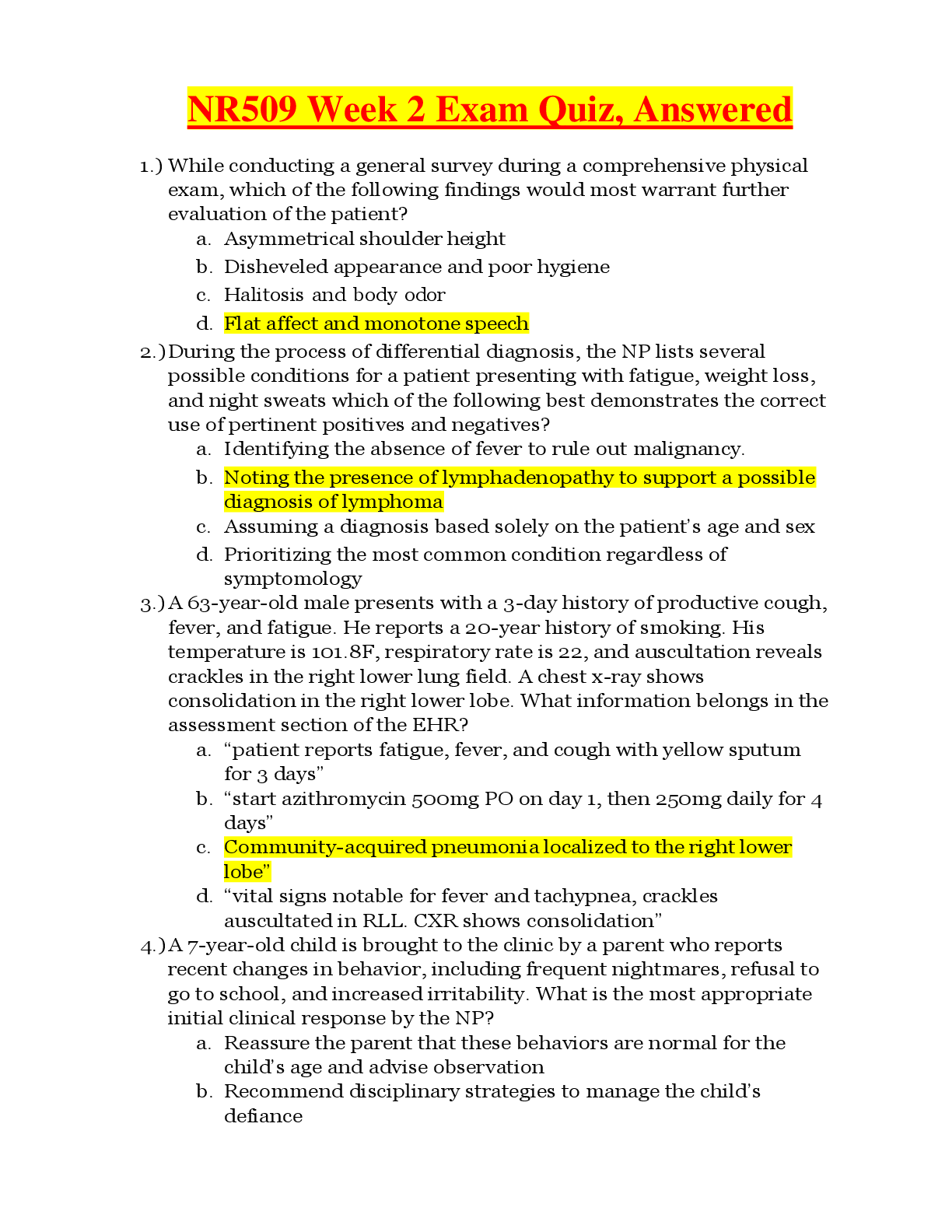
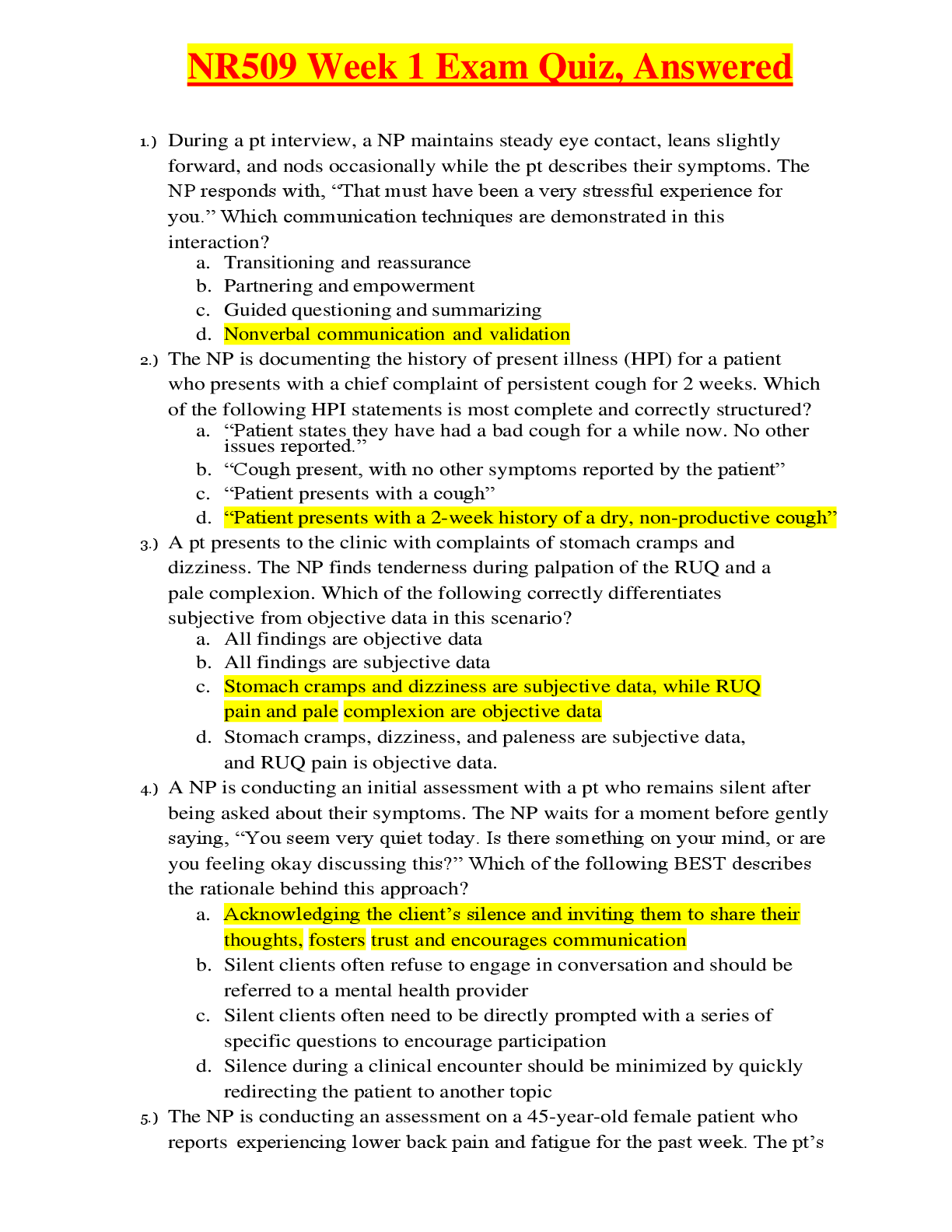
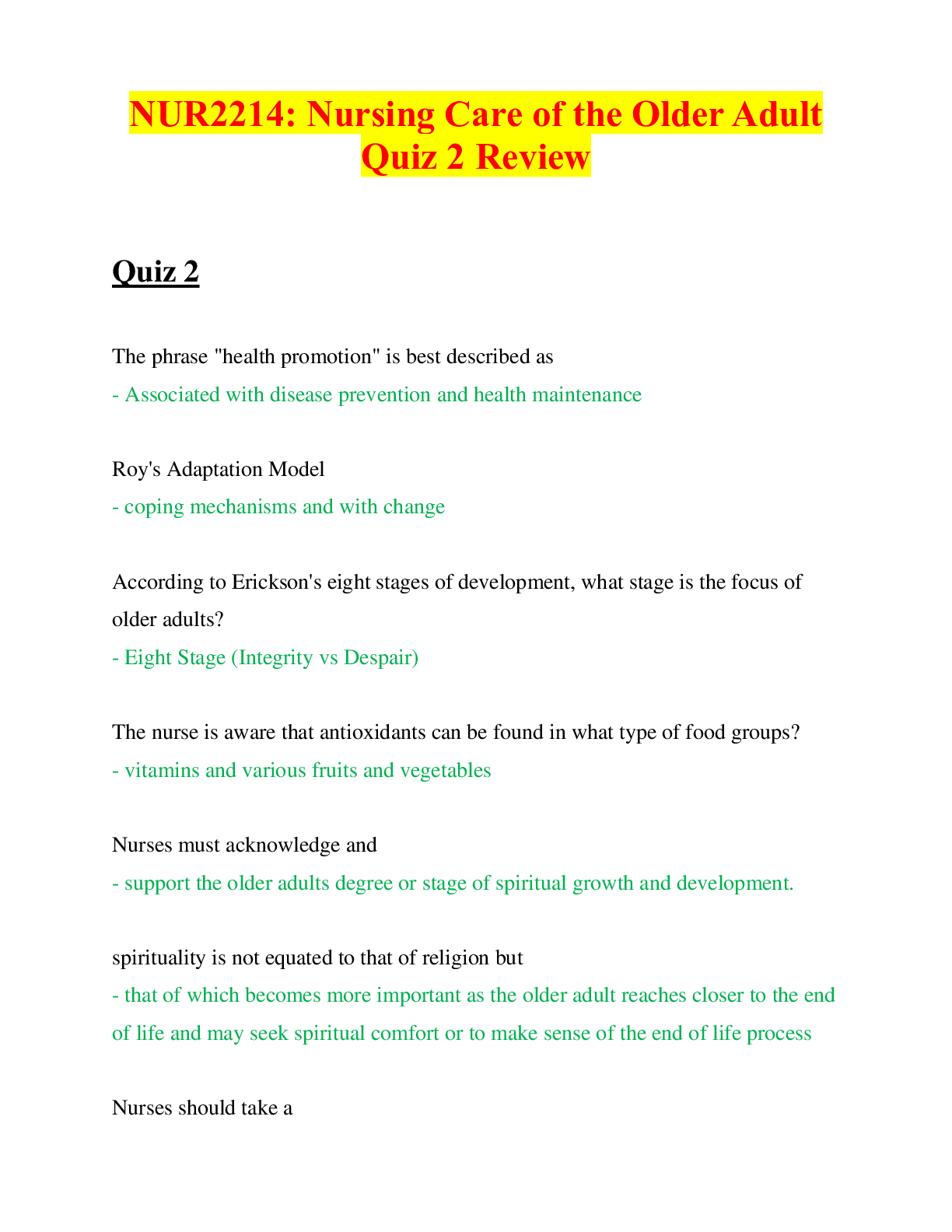
NUR 316 Exam 1 Question & Answers, Graded 100%-After assessing a patient, a nurse develops a standard formal nursing diagnosis. What is the rationale for the nurse's actions?
A) To form a language that can be encoded on
...
[Show More]
Last updated: 2 years ago
Preview 5 out of 29 pages
Instant download

Loading document previews ...
Buy this Document to get the Full Access Instantly
Provided by Students Who Aced it
We Verify Document Content to Gurantee Accuracy
Reviews( 0 )
Document information
Connected school, study & course
About the document
Uploaded On
Jun 24, 2024
Number of pages
29
Written in
All

Additional information
This document has been written for:
Uploaded
Jun 24, 2024
Downloads
0
Views
74
Topic Tags
Recommended For You
Get more on EXAM »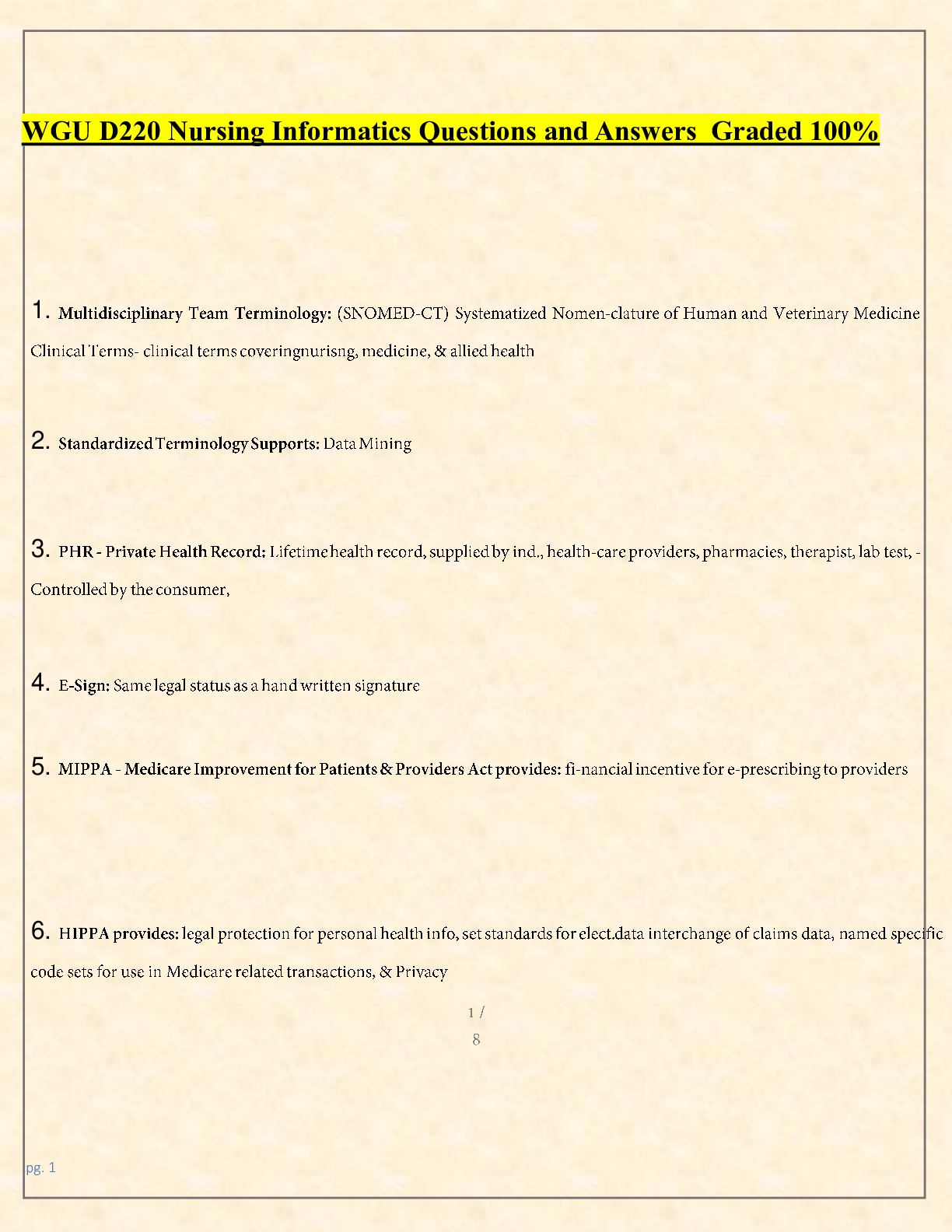
$10.5
24 Pages
WGU D220 Nursing Informatics Questions and Answers Graded 100...

$20
20 Pages
HESI A2: Exam2(Study Mode) Questions and Answers latest 2024/2...

$15
14 Pages
NRP 2022 exam/ NRP 7TH EDITION Parts 1 and 2 answered and grad...
$14.5
36 Pages
NURS 6630 psychopharmacology Midterm Exam - Walden University....
$14
17 Pages
NR 508 FINAL EXAM | A patient who has diabetes reports intense...
$10
293 Pages
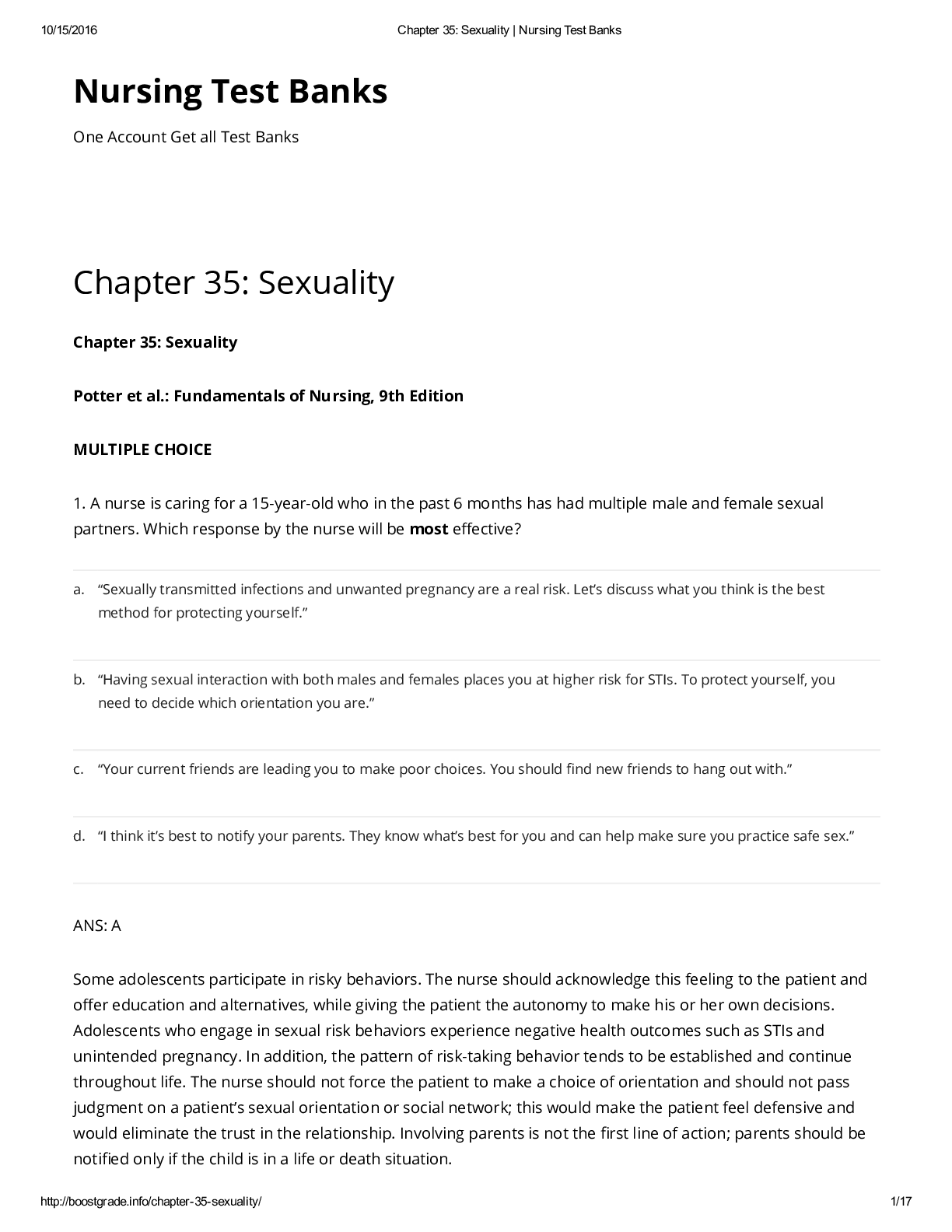
NUR 316 Practice Questions. Test Bank: Maternal-Newborn Nursin...

$16
252 Pages
NURSE 395-Pathophysiology Unit 2 6 test bank-graded 100%
$9.5
23 Pages
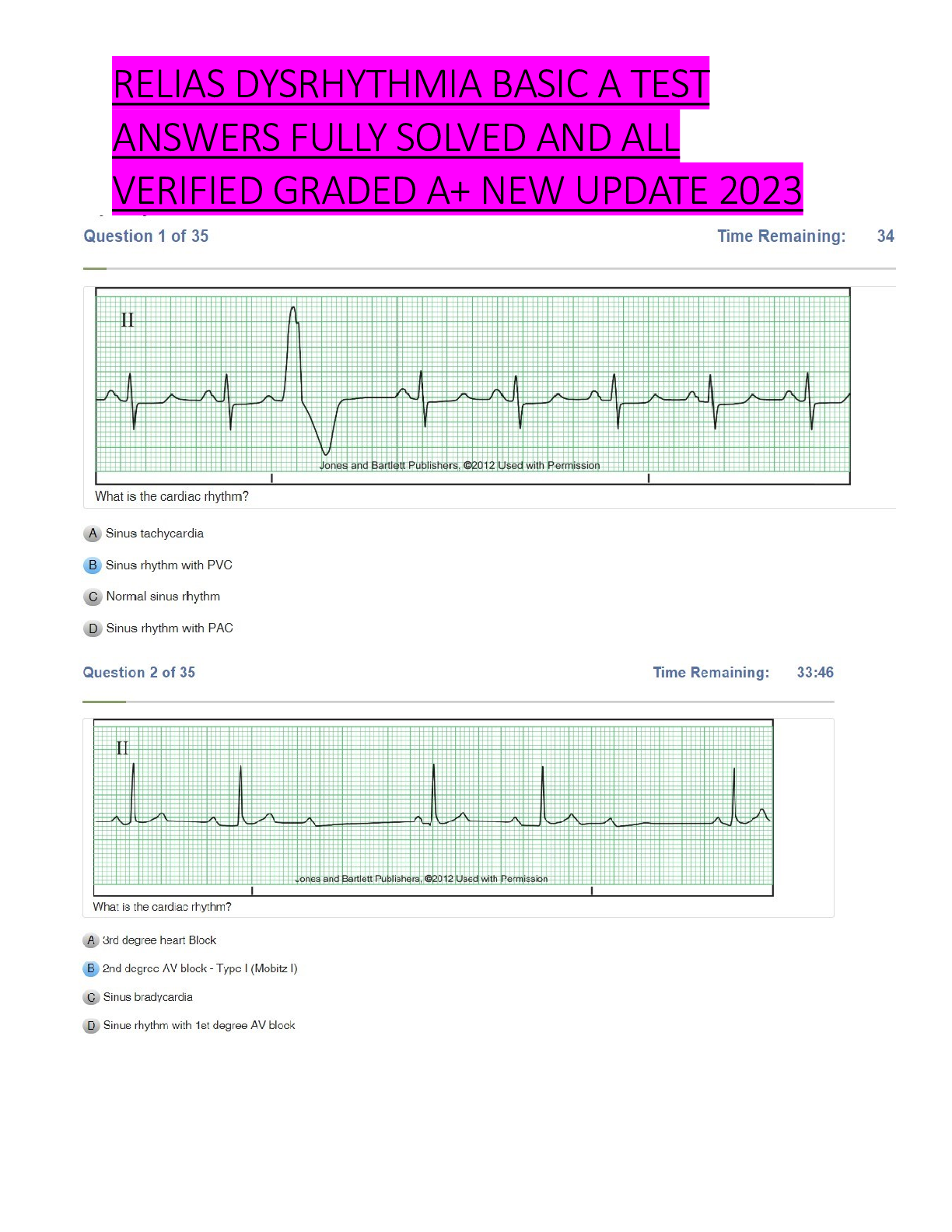
Relias Dysrhythmia Basic Test Answers 2023 Dysrhythmia – Basic...
$10
20 Pages
Relias Dysrhythmia Basic A_Test Answers ( A+ GRADED 100% VER...
$15
6 Pages
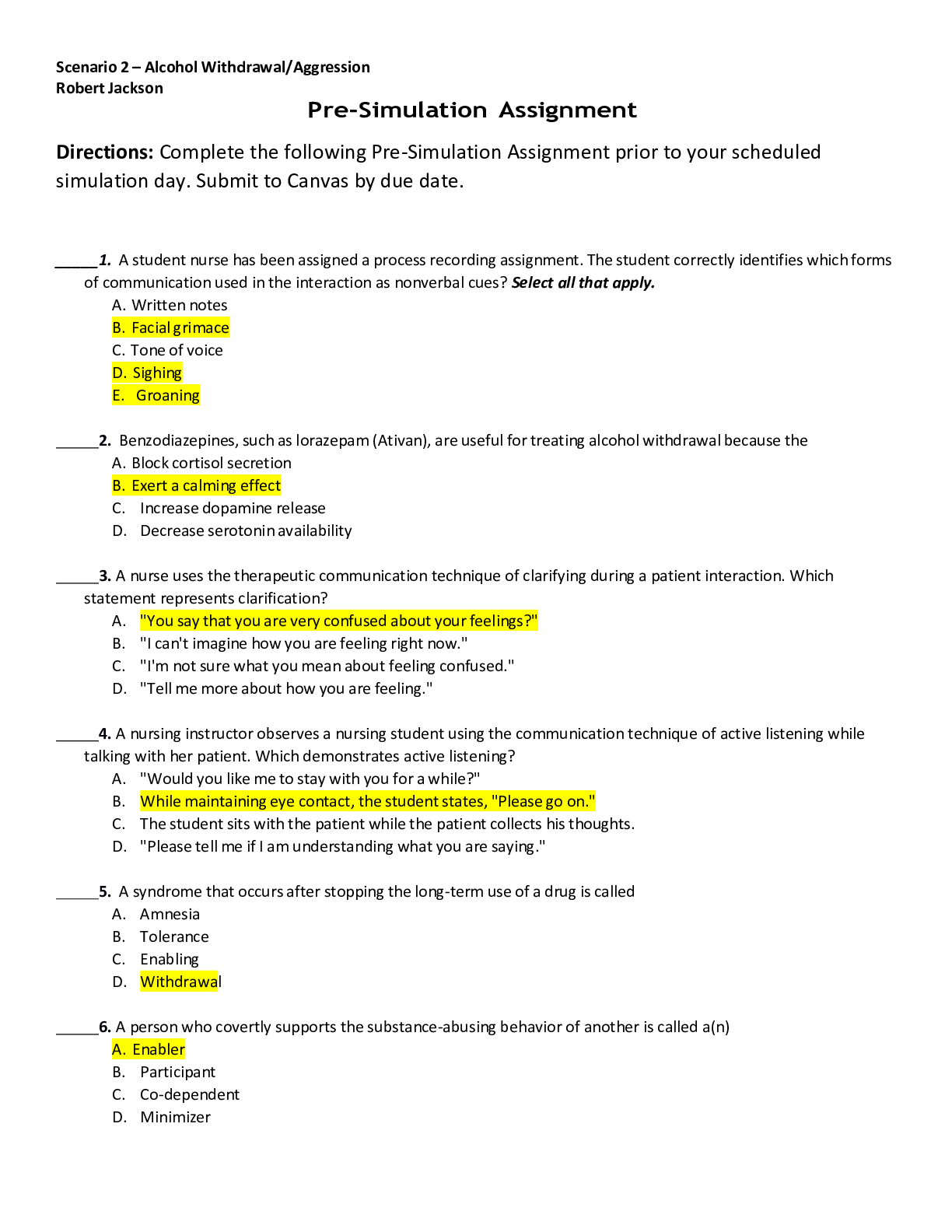
Scenario 2 – Alcohol Withdrawal/Aggression Robert Jackson Pre-...

More related documents below