EXSS 276 Final Exam | Verified with 100% Correct Answers The movement of substances from the nephron tubule back into the bloodstream is referred to as: nephron replacement. nephron recirculation. tubular reabsorption.
...
EXSS 276 Final Exam | Verified with 100% Correct Answers The movement of substances from the nephron tubule back into the bloodstream is referred to as: nephron replacement. nephron recirculation. tubular reabsorption. tubular secretion. The movement of substances from the bloodstream into the tubular nephron is referred to as: tubular reabsorption. tubular secretion. nephron replacement. nephron recirculation. The process by which plasma minus protein passes from the glomerulus into the tubular nephron is by: diffusion. osmsosis. filtration. endocytosis. Blood entering the kidney arrives at the glomeruli of each nephron through: cortical veins peritubular capillaries afferent arterioles vasa recta Arrange the following structures in the correct order: 1. Collecting duct 2. Loop of Henle 3. Distal convoluted tubule 4. Glomerulus 4, 2, 3, 1 4, 3, 1, 2 2, 3, 1, 4 1, 2, 4, 3 Glomerulus -> Loop of Henle -> Distal Convoluted Tubule -> Collecting Duct Water will move: -In the direction of lower osmotic pressure -In the direction of higher osmotic pressure -In the direction of a fluid with the same osmotic pressure -All of the answer choices are correct ADH acts on the _____ to regulate facultative water reabsorption. -proximal convoluted tubules -descending portions of the nephron loop -thick and thin segments of the ascending nephron loop -early and late distal convoluted tubules -late distal convoluted tubules and collecting ducts Which is the correct order of filtrate flow? -glomerular capsule, proximal convoluted tubule (PCT), nephron loop, distal convoluted tubule (DCT), collecting duct -nephron loop, glomerular capsule, PCT, DCT, collecting duct -ascending limb of loop, PCT, DCT, collecting duct -collecting duct, DCT, PCT, collecting duct, glomerular capsule -PCT, glomerular capsule, DCT, collecting duct, nephron loop Which structure of the nephron reabsorbs the most substances? glomerular capsule nephron loop ascending limb collecting duct proximal convoluted tubule Increased secretion of hydrogen ions would result in a(n) ______________ of blood ____________? increase, pressure decrease, volume increase, sodium levels decrease, pH increase, urea Choose the organ of the urinary system and corresponding function that are matched INCORRECTLY. -the kidneys regulate blood volume and composition -the ureters transport urine from the kidneys to the urinary bladder -the urinary bladder excretes waste in urine -the urethra discharges urine from the body Wastes or substances with no useful function in the body are excreted in urine. True False The kidneys produce two hormones, calcitriol and _____. erythropoietin testosterone calcitonin antidiuretic hormone Why are the kidneys said to be retroperitoneal? -they are posterior to the peritoneum -they are inferior to the pericardium -they are inferior to pleura -they function to reduce the amount of serous fluid Identify the three layers that surround the kidney from internal to external are: -renal capsule, adipose capsule, renal fascia -adipose capsule, renal fascia, renal capsule -renal fascia, renal capsule, adipose capsule -renal fascia, adipose capsule, renal capsule Renal pyramids occur in the _____ of the kidney. renal medulla renal cortex renal papilla renal pelvis A drop of blood entering a renal artery would pass through a segmental artery, interlobar artery, and ______ before reaching a corticol radiate artery. arcuate artery globerular artery peritubular capillaries peritubular vanules The two main parts of the nephron are the renal corpuscle and renal tubule. True False The renal tubule is composed of a glomerulus and a glomerular or Bowman's capsule. True False The juxtaglomerular apparatus consists partially of the: -Juxtaglomerular cells of an afferent arteriole -Renal hilum -Bowman's capsule Tubular reabsorption selectively removes material from the tubular fluid and returns to the blood while tubular secretion removes materials from the blood. True False If the urinary excretion rate of a drug such as penicillin is greater than the rate at which it is filtered at the glomerulus, how else is it getting into urine? -Through a damaged filtration membrane -Through tubular secretion -Through the action of aldosterone -All of these What is the major chemical difference between blood plasma and glomerular filtrate? -Blood plasma contains protein and normal filtrate does not. -Normal filtrate contains protein and blood plasma does not. -Normal filtrate contains albumin and sodium and blood plasma does not. -Normal filtrate contains potassium and blood plasma does not. There is much greater filtration through glomerular capillaries than through capillaries elsewhere in the body because the filtration membrane contains filtration slits between Bowman's capsules. True False Which of the following statements is incorrect? -Glomerular blood hydrostatic pressure (GBHP) is the blood pressure in glomerular capillaries -Capsular hydrostatic pressure (CHP) is the hydrostatic pressure exerted against the filtration membrane by fluid already in the capsular space and renal tubule. -Blood colloid osmotic pressure (BCOP) is due to proteins in blood plasma. -Net Filtration pressure (NFP) = GBHP + CHP - BCOP Glomerular filtration is regulated by renal autoregulation, neural regulation and hormonal regulation. True False Which of the following statements is incorrect? -In the proximal convoluted tubule, sodium ions are reabsorbed through the apical membrane by the Na+-glucose symporters and Na+/H+ antiporters. -In the loop of Henle, Na+-K+-2Cl-Symporters reclaim sodium, potassium and chloride from fluid in the tubule lumen. -In the distal convoluted tubule, sodium resorption is mainly by osmosis. -In the collecting duct, principle cells absorb sodium. Intercalated cells resorb potassium ions, bicarbonate ions and secrete hydrogen ions. True False In the process of forming concentrated urine, symporters in the loop of Henle cause sodium ions and chloride ions to build up in the renal medulla helping to form the osmotic gradient. ADH increases resorption of water by principal cells in the collecting ducts. True False Antidiuretic hormone increases the solute concentration of urine by causing less water to be resorbed. True False The counter current mechanism establishes an osmotic gradient in the interstitial fluid of the renal cortex allowing concentration of urine in the presence of aldosterone. True False Which of the following statements is incorrect regarding normal urine? -The color is normally yellow or amber -It is normally transparent -It has a mildly aromatic odor. -The pH is between 2 and 3. -The specific gravity is between 1.001 and 1.035. Chemical substances normally present in urine include: Electrolytes Urea Creatinine Uric acid All of these substances are normally present in urine. Which of the following would be useful in evaluating kidney function? Blood urea nitrogen Plasma creatine Renal plasma clearance All of these Which of the following statements is incorrect? -Plasma clearance rates vary because substances are resorbed and excreted in differing amounts. -Creatine clearance is a close estimate of glomerular filtration rate. -Renal plasma clearance of glucose is normally zero. -All of these statements are correct. Urine is moved from the renal pelvis to the urinary bladder by: Segmentation Gravity Peristalsis All of these Micturition involves: -Voluntary and involuntary muscle contractions -Micturition center in the sacral spinal cord -Relaxation of the internal urethral sphincter -All of these Which of the following statements is incorrect? -The urethra in females lies posterior to the pubic symphysis and is 4 cm long. -In females, the external urethral orifice is located between the clitoris and vaginal opening. -The male urethra has 3 parts, the prostatic urethra, the membranous urethra and the spongy urethra. -The male urethra is shorter than the female urethra. The liver contributes to waste management by detoxifying substances and the lungs participate by excreting carbon dioxide. True False What type of embryonic tissue develops into nephrons? Endoderm Ectoderm Mesoderm Pyoderm The ureteric bud gives rise to the collecting ducts, calyces, renal pelvis and ureter. True False Which of the following is incorrect regarding changes with age of kidney mass and filtration rate? -Glomeruli number decreases with age. -Kidney mass doubles between ages 20 and 60. -Renal blood flow and filtration rate decline by 50% between ages 40 and 70. -Kidney diseases increase with age. The kidney releases what hormones? Erythropoietin Calcitriol Renin What is reabsorption? Return of substances from the filtrate to the blood Which vessel DIRECTLY delivers blood into the glomerulus? Afferent arteriole The renal corpuscle includes the: glomerulus and bowman's capsule What happens in the proximal convoluted tubule? Reabsorption of water, glucose, buffers, etc. Which of the following digestive system structures is INCORRECTLY matched? mouth - gastrointestinal tract organ teeth - accessory organ gallbladder - accessory organ esophagus - gastrointestinal tract organ salivary glands - gastrointestinal tract organ The teeth, which aid in physical breakdown of food, are the only digestive tract accessory organs that come into direct contact with food. True False Which of the following do not undergo chemical digestion? large carbohydrate, vitamins, proteins nucleic acids, ions, cholesterol carbohydrates, protein nucleic acids vitamins, ions, cholesterol Where in the GI tract is skeletal (voluntary) muscle found? -mouth, pharynx, superior and middle part of esophagus, external sphincter -large and small intestine and stomach -mouth and large intestine -esophagus and small intestine Which of the following statements is incorrect? -The mucosa is a serous membrane involved in protection and absorption. -The submucosa contains lymphatic vessels and blood vessels involved in absorption. -The muscularis breaks down food and propels it along the digestive tract. Parasympathetic innervation increases GI tract secretion and motility while sympathetic innervation causes decrease in GI secretion and motility. True False Which of the following statements about gastrointestinal reflex pathways is correct? -They regulate GI secretion and motility in response to stimuli present in the lumen of the GI tract. -They involve sensory receptors and chemoreceptors whose axons synapse with neurons in the ENS, CNS, or ANS. -They involve neurons of the ENS, CNS or ANS and activate or inhibit GI glands and smooth muscle, altering GI secretion and motility. -All of these statements are correct. The parietal peritoneum lines the wall of the abdominopelvic cavity while the visceral peritoneum covers some organs in the cavity.
[Show More]


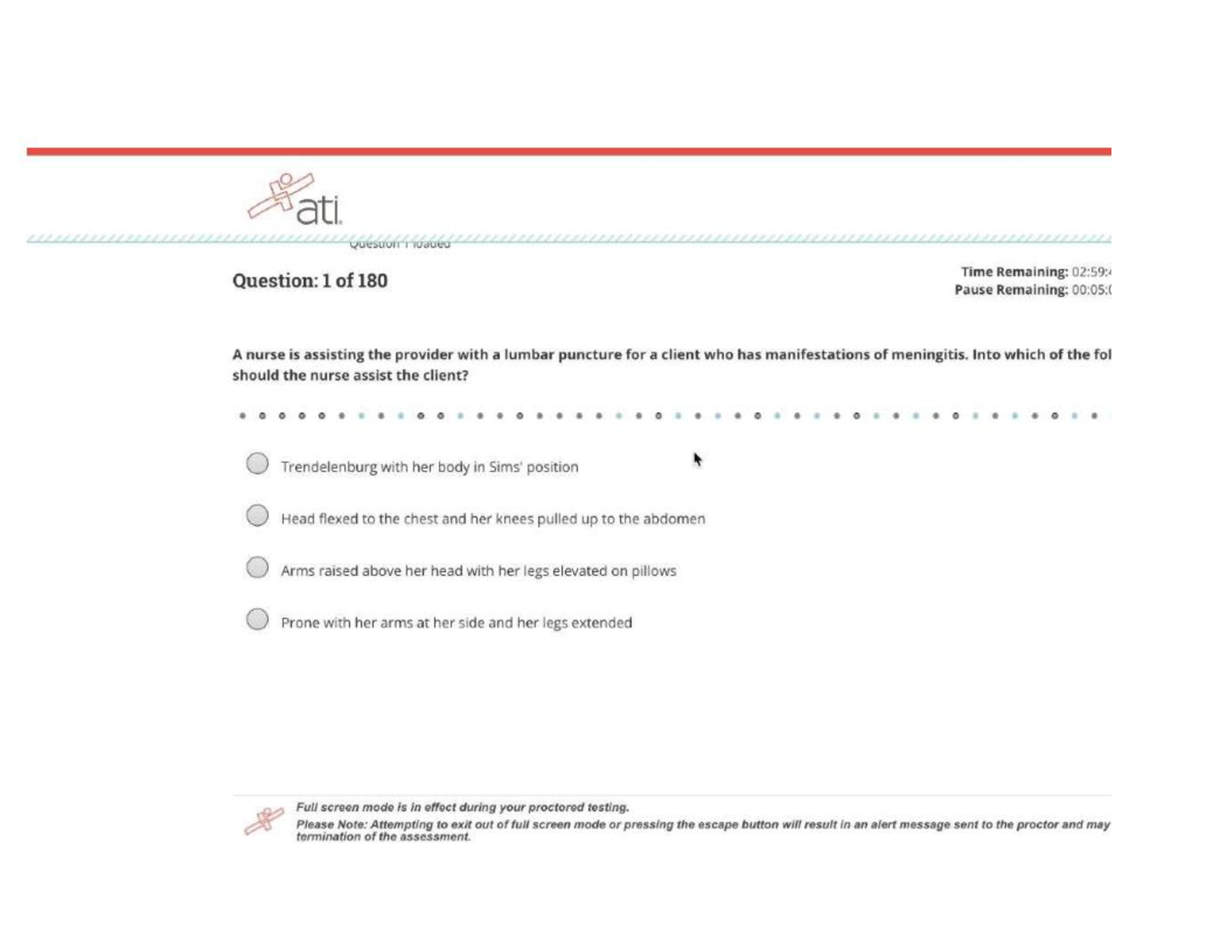
![Preview of FAMILY NURSE PRACTIONER [FNP] EXAM WITH 100 QUESTION AND CORRECT ANWERS 2026/2027 ALREADY](https://browseimages.nyc3.digitaloceanspaces.com/paper-images/2026/05/21/WlwTkQJt2026-05-21-12-186a0e253bce082.png)
![Preview of FAMILY NURSE PRACTIONER [FNP] EXAM WITH 100 QUESTION AND CORRECT ANWERS 2026/2027 ALREADY](https://browseimages.nyc3.digitaloceanspaces.com/paper-images/2026/05/21/jIiwUe5m2026-05-21-12-186a0e2531dac30.png)


![Preview of eBook [PDF] Pulmonary Physiology 10th Edition By Michael Levitzky](https://browseimages.nyc3.digitaloceanspaces.com/paper-images/2024/Aug/29/LO54yHZK2024-08-29-12-3666d0411aadcd5.png)
![Preview of eBook [PDF] Pulmonary Physiology 10th Edition By Michael Levitzky](https://browseimages.nyc3.digitaloceanspaces.com/paper-images/2025/Aug/24/0jEvYOIb2025-08-24-08-4368ab4f4be3b26.png)


![Preview of [eBook] [PDF] Psychology Contemporary Perspectives, 1st Edition By Paul Okami](https://scholarfriends.com/storage/eBook Psychology Contemporary Perspectives, 1e Paul Okami.png)