Pathology > LECTURE SLIDES/NOTES > General Pathology (All)
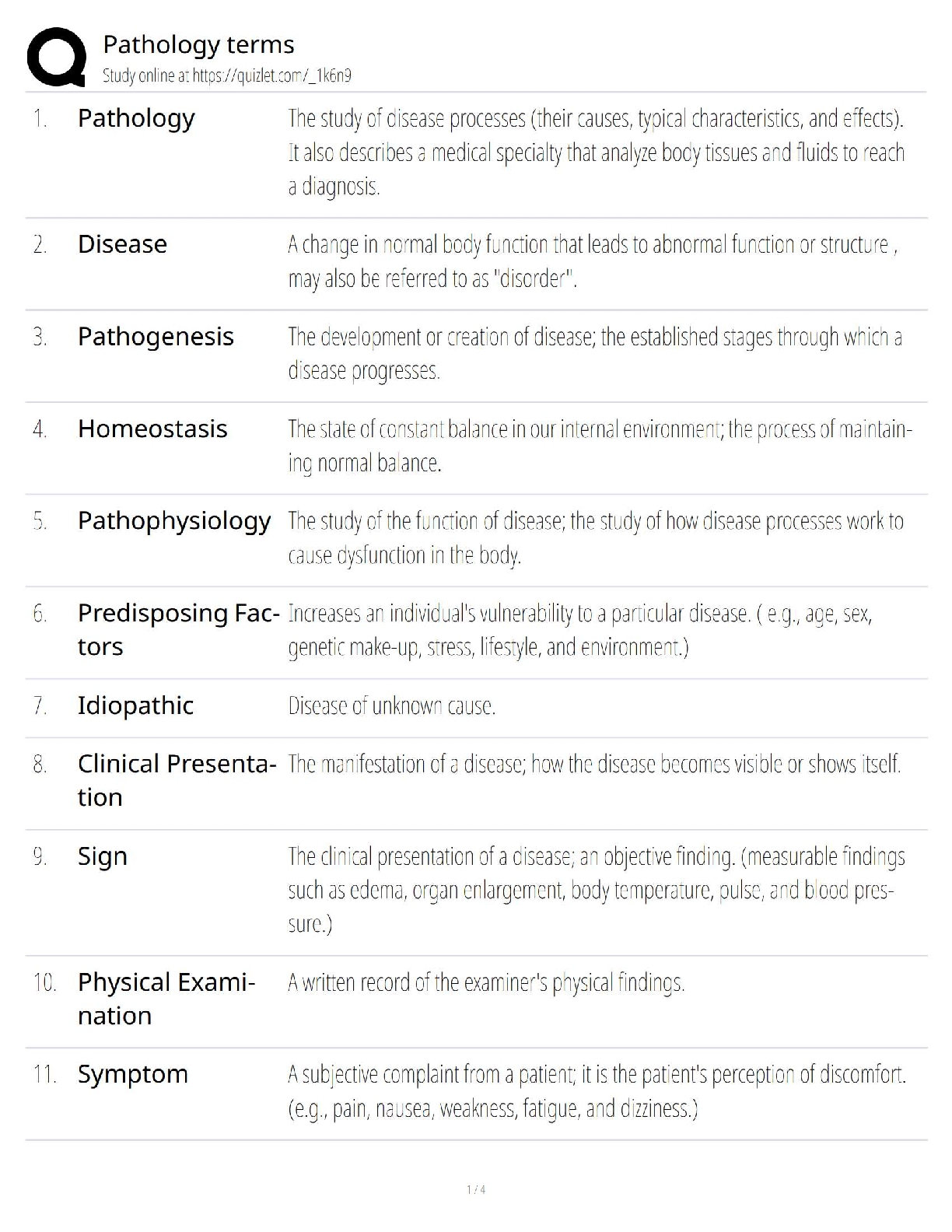
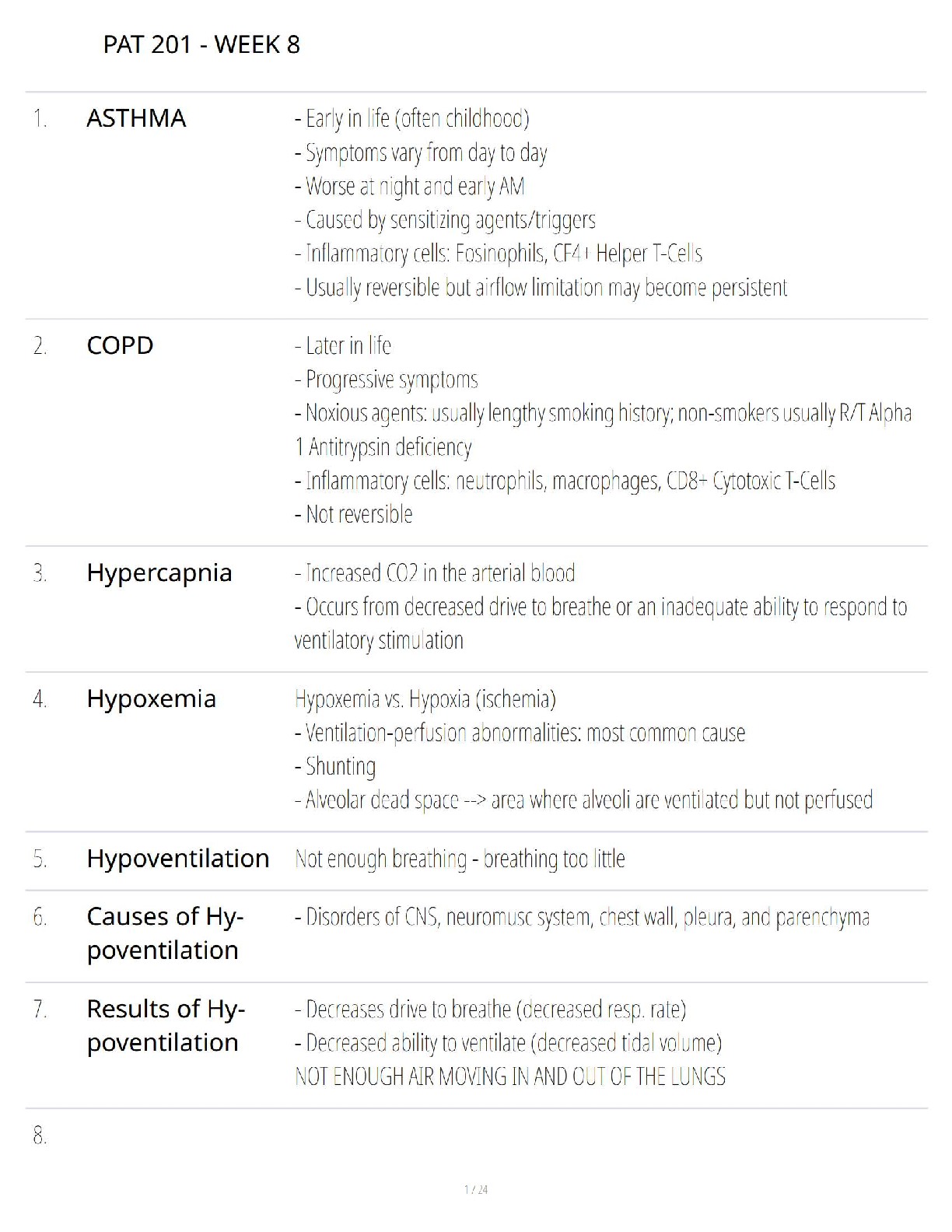
General pathology is the study of the mechanisms of disease (with emphasis on aetiology and pathogenesis), while systematic pathology is the study of diseases as they occur within particular organ sys ... tems – it involves aetiology, pathogenesis, epidemiology, macro- and microscopic appearance, specific diagnostic features, natural history and sequelae. Academic pathology includes research and teaching, and the discipline of experimental pathology was derived from this. Clinical pathology is often referred to as laboratory medicine and includes a number of diagnostic disciplines. Pathology provides the basis for understanding: The mechanisms of disease The classification of diseases The diagnosis of diseases The basis of treatment Monitoring the progress of disease Determining prognosis Understanding complications SNOMED – standard classification of disease – considers the following aspects: Topography Morphology Aetiology Function Disease Procedure Occupation • Techniques of Pathology Gross pathology – macroscopic investigation and observation of disease Light microscopy – thin section of wax or plastic permeated tissues, snap-frozen tissues Histochemistry – microscopy of treated tissue sections (to distinguish cell components) Immunohistochemistry and immunofluorescence – tagged antibodies (monoclonal better) Electron microscopy Biochemical techniques – e.g. fluid and electrolyte balance, serum enzymes Cell cultures – also allowing cytogenetic analysis Medical microbiology – direct microscopy, culturing and identification Molecular pathology – in situ hybridisation (specific genes/mRNA), polymerase chain reaction CELL INJURY • The Pathogenesis of Cell Injury Normal cell structure and function requires: Nuclear function for nucleic acid, protein, lipid and carbohydrate synthesis Enzyme function for assembly and degradation of organelles and cell products Membrane function for the transport of metabolites/messengers and for the ionic and fluid homeostasis Energy production and the formation of high-energy compounds by aerobic phosphorylation (and/or anaerobic glycolysis) Injury to the nucleus: Genetic defects – single gene, multiple gene or whole chromosome abnormalities Nutritional disturbances – e.g. pernicious anaemia due to B12 deficiency affecting DNA synthesis in haematopoietic cells Toxic injury – may inhibit nuclear functions (synthesis, division) Standard background radiation is approximately 10-3 rads, with minor consequences for dosages lower than 10 rads. A dose of 100 rads will give mild radiation sickness. A dose of 1000 rads will give severe radiation sickness, with pancytopenia. Note that UV is sufficient to create pro-mutagenic damage to DNA and hence has long-term effects. Ataxia telangiectasia is due to a fundamental failure to repair damaged DNA. Individuals with this condition have hypersensitivity to DNA damage (e.g. radiation). Fragile X syndrome is due to an expansion in an unstable codon (6-50 in normal individuals, 250-4000 in affected individuals) which leads to susceptibility to nuclear damage. ..........................................................CONTINUED...................................... [Show More]
Last updated: 1 year ago
Preview 5 out of 29 pages
Loading document previews ...
Buy this document to get the full access instantly
Instant Download Access after purchase
Buy NowInstant download
We Accept:
Can't find what you want? Try our AI powered Search
Connected school, study & course
About the document
Uploaded On
Sep 09, 2024
Number of pages
29
Written in
All
This document has been written for:
Uploaded
Sep 09, 2024
Downloads
0
Views
62
Scholarfriends.com Online Platform by Browsegrades Inc. 651N South Broad St, Middletown DE. United States.
We're available through e-mail, Twitter, Facebook, and live chat.
FAQ
Questions? Leave a message!
Copyright © Scholarfriends · High quality services·