Chemistry > Lab Experiment > Chamberlain College of Nursing - CHEM 120Lab7 week 5 (All)
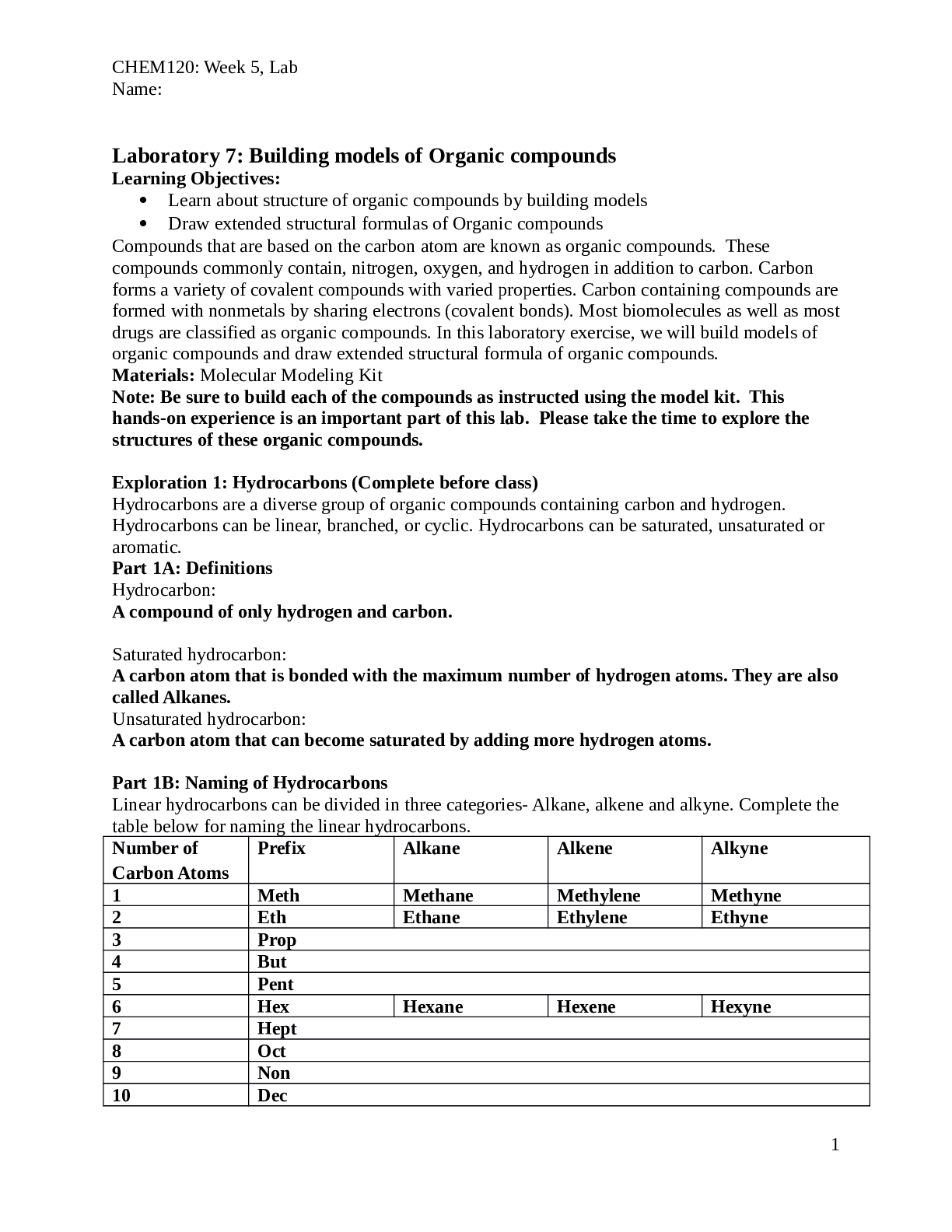
Chamberlain College of Nursing - CHEM 120Lab7 week 5
Document Content and Description Below
Last updated: 4 years ago
Preview 1 out of 12 pages
Instant download
Buy this Document to get the Full Access Instantly
Provided by Students Who Aced it
We Verify Document Content to Gurantee Accuracy
Reviews( 0 )
Document information
Connected school, study & course
About the document
Uploaded On
Mar 12, 2021
Number of pages
12
Written in
All

Additional information
This document has been written for:
Uploaded
Mar 12, 2021
Downloads
0
Views
109
Topic Tags
Recommended For You
Get more on Lab Experiment »
SOLUTIONS MANUAL for Organic Chemistry: Mechanistic Patterns 1...
Test Bank For Petrucci General Chemistry Principles and Modern...
TEST BANK for Organic Chemistry: Mechanistic Patterns 1st Edit...
Solutions Manual For Chemistry The Molecular Nature of Matter...
Test Bank For Organic Chemistry 9th Edition By William Brown,...

eBook [PDF] Radiotheranostics A Primer for Medical Physicists...

eBook [PDF] Chemistry of Dehydrogenation Reactions and Its App...

eBook [PDF] Carbon Nanotube Based Sensors Fabrication, Charact...
Test Bank for Chemistry The Central Science 14 Edition by Bro...
Test Bank For Chemistry Chemical Reactivity 9th Edition by Joh...
Test bank chemistry atoms first 2e 2nd edition openstax all c...
Quantitative Chemical Analysis 11th Edition By Daniel Harris,...
Computational Chemistry Introduction to the Theory and Applica...
.png)
CHEMI 1105 Doll _Chem1105 Experiment 8: Oxidation-Reduction Ac...
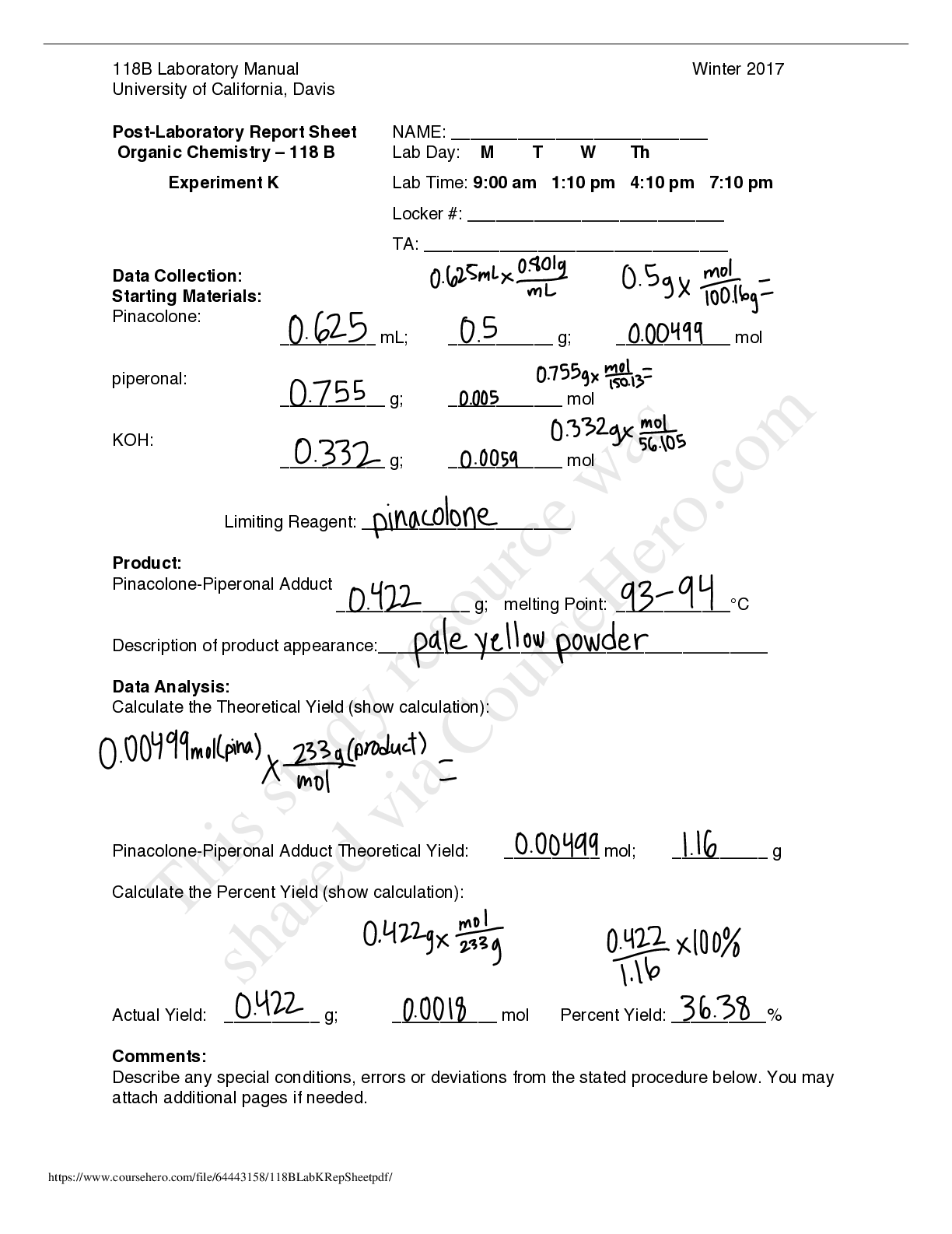


Stoichiometry of Iron-Copper (II) Sulfate Redox Reaction Queen...