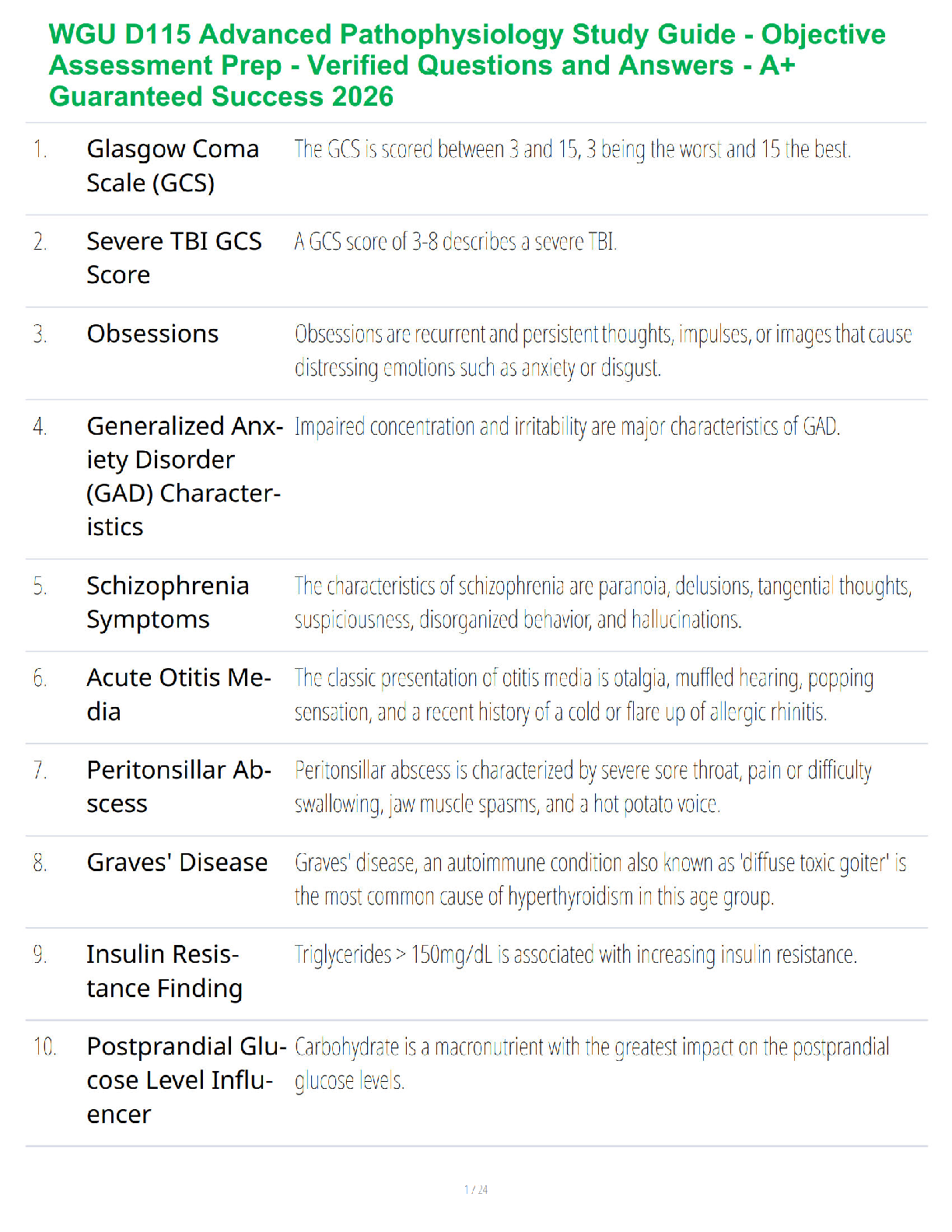
NR 507 Advanced Pathophysiology Midterm Exam Practice Questions with Verified Solutions-Hives (urticaria) are an example of a: - Type 1 hypersensitivity reaction.
Anaphylaxis is what type of reaction? - type 1 hyperse
...
NR 507 Advanced Pathophysiology Midterm Exam Practice Questions with Verified Solutions-Hives (urticaria) are an example of a: - Type 1 hypersensitivity reaction.
Anaphylaxis is what type of reaction? - type 1 hypersensitivity
Which of the following are considered the "first responders" of the innate immune system? - neutrophils
Allergic contact dermatitis is an example of what type of
hypersensitivity reaction. - type 4 hypersensitivity reaction
Type 2 (Cytotoxic) hypersensitivity reactions are mediated by: - IgG or IgM
Type 1 hypersensitivity reaction is mediated by - IgE
Allergic asthma is an example of - type 1 hypersensitivity reaction
type 2 hypersensitivity - tissue specific
Primary effector cells of type 2 - macrophages
Examples of type 2 reactions - drug allergies, hemolytic anemia, blood transfusion mismatch, allergies against infectious agents
Type 2 causes - The cell to be destroyed by the antibody
Cell destruction through phagocytosis by macrophages
Damage to the cell by neutrophils triggering phagocytosis
Natural killer cells to release toxic substances that destroy the target cell
Malfunction of the cell without destruction
Type 3 hypersensitivity reaction - antigen-antibody response
Where does the antibody bind to the antigen in type 3 response? - in blood or body fluids and then circulates to tissue
Where does the antibody bind to the antigen in type 1, 2, and 4? - on cell surface
Primary effector cell in type 3 - neutrophils
example of type 3 reaction - serum sickness
type 4 hypersensitivity reaction - cell-mediated response
primary mediators of type 4 - lymphocytes and macrophages
type 4 mediated by - T lymphocytes and do not use antibodies
example of type 4 - localized contact dermatitis (poison ivy)
Damage occurs with ABO incompatibility because: - Complement damages RBC membrane causing cell lysis.
Which of the following is the underlying pathology for hay fever? - mast cell degranulation
The diagnosis for an individual who presents to the office with sudden swollen lips and eyes, shortness of breath and throat tightness after a bee sting is: - anaphylaxis
[Show More]