healthcare > EXAM > IVY TECH APHY 102 MIDTERM EXAM 2024 COMPLETE QUESTIONS WITH CORRECT ANSWERS GUARANTEED PASS | RATED (All)
IVY TECH APHY 102 MIDTERM EXAM 2024 COMPLETE QUESTIONS WITH CORRECT ANSWERS GUARANTEED PASS | RATED A+
Document Content and Description Below
Last updated: 1 year ago
Preview 4 out of 14 pages
Instant download

Loading document previews ...
Buy this Document to get the Full Access Instantly
Provided by Students Who Aced it
We Verify Document Content to Gurantee Accuracy
Reviews( 0 )
Document information
Connected school, study & course
About the document
Uploaded On
Dec 12, 2024
Number of pages
14
Written in
All

Additional information
This document has been written for:
Uploaded
Dec 12, 2024
Downloads
0
Views
133
Topic Tags
Recommended For You
Get more on EXAM »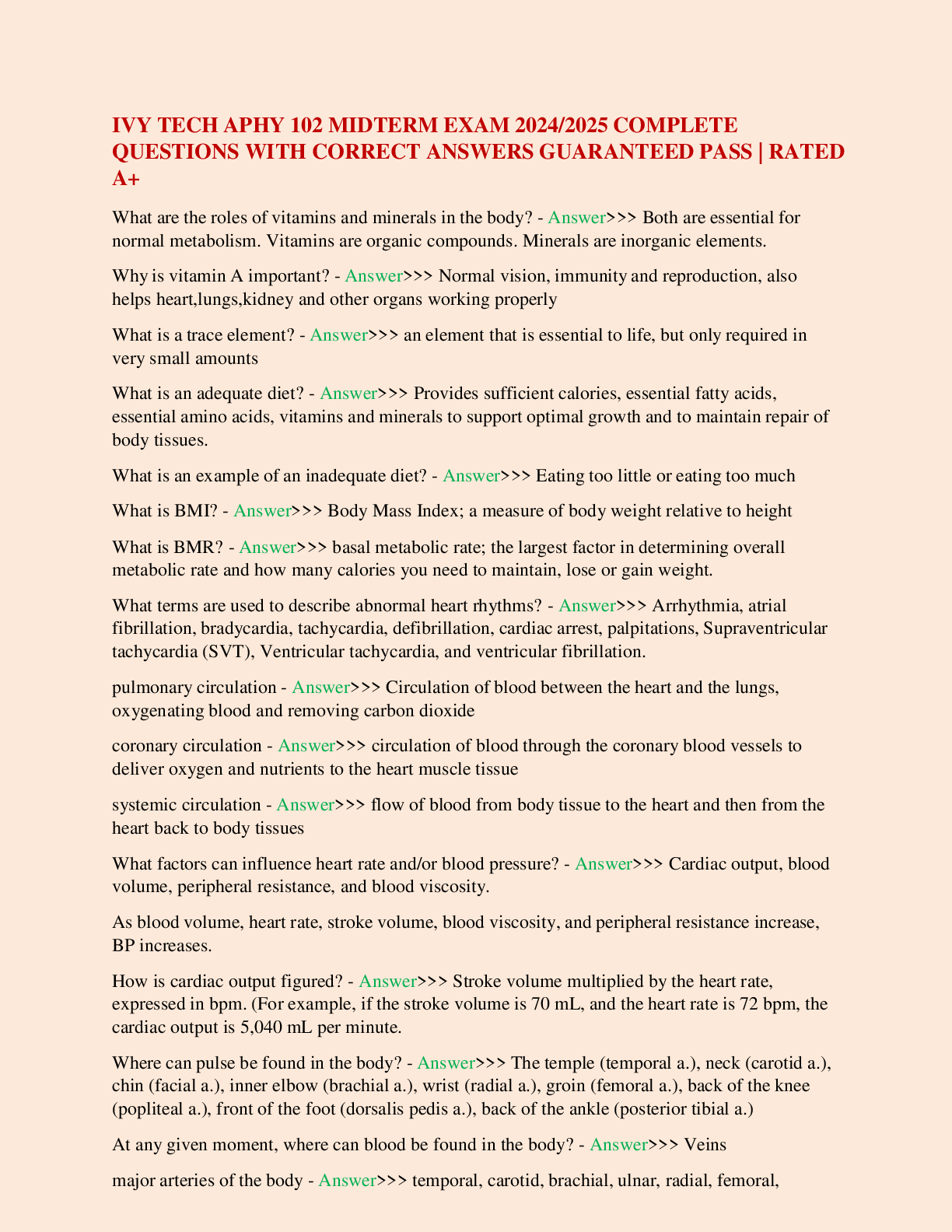
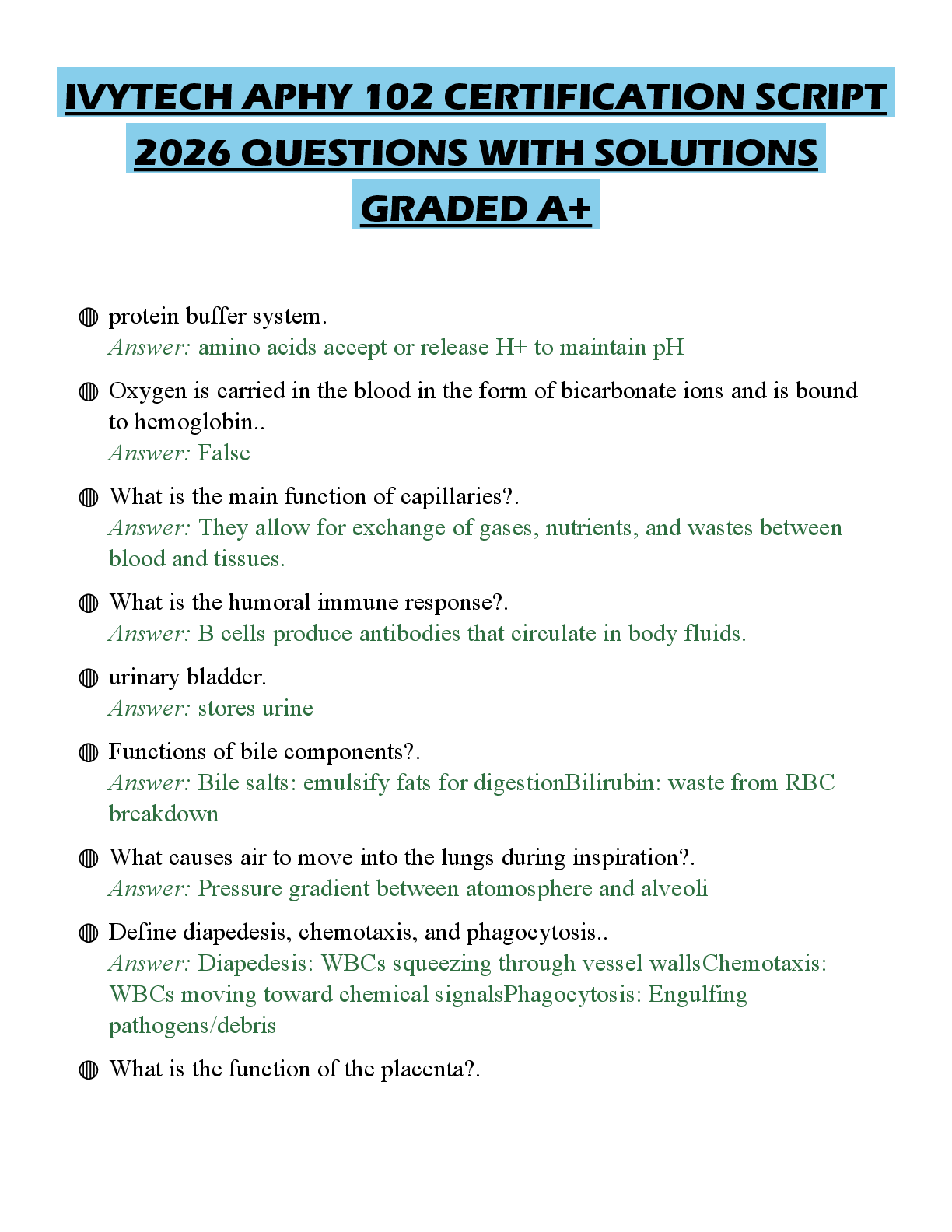
IVY TECH APHY 102 MIDTERM EXAM 2024/2025 COMPLETE QUESTIONS WI...
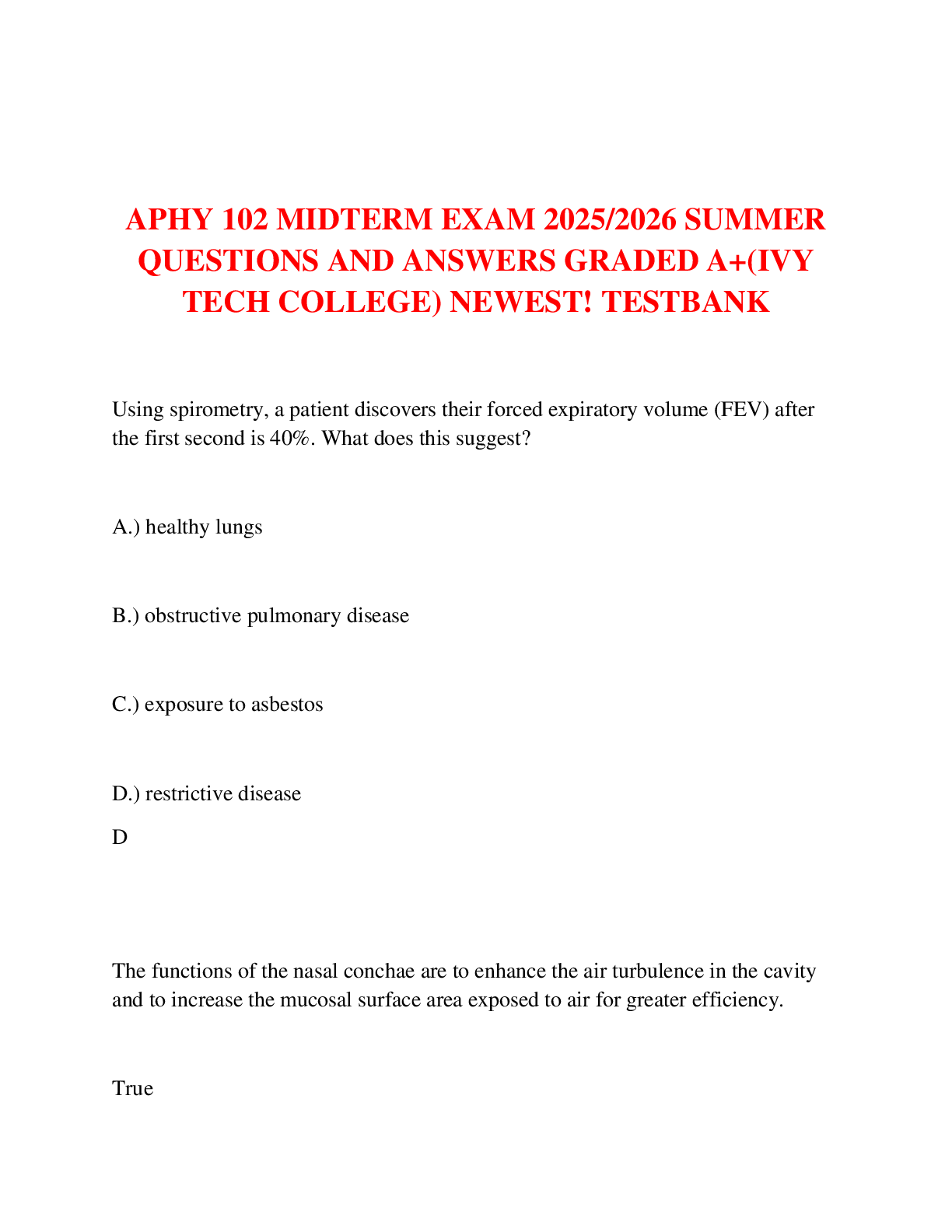
APHY 102 MIDTERM EXAM 2025/2026 SUMMER QUESTIONS AND ANSWERS G...
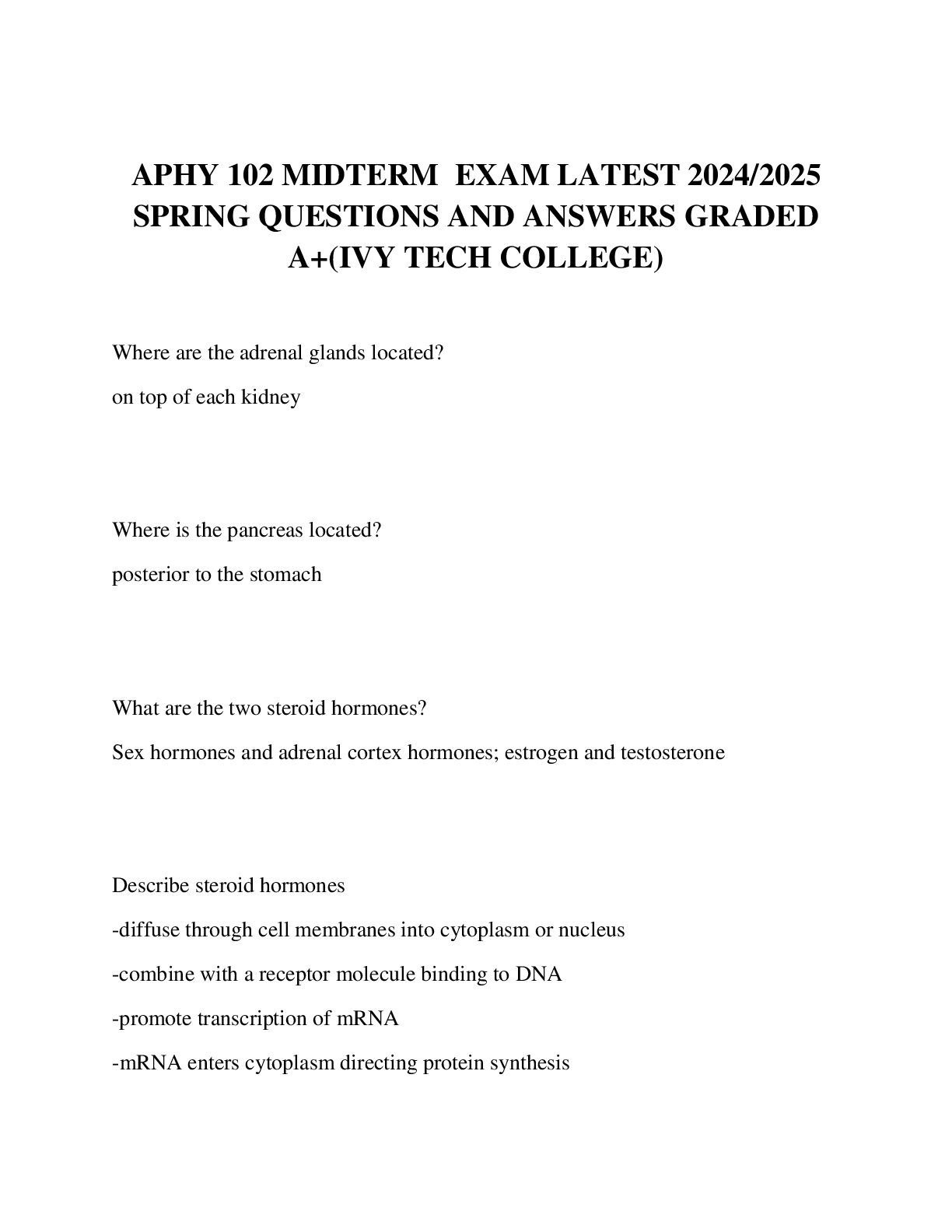
APHY 102 MIDTERM EXAM LATEST 2024/2025 SPRING QUESTIONS AND A...
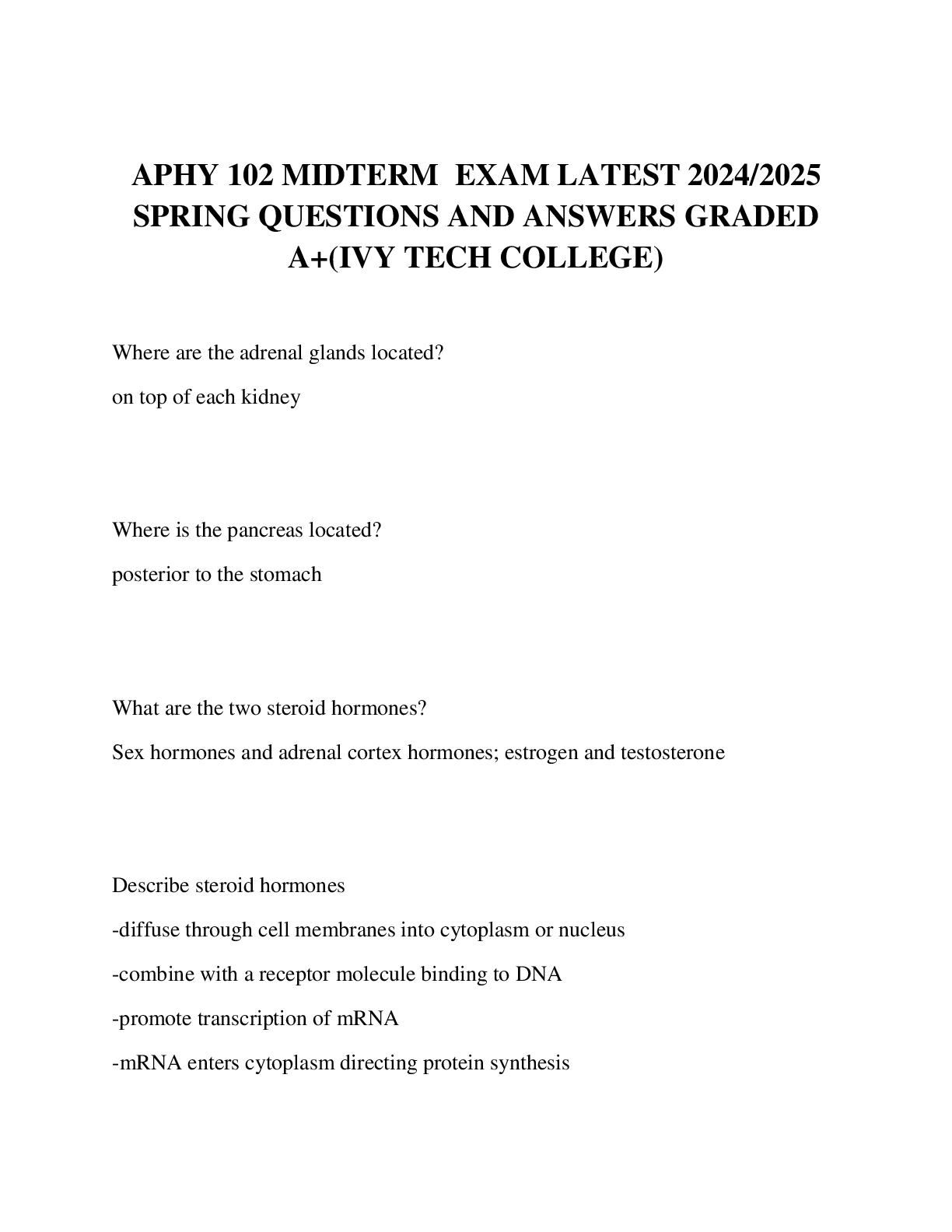
APHY 102 MIDTERM EXAM LATEST 2024/2025 SPRING QUESTIONS AND A...

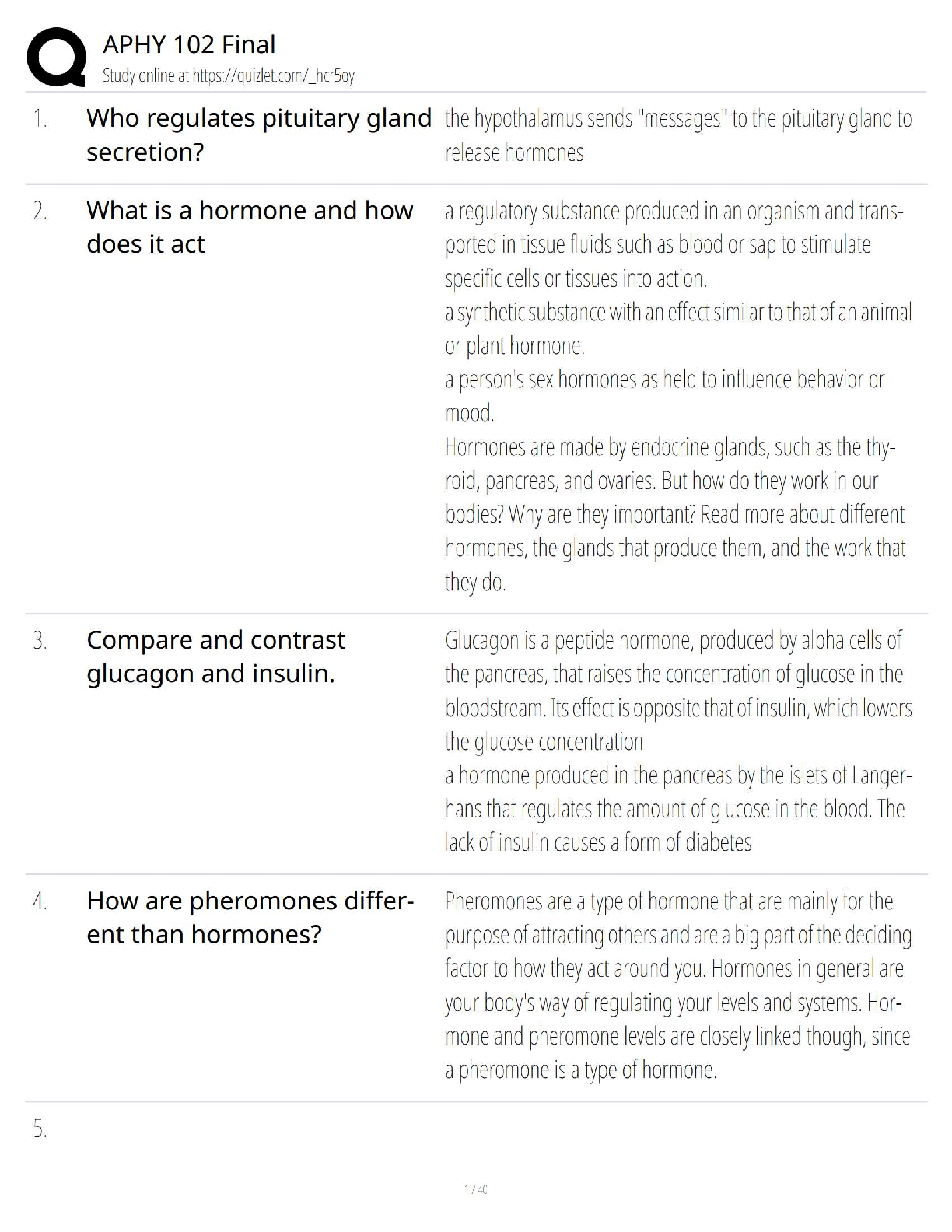
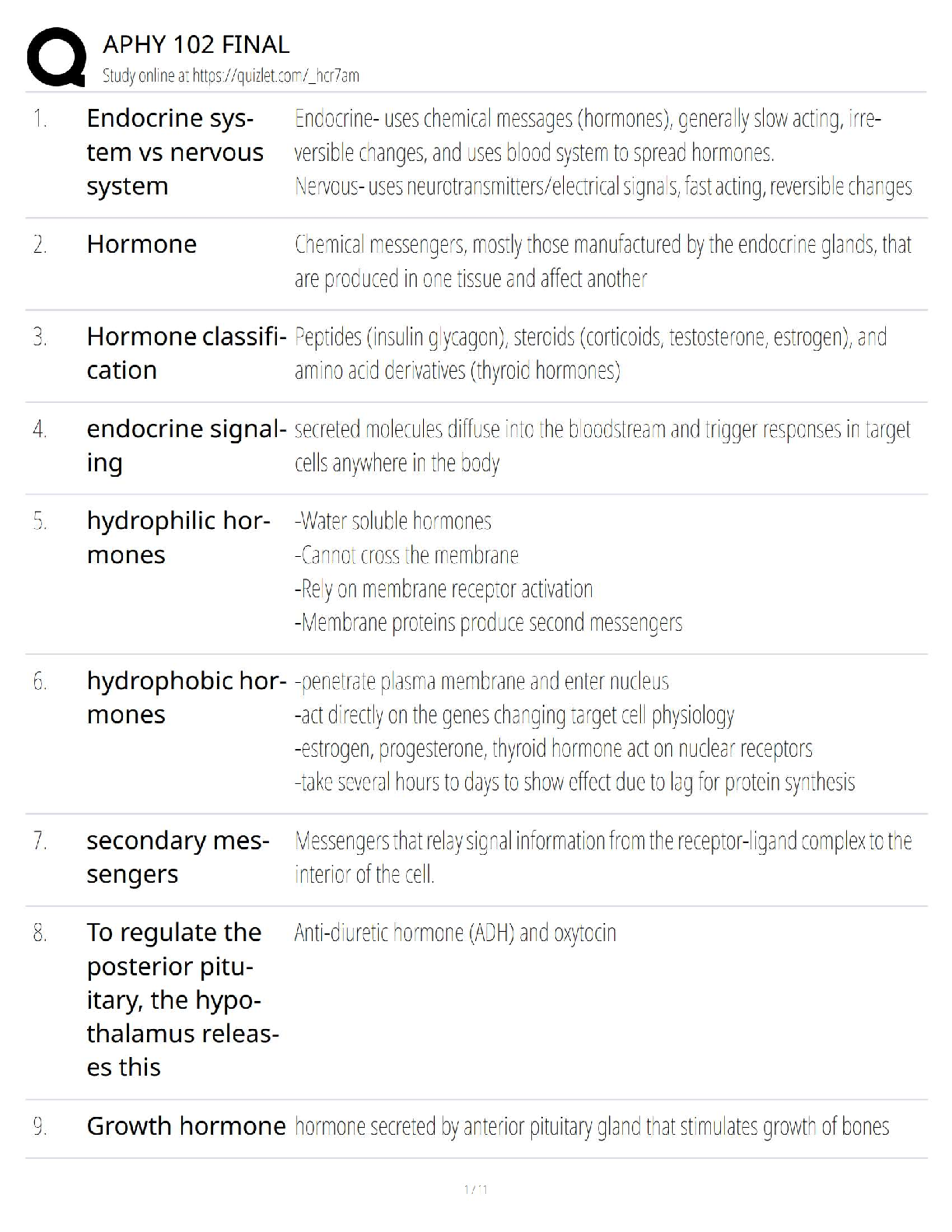
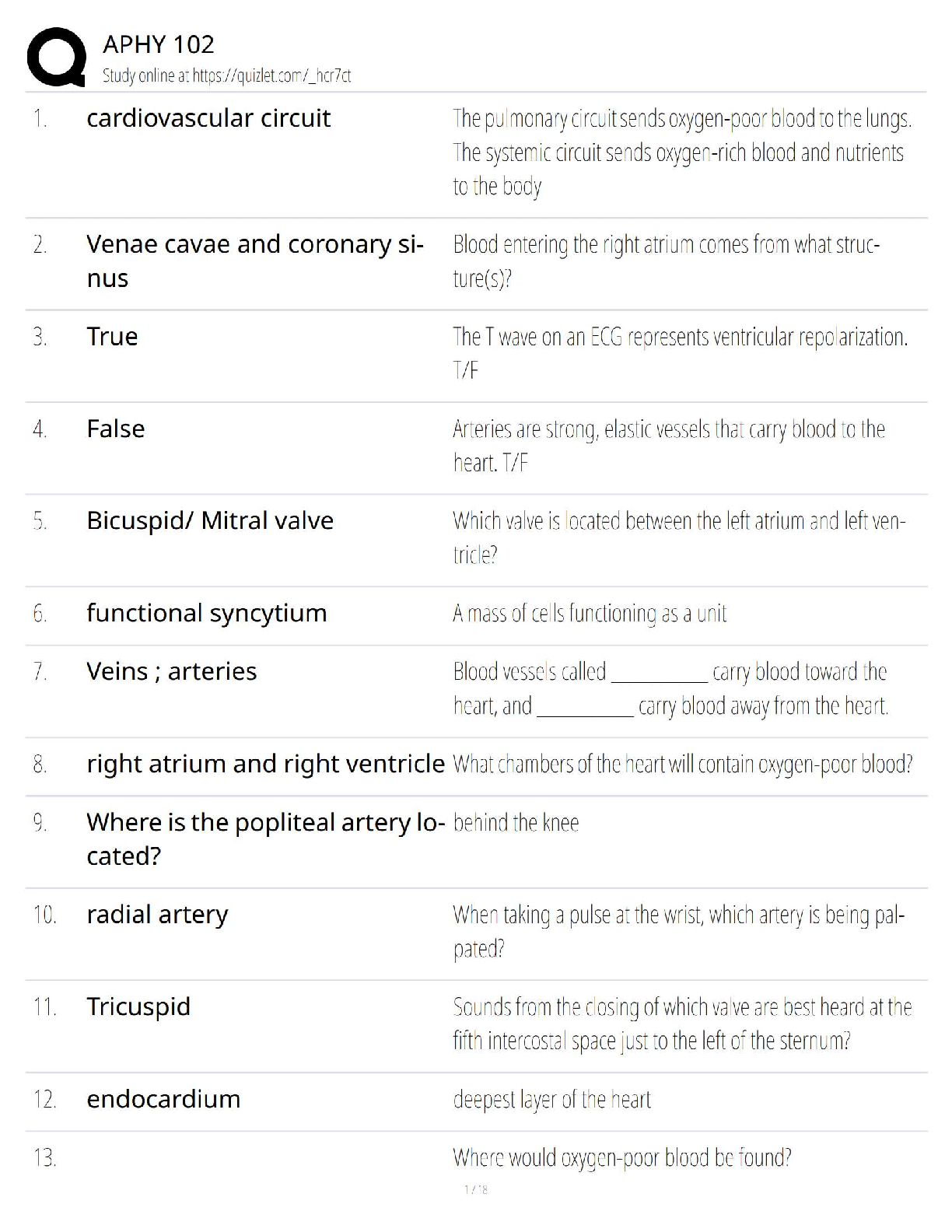
PHARMACY 1301 StudyBlue Flashcard Printing of APHY 102 FIN...

Ivy Tech Community College of Indiana - APHY 102 Sheep Kidney...
APHY 102 Sheep Kidney Dissection | Report contains, Abstract,...
TEST BANK FOR PSYCHIATRIC NURSING FOR NORMAN L. KELTNER DEBBI...