HESI A2 ENTRANCE > EXAM > HESI A2 CRITICAL THINKING QUESTIONS WITH CORRECT ANSWERS 2025 GUARANTEED PASS | RATED A+ (All)
HESI A2 CRITICAL THINKING QUESTIONS WITH CORRECT ANSWERS 2025 GUARANTEED PASS | RATED A+
Document Content and Description Below
Last updated: 1 year ago
Preview 5 out of 64 pages
Instant download

Loading document previews ...
Buy this Document to get the Full Access Instantly
Provided by Students Who Aced it
We Verify Document Content to Gurantee Accuracy
Reviews( 0 )
Document information
Connected school, study & course
About the document
Uploaded On
Feb 05, 2025
Number of pages
64
Written in
All

Additional information
This document has been written for:
Uploaded
Feb 05, 2025
Downloads
0
Views
320
Topic Tags
Recommended For You
Get more on EXAM »

HESI A2 (Anatomy and Physiology) ENTRANCE EXAM QUESTIONS AND...

2024 HESI A2 ENTRANCE EXAM ALL SECTION WITH QUESTIONS & ANSWER...

HESI A2 READING COMPREHENSION 2025 Newest 2025 Actual Exam Co...


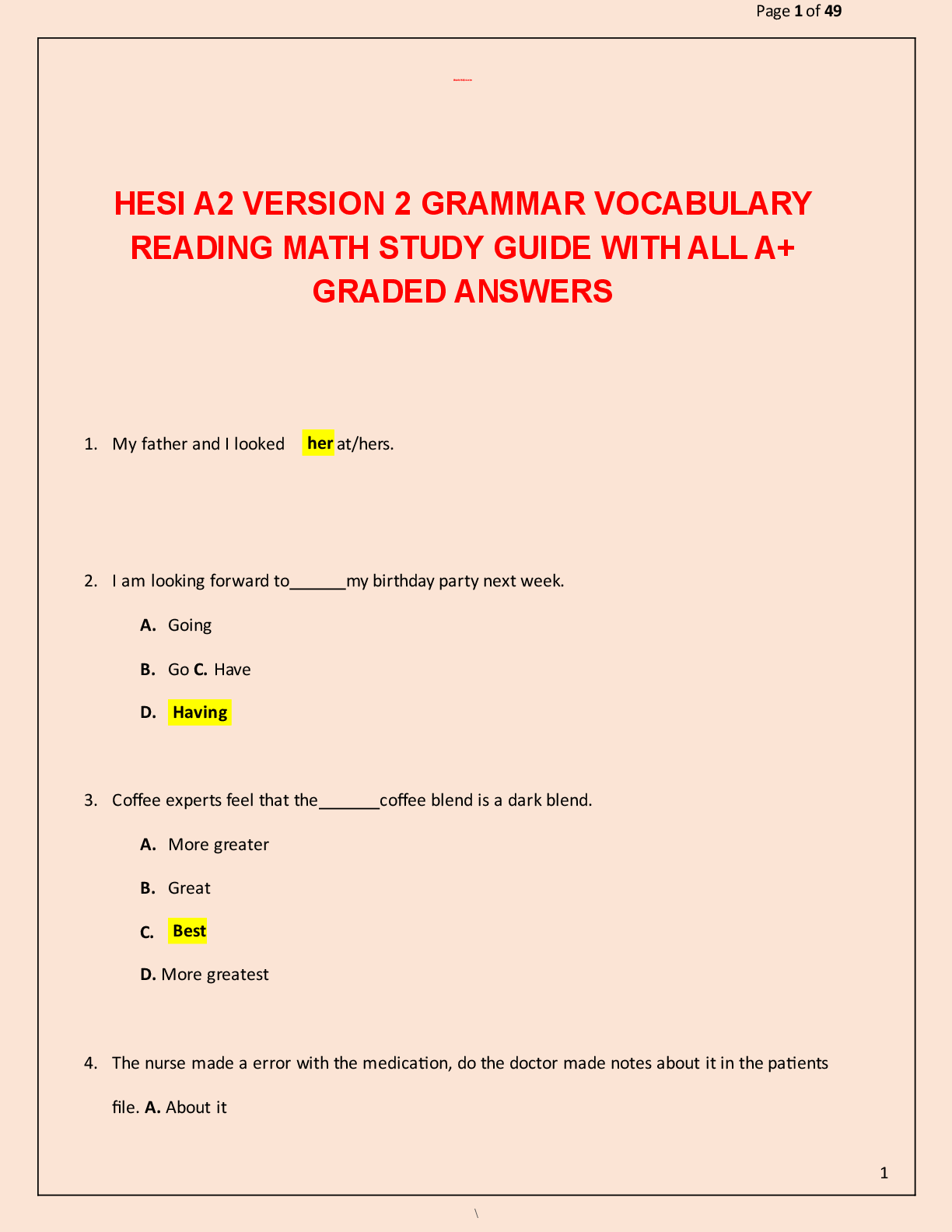
HESI A2 VERSION 2 GRAMMAR VOCABULARY READING MATH STUDY GUIDE...
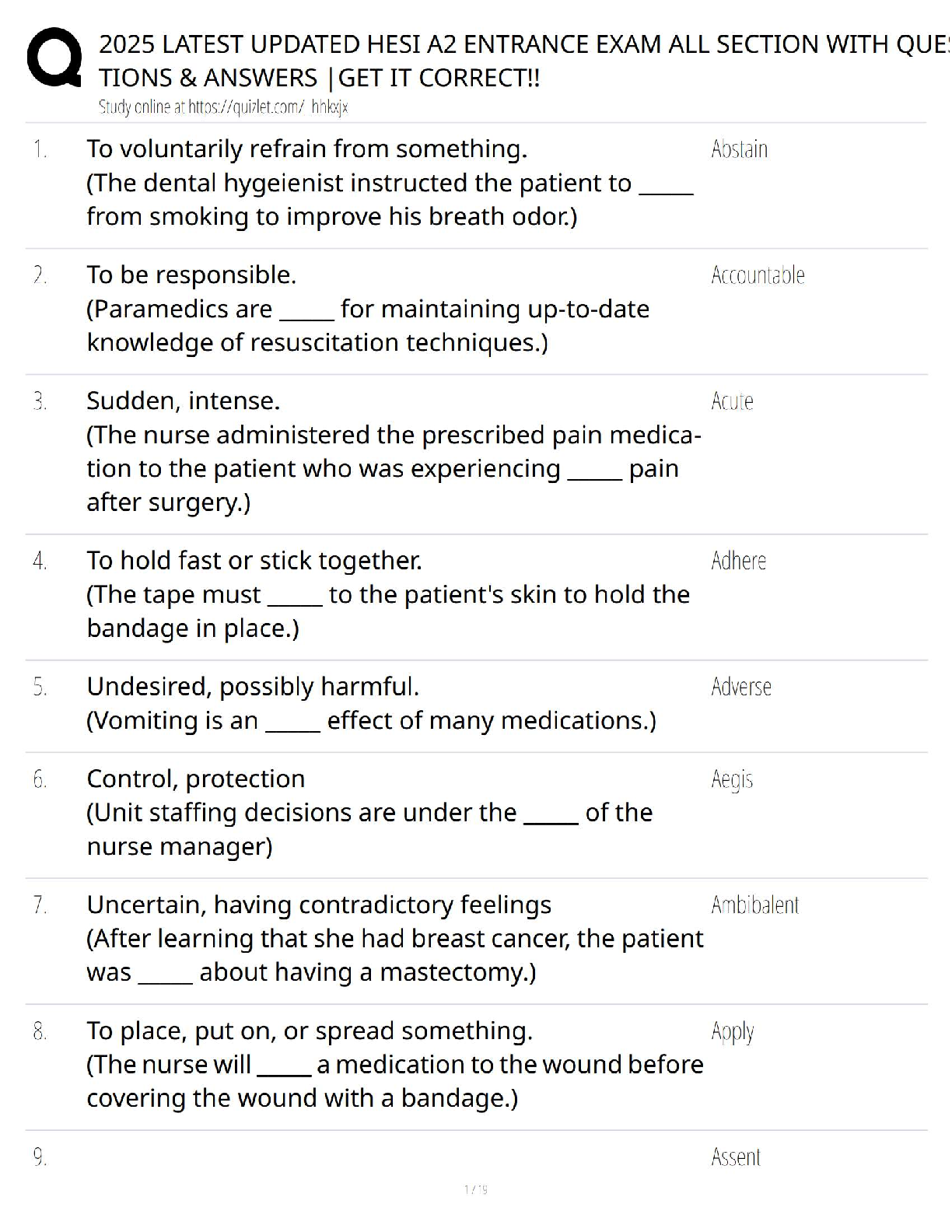
HESI A2 Entrance Exam / 2025 Latest Update Complete Study Gu...
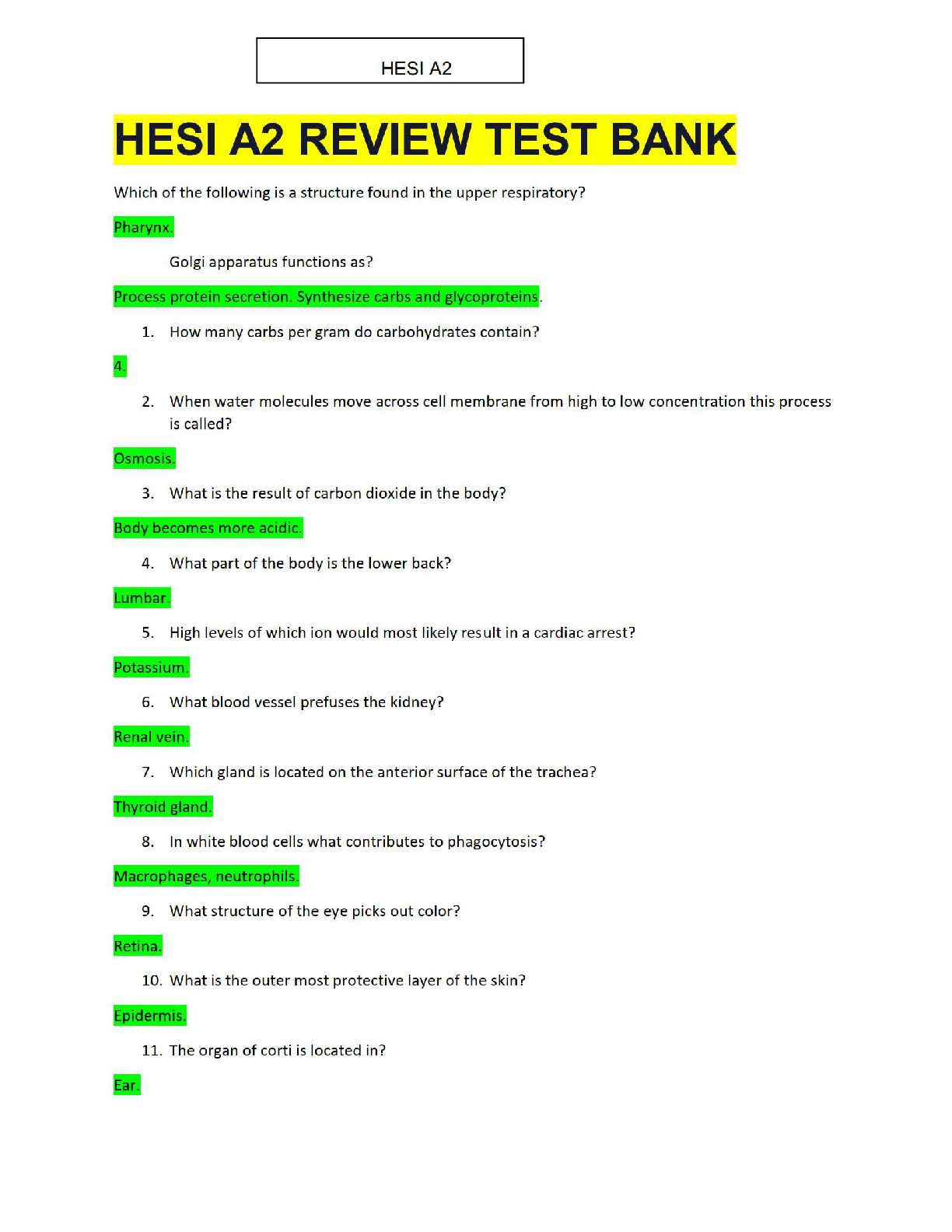
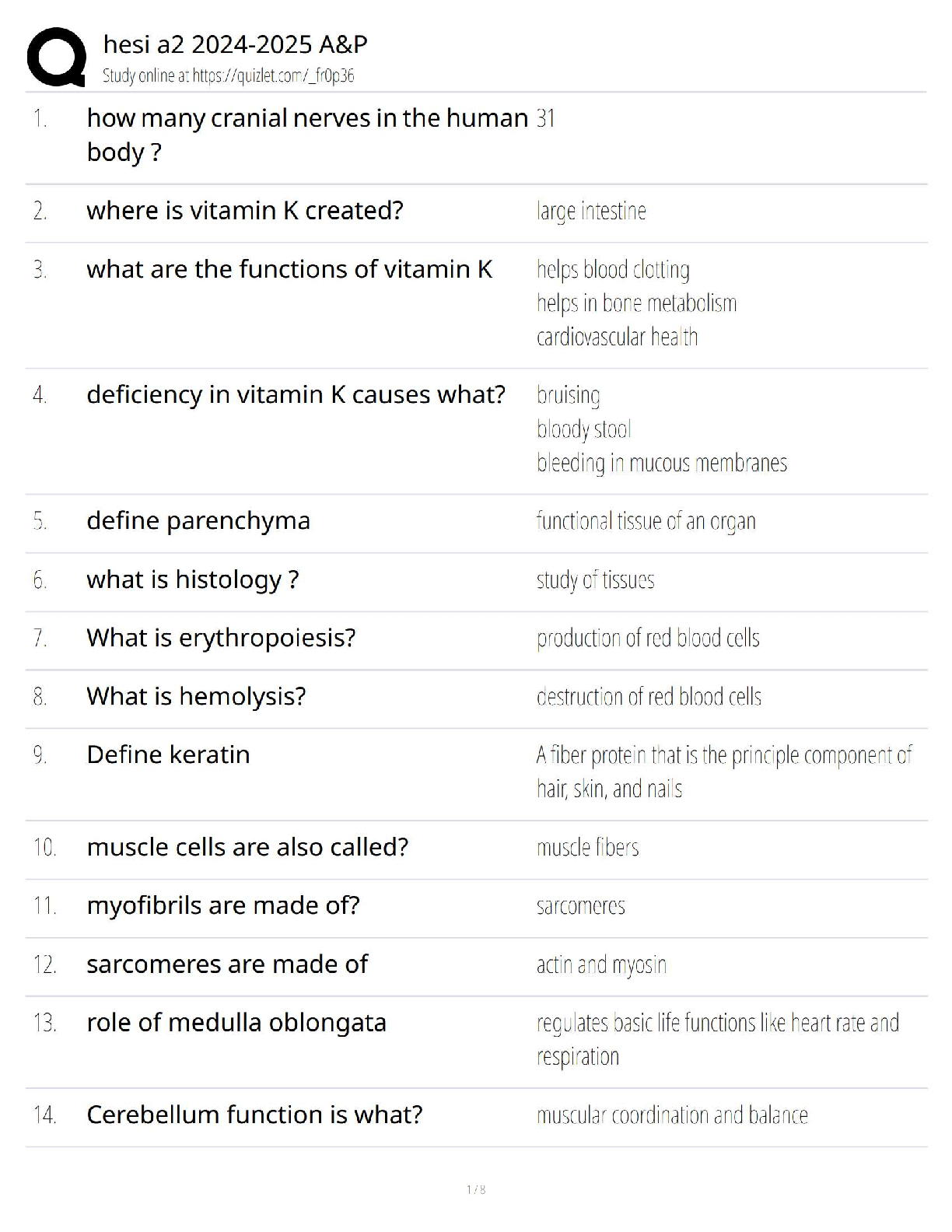

HESI A2 Anatomy & Physiology 2025 Latest Version / Entrance...