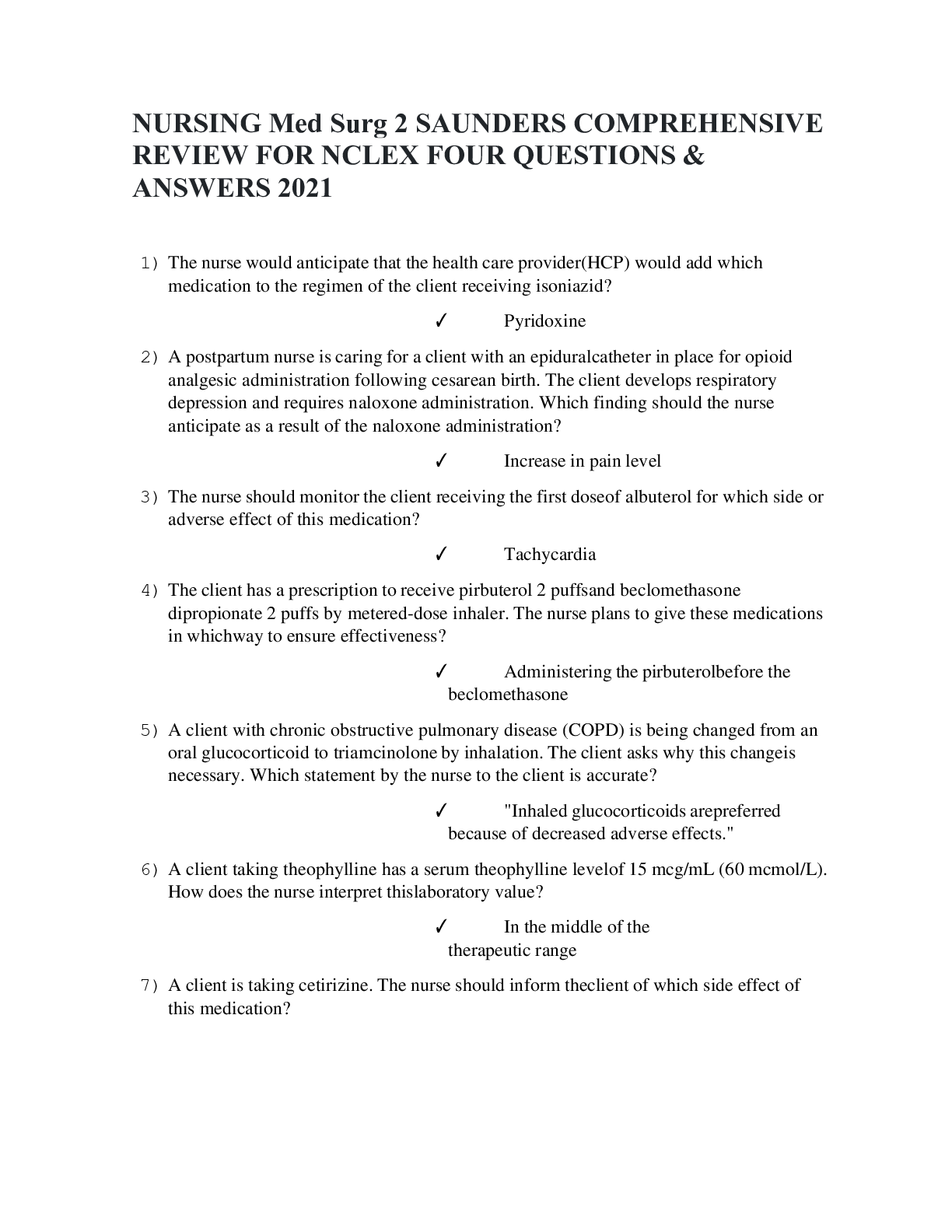
NURSING > STUDY GUIDE > Wiregrass Georgia Technical College - NURSING MED SURG 2Med Surg Version 1 Hesi Topics (1) (All)
Wiregrass Georgia Technical College - NURSING MED SURG 2Med Surg Version 1 Hesi Topics (1)
Document Content and Description Below
Last updated: 4 years ago
Preview 1 out of 59 pages
Instant download

Buy this Document to get the Full Access Instantly
Provided by Students Who Aced it
We Verify Document Content to Gurantee Accuracy
Reviews( 0 )
Document information
Connected school, study & course
About the document
Uploaded On
Mar 16, 2021
Number of pages
59
Written in
All

Additional information
This document has been written for:
Uploaded
Mar 16, 2021
Downloads
0
Views
180
Topic Tags
Recommended For You
Get more on STUDY GUIDE »
HESI A2 REVIEW Anatomy and Physiology, HESI A2 Science, HESI A...
NSG 3500 Exam 3 Testbank – Comprehensive Nursing Practice Ques...
NURSING MED SURGE Acne SOAP Note : “Pimples in face and upper...

Primary Concepts Of Adult Nursing MED SURG 1 FINAL EXAM STUDY...
NUR 265 Final Exam – Comprehensive Medical-Surgical Nursing Qu...
NUR 265 Exam 4 – Advanced Medical-Surgical Nursing Questions,...
NR566 Week 5 Study Guide Chapter 18: Drugs Affecting the Hemat...
STUDY GUIDE for Lehne's Pharmacology for Nursing Care 12th Edi...
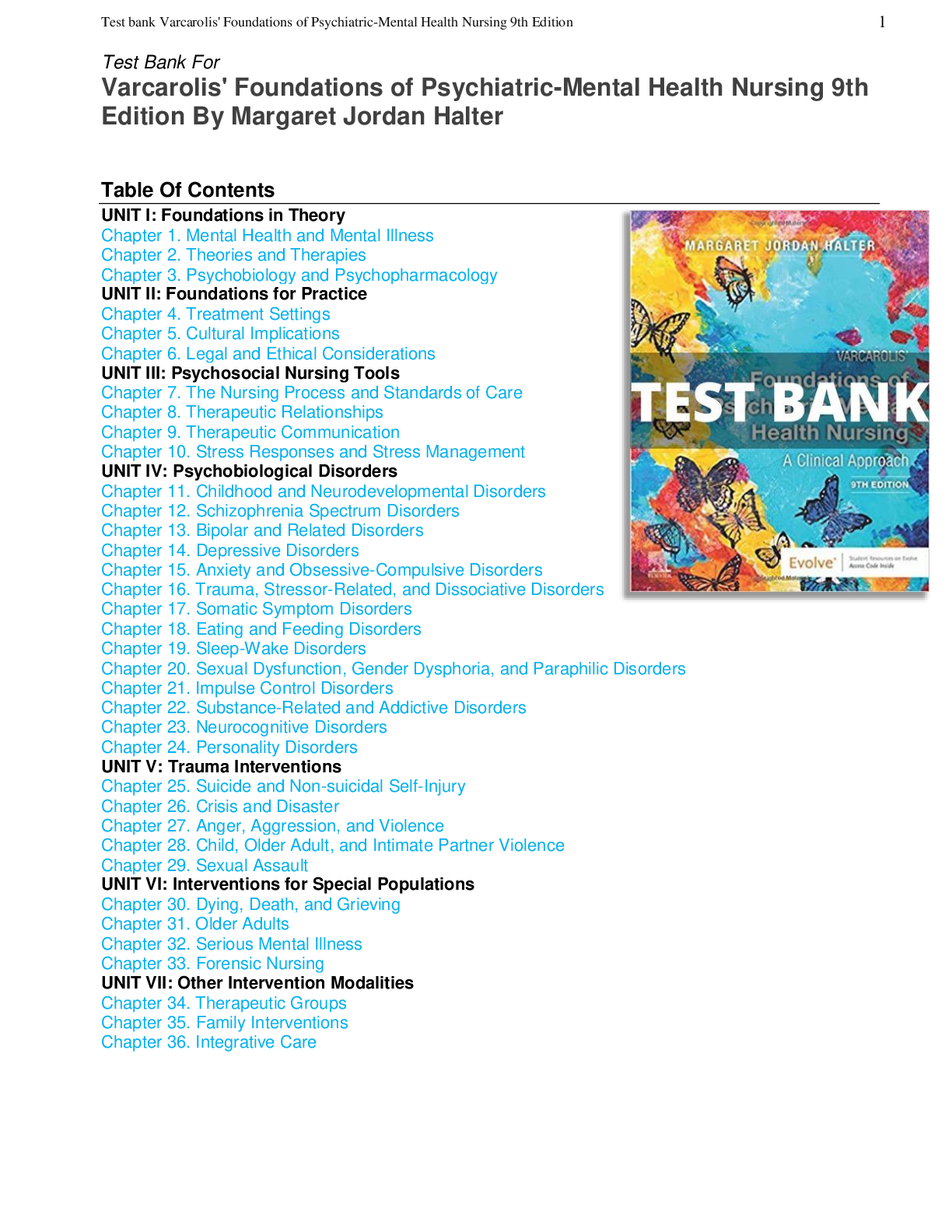
Test bank For Varcarolis' Foundations of Psychiatric-Mental He...
Test Bank for Role Development in Professional Nursing Practic...
TEST BANK for Essentials for Nursing Practice, 9th Edition by...
Basic Geriatric Nursing, 8th Edition By Patricia Williams [PDF...
Leadership and Community health Pre assessment Questions and a...

BURNS SHOCK TEST ACTUAL QUESTIONS AND ANSWERS-2026 NURSING ME...

NURSING Med Surg 2 SAUNDERS COMPREHENSIVE REVIEW FOR NCLEX FIV...

.png)
.png)


