NURSING > CASE SOLUTIONS > Case Study, Oral and Parenteral Medication Administration, Skills & Reasoning, Jerry Williams, 62 ye (All)
Case Study, Oral and Parenteral Medication Administration, Skills & Reasoning, Jerry Williams, 62 years old. Latest Grade A Correct Study Guide, Complete Solutions
Document Content and Description Below
Last updated: 1 year ago
Preview 4 out of 14 pages
Instant download

Loading document previews ...
Buy this Document to get the Full Access Instantly
Provided by Students Who Aced it
We Verify Document Content to Gurantee Accuracy
Reviews( 0 )
Document information
Connected school, study & course
About the document
Uploaded On
Mar 03, 2025
Number of pages
14
Written in
All

Additional information
This document has been written for:
Uploaded
Mar 03, 2025
Downloads
0
Views
134
Topic Tags
Recommended For You
Get more on CASE SOLUTIONS »
Case Study Oral and Parenteral Medication Administration, Skil...
 Correct Study Guide, Download to Score A.png)
Case Study Oral and Parenteral Medication Administration, Skil...
Case Study Oral and Parenteral Medication Administration, Skil...
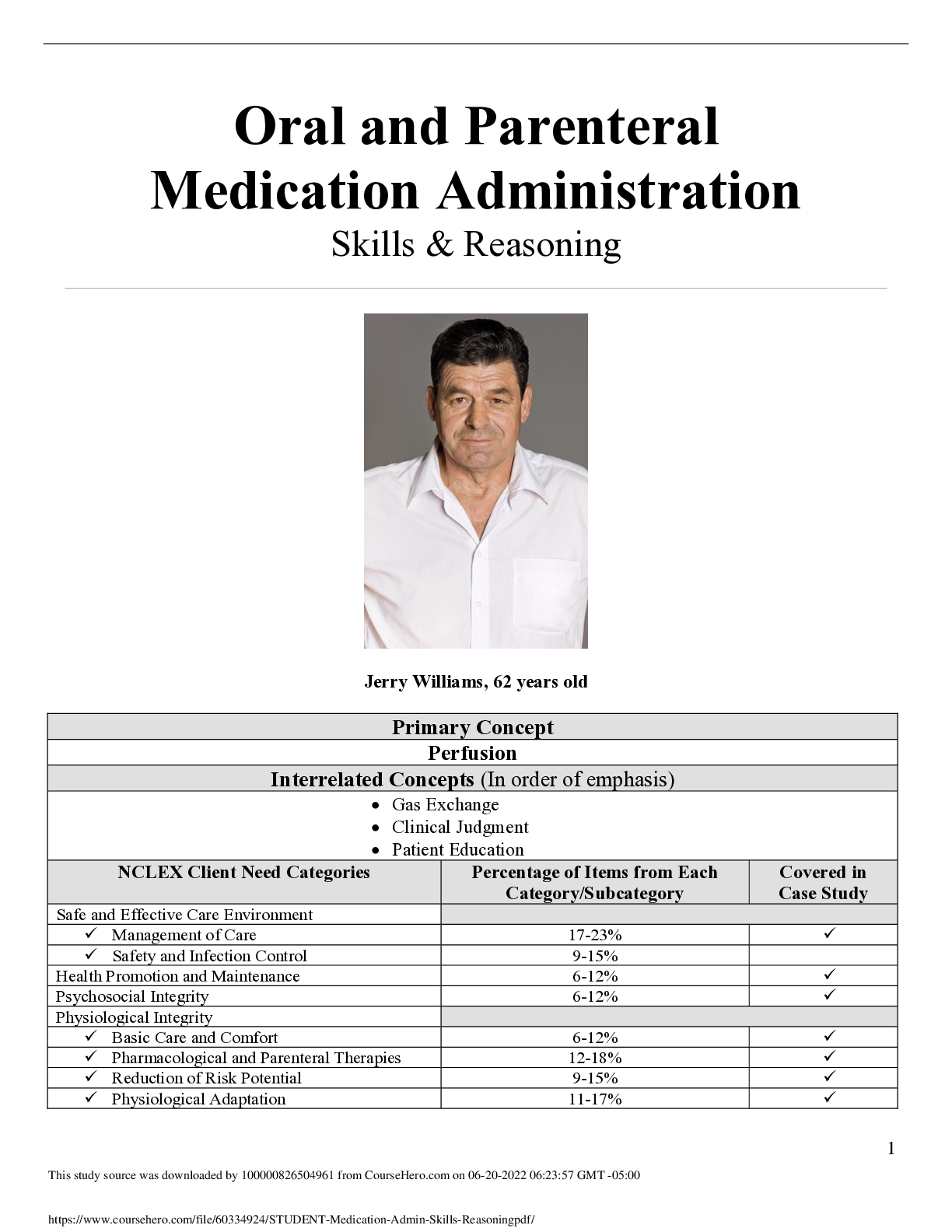
Oral and Parenteral Medication Administration Skills & Reasoni...

Unfolding Clinical Reasoning Case Study: Oral and Parenteral M...
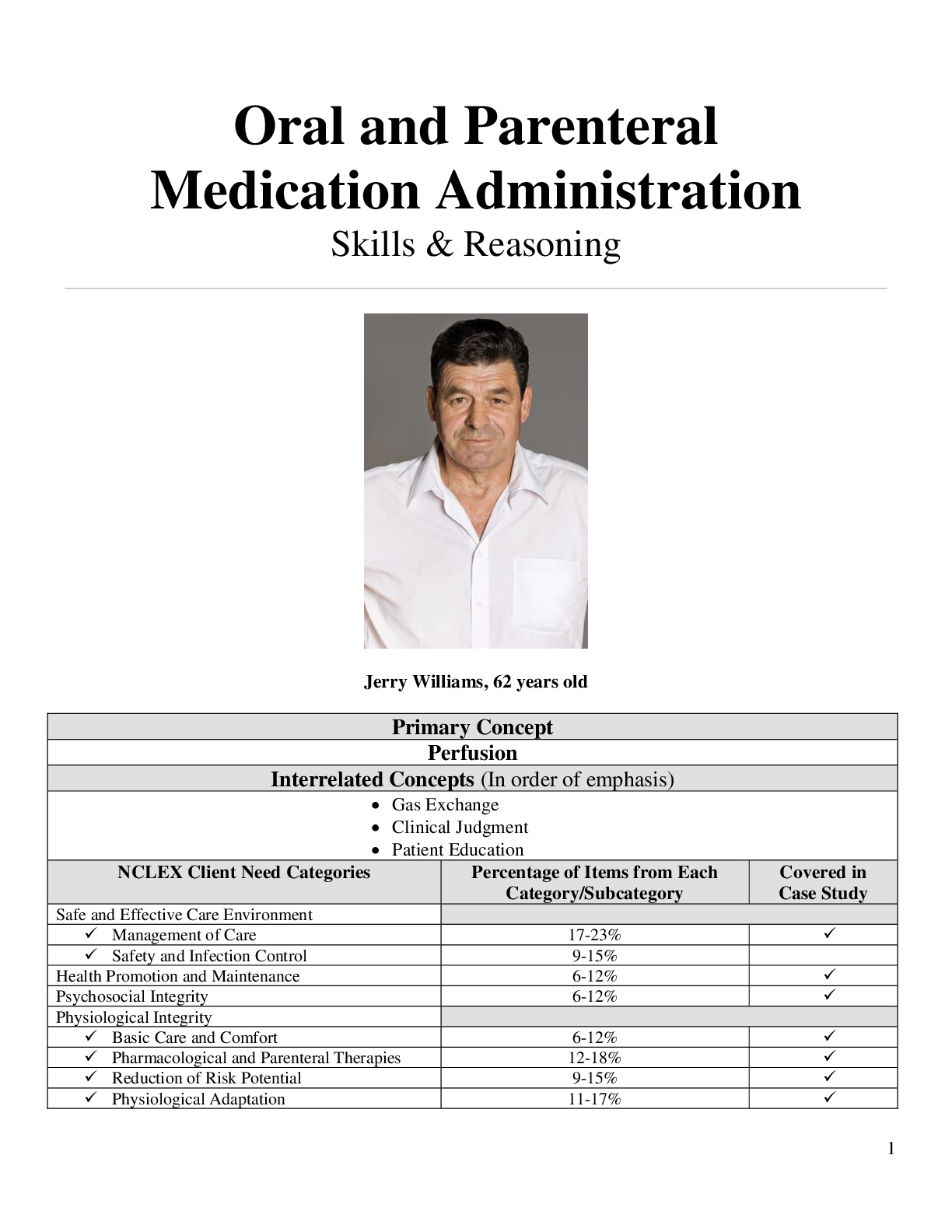
med administration case study Oral and Parenteral Medication A...

Oral and Parenteral Medication Administration Skills & Reasoni...
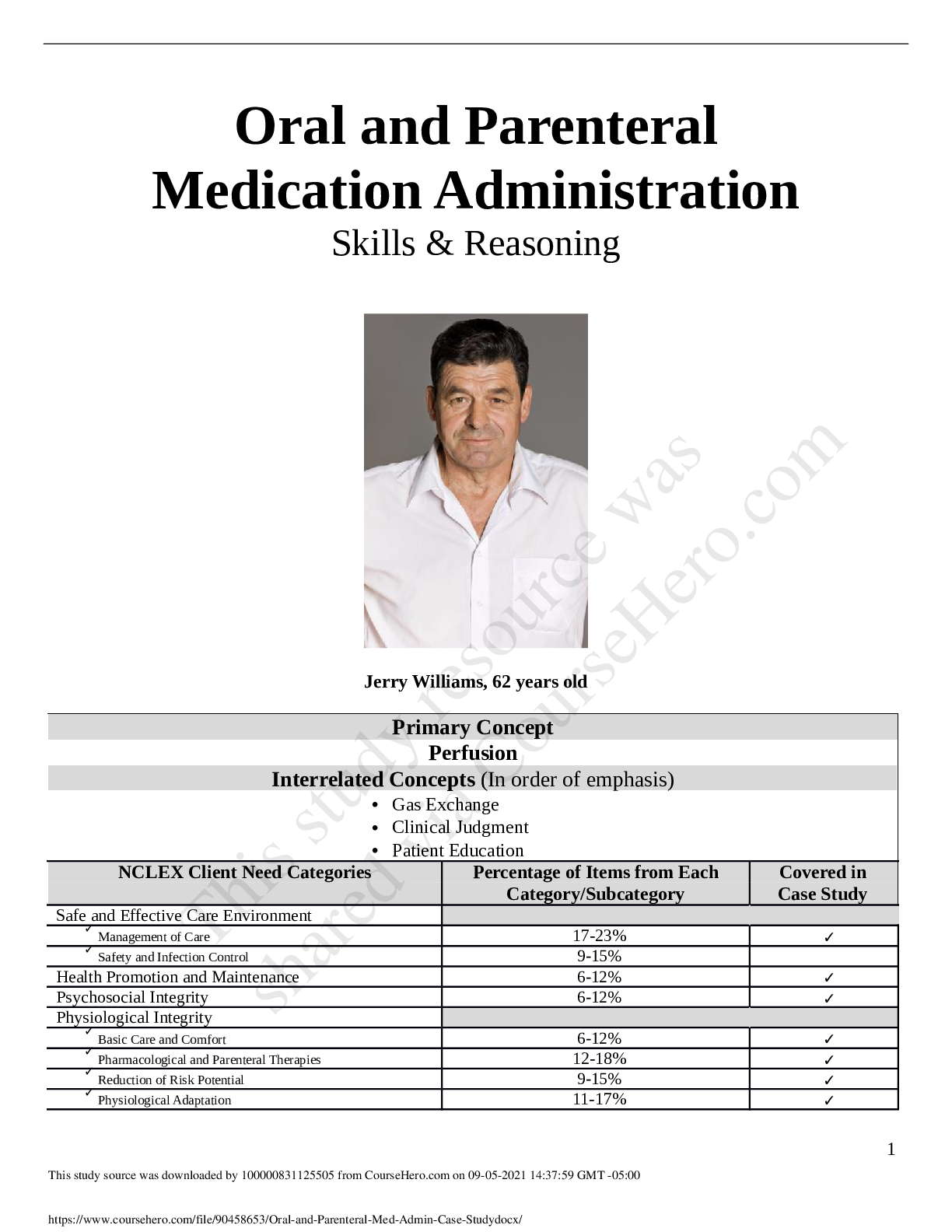
Case Study Oral and Parenteral Medication Administration, Skil...
Case Study Oral and Parenteral Medication Administration, Skil...
Case Study: Oral and Parenteral Medication Administration, Ski...
Case Study Oral and Parenteral Medication Administration, Skil...

Case Study, Oral and Parenteral Medication Administration, Ski...
Case Study Oral and Parenteral Medication Administration, Skil...

I Human Case Study: Grady Turner (18-Month-Old with Cough) –...