1.
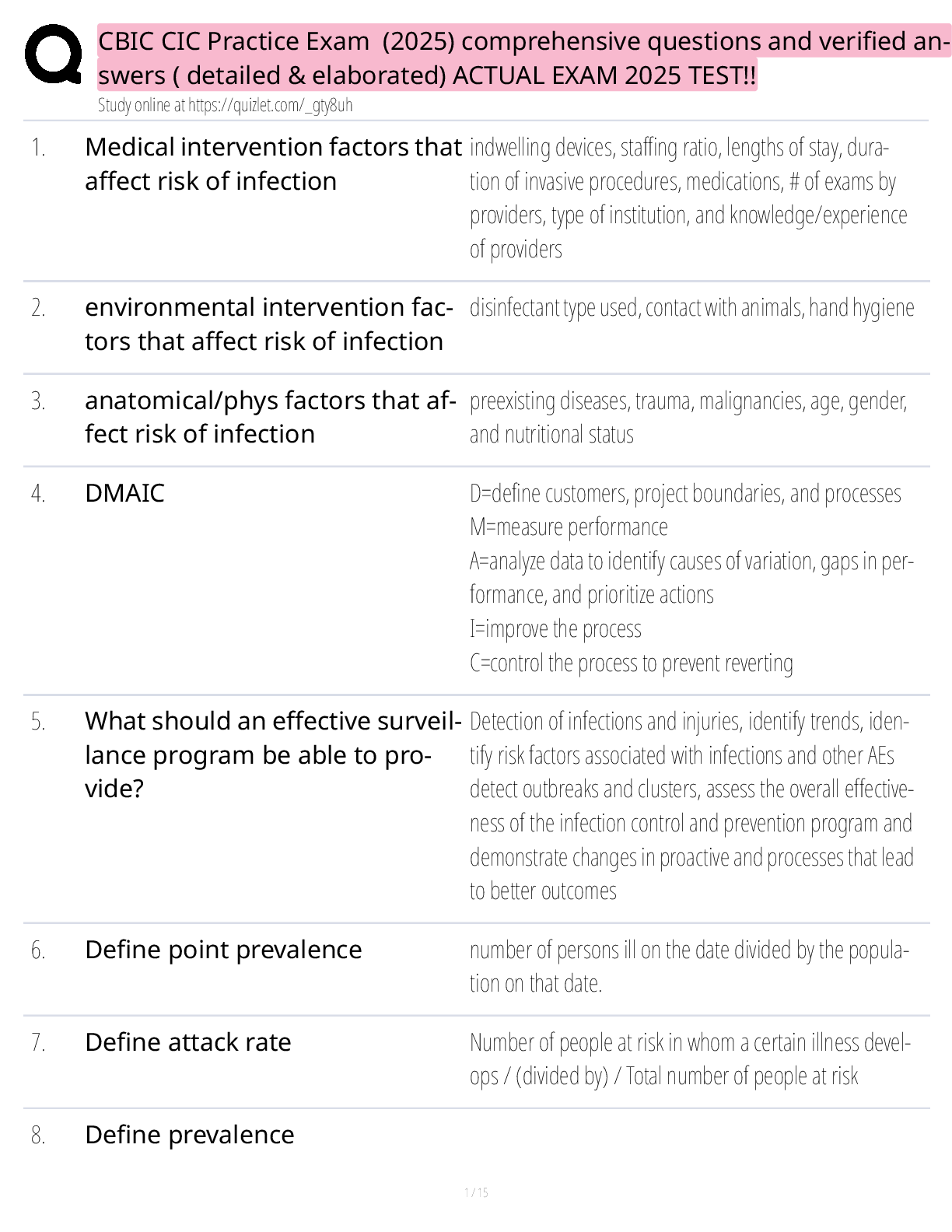
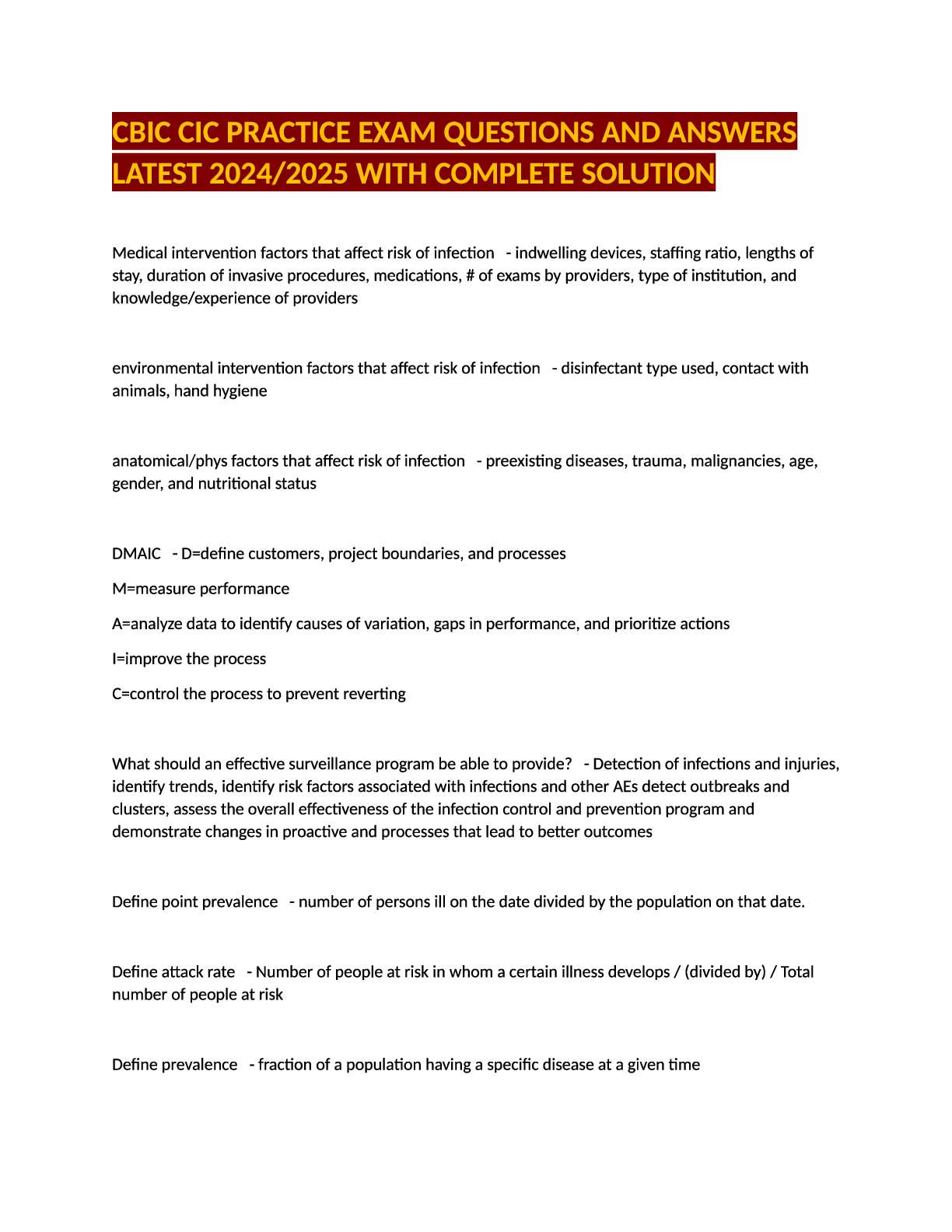
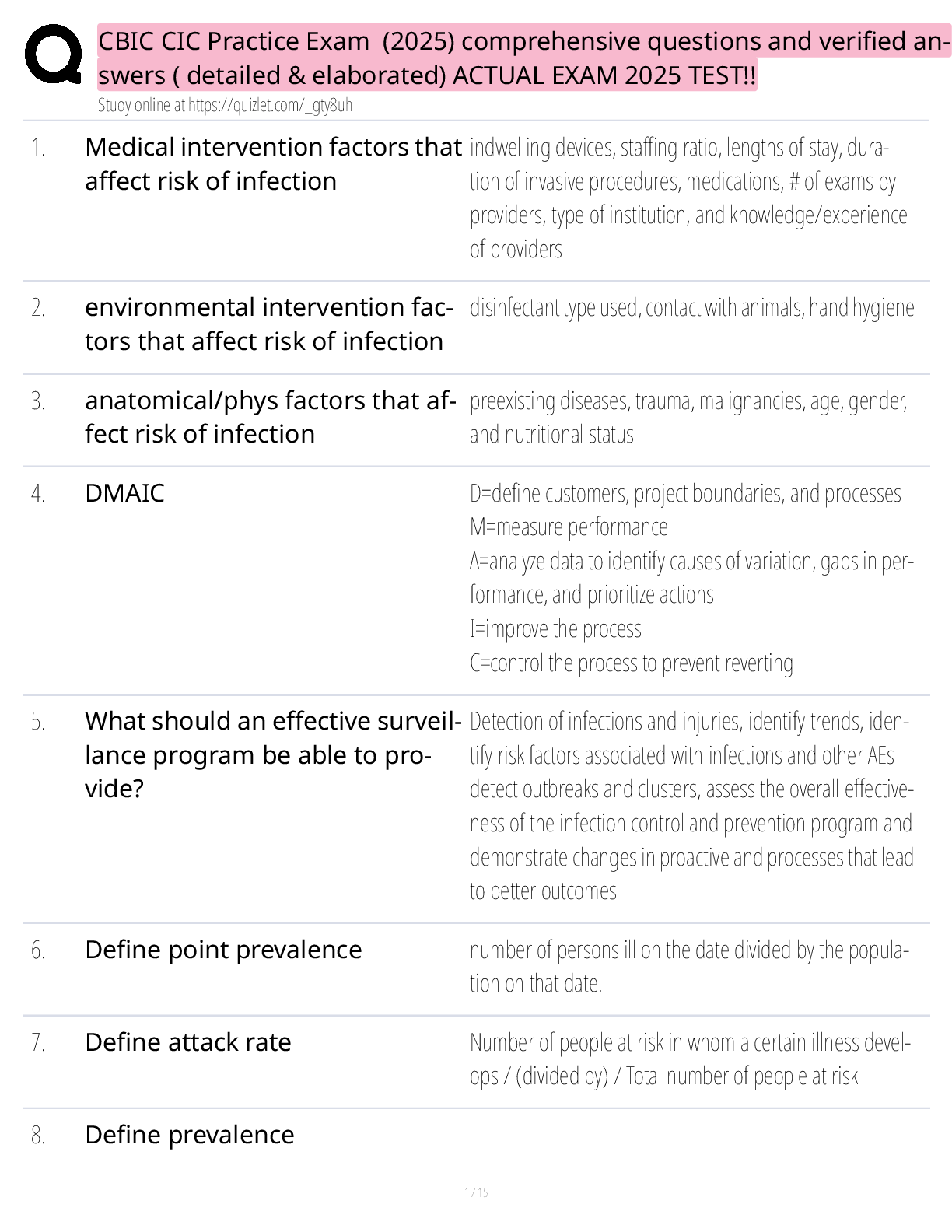
Medical intervention factors that affect risk of infection
indwelling devices, staffing ratio, lengths of stay, duration of invasive procedures, medications, # of exams by providers, type of institution, and knowled
...
1.
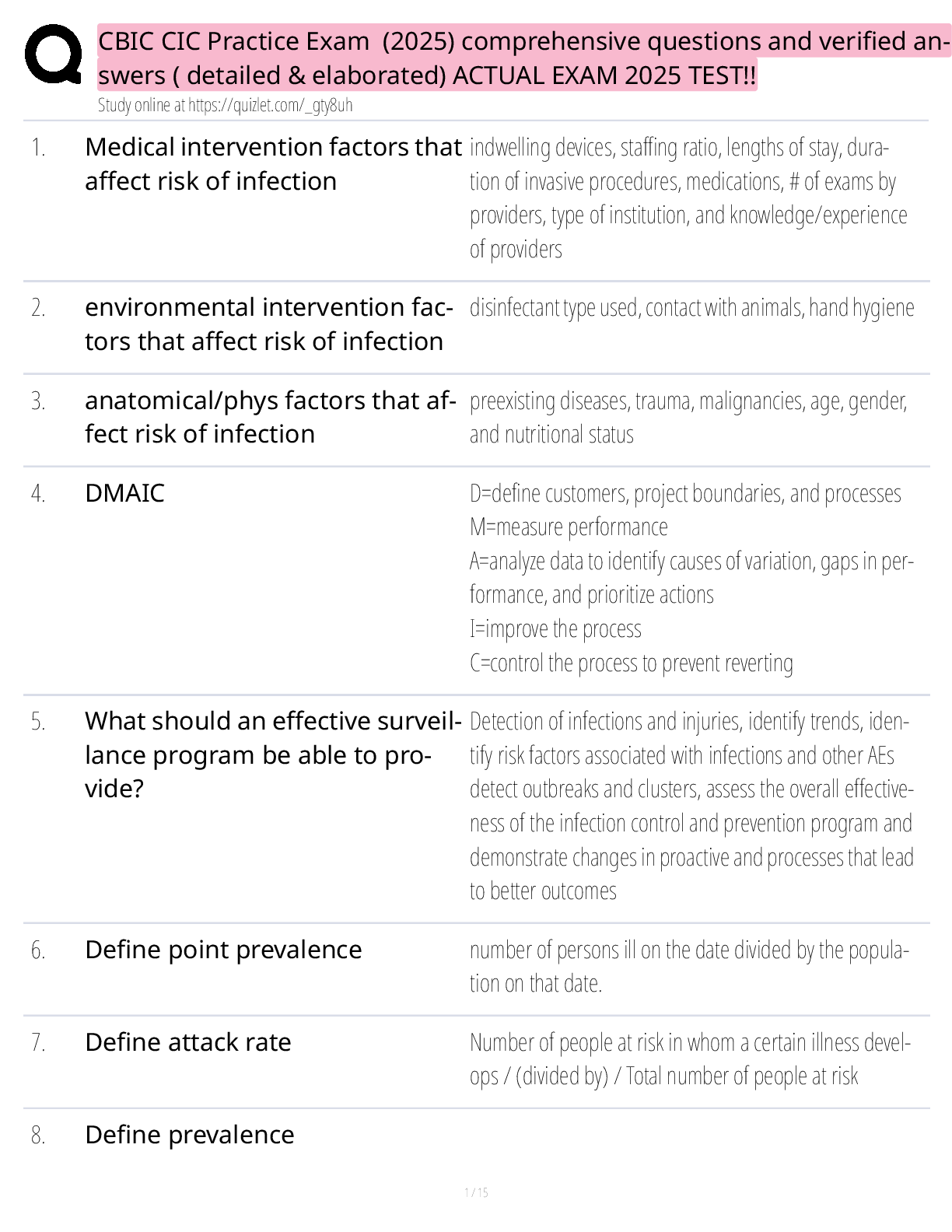
Medical intervention factors that affect risk of infection
indwelling devices, staffing ratio, lengths of stay, duration of invasive procedures, medications, # of exams by providers, type of institution, and knowledge/experience of providers
2. 3.
environmental intervention factors that affect risk of infection
anatomical/phys factors that affect risk of infection
4. DMAIC disinfectant type used, contact with animals, hand hygiene
preexisting diseases, trauma, malignancies, age, gender, and nutritional status
D=define customers, project boundaries, and processes M=measure performance A=analyze data to identify causes of variation, gaps in performance, and prioritize actions I=improve the process C=control the proc
time
9. Define incidence 10. Type of specimen for C. diff
number of new cases of a disease divided by the number of persons at risk for the disease.
liquid stool is required
11. When to suspect C. diff infection? when 3 or more unformed/watery stool in 24 hrs occurs 12. Relative Risk (RR)
Used in cohort studies to determine how strongly a risk factor is associated with an outcome.
1 is the null= no significance of the association between exposure and adverse event
P(X infection or exposed)/P(Y infection or unexposed) = RR 13. Details of control chart
central line = the ave of data pts x axis = time
18. 4 stages of prevention
1. preventing altogether ie vaccine 2. early identification/tx ie cessation or dx testing 3. providing optimal health to prevent further disease progression 4. preventing healthcare associated complications
19. Volume limit for alcohol-based hand dispensers
20. 3 / 15
1.2 L in rooms, hallways/areas open to hallways 2L in suites
CBIC CIC Practice Exam (2025) comprehensive
[Show More]