Nurses and Systems Development Life Cycle
Nursing's integral contribution to the process of selecting and implementing a hospital
information system is essential to the success of the system. This process, defined as t
...
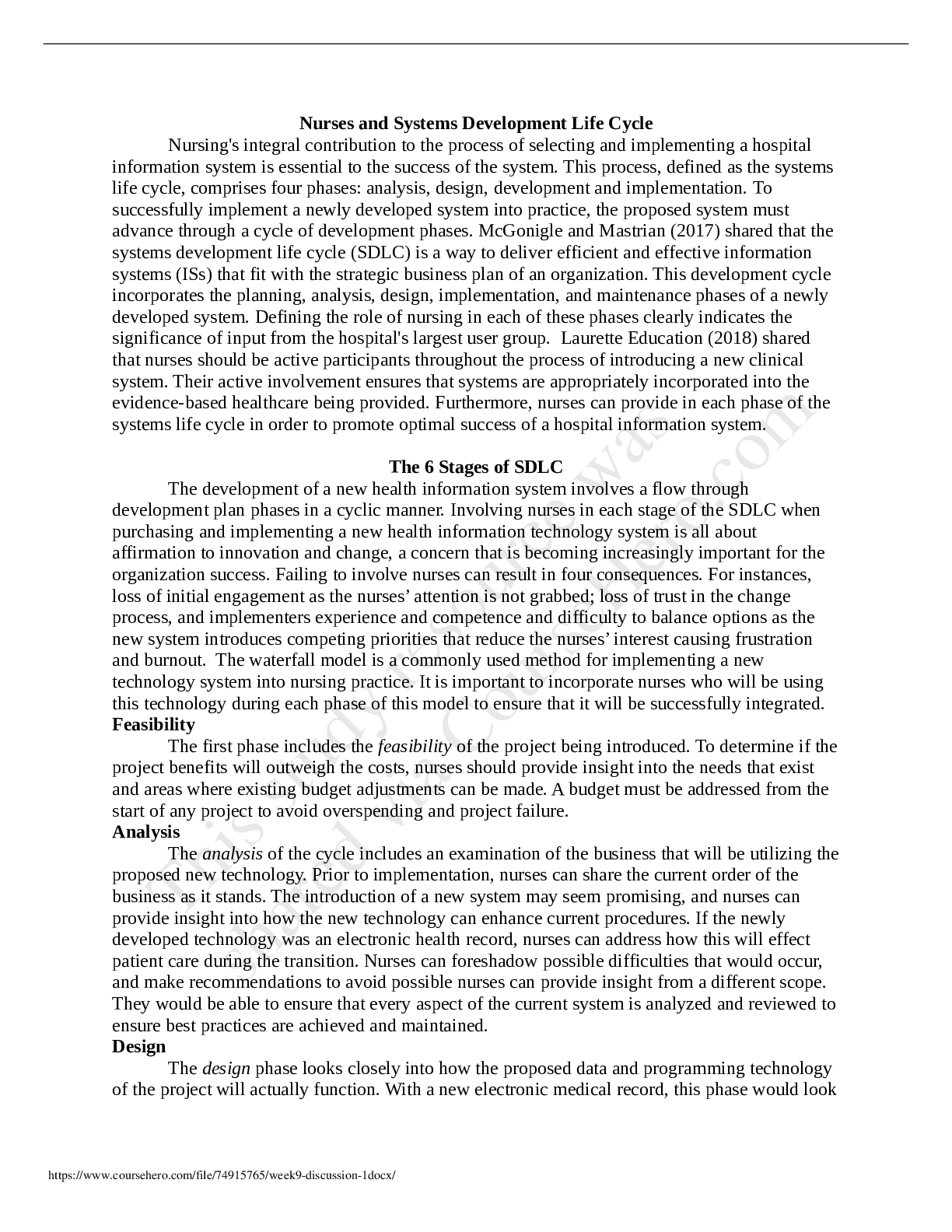
Nurses and Systems Development Life Cycle
Nursing's integral contribution to the process of selecting and implementing a hospital
information system is essential to the success of the system. This process, defined as the systems
life cycle, comprises four phases: analysis, design, development and implementation. To
successfully implement a newly developed system into practice, the proposed system must
advance through a cycle of development phases. McGonigle and Mastrian (2017) shared that the
systems development life cycle (SDLC) is a way to deliver efficient and effective information
systems (ISs) that fit with the strategic business plan of an organization. This development cycle
incorporates the planning, analysis, design, implementation, and maintenance phases of a newly
developed system. Defining the role of nursing in each of these phases clearly indicates the
significance of input from the hospital's largest user group. Laurette Education (2018) shared
that nurses should be active participants throughout the process of introducing a new clinical
system. Their active involvement ensures that systems are appropriately incorporated into the
evidence-based healthcare being provided. Furthermore, nurses can provide in each phase of the
systems life cycle in order to promote optimal success of a hospital information system.
The 6 Stages of SDLC
The development of a new health information system involves a flow through
development plan phases in a cyclic manner. Involving nurses in each stage of the SDLC when
purchasing and implementing a new health information technology system is all about
affirmation to innovation and change, a concern that is becoming increasingly important for the
organization success. Failing to involve nurses can result in four consequences. For instances,
loss of initial engagement as the nurses’ attention is not grabbed; loss of trust in the change
process, and implementers experience and competence and difficulty to balance options as the
new system introduces competing priorities that reduce the nurses’ interest causing frustration
and burnout. The waterfall model is a commonly used method for implementing a new
technology system into nursing practice. It is important to incorporate nurses who will be using
this technology during each phase of this model to ensure that it will be successfully integrated.
Feasibility
The first phase includes the feasibility of the project being introduced. To determine if the
project benefits will outweigh the costs, nurses should provide insight into the needs that exist
and areas where existing budget adjustments can be made. A budget must be addressed from the
start of any project to avoid overspending and project failure.
Analysis
The analysis of the cycle includes an examination of the business that will be utilizing the
proposed new technology. Prior to implementation, nurses can share the current order of the
business as it stands. The introduction of a new system may seem promising, and nurses can
provide insight into how the new technology can enhance current procedures. If the newly
developed technology was an electronic health record, nurses can address how this will effect
patient care during the transition. Nurses can foreshadow possible difficulties that would occur,
and make recommendations to avoid possible nurses can provide insight from a different scope.
They would be able to ensure that every aspect of the current system is analyzed and reviewed to
ensure best practices are achieved and maintained.
Design
The design phase looks closely into how the proposed data and programming technology
of the project will actually function. With a new electronic medical record, this phase would look
[Show More]