NURSING > QUESTIONS & ANSWERS > : Physical Examination & Health Assessment, 6th Edition[ Chapter 21: Abdomen pdf] (All)
: Physical Examination & Health Assessment, 6th Edition[ Chapter 21: Abdomen pdf]
Document Content and Description Below
Last updated: 4 years ago
Preview 1 out of 14 pages
Instant download

Buy this Document to get the Full Access Instantly
Provided by Students Who Aced it
We Verify Document Content to Gurantee Accuracy
Reviews( 0 )
Document information
Connected school, study & course
About the document
Uploaded On
Mar 25, 2021
Number of pages
14
Written in
All

Additional information
This document has been written for:
Uploaded
Mar 25, 2021
Downloads
0
Views
210
Topic Tags
Recommended For You
Get more on QUESTIONS & ANSWERS »
TEST BANK Chapter 21: Peripheral Vascular System and Lymphatic...
Milestone Chapter 21: Cancer Development (Concepts for Interpr...
CRCST Certification Chapter 21 / score 100% / new version / 20...

Giger & Davidhizar: Transcultural Nursing: Assessment and Inte...
MATERNAL CHILD NURSING CARE 6TH EDITION PERRY TEST BANK CHAPTE...
.png)
TEST BANK Chapter 21: Peripheral Vascular System and Lymphatic...
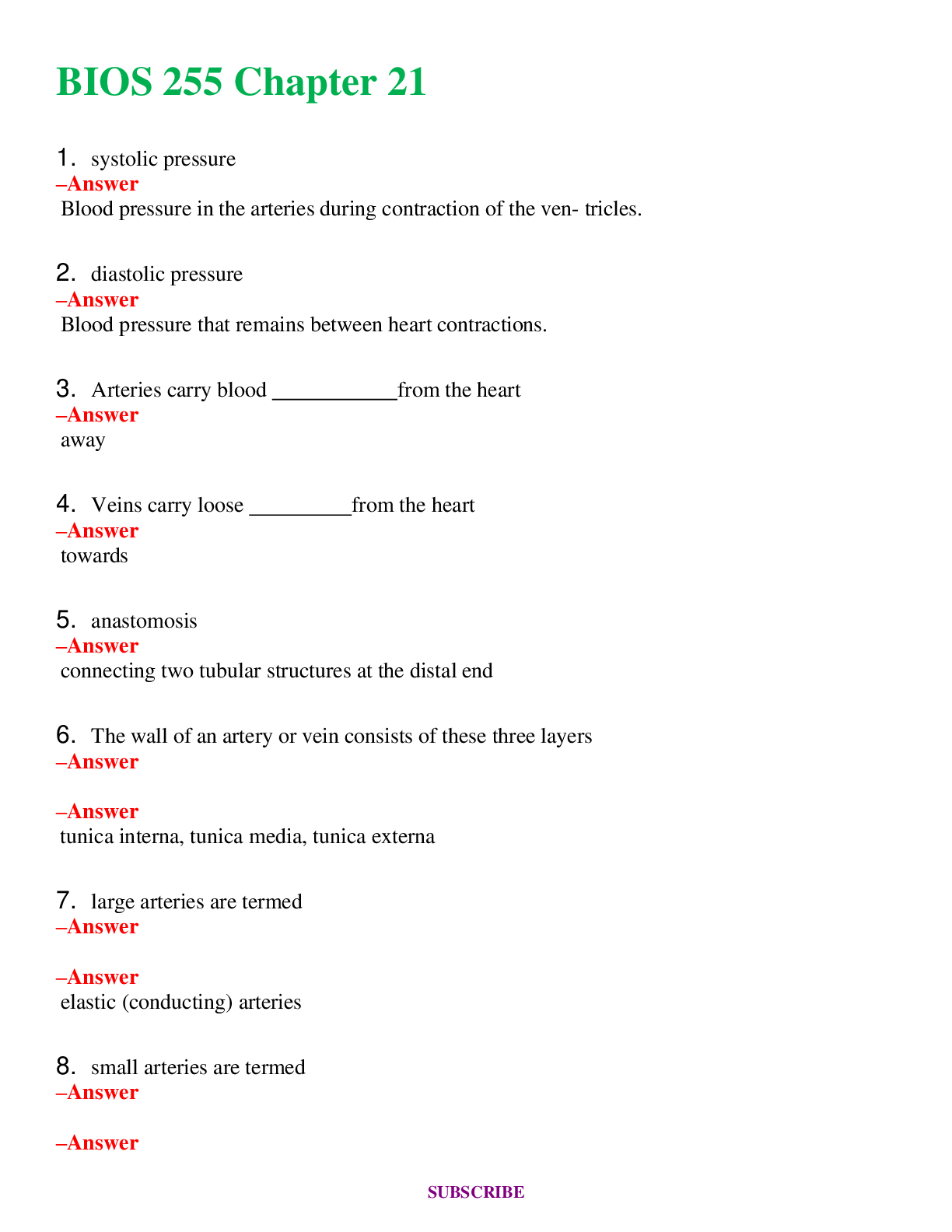
BIOS 255 Chapter 21 Questions and Answers (Verified Answers...
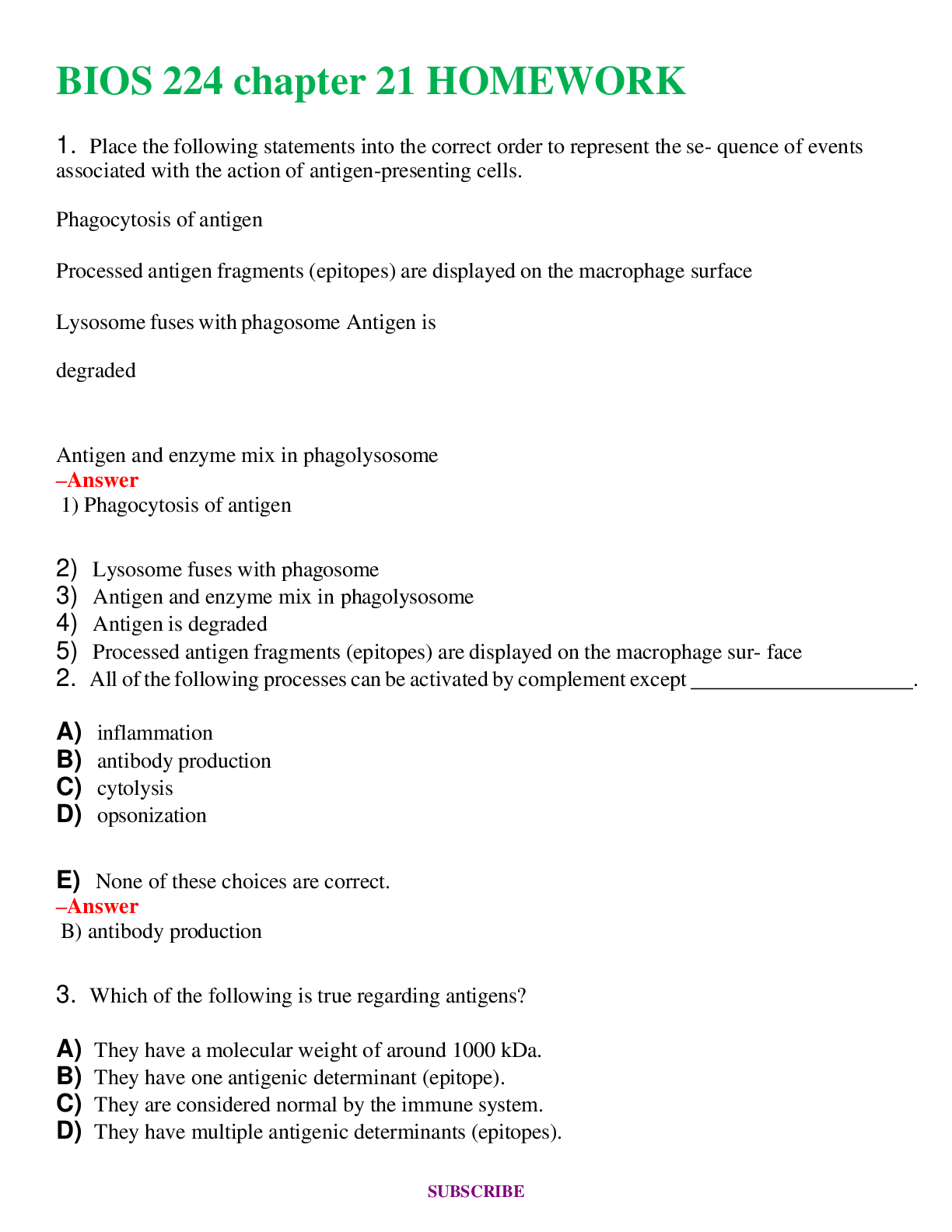
BIOS 224 Chapter 21 HOMEWORK Questions and Answers (Verifie...
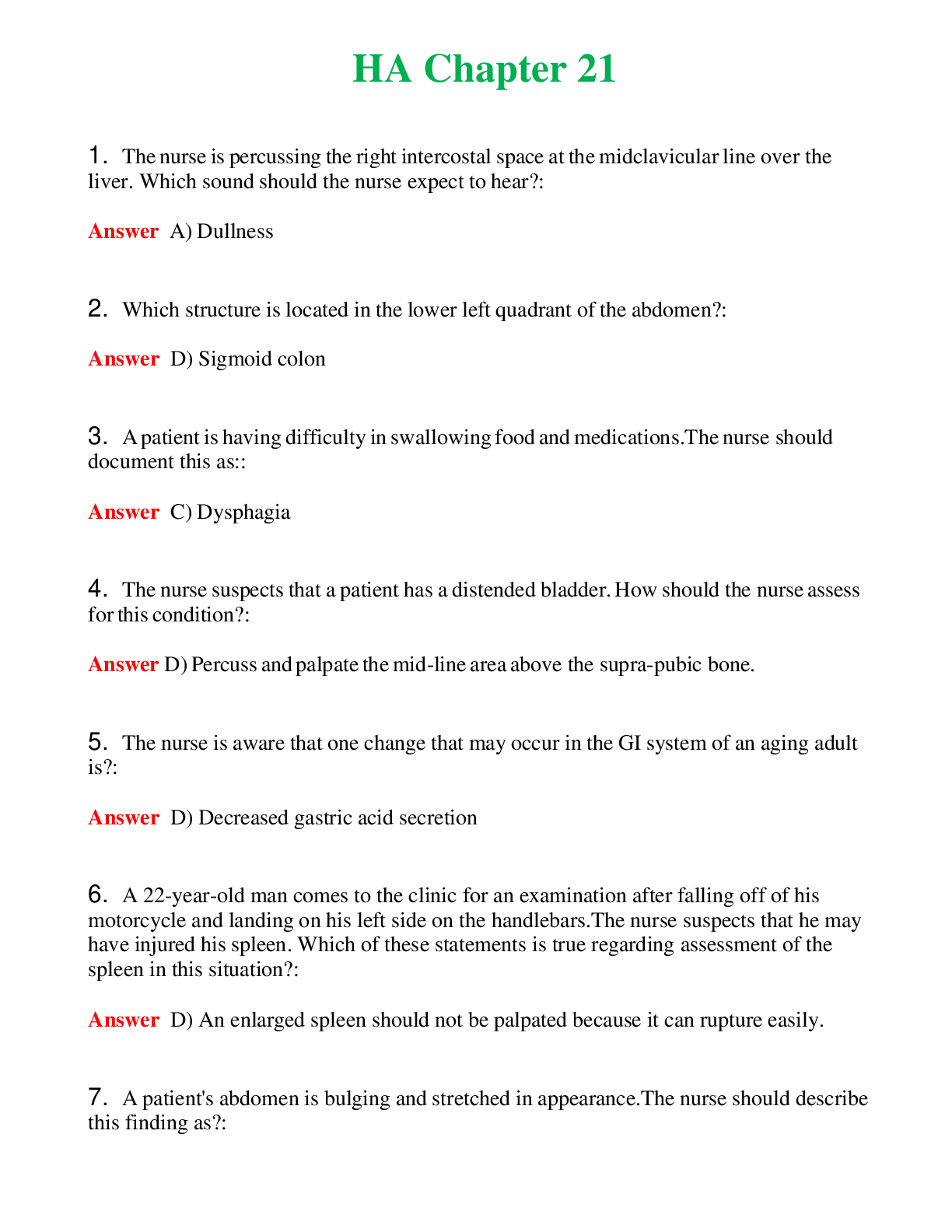
HA Chapter 21 Actual Questions and Verified Answers ( Included...

NURS 6501 / NURS6501: Advanced Pathophysiology - Chapter 21 St...
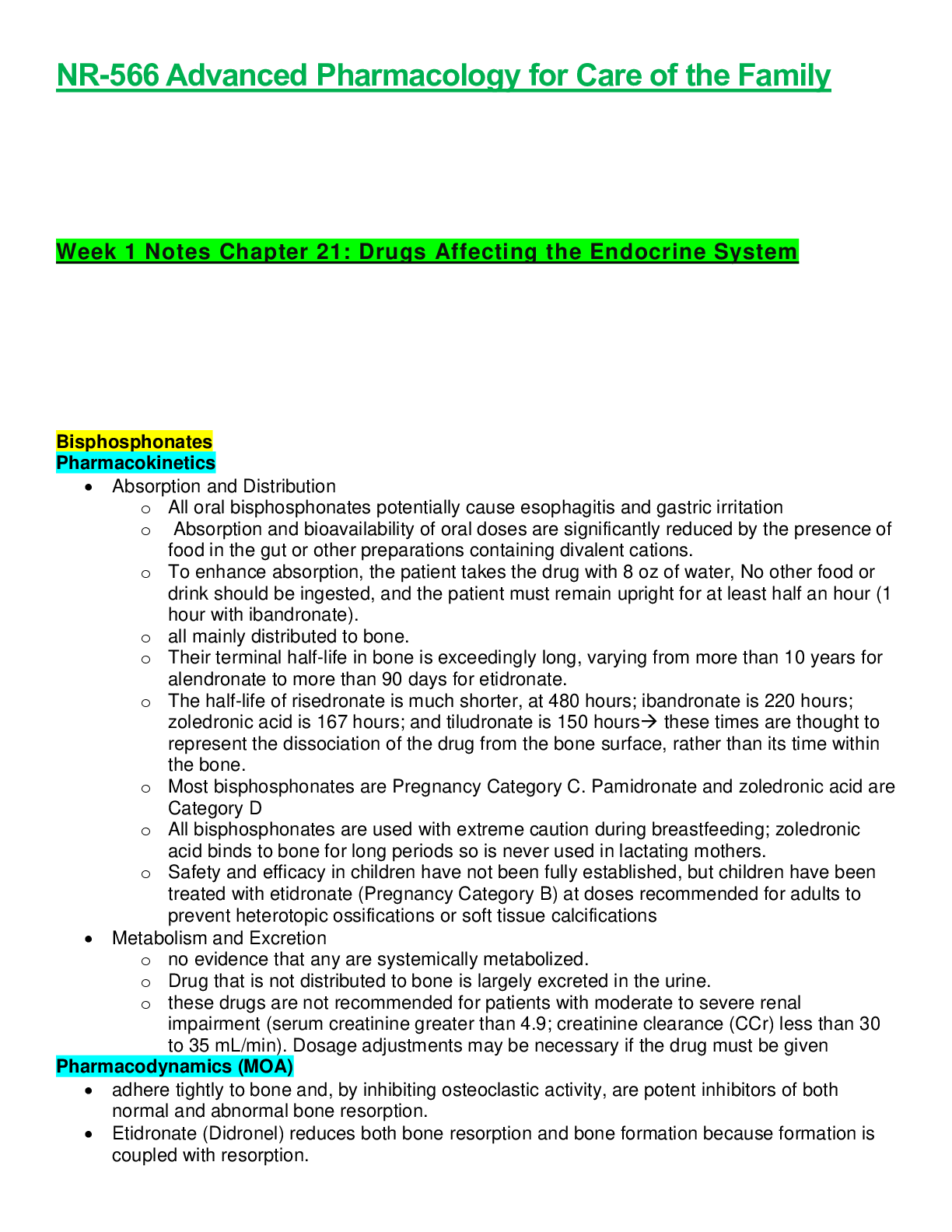
NR566 / NR 566: Advanced Pharmacology for Care of the Family W...

NR 566 / NR566 Advanced Pharmacology for Care of the Family We...

NR566 / NR 566: Advanced Pharmacology for Care of the Family W...
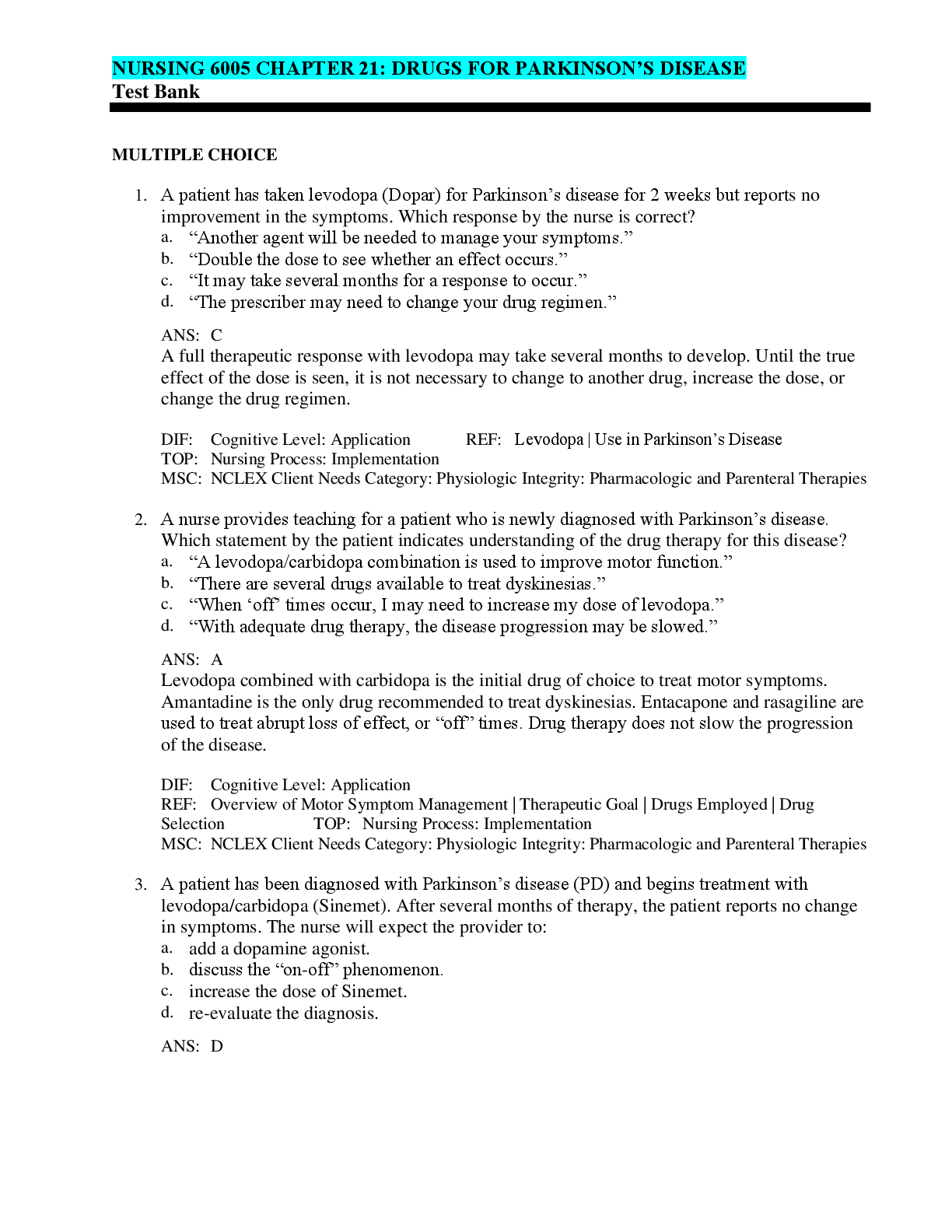
NURSING 6005 CHAPTER 21: DRUGS FOR PARKINSON’S DISEASE | LATES...

NR 304 Chapter 21 Abdominal assessment, Complete solution (202...
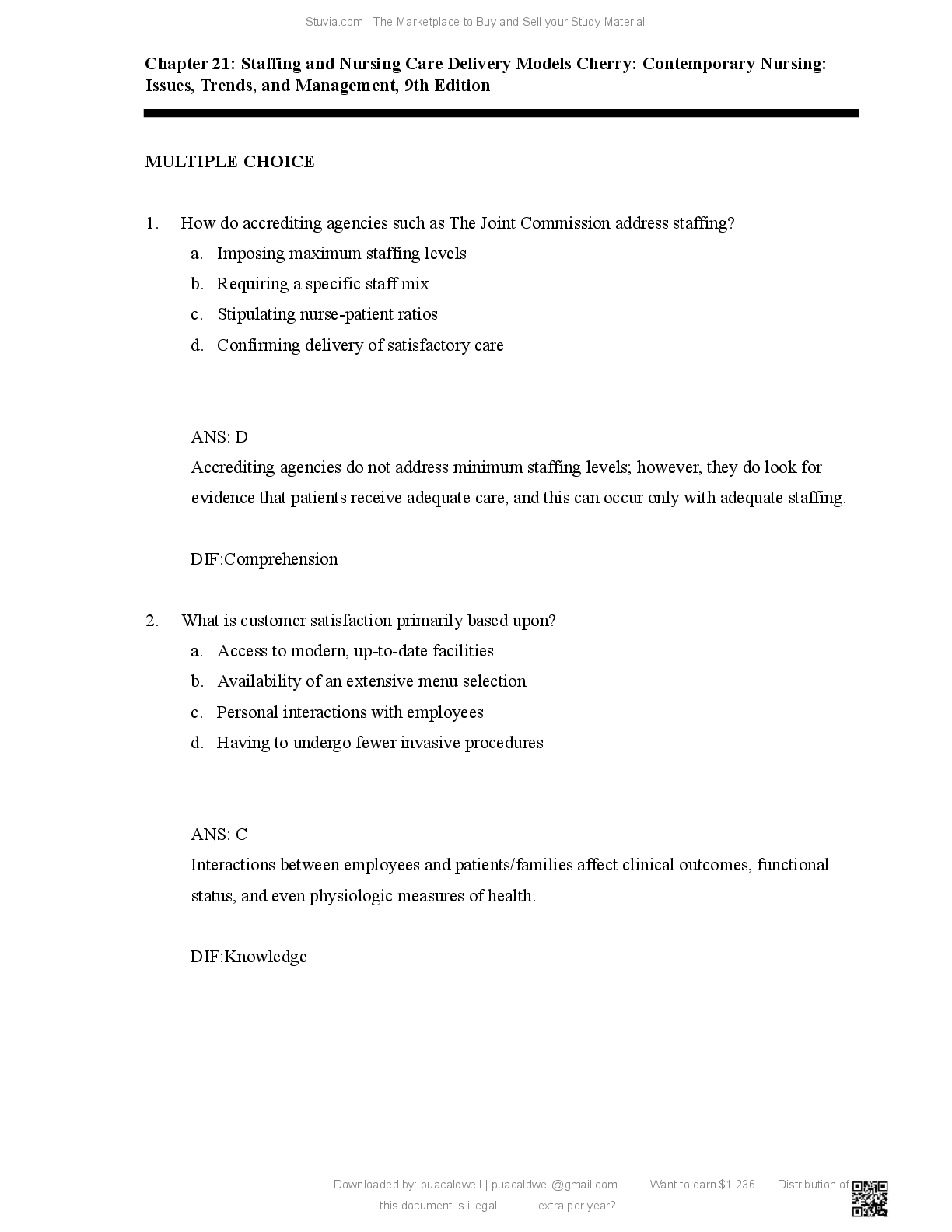
CONTEMPORARY NURSING ISSUES TRENDS AND MANAGEMENT CHAPTER21 9T...
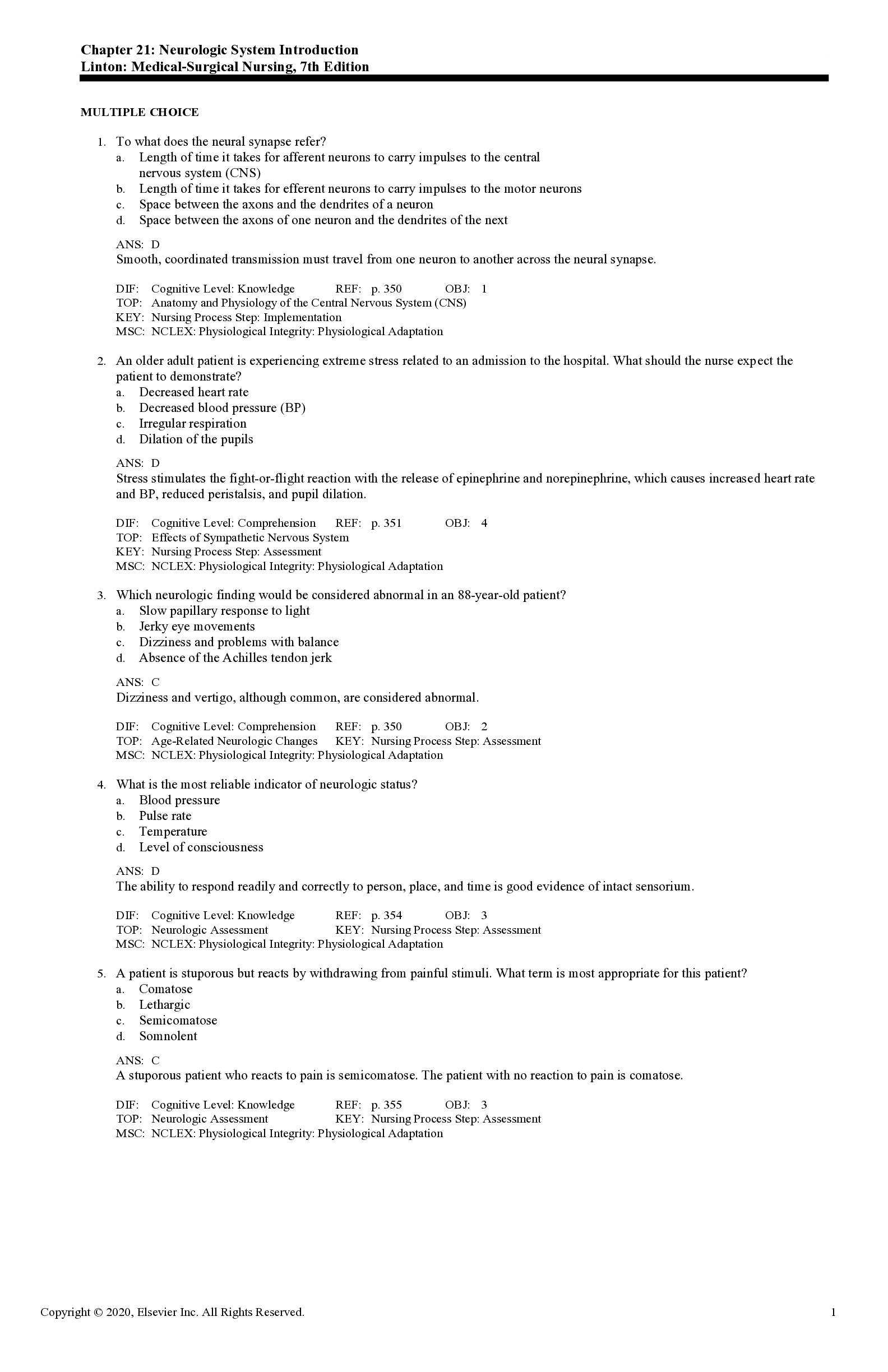
Chapter 21 Linton: Medical-Surgical Nursing, 7th Edition
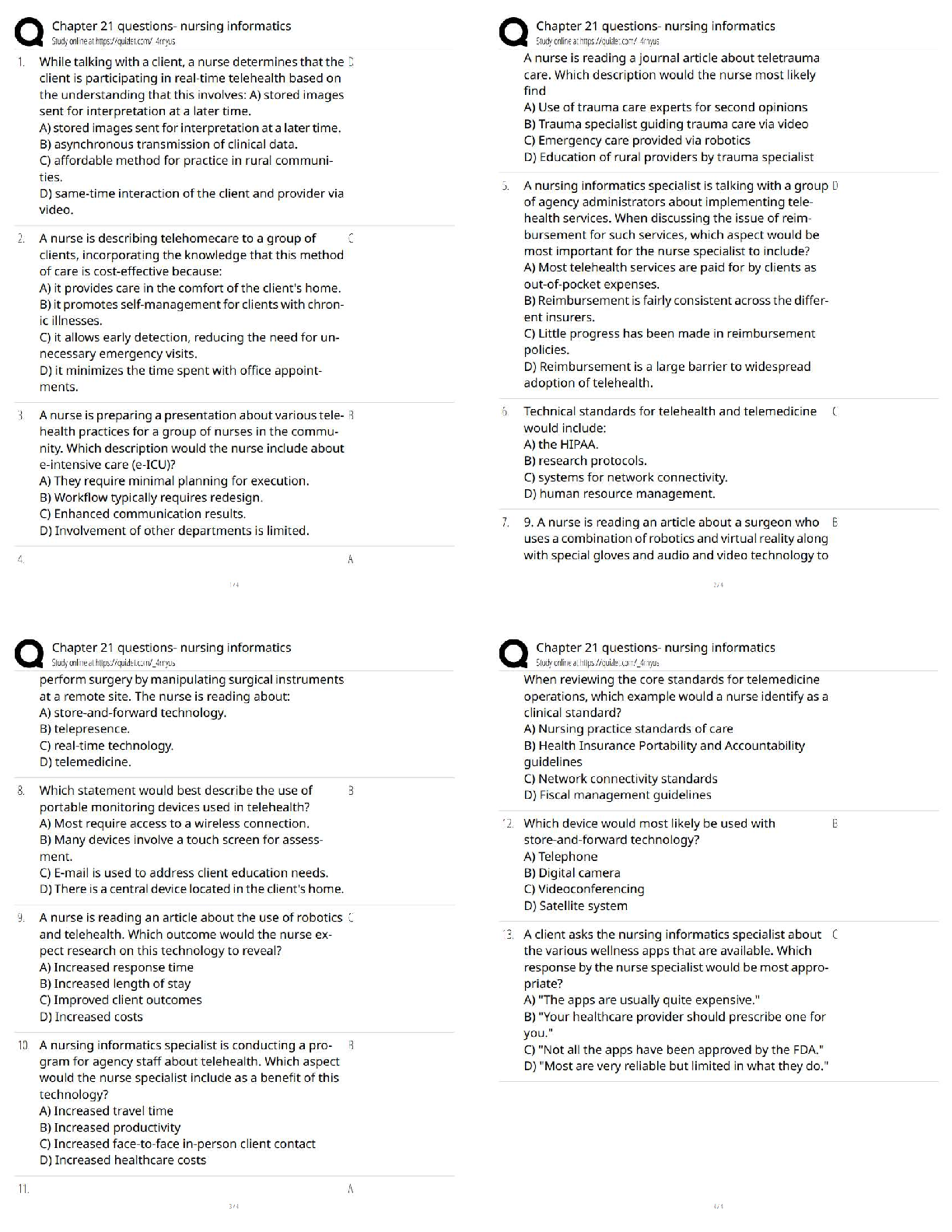
Chapter 21 Nursing Informatics Questions / New Version / 202...

.png)
.png)
![Preview of Pennsylvania State UniversityLES 6.]Les 6 Lab Report.](https://scholarfriends.com/storage/docx (5).png)
![Preview of 2019 PN Hesi Exit V1 questions and answers 100% verified]](https://scholarfriends.com/storage/2019_PN_Hesi_Exit_V1.png)
![Preview of Walden UniversityADVANCED P 6521].phRMcymidterm 100% verified](https://scholarfriends.com/storage/phRMcymidterm.png)
![Preview of Pharmacology Midterm Test[mostly examined in exams ]100% verified]](https://scholarfriends.com/storage/Pharmacology_Midterm_Test.png)

