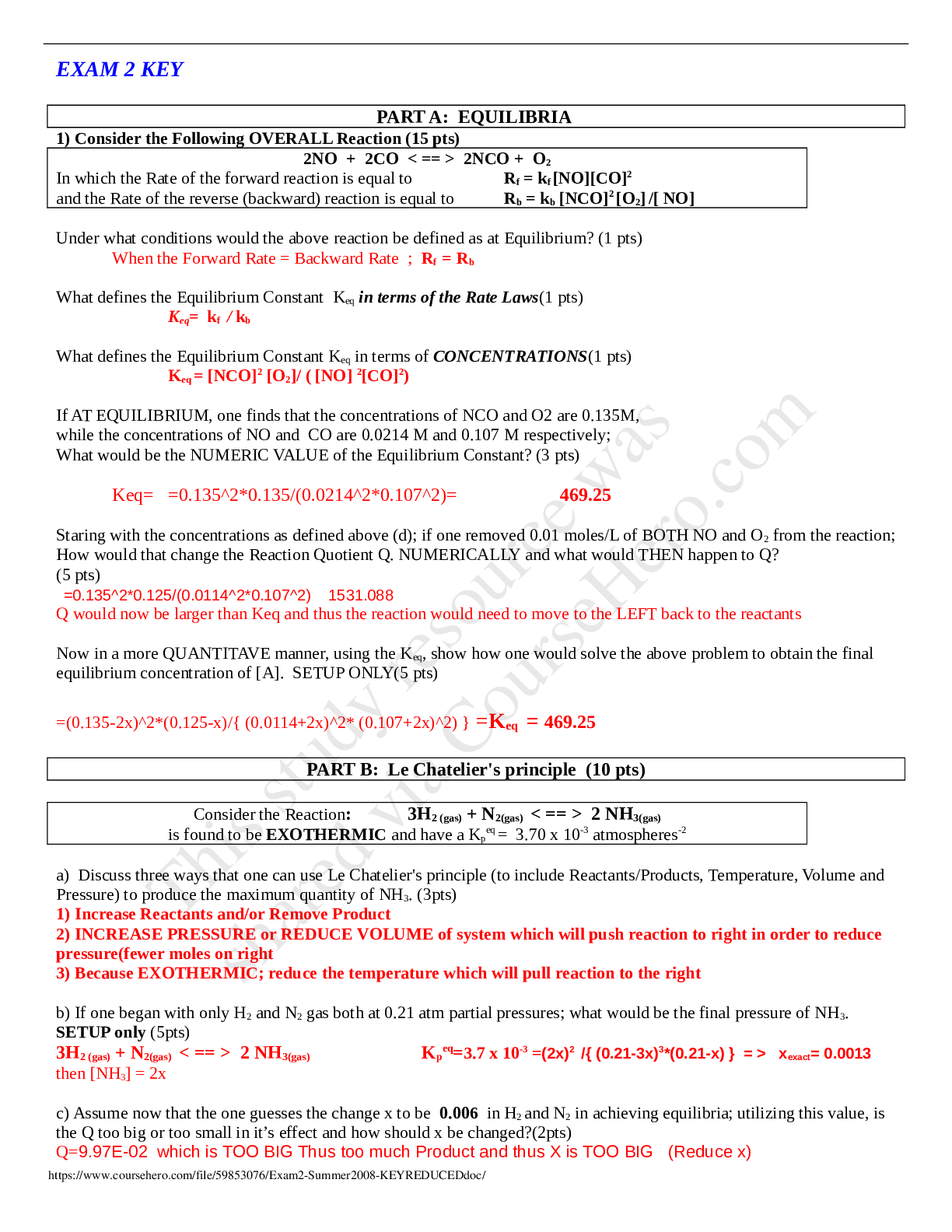
University of Pennsylvania - BIOL 204BIOL 204 (2017) Problem Set 5 + Key
Document Content and Description Below
Biology 204
Spring 2017/REA/ELLIOTT
1
Problem Set 5: Intermediary metabolism
Questions:
These questions are intended as a supplement and complement to the material covered in the lecture series
‘Metabolism’ but lar
...
[Show More]
Last updated: 7 months ago
Preview 1 out of 13 pages
Instant download
.png)
Buy this Document to get the Full Access Instantly
Provided by Students Who Aced it
We Verify Document Content to Gurantee Accuracy
Reviews( 0 )
Document information
Connected school, study & course
About the document
Uploaded On
Mar 28, 2021
Number of pages
13
Written in
All

Additional information
This document has been written for:
Uploaded
Mar 28, 2021
Downloads
0
Views
91
Topic Tags
Recommended For You
Get more on EXAM »
$25
240 Pages
Test Bank for Biology The Core 3rd Edition By Eric Simon (All...
$25
813 Pages
Test Bank for Biological Science 3rd Canadian Edition By Scott...
$25
3221 Pages
Test Bank for Biology 4th Edition By Robert Brooker Eric Widma...
$25
2871 Pages
Test Bank for Biology 5th Edition By Robert Brooker, Eric Widm...
$25
4166 Pages
Test Bank for Biology 11th Edition By Peter Raven, George John...
$25
318 Pages
Solutions Manual for Biology Concepts and Applications without...
$25
717 Pages
Test Bank for Biology Concepts and Applications 10th Edition B...
$25
2301 Pages
Test Bank for Biology Concepts and Investigations 2nd Edition...
$25
1638 Pages
Test Bank for Biology 3rd Edition By Robert Brooker Eric Widma...
$25
1145 Pages
Test Bank for Biology 8th Edition By Eldra Solomon Linda Berg...
$25
1999 Pages
Test Bank for Biology 10th Edition By Raven Johnson Kenneth Jo...
$25
446 Pages
Solutions Manual for Biology 10th Edition By Raven Johnson Ken...
$25
947 Pages
Test Bank for Biology 10th Edition By Solomon Berg, Martin Dia...
$25
976 Pages
Test Bank for Biology Concepts and Investigations 4th Edition...
$25
890 Pages
Test Bank for Biology Exploring the Diversity of Life 4th Cana...
$25
1171 Pages
Test Bank for Biology Life on Earth with Physiology 10th Editi...
$25
709 Pages
Test Bank for Biology Life on Earth with Physiology 11th Editi...
$25
709 Pages
Test Bank for Biology Life on Earth with Physiology 12th Editi...
$25
325 Pages
Test Bank for Biology Now 1st Core Edition By Anne Houtman, Me...
$25
404 Pages
Test Bank for Biology of Humans Concepts, Applications and Iss...
More related documents below


.png)

.png)