NR 511 Final Exam Study Guide Top Grade Question and Answers(Graded A Already) | Week 1
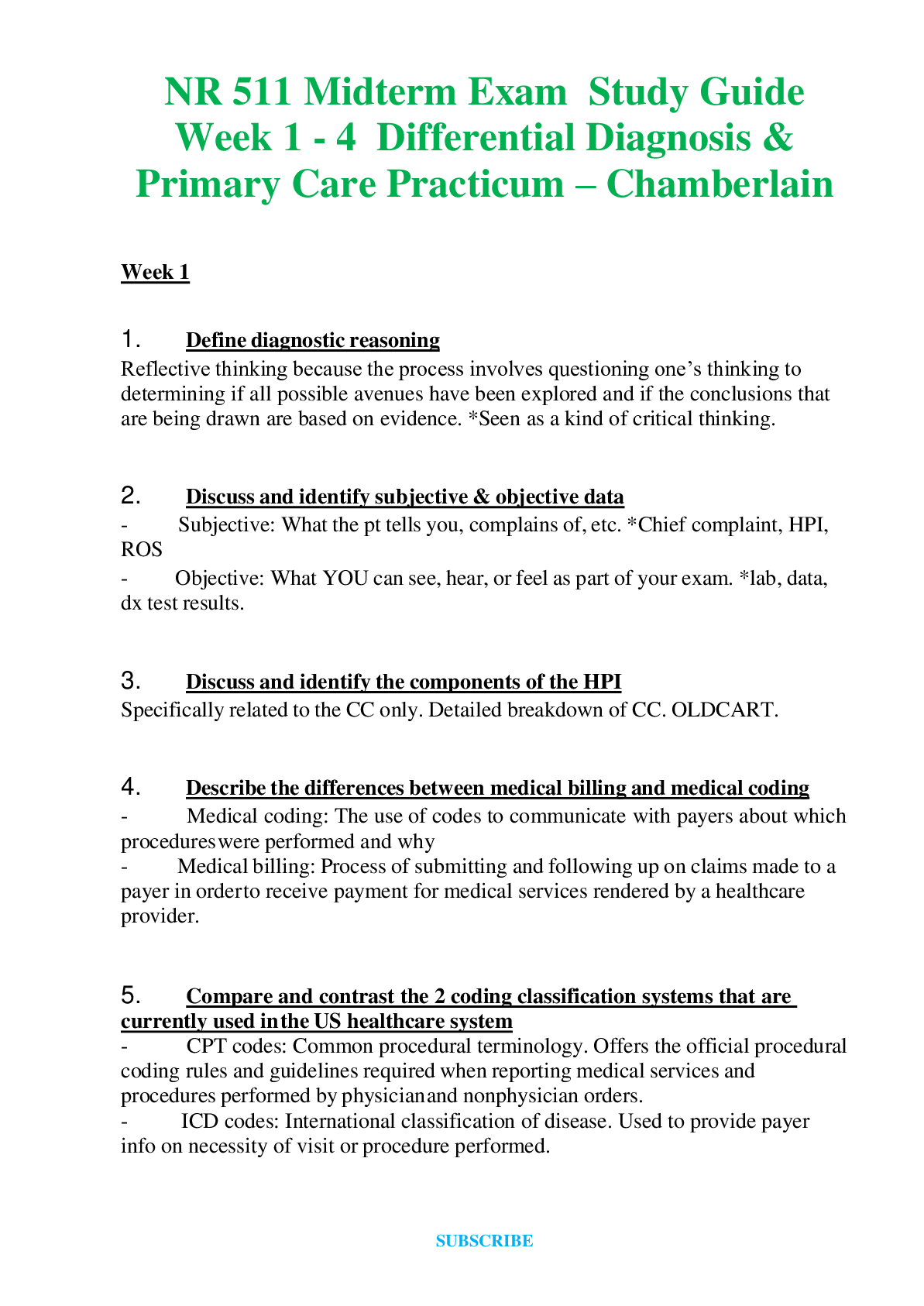
1. Define diagnostic reasoning
2. Discuss and identify subjective & objective data
3. Discuss and identify the components of the
...
NR 511 Final Exam Study Guide Top Grade Question and Answers(Graded A Already) | Week 1
1. Define diagnostic reasoning
2. Discuss and identify subjective & objective data
3. Discuss and identify the components of the HPI
4. Describe the differences between medical billing and medical coding
5. Compare and contrast the 2 coding classification systems that are currently used in the
US healthcare system
6. Discuss how specificity, sensitivity & predictive value contribute to the usefulness of the
diagnostic data
7. Discuss the elements that need to be considered when developing a plan
8. Describe the components of Medical Decision Making in E&M coding
9. Correctly order the E&M office visit codes based on complexity from least to most
complex
10. Discuss a minimum of three purposes of the written history and physical in relation to the
importance of documentation
11. Accurately document why every procedure code must have a corresponding diagnosis
code
12. Correctly identify a patient as new or established given the historical information
13. Identify the 3 components required in determining an outpatient, office visit E&M code
14. Describe the components of Medical Decision Making in E&M coding
15. Correctly order the E&M office visit codes based on complexity from least to most
complex
16. Explain what a “well rounded” clinical experience means
17. State the maximum number of hours that time can be spent “rounding” in a facility
18. State 9 things that must be documented when inputting data into clinical encounter
19. Identify and explain each part of the acronym SNAPPS
week 2, 3, 4
1. Identify the most common type of pathogen responsible for acute gastroenteritis
2. Recognize that assessing for prior antibiotic use is a critical part of the history in patients presenting with diarrhea
3. Describe the difference between Irritable Bowel Disease (IBS) and Inflammatory Bowel Disorder (IBD)
4. Discuss two common Inflammatory Bowel Diseases
5. Discuss the diagnosis of diverticulitis, risk factors, and treatments
6. Identify the significance of Barrett’s esophagus
7. Discuss the diagnosis of GERD, risk factors, and treatments
8. Discuss the differential diagnosis of acute abdominal pain, work-up and testing, treatments
9. Discuss the difference between sensorineural and conductive hearing loss
10. Identify the triad of symptoms associated with Meniere's disease
11. Identify the symptoms associated with peritonsilar abcess
12. Identify the most common cause of viral pharyngitis
13. Identify the most common cause of acute nausea & vomiting
14. Discuss the importance of obtaining an abdominal xray to rule out perforation or
15. Discuss colon cancer screening recommendations relative to certain populations
16. Identify at least two disorders that are considered to be disorders related to conductive hearing loss
17. Identify the most common bacterial cause of pharyngitis
18. Identify the clinical findings associated with mononucleosis
19. Identify common characteristics in a rash caused be Group A Strep
20. Discuss that the diagnosis of streptococcal pharyngitis can be made clinically based on the Centor criteria
21. Describe an intervention for a patient with gastroenteritis
22. Discuss an appropriate treatment for prophylaxis or treatment of traveler's diarrhea
23. Identify at least one effective treatment for Irritable Bowel Syndrome (IBS)
24. Identify at least one prescription medication for the treatment of chronic constipation
25. Discuss at least one treatment for Meniere's disease
26. Identify at least two disorders that are considered to be disorders related to conductive hearing loss
27. Identify the most common bacterial cause of pharyngitis
28. Identify the clinical findings associated with mononucleosis
29. Identify common characteristics in a rash caused be Group A Strep
30. Discuss that the diagnosis of streptococcal pharyngitis can be made clinically based on the Centor criteria
31. Describe an intervention for a patient with gastroenteritis
32. Discuss an appropriate treatment for prophylaxis or treatment of traveler's diarrhea
33. Identify at least one effective treatment for Irritable Bowel Syndrome (IBS)
34. Identify at least one prescription medication for the treatment of chronic constipation
35. Discuss at least one treatment for Meniere's disease
1. Discuss that the majority of dyspnea complaints are due to cardiac or pulmonary decompensation
2. Explain the differences between intra-thorax and extra-thorax flow disorders
3. Identify at least three examples of flow and volume disorders (intra and/or extra thorax)
4. Discuss diagnosis, risk factors and treatments for asthma
5. Describe appropriate tests in the work up for dyspnea
6. Discuss clinical findings and PFTs for asthma, chronic bronchitis, emphysema, and COPD
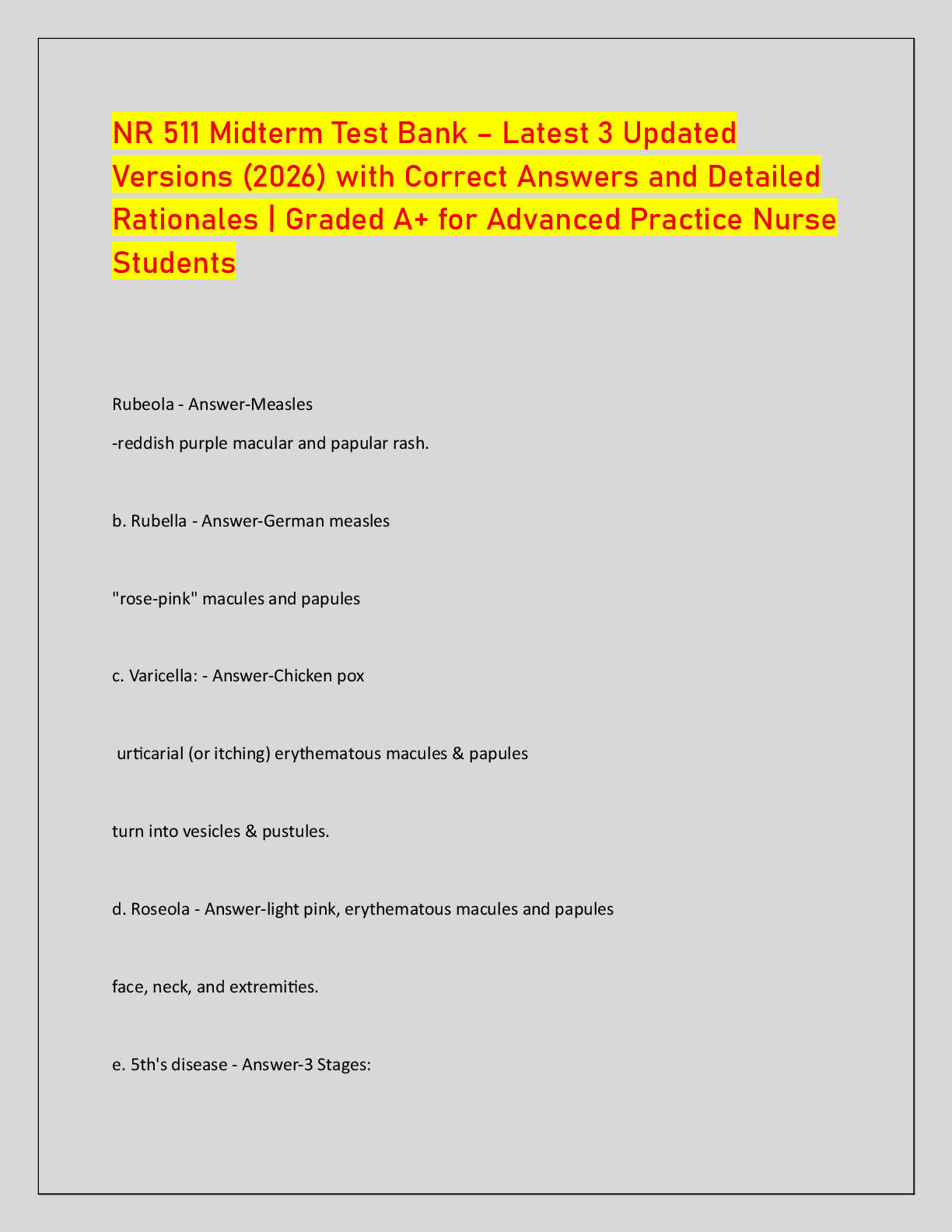
7. Differentiate between the following common rashes: rubeola, rubella, varicella,
roseola, 5ths disease, pityriasis rosea, hand, foot and mouth disease and molluscum contagiosum.
Differentiate between the following tineas: pedis, cruris, corporis and unguium
8. and describe an appropriate treatment
9. Identify the virus that causes warts
a. HPV human papilloma virus
10. Differentiate between atopic and contact dermatitis and give examples of each
11. Identify common characteristics associated with blepharitis, chalzion and hordeolum
12. Differentiate between viral, allergic, bacterial, toxic and HSV conjunctivitis
13. Discuss which chemical injury is associated with the most damage and highest risk to vision loss
14. Recognize common eye emergency conditions that require emergency room
evaluation
15. Discuss glaucoma, diagnosis and treatment
16. Discuss diabetic retinopathy
Week 5
1. Identify the population most commonly affected by bacterial prostatitis
2. Discuss the physical exam characteristics of acute bacterial prostatitis
3. Discuss how the Phren sign can differentiate between testicular torsion and epididymitis
4. Discuss common symptoms reported from a patient with BPH
5. Discuss the hallmark characteristic of a varicocele
6. Identify the population most affected by testicular cancer
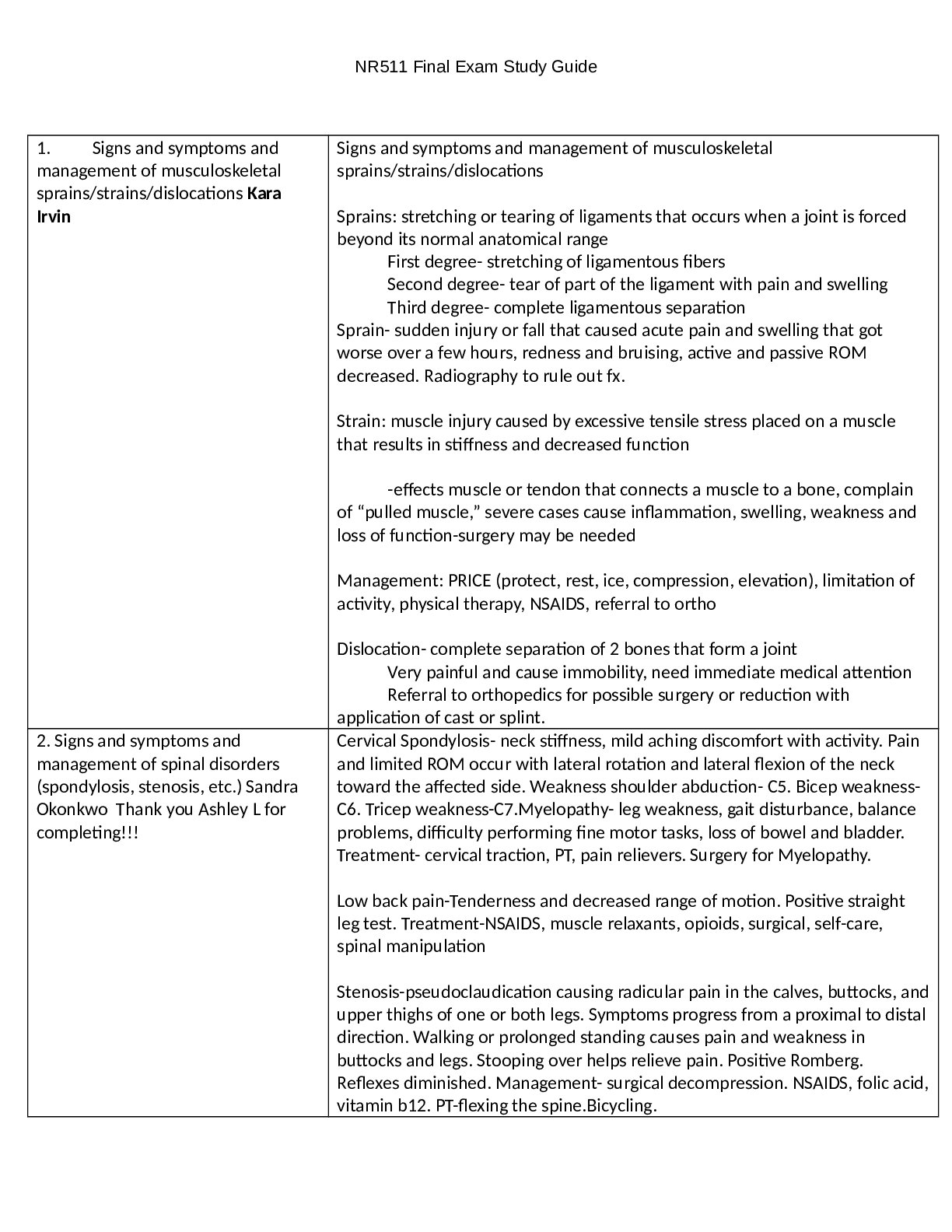
7. Explain spinal stenosis
8. Discuss common characteristics (subjective and objective findings) of patients with lumbar spinal stenosis
9. Identify the red flags associated with back and neck complaints which warrant further investigation
10. Define chronic pain
11. Identify the number of joints involved in a poly-articular disorder
12. Describe the four cardinal signs of joint inflammation: (PEWS)
13. Differentiate between DeQuervain’s Tenosynovitis and Carpal Tunnel Syndrome
14. Differentiate between lateral and medial epicondylitis
15. Discuss at least 3 vital body functions which thyroid hormones regulate.
16. Describe a goiter and the type of thyroid dysfunction that can be associated with it
17. Differentiate between overt hypothyroidism and subclinical hypothyroidism-
18. Differentiate between Hashimoto’s thyroiditis and Grave’s disease.Both are
19. Identify at least 3 risks associated with obesity
20. Identify at least 3 causes of obesity
21. Discuss one primary prevention for obesity
22. Identify the categories of obesity based on the BMI
23. Discuss how acute low back pain without neurological dysfunction does not warrant radiological imaging
24. Identify the roles of TSH, FT4, TT3, and TPO Abs in determining thyroid function
25. Identify at least one “at-risk” population who should be considered for thyroid screening-
26. Discuss one physical characteristic seen in a hyperthyroid patient--Smooth,
27. Identify the CDC recommended antibiotic class for treatment of acute bacterial
prostatitis
28. Identify at least one treatment for BPH
29. Identify treatment options for obesity based on BMI and comorbid conditions
30. Describe the Spurling test and what condition it is used to diagnose
31. Describe how to perform a Phalen and Tinel test
32. Identify at least 3 physical exam maneuvers to assess the knee
Week 6
1. Differentiate between resting, postural and intention tremors and describe each
2. Describe one disease with resting tremor as a clinical finding
3. Describe a medication commonly associated with tremors
4. Identify at least 3 laboratory tests to rule out systemic causes of tremor
5. Describe at least one at-risk population that is recommended to have HIV
screening
6. Describe at least one pharmacologic treatment option for tremor
7. Describe an appropriate empiric antibiotic treatment plan for cellulitis
8. Discuss an intervention to prevent HIV and HIV-associated behaviors
9. Identify physical exam findings in the patient with HIV
10. Describe symptoms, DDx, pathogens, testing, and treatment for the following
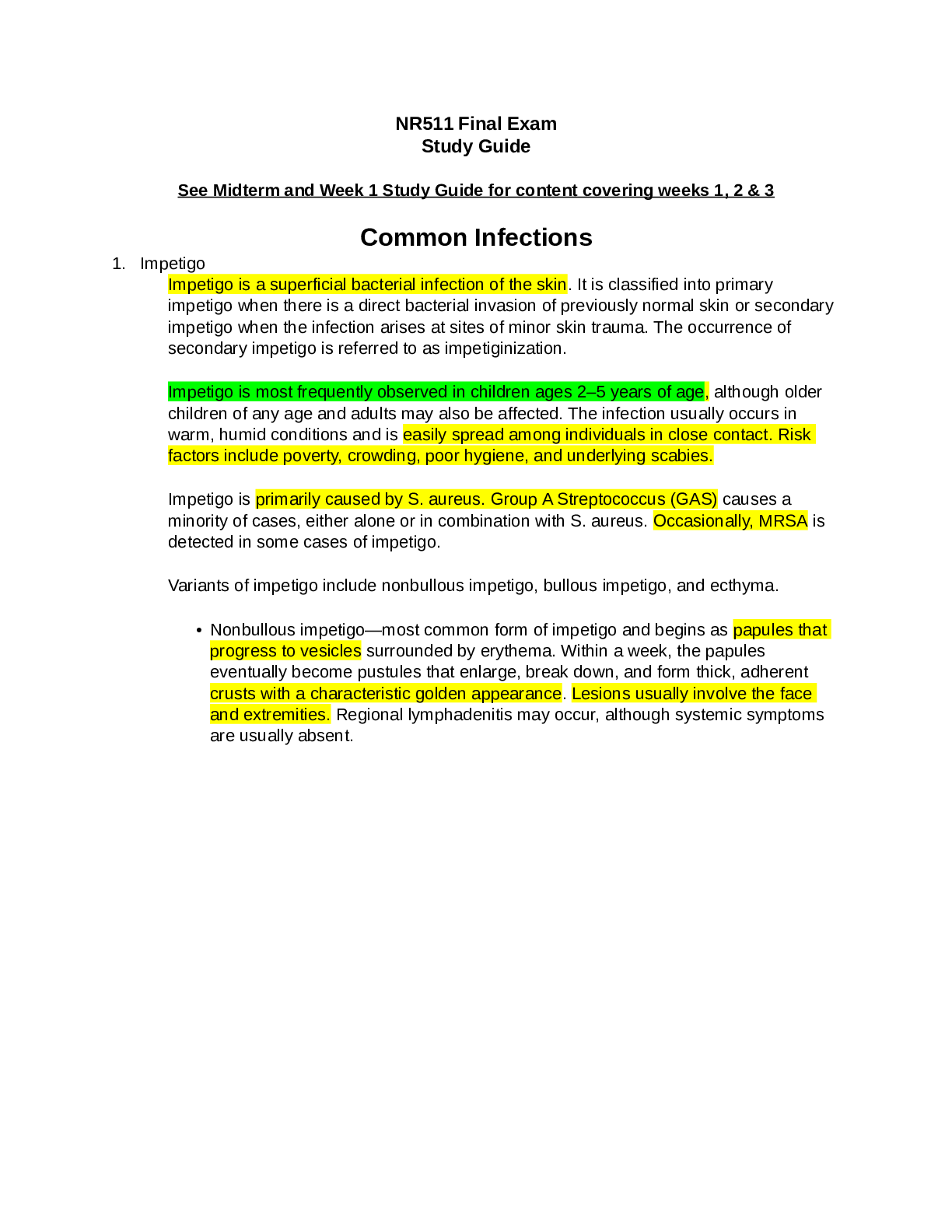
conditions: Cellulitis, impetigo, MRSA, Bites (dogs, cats, humans), Erysipelas
Impetigo
Treatment
Bullous and nonbullous impetigo can be treated with either
• Unlike impetigo, ecthyma should always be treated with oral therapy.
Extensive impetigo and ecthyma
MRSA impetigo
MRSA
• Risk factors for community-associated methicillin-resistant S. aureus (CA-MRSA)
CA-MRSA transmission
CA-MRSA isolates
Dog Bites
Human bites
Erysipelas
[Show More]