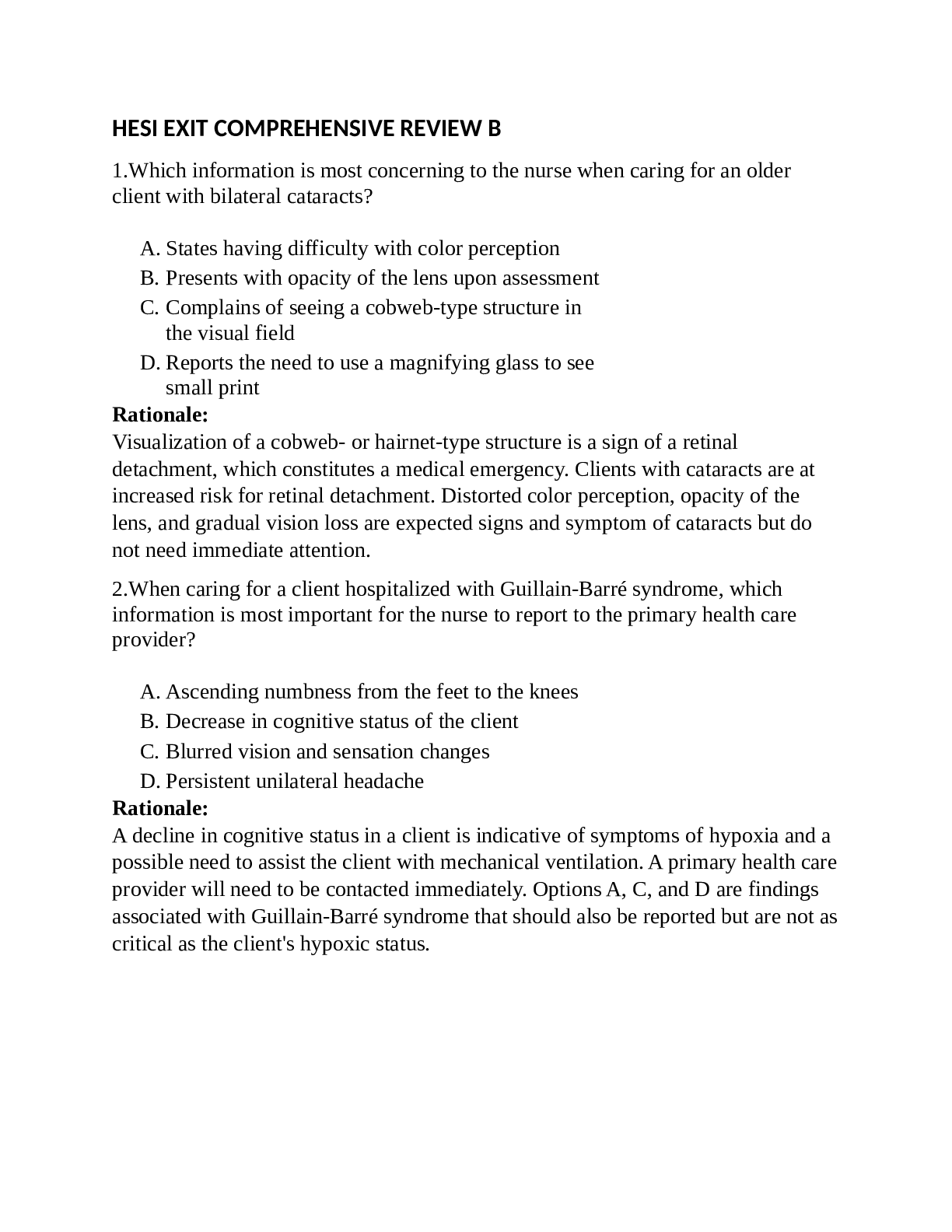
NURSING > Study Notes > NUR 590 Topic 2 Assignment; Evidence-Based Practice Proposal - Section A; Organizational Culture and (All)
NUR 590 Topic 2 Assignment; Evidence-Based Practice Proposal - Section A; Organizational Culture and Readiness Assessment
Document Content and Description Below
Last updated: 3 years ago
Preview 1 out of 11 pages
Instant download

Buy this Document to get the Full Access Instantly
Provided by Students Who Aced it
We Verify Document Content to Gurantee Accuracy
Reviews( 0 )
Document information
Connected school, study & course
About the document
Uploaded On
Mar 29, 2021
Number of pages
11
Written in
All

Additional information
This document has been written for:
Uploaded
Mar 29, 2021
Downloads
0
Views
249
Topic Tags
Recommended For You
Get more on Study Notes »
NUR 590 Week 7 Assignment; Benchmark - Evidence-Based Practice...

NURSING NUR/590B_ NUR 590B Medical surgical nursing 7th (TEST...

Grand Canyon University – NUR 590; Using Telehealth and Mobile...

Lawson State Community College - NUR 201Maternal-Child-Nursing...
University of Phoenix - NURSING NUR/590BMedical surgical nursi...
.png)
NURSING NUR/590B Medical surgical nursing 7th Questions And An...
NUR 590 Week 7 Assignment; Benchmark - Evidence-Based Practice...

NUR 590B Medical surgical nursing 7th edition Test bank – Univ...

TEST BANK for Essentials of Psychiatric Mental Health Nursing:...

Psychiatric Mental Health Nursing Concepts of Care in Evidence...

NURSING NUR/590B Medical surgical nursing 7th Chapter 1-76 Bes...
NURSING NUR/590B Medical surgical nursing 7th Chapter 1-76 Bes...
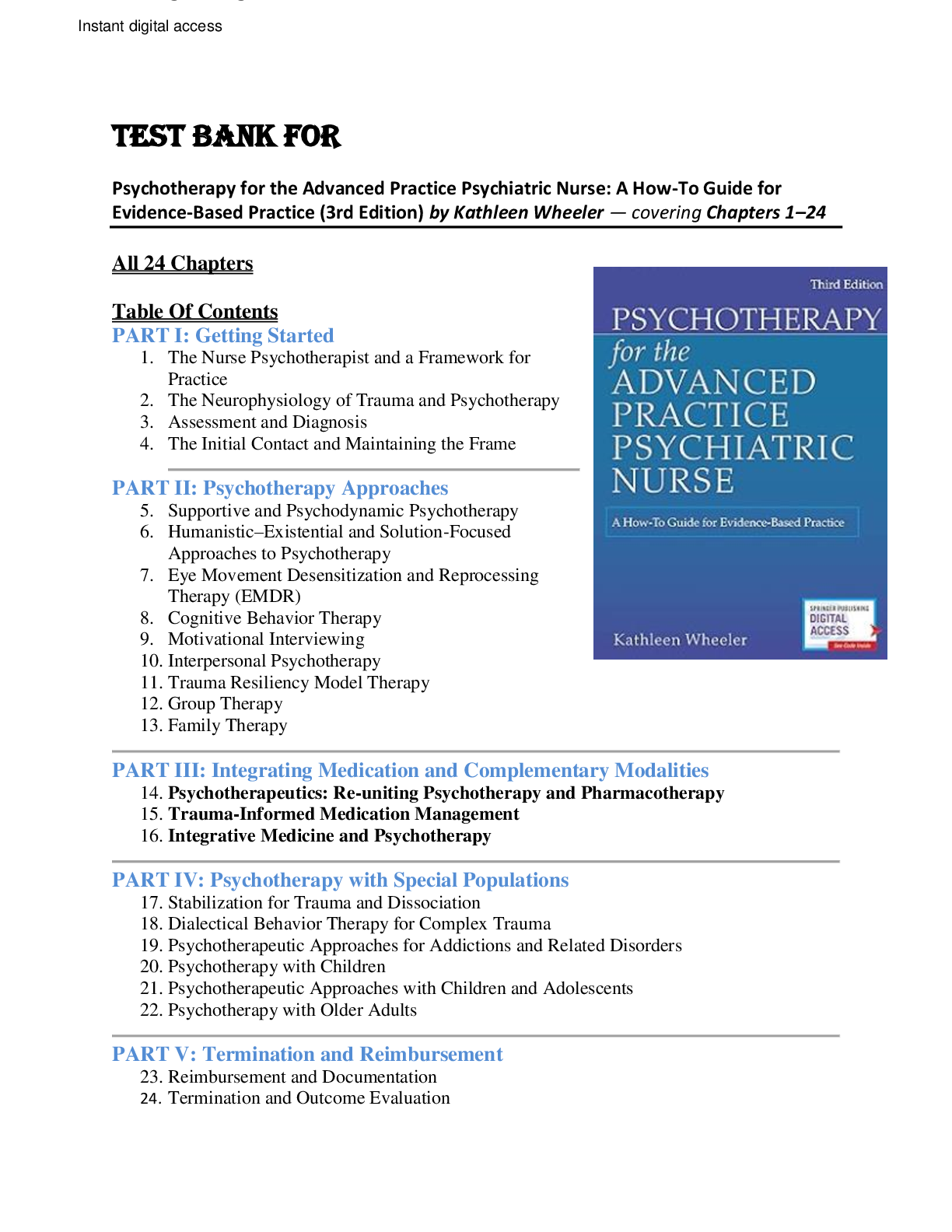
Test bank psychotherapy for the advanced practice psychiatric...
Evidence Based Practice for Nursing and Healthcare Quality Imp...

NURS 4100 Week 3 Quiz: Quality and Safety through Evidence Bas...
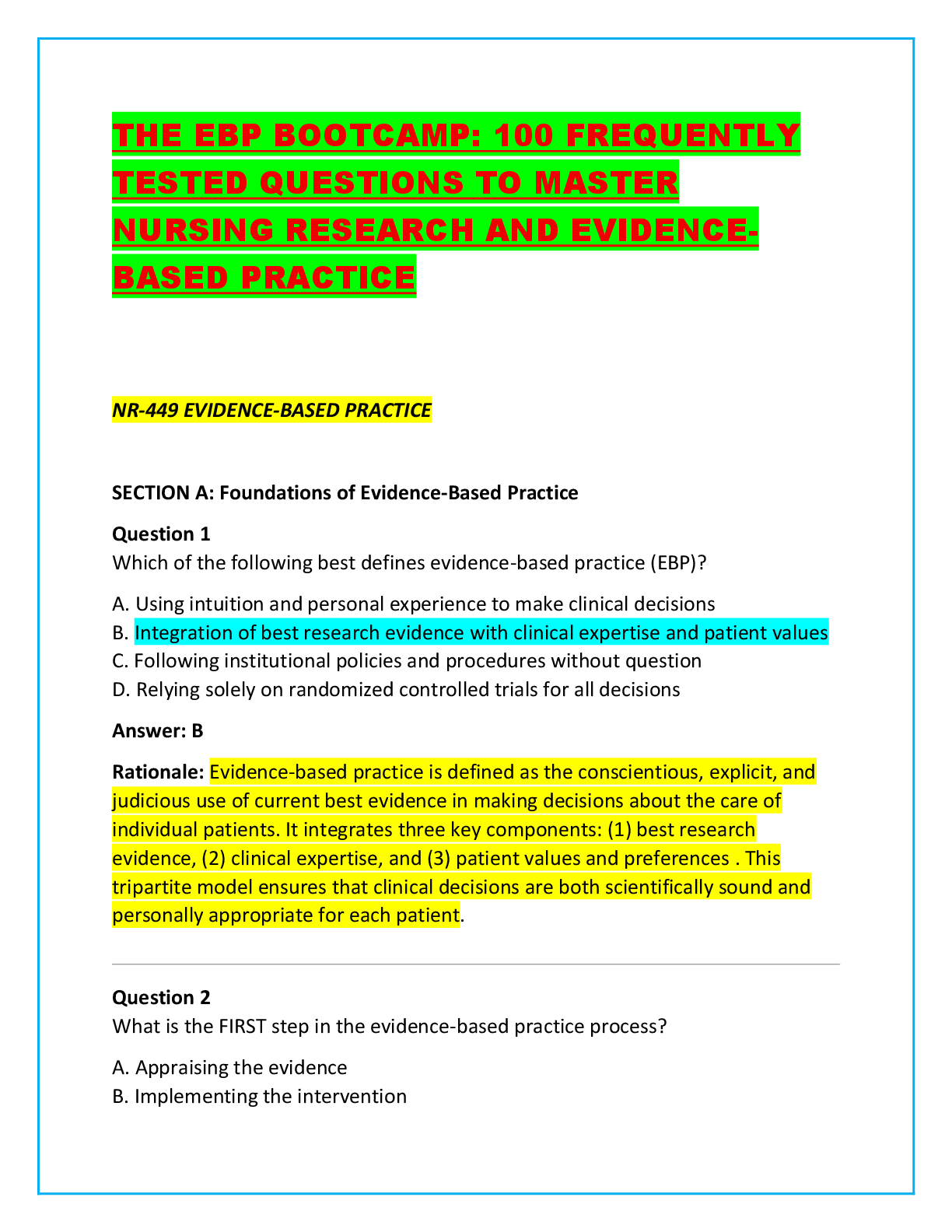
THE EBP BOOTCAMP: 100 FREQUENTLY TESTED QUESTIONS TO MASTER...
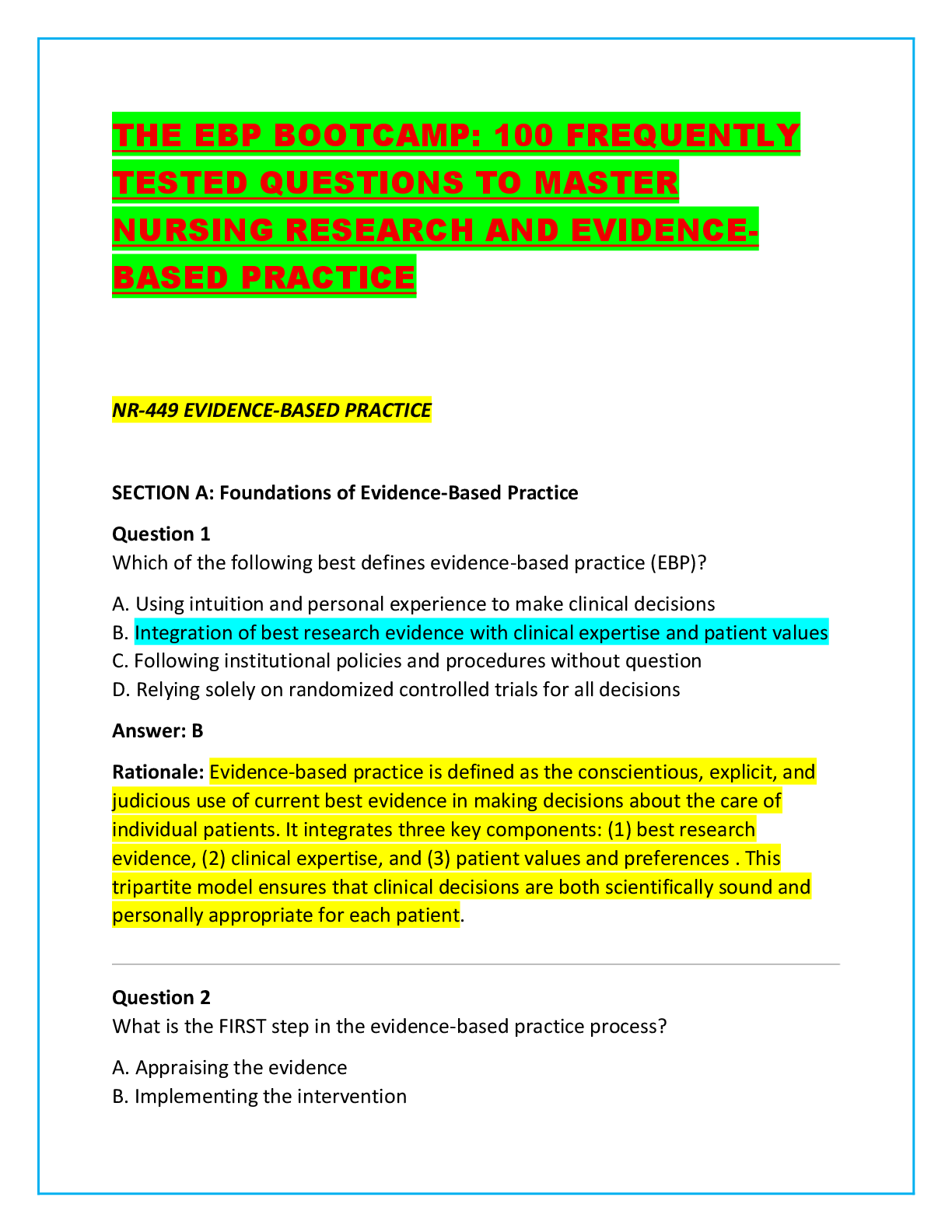
 Quiz 2 Concept Notes MY21.png)