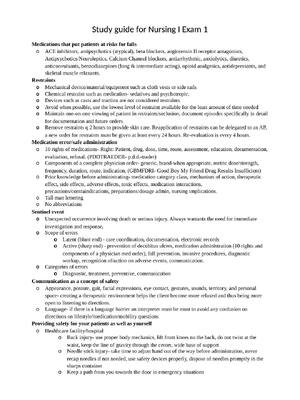
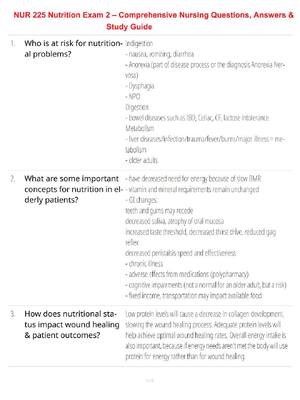
NR 507 Week 8 Final Study Guide (Variant 1) • Reproductive: o Endometrial cycle (menstrual cycle) and the occurrence of ovulation o Uterine prolapse o Polycystic ovarian syndrome o Testicular cancer and conditions t
...
NR 507 Week 8 Final Study Guide (Variant 1) • Reproductive: o Endometrial cycle (menstrual cycle) and the occurrence of ovulation o Uterine prolapse o Polycystic ovarian syndrome o Testicular cancer and conditions that increase risk o Symptoms that require evaluation for breast cancer o Signs of premenstrual dysphoric disorder o Dysfunctional uterine bleeding o Pathophysiology of prostate cancer o HPV and the development of cervical cancer • Endocrine: o Body’s process for adapting to high hormone levels o Cushing’s Syndrome o Causes of hypoparathyroidism o Lab results that point to primary hypothyroidism o Pathophysiology of thyroid storm o Signs of thyrotoxicosis • Neurological: o Dermatomes o Substance release at the synapse o Spondylolysis o Location of the motor and sensory areas of the brain o Pathophysiology of cerebral infarction o Excitotoxins o Agnosia o Accumulation of blood in a subarachnoid hemorrhage o Most common cause of meningitis • Genitourinary: o Diet and the prevention of prostate cancer o Impact of Benign Prostatic Hypertrophy (BPH) on the urinary system • Genetics: o The role of DNA in genetics o Transcription o Effects of genetic mutations o Trisomy o Down Syndrome o Klinefelter syndrome o Diseases that have multifactorial traits o Multifactorial inheritance o Duchenne muscular dystrophy o Neurofibromatosis • Musculoskeletal: o Ions that initiate muscle contraction o Growth of long bones in children o Bones belonging to the appendicular skeleton • Immunity/Inflammation: o How vaccines are formed o Populations at risk for getting systemic fungal infections and parasitic infections o Systemic manifestations of infection o Mechanisms responsible for the increase in antimicrobial resistance worldwide o Functions of normal flora in the body o Desensitization therapy o Cells involved in “left shift” in the WBC count differential o Forms of immunity o Major histocompatibility class I antigens o Inflammatory chemicals blocked by anti-inflammatory drugs o Characteristics of acute phase reactant C-reactive protein • Dermatology: o Process by which a deep pressure ulcer heals o Complications of the development of contractures during wound healing • Acid/Base: o Causes of respiratory alkalosis o Molecules that act as buffers in the blood • Cardiovascular: o Most common cardiac valve disease in women o When myocardial ischemia may be reversible o Symptoms of stable angina o Orthostatic hypotension o Isolated systolic hypertension o Results of sustained controlled hypertension o The relationship of insulin resistance on the development of primary hypertension o Defects in the normal secretion of natriuretic hormones and the impact on renal system o Effects of increased sympathetic nervous system activity due to primary hypertension o Complications of unstable plaque in the coronary arteries o Forms of dyslipidemia associated with the development of the fatty streak in atherosclerosis o Events that initiate the process of atherosclerosis o Signs and symptoms of increased left atrial and pulmonary venous pressures in left sided heart failure o Differences between left and right sided heart failure o Infective endocarditis • Peripheral vascular disease: o Pathophysiology of deep vein thrombosis o Virchow’s triad • Hematology: o Physiological response to hypoxia in anemia o Populations at the highest risk for developing folate deficiency anemia o Causes of iron deficiency anemia o Expected lab test results found in long standing iron deficiency anemia o Sickle Cell Anemia o Causes of aplastic anemia o Underlying pathophysiologic mechanisms leading to autoimmune hemolytic anemia o Secondary polycythemia o Anemia of chronic renal failure • Fluid and Electrolytes: o Conditions that result in pure water deficit (hypertonic volume depletion) o Osmoreceptors that stimulate thirst and the release of ADH o Causes of hypernatremia o Effects of increased aldosterone o Dependent edema o Definition of isotonic o Principle of capillary oncotic pressure o Types of fluid compartments in the body • Pulmonary: o Most effective measure to prevent pulmonary embolus from developing in patients o When the practitioner will note tactile fremitus o Cause of acute airway obstruction in the patient with chronic bronchitis o Types of pneumothorax o Results of the loss of alph-1-antitrypsin in emphysema o The result of loss of surfactant in ARDS o Characteristics of Cheyne-Stokes respirations • Shock: o Causes of hypovolemic shock o How the body maintains glucose levels during shock ________________________________________ NR 507 Week 8 Final Study Guide (Variant 2) Genitourinary: • BPH: • Prostate Cancer: Shock: • Blood Glucose: • Hypovolemic Shock: Acid/Base Balance: • Respiratory Alkalosis: • Buffer in Blood: Peripheral Vascular Disease: • DVT Pathophysiology: Dermatology: • Contractures: • Deep Pressure Ulcer Healing: o Phase 1: inflammation o … proliferation and new tissue formation (reconstruction) o Phase 3: remodeling and maturation Musculoskeletal: • Contraction: • Growth of Long Bones in Children: • Bones in Appendicular Skeleton: Genetics: • DNA in Genetics: • Transcription: • Effects of Genetic Mutations • Trisomy: • Down Syndrome: • Klinefelter Syndrome: • Diseases that have Multifactorial Traits: • Multifactorial Inheritance: • Duchenne Muscular Dystrophy: • Neruofibromatosis: Endocrine: • Adapting to High Hormone Levels: • Signs/Symptoms of Thyrotoxicosis: • Thyroid Storm: • Hypothyroidism Lab Results: • Hypoparathyroidism Causes: • Cushing Syndrome: Neurological: • Dermatomes: • Agnosia: • Spondylolysis: • Meningitis Causes: • Subarachnoid Hemorrhage: • Substance Release at the Synapse: • Cerebral infarction Pathophysiology: • Pathophysiology of Excitotoxins: Fluids & Electrolytes: • Pure Water Deficit (hypertonic volume depletion): • Osmoreceptors that Stimulate Thirst and ADH Release: • Causes of Hypernatremia: • Effects of Increased Aldosterone • Dependent Edema: • Isotonic: • Capillary Oncotic Pressure: • Fluid Compartments: Pulmonary: • PE Prevention: • Airway Obstruction in Chronic Bronchitis: • Emphysema: • Types of Pneumothorax: • Cheyne-Stokes Respirations: • Loss of Surfactant in ARDS: • Tactile Fremitus: Reproductive: • Uterine Prolapse: • Evaluate for Breast Cancer: • Dysfunctional Uterine Bleeding: • Polycystic Ovarian Syndrome: • Signs of Premenstrual Dysphoric Disorder: • Endometrial Cycle and Ovulation: • Testicular Cancer Risk Factors: • Pathophysiology of Prostate Cancer: • HPV to Cervical Cancer: Hematology: • Populations at Risk for Folate Deficiency Anemia: • Causes of Iron Deficiency Anemia: • Lab Results for Long Standing Iron Deficiency Anemia: • Causes of Aplastic Anemia: • Secondary Polycythemia: • Autoimmune Hemolytic Anemia: • Sickle Cell Anemia: • Anemia of Chronic Renal Failure: • Physiologic Response to Hypoxia in Anemia: Cardiovascular: • Most Common Valve Disease in Women: • Myocardial Ischemia: • Symptoms of Stable Angina: • Orthostatic Hypotension: • Isolated Systolic HTN: • Insulin Resistance and HTN: • Natriuretic Hormones and Effects on Renal System: • SNS and Primary HTN: • Complications of Unstable Plaques: • Process of Atherosclerosis Initiation: • S/S of L Sided HF: • Results of Sustained Controlled HTN: • Difference in L and R sided HF: • Dyslipidemia Associated with Formation of Fatty Streak: • Infective Endocarditis: Immunity/Inflammation: • How Vaccines are Formed: • Systemic Manifestations of Infection: • Functions of Normal Flora: • Mechanism for Antimicrobial Resistance: • Desensitization Therapy: • Cells Involved in Left Shift: • Forms of Immunity: • Histocompatibility Class I Antigens: • Chemicals Blocked by Anti-Inflammatory Drugs: • C-Reactive Protein: • Populations at Risk for Fungal/Parasitic Infections: ________________________________________ NR 507 Week 8 Final Study Guide (Variant 3, 4) REPRODUCTIVE • Endometrial cycle and occurrence of ovulation • Uterine Prolapse • PCOS • Testicular cancer & Risk factors • Symptoms that require evaluation for Breast Cancer • Signs of premenstrual dysphoric disorder (PMDD) • Dysfunctional uterine bleeding • Pathophysiology of prostate cancer • HPV and development of cervical cancer ENDOCRINE • Body’s process for adapting to high hormone levels: • Cushing’s Syndrome: • Hypoparathyroidism CX: • Lab results point to primary hypothyroidism: • Primary hypothyroidism DX: • Pathophysiology of thyroid storm: • Signs of thyrotoxicosis: NEURO • Dermatomes • Substance release at synapse • Spondylolysis • Location of motor and sensory areas of the brain GENITOURINARY • Diet and prevention of prostate cancer • Impact of BPH on the Urinary System GENETICS • The role of DNA in genetics • Transcription • Effects of genetic mutations – • Down syndrome/ Trisomy: • Klinefelter syndrome: • Duchenne muscular dystrophy • Neurofibromatosis • diseases that have multifactorial traits/multifactorial inheritance • What is multifactorial inheritance? MUSCULOSKELETAL • Ions that initiate muscle contraction: • Growth of long bones in children: • Bones belonging to the appendicular skeleton: IMMUNITY • How vaccines are performed • Populations are risk for getting systematic fungal infections and parasitic infections • Systematic manifestations of infection • Mechanism responsible for the increase in antimicrobial resistance worldwide • Functions of normal body flora • Desensitization therapy • Cells involved in the “left shift” in the WBC count differential • Forms of Immunity • Major histocompatibility class (MHC) I antigens (7th Edition, pg. 233-235, 244) • Inflammatory chemicals blocked by anti-inflammatory drugs (7th Edition, pg. 207) • Characteristics of acute phase reactant C-reactive protein (CRP) (7th Edition, pg. 214) DERMATOLOGY • Process by which a deep pressure ulcer heals: • Phases of wound healing: Inflammatory-Proliferation-Maturation • Complications of the development of contractures during wound healing: ACID/BASE • Causes of respiratory alkalosis: • Molecules that act as buffers in the blood: CARDIOVASCULAR • Most common cardiac valve disease in women • When myocardial ischemia may be reversible • Symptoms of stable angina (angina pectoris) • Orthostatic hypotension • Isolated systolic HTN • Sustained controlled HTN • Relationship of insulin resistance on the development of primary hypertension; pg 1136. • Defects in normal secretion of natriuretic hormones & impact on renal system; pg 1134 • Effects of increased sympathetic nervous system activity due to primary HTN; pg 1133 • Complications of unstable plaque in the coronary arteries: • Forms of dyslipidemia associated with the development of the fatty streak in atherosclerosis: • Events that initiate the process of atherosclerosis: • S&S of ¬Left Atrial &Pulmonary venous pressures in Left Sided HF • Difference between L & R sided © failure • Infective Endocarditis PERIPHERAL VASCULAR DISEASE • Peripheral vascular disease: • Deep Vein Thrombosis pathophysiology • Vichow’s traid: HEMATOLOGY • Physiological response to hypoxia in anemia • Populations at highest risk for developing folate deficiency anemia • Cause of Iron Deficiency Anemia • Expected lab test results found in long standing Iron Deficiency Anemia • Sickle Cell Anemia • Aplastic Anemia • Pathophysiology of Autoimmune Hemolytic Anemia • Secondary polycythemia Vera Anemia of chronic renal failure FLUIDS & ELECTROLYTES • Conditions that result in pure water deficit (hypertonic volume depleted) • Osmoreceptors that stimulate thirst and the release of ADH • Causes of hypernatremia • Effects of increased aldosterone • Dependent edema • Definition of isotonic • Principle of capillary oncotic pressure • Types of fluid compartments in the body PULMONARY • most effective measure to prevent pulmonary embolus from developing in patients • when the practitioner will note tactile fremitus • cause of acute airway obstruction in the patient with chronic bronchitis TYPES OF PNEUMOTHORAX • Results of the loss of alph-1- antitrypsin in emphysema • The result of loss of surfactant in ARDS • Characteristics of Cheyne-Stokes respirations SHOCK • Causes of hypovolemic shock (7th Edition, pg. 1672-3) • How the body maintains glucose levels during shock (7th Edition, pg. 1670)
[Show More]