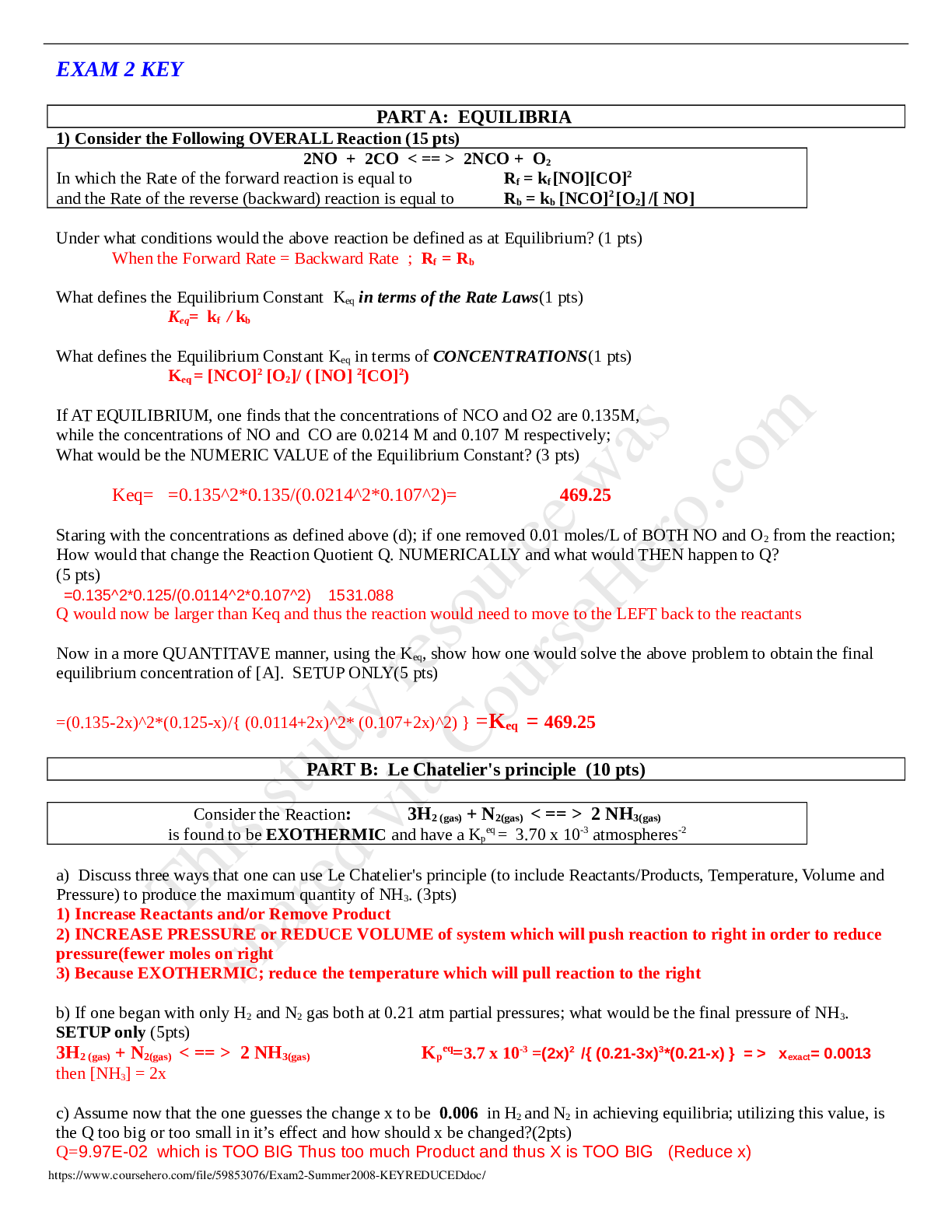
NURSING FN NURS 6640Nfinal exam for 6640
Document Content and Description Below
Question 1
1 out of 1 points
A PMHNP has been treating a 9-year-old patient who was referred by her school. Students are asked to
raise their hands before speaking during group discussion, but the patient seems to blu
...
[Show More]
Last updated: 5 months ago
Preview 1 out of 21 pages
Instant download

Buy this Document to get the Full Access Instantly
Provided by Students Who Aced it
We Verify Document Content to Gurantee Accuracy
Reviews( 0 )
Document information
Connected school, study & course
About the document
Uploaded On
Apr 05, 2021
Number of pages
21
Written in
All

Additional information
This document has been written for:
Uploaded
Apr 05, 2021
Downloads
0
Views
125
Topic Tags
Related Subjects & Courses
Explore similar study resources and related concepts.
Recommended For You
Get more on EXAM »
$26
21 Pages
NURSING FN NURS 6640Nfinal exam for 6640 Final exam for 6640:...

$18
21 Pages
NURSING FN NURS 6640Nfinal exam for 6640 Final exam for 6640:...
$14
12 Pages
final exam for 6640-walden university -complete and graded A p...
More related documents below


.png)

.png)