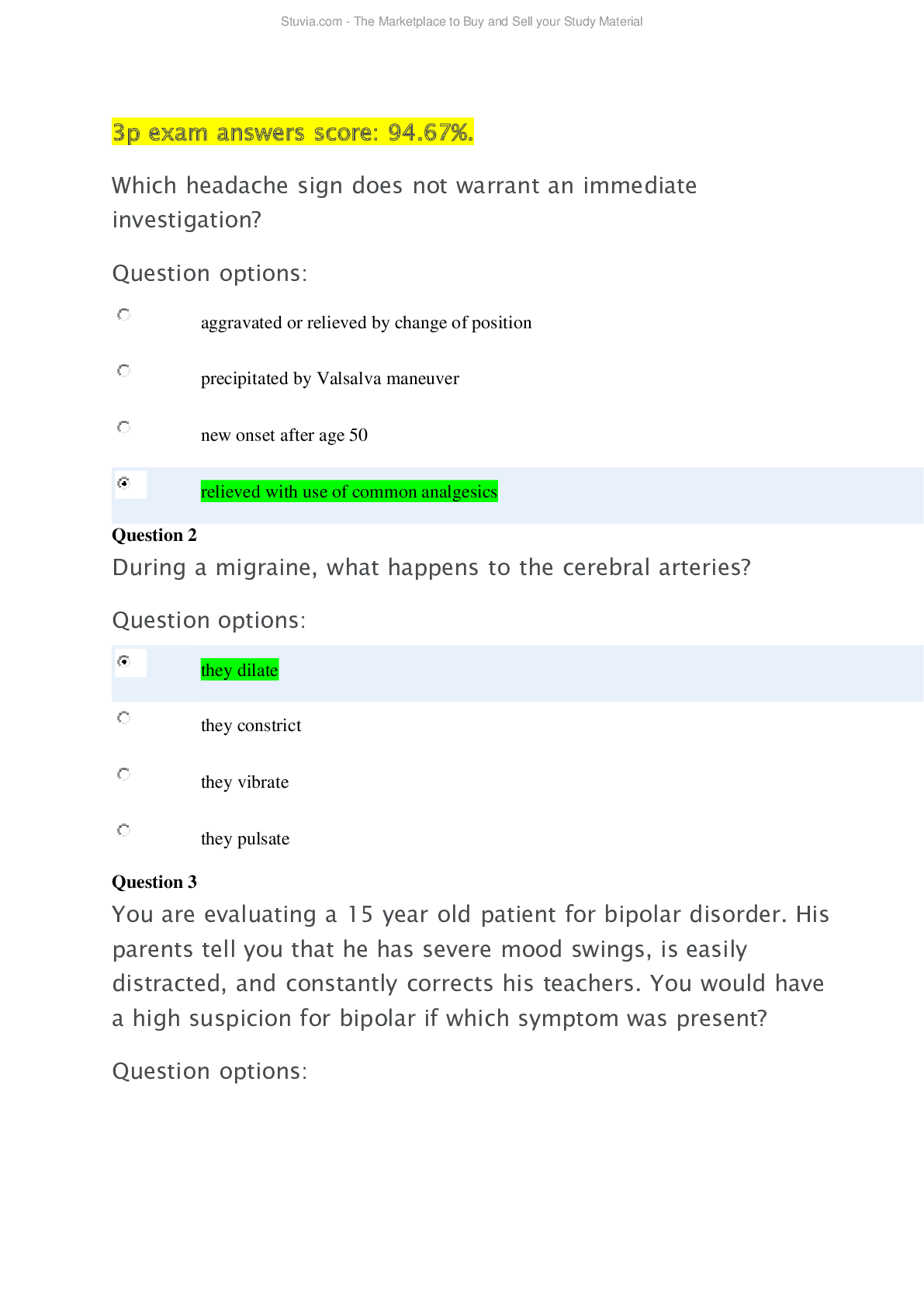
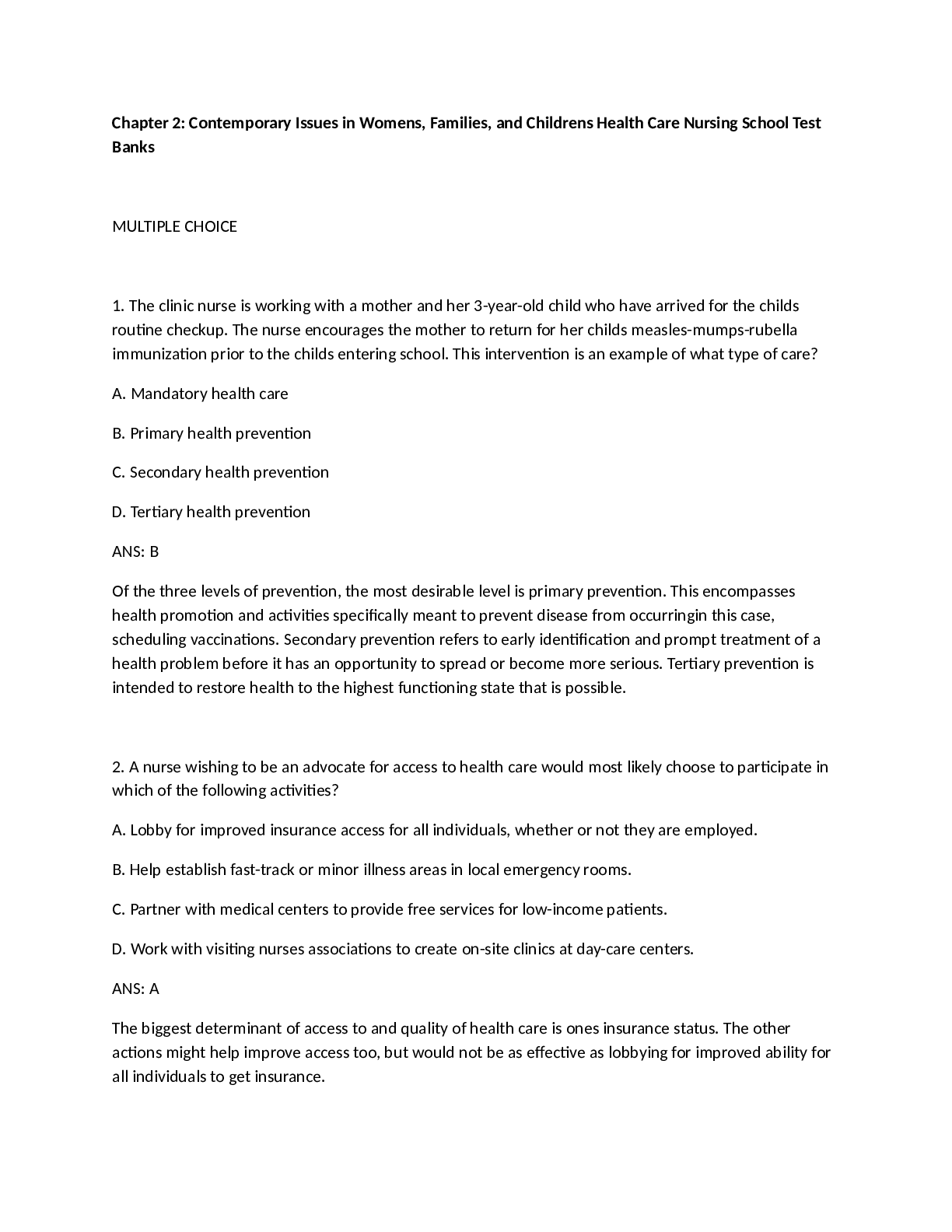
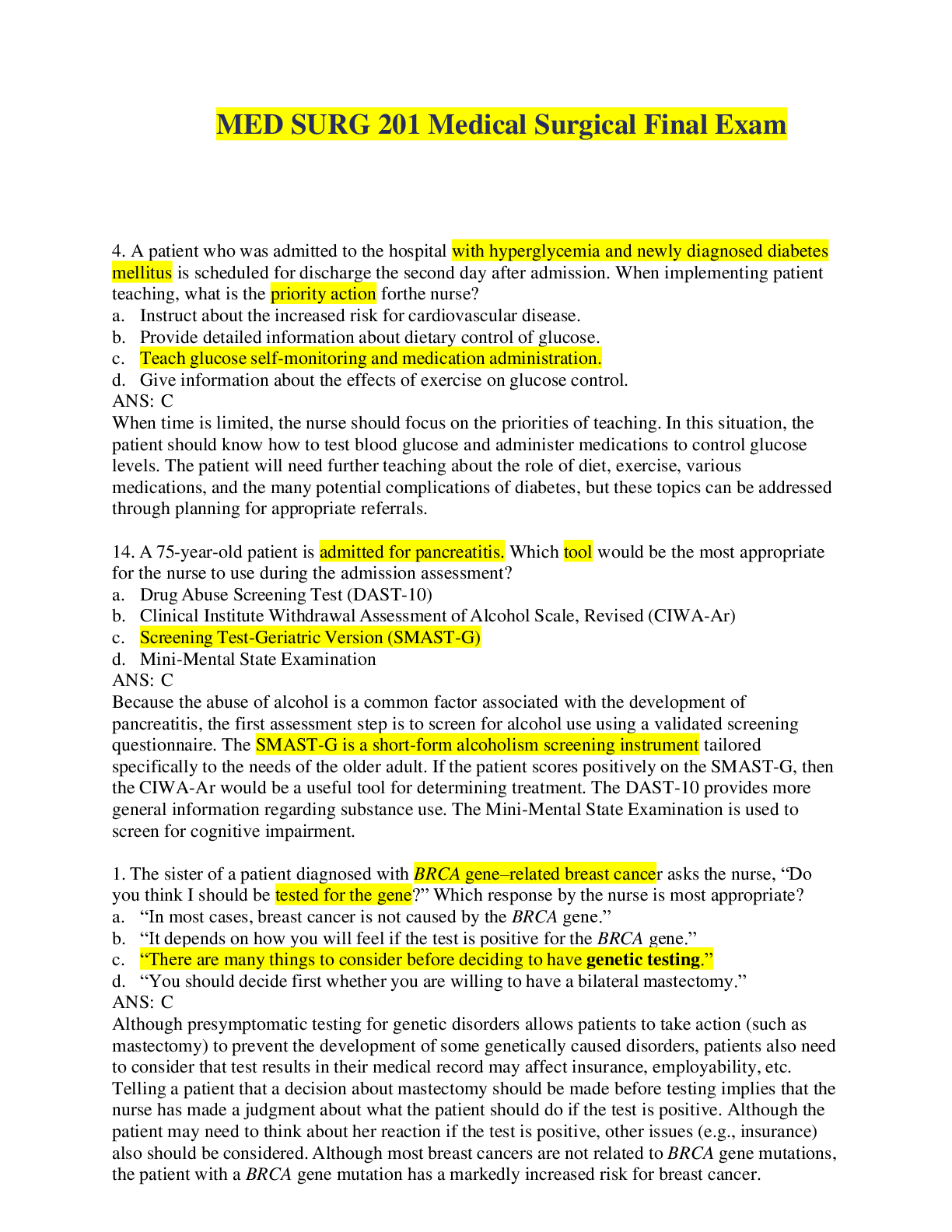
MED SURG 201 FINAL EXAM FINAL EXAM QUESTIONS, ANSWERS (EXPLAINED)
Document Content and Description Below
1. The sister of a patient diagnosed with BRCA gene–related breast cancer asks the nurse, “Do you think I should be tested for the gene?” Which response by the nurse is most appropriate? • “In most cases, breast cancer i
...
[Show More]
Last updated: 3 years ago
Preview 1 out of 108 pages
Instant download

Buy this Document to get the Full Access Instantly
Provided by Students Who Aced it
We Verify Document Content to Gurantee Accuracy
Reviews( 0 )
Document information
Connected school, study & course
About the document
Uploaded On
Apr 13, 2021
Number of pages
108
Written in
All

Additional information
This document has been written for:
Uploaded
Apr 13, 2021
Downloads
0
Views
200
Topic Tags
Related Subjects & Courses
Explore similar study resources and related concepts.
Recommended For You
Get more on EXAM »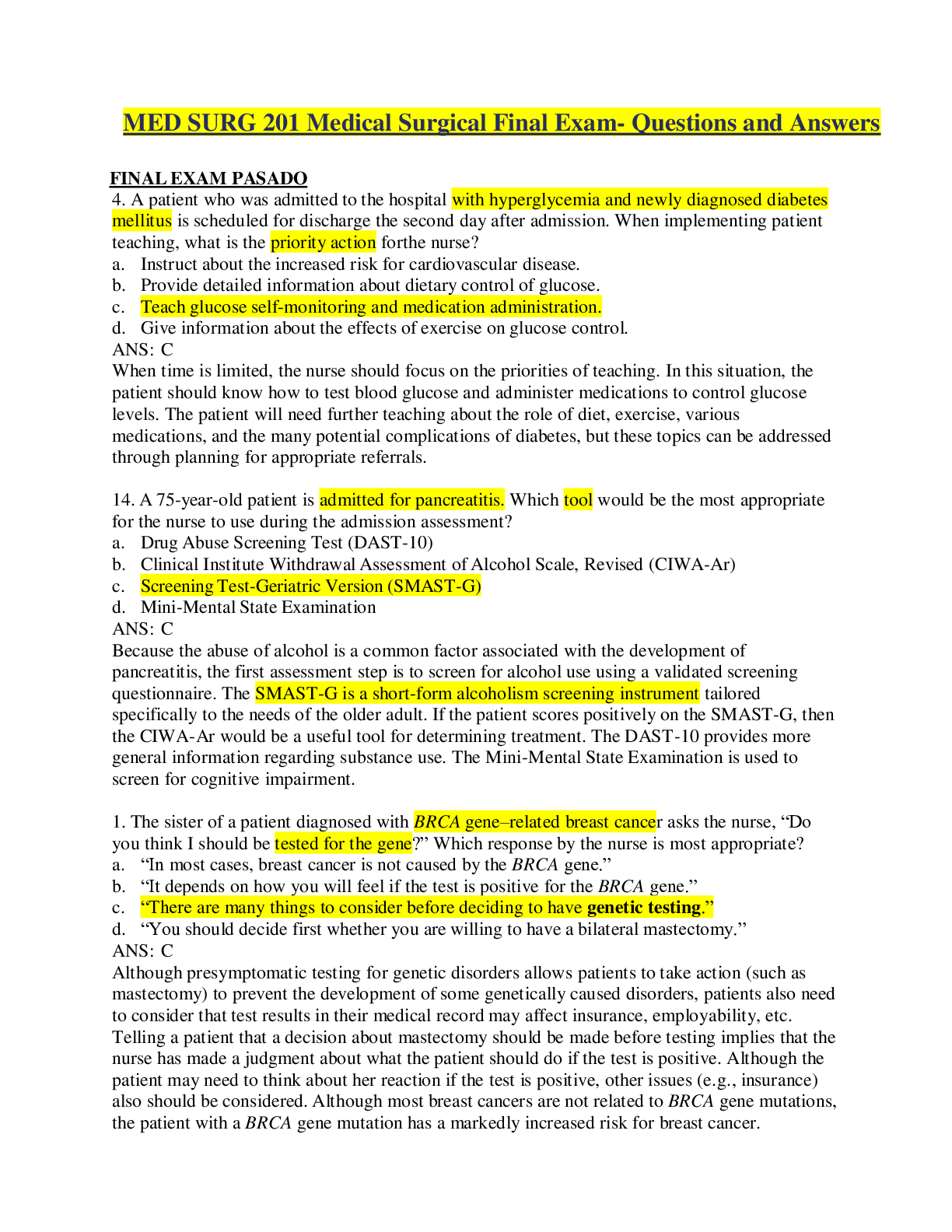
$20.5
89 Pages
MED SURG 201 Medical Surgical Final Exam- Questions and Answer...
$19
88 Pages
MED SURG 201 Medical Surgical Final Exam- Questions and Answer...


$16
235 Pages
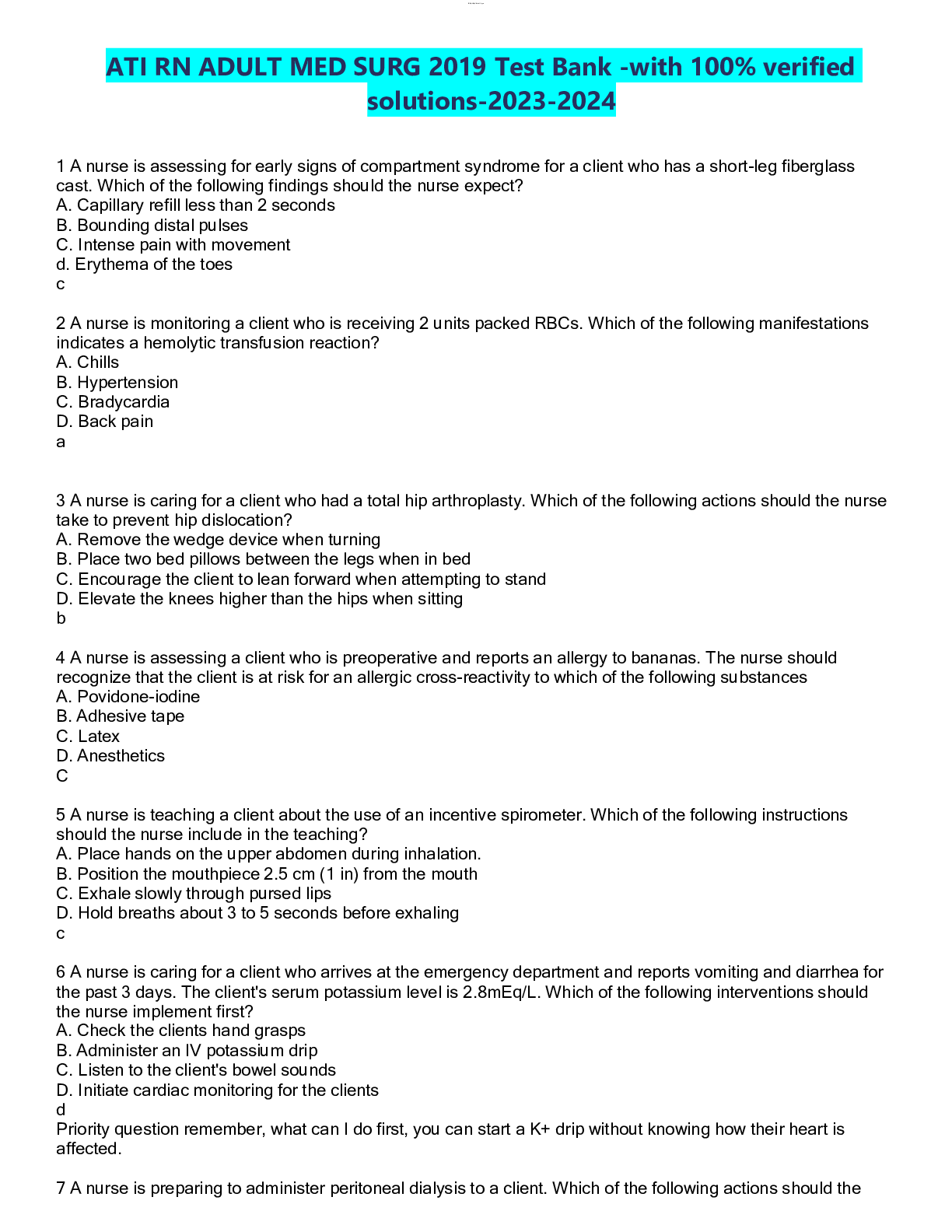
ATI RN ADULT MED SURG 2019 Test Bank -with 100% verified solut...
$16
28 Pages
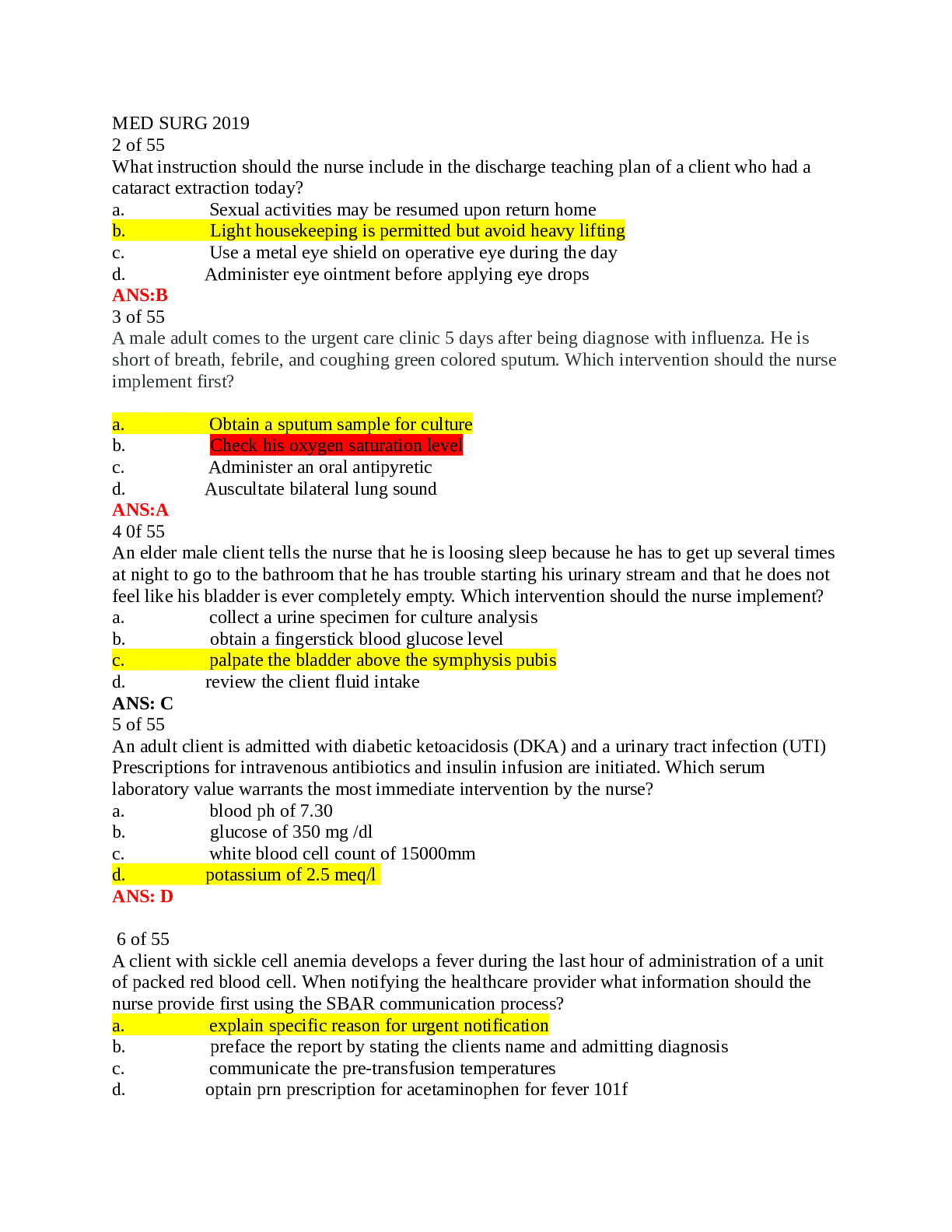
MED SURG 2019 hesi A&B (CURRENTLY UPDATED 2020/2021)/ MED SURG...

$7
9 Pages
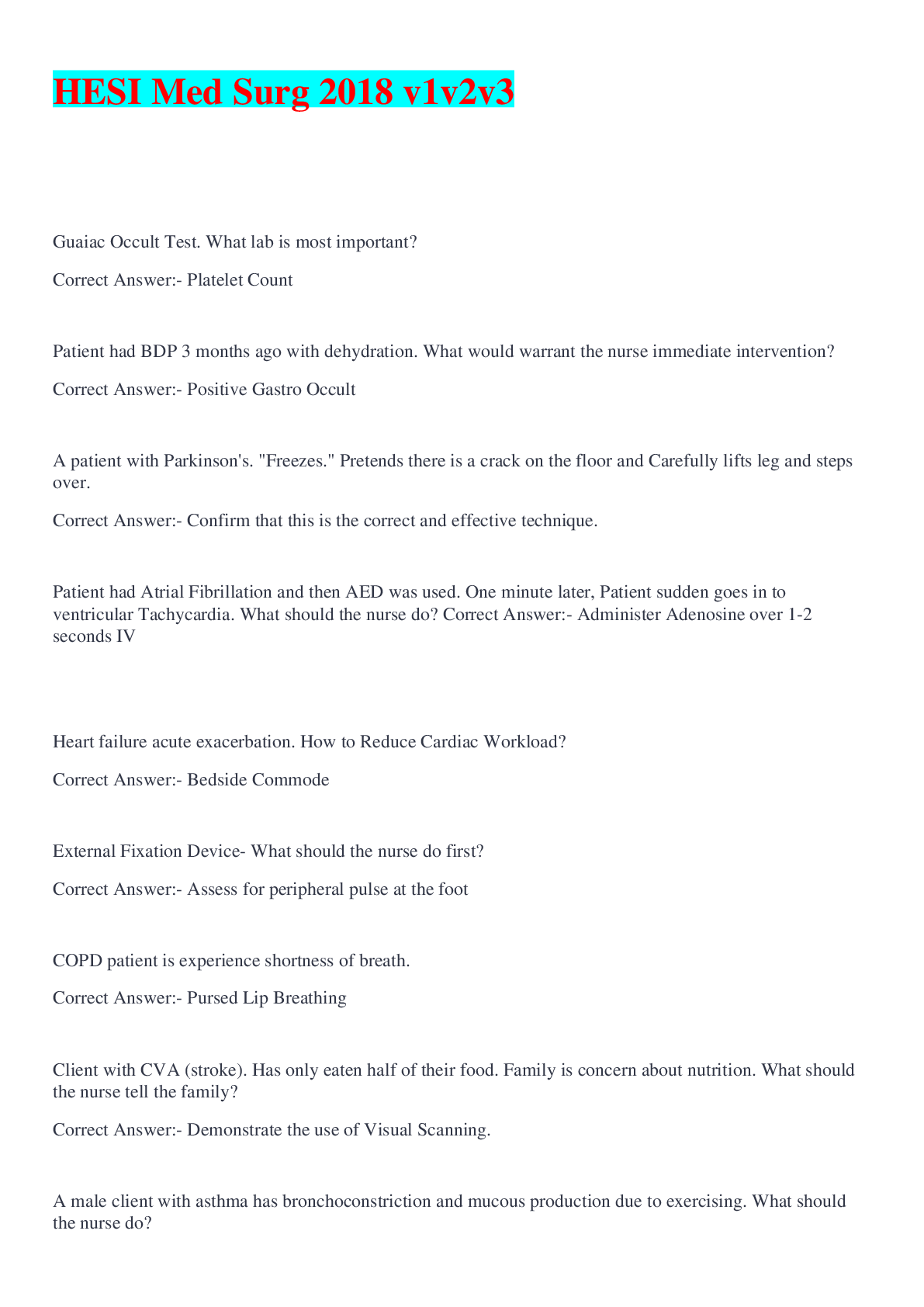
HESI ADV MED SURG 2019 v2 STUDY GUIDE QUESTION/ANSWER(S) SHOWN...
$13
14 Pages
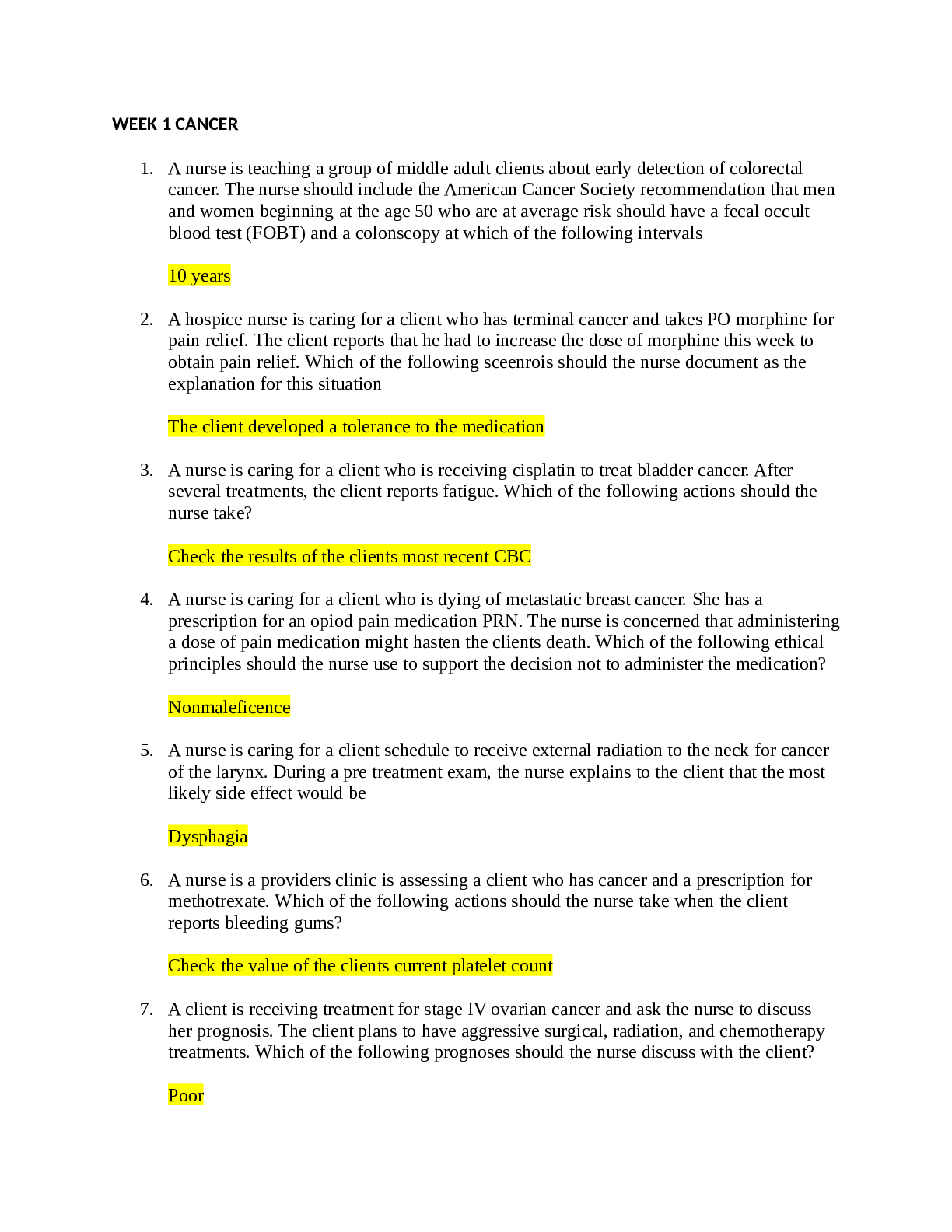
MED SURG 201 WEEKLY QUIZZES MIDTERM AND FINAL QUIZZES ALREADY...

$14
54 Pages
HESI MED SURG 2019_100% CORRECT ANSWERS | HESI MED SURG_Graded...
$15
8 Pages
RN VIRTUAL MED SURG 2019 EXAM – STUDY GUIDE Questions & Answer...

$14
17 Pages
ATI RN ADULT MED SURG 2019 EXAM - STUDY GUIDE / Correct Questi...
More related documents below
_removed.png)


_removed.png)

_removed.png)
_removed.png)