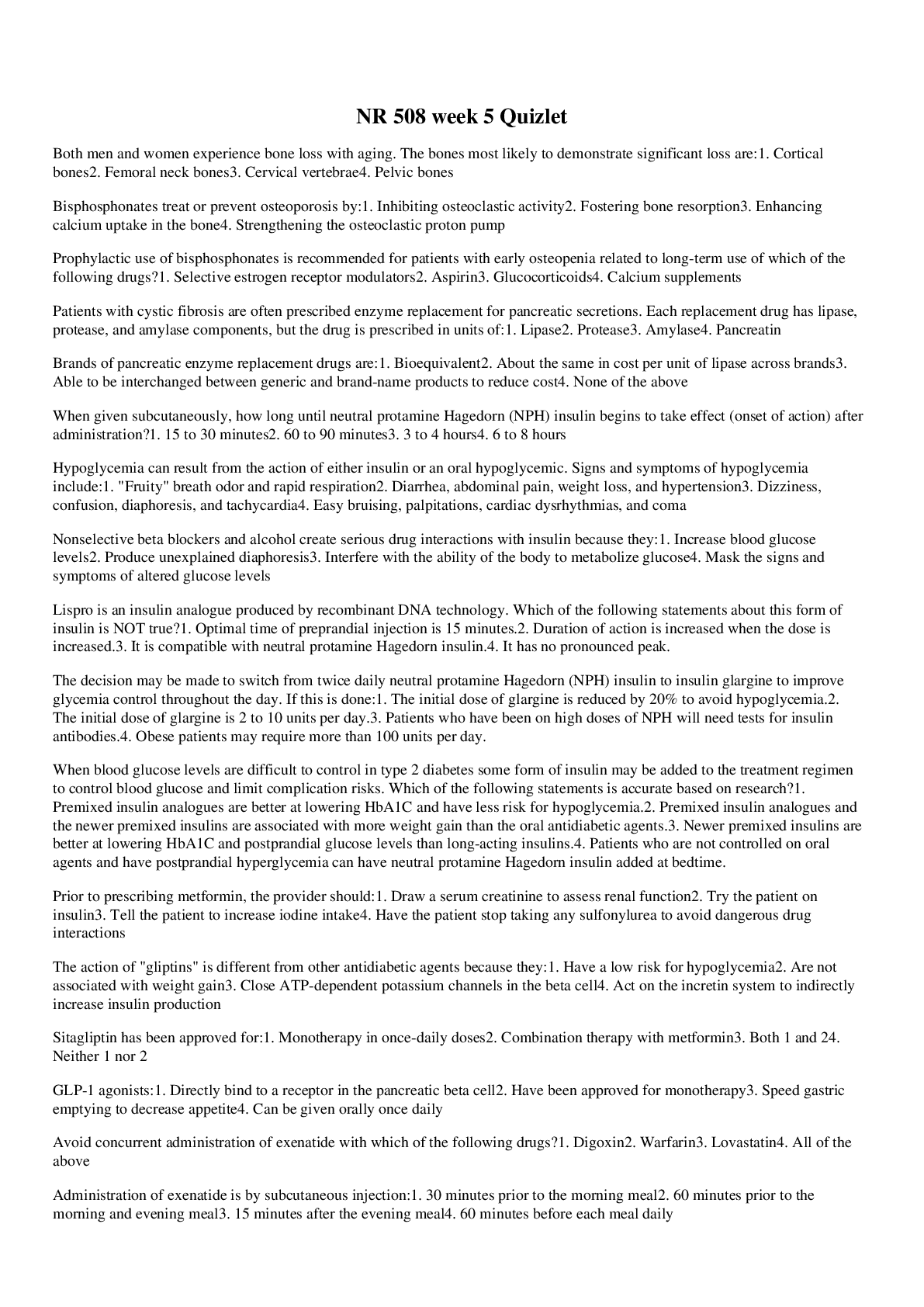
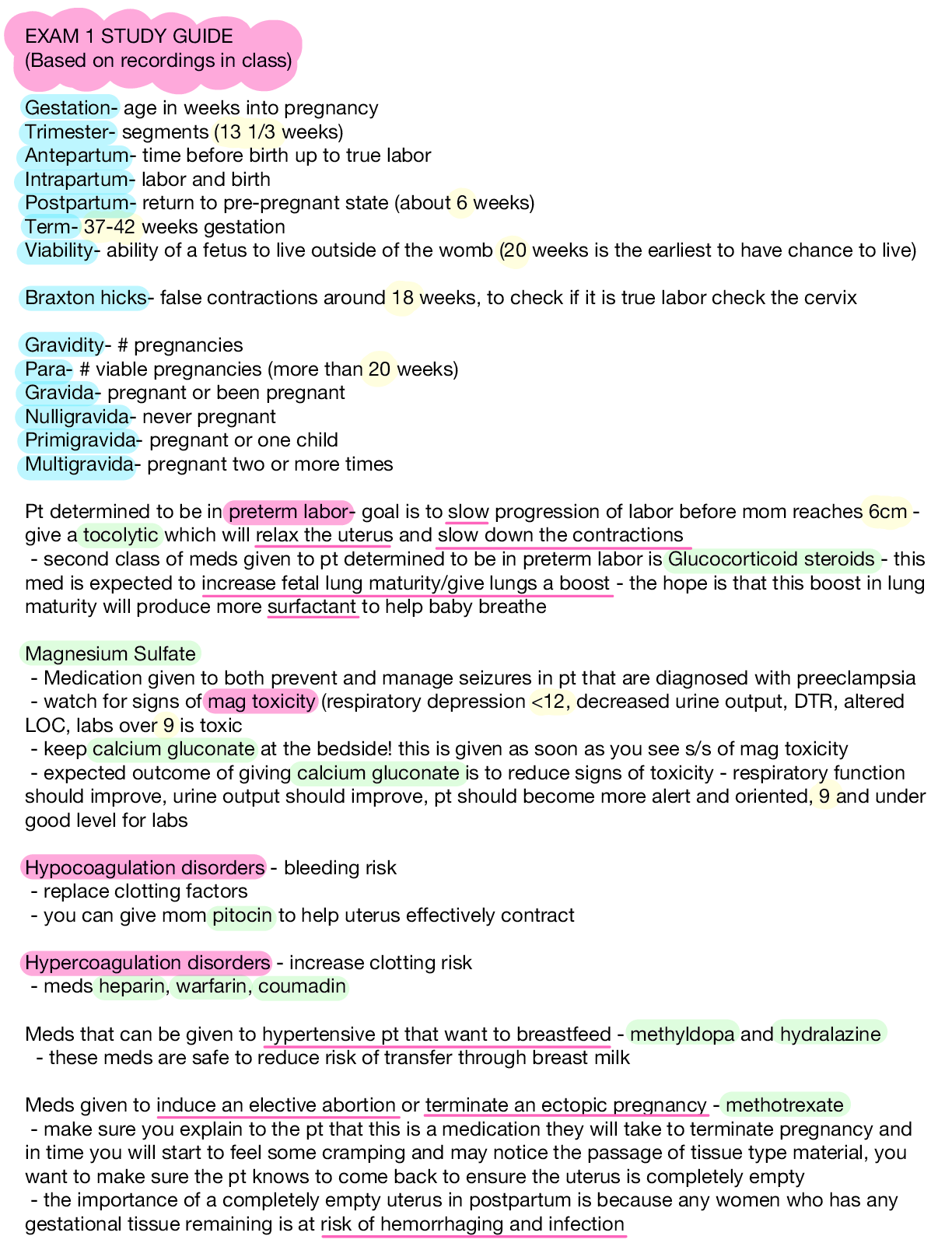
NR 508 Final Exam study guide
Cardiovascular management:
1. Know Initial treatment choices for HTN
AceI- sartans
Arbs- ipine, verapamil & diltazem
Thiazide- iaside, chlorthalidone, imdapamide, metolazone
calcium c
...
NR 508 Final Exam study guide
Cardiovascular management:
1. Know Initial treatment choices for HTN
AceI- sartans
Arbs- ipine, verapamil & diltazem
Thiazide- iaside, chlorthalidone, imdapamide, metolazone
calcium channel blocker
2. Know first line treatment options for HTN for African Americans without renal impairment.
Calcium channel blockers
Thiazide
3. First line option for HTN for anyone with chronic kidney disease
Ace inhibitors
ARB’s
Diuretics:
4. Types, Uses, Side effects
Thiazides (HCTZ)
Uses- HTN, CHF, edema, useful in decreases calcium stone formation
Off label HCTZ- osteoporosis and diabetes
AE- hypokalemia, hyperglycemia, arrhythmias, metabolic alkalosis, fatigue, postural Hypotension
Loop diuretics (furosemide, torsemide, ethacrynic acid) *preferred diuretics for renal
Impairment
Uses- CFH, HTN, nephrotic syndrome, cirrhosis, pulmonary edema
AE-hypocalcemia, hyponatremia, hypokalemia, ototoxicity
Carbonic anhydrase inhibitors (acetazolamide) *weak diuretic
Uses- edema, epilepsy, glaucoma, mountain sickeness
AE- toxic epidermal necrolysis, agranulocytosis, aplastic anemia, thrombocytopenia, metabolic acidosis
Potassium-sparing (spironolactone, eplerenone)
Uses- CHF (in combo with thiazides or ACE and loop), HTN
AE-gynomastia, n/v, erectile dysfuction, electrolyte imbalance, metabolic acidosis
**postdiuretic sodium retention- It is important for pts to adhere to a low sodium diet. As drug concentrations fall, there is a period of positive sodium balance
** If a pt has a sulfa allergy= take ethacrynic acid
5. Preferred diuretic with renal impairment-
Loop diuretics because they retain efficacy even with moderate renal insufficiency: such as furosemide, buetanide, torsemide, ethacrynic acid.
Uses: Edematous states (HF, cirrhosis, pulmonary edema, nephrotic syndrome), hypercalcemia
6. Side effect of post diuretic sodium retention pg 374
As drug concentrations decrease, period of + Na balance, this is the post diuretic sodium retention
If there is a high Na intake then Na lost with diuresis is offset.. diuretic resistance
7. Recognition that some diuretics are sulfa derivatives (carbonic anhydrase inhibitors, loop diuretics, thiazides, but NOT ethacrynic acid)
Loops- Examples: furosemide, bumetanide, torsemide, ethacrynic acid
"The Loop FURiously BUMmed my TORSo like ACID"
Common side effects: orthostatic hypotension, excessive diuresis, tinnitus, vertigo, hyperuricemia note all these are precursors to toxicity
Thiazides Hydrochlorothiazide, Chlorothoazide, , Chlorthalidone, Indapamide, Metolazone
1st line for HTN, Chronic Calcium Kidney Stones, HF, Idiopathic hypercalciuria, Nephrogenic diabetes insipidus, Osteoporosis. Other common side effects: orthostatic hypotension, dizzy, drowsy, syncope, weakness, nausea, GI irritation, elevated BUN, depressed respirations lethargy
Carbonic anhydrase inhibitors- Acetazolamide N/V/D, Drowsy, Parathesis, confusion, tinnitus, myopia, anorexia, change in taste; polyuria, mild electrolyte changes
Uses: Edematous states ( HF, cirrhosis, pulmonary edema, nephrotic syndrome), hypercalcemia
Ethacrynic Acid
Note it's the only diuretic with "acid" in its name
8. Management of edema
Loops for volume excess
9. CHF drugs including diuretic choices
1- Loops -fluid
2- ACEIs or ARBs
3-BB - Diastolic after stable (B-Day)
4- Digoxin - Systolic , AFib, (Dig A Syst)
5- Spironolactone - if above not effective
6- Nitrates & Hydralazine *AA only* Think Michael Jordan goes Hy in his NIkes
CCBs ( Amlodipine/Felodipine) only for angina or HTN if EF is preserved
2- Clinical pearls for CHF- Improve SX: ACEIs, ARBs, BBs (metoprolol, Bisoprolol, Carvedilol) , Dig ( only after diuretics & ACEIs)
Prolong survival: ACEIs, ARBS, BB, Hydralazine/Nitrates(AA only) Aldosterone Antagonists
BB NEVER IN ACTIVE FAILURE
Dig does not improve mortality but improves SX decreases Hospitalization..
CAUTION:: Loops without Spironolactone **with hyperkalemia DIG CAN BECOME TOXIC"
Neuro/Psych:
10. Know migraine management and prophylactics (see migraine lecture)
dark, quiet room
*NSAIDS or APAP
*Triptans (sumatriptan/imitrex, zolmatriptan/zomig, rizatriptan/maxalt)
-nasal, oral, subq
-use no more than 2d/wk
-CI-recent use of MAOIs, ergots, or SSRIs, CVD, CAD, TIA, HTN, pregnancy
*Ergots (ergotamine tartrate/cafergot) not used often, expensive
-nasal, oral, rectal, IM, IV, siblingual
-CI-recent use of triptans, CVD, CAD, TIA, HTN, pregnancy
*Caffeine (Excedrin)
*antiemetics
Migraine prevention
*beta blockers (metoprolol, propranolol, timolol)
-takes 2-3 months for full benefit- can decrease frequency and severity by 50%
-AE- drowsiness, exercise intolerance, depression
-CI-CHF, asthma
*anticonvulsants (valproate, topiramate) effective but both have major AE
-valproate AE- dizziness, platelet dysfunction, hair loss, hepatotoxic, teratogenic
-topiramate AE- cognitive dysfunction, weight loss, renal stones
*butterbur- PA free only, otherwise can cause liver damage and severe illness
11. Herbal migraine management
Butter bur root. It should be PA free or could result in liver damage.
Feverfew (Tanacetum parthenium) - Action: Antiinflammatory effects Uses: migraine prevention Interactions: Anticoagulants, antiplatelet drugs, aspirin (Pg. 99)
12. What drugs can cause serotonin syndrome?
SSRIs and TRIPTANS
13. What migraine prophylactic medication class to avoid in patients with asthma.
Beta Blockers such as Propranolol
cyproheptadine (Periactin) - The drug may produce an atropine-like action, so it must be used with caution in patients treated for bronchial asthma (pg. 487)
14. Know the common side effects of methylphenidate Ritalin
Most common: Nervousness & Insomnia
Other common side effects:
Decreased appetite
Abdominal pain
HA
Depression
Irritability
Weight loss
Rebound effect
Side effects like if I don't have my stimulant COFFEE!! Page 453
Also: Temporary slowing of growth rate/Height and weight should be monitored with long term use
ADHD management –
15. At what age can ADHD dx be made?
DX typically before age 7
16. Stimulants including: Side effects -eg HA, tics, appetite suppression, elevated BP
Stimulants: work by increasing “background” dopamine levels in the synapses. However, diagnostic trials of stimulant medications have failed to distinguish between children with and those without AD/HD.
Amphetamine Like Drugs (Methylphenidate, ritalin, metadate, concerta) 1st LINE OF TREATMENT
MOA: mild cortical stimulant with CNS actions similar to amphetamines. Inhibits reuptake of norepinephrine & dopamine
Side effects: (may subside after a few weeks) common –These are drugs including methylphenidate and dexmethylphenidate
Side effects
Increased BP
Exacerbation of behavior
Agitation and aggression
Watch for abuse
Mania psychotic symptoms
Blurred vision
Temp stunting of growth
Decreased appetite
HA
Depression
Rebound SX
NERVOUSNESS & INSOMNIA MOST COMMON
monitor height weight and BP *
Amphetamines - (Adderall,
Vyvanse)
MOA: Norepinephrine released from central noradrenergic neurons.
Side effects: These drugs include dextroamphetamine
Side effects
Effects more severe initial days of TX
Anorexia
Weight loss
Nausea
Abdominal pain
Diarrhea Xerostomia
Constipation
** tics motor or phonetic May be unmasked*
* Black Box warning sudden death with structural cardiac abnormalities***
Others- armodafinil (Nuvigil), modafinil (Provigil), Guanfacine (Intuniv), Clonidine (Kapvay)
17. At what age can medications for ADHD be prescribed?
6 YEARS AND UP Meds 6 and up RX of younger than 6 is off label
18. Which is the longest acting stimulant?
Long Acting: methylphenidate (AMPHETAMINE LIKE DRUG) SR
Concerta ( 12 HOURS), Metadate CD, Ritalin LA, Methylin, Daytrana Transdermal System, amphetamine/dextroamphetamine
Adderall XR, clonidine
Kapvay
Atomoxetine is metabolized by the 2D6 enzyme system. Its half-life is 4 hours in most patients, although this may be prolonged to 30 to 40 hours in poor metabolizers (7% of population).
Nonstimulant alternatives:
19. Strattera/ atomoxetine
Norepinephrine reuptake inhibitor used to treat ADHD
As effective as stimulants
Low abuse potential
Black box increased risk of suicide
Preg C
Causes more vomiting and insomnia
Norepinephrine reuptake inhibitors (Strattera- atomoxetine) not a controlled substance and it is not a stimulant
MOA: reuptake of presynaptic norepinephrine. It does not bind to monoamine receptors in the brain, thereby decreasing the risk of adverse reactions compared with older norepinephrine reuptake inhibitors.
Side effects: “black box” warning increased suicide risk, vomiting, insomnia, headache, rhinitis, upper abdominal pain, decreased appetite, constipation, increased cough, flu syndrome
Half-life - Atomoxetine is metabolized by the 2D6 enzyme system. Its half-life is 4 hours in most patients, although this may be prolonged to 30 to 40 hours in poor metabolizers (7% of population).
20. Clonidine derivatives eg guanfacine (intuniv)- these tend to be most effective in younger boys with hyperactivity symptoms and can be helpful with insomnia
armodafinil (Nuvigil), modafinil (Provigil), Guanfacine (Intuniv), Clonidine (Kapvay)
Use in children younger than 6 years of age is off-label. Most effective in younger boys
Hyperactive SX and insomnia
Stimulate alpha 2 adrenoreceptors, reduce sympathetic outflow
21. Buproprion (wellbutrin) (it is an off-label use) – consider in adolescent who also has depressive symptoms
Off label for ADHD CONSIDER IN ADOLESCENT WHO HAD DEPRESSION SX NOTE WITH ANY ALPHA AGONISTS OR ANTIDEPRESSANTS RISK FOR ADVERSE CARDIAC EVENTS
22. Know the treatment of Alzheimer’s and the education behind the medication management of the disease.
(When are each of them indicated? What is their benefit?)
cholinesterase inhibitors. Cholinesterase inhibitors (ChE inhibitors (this abbreviation may be seen on the exam) eg donepezil: Can be used at any stage; Helps with functioning
Donepezil SEVERE
Rivastigmine MILD TO MOD
Galantamine MILD TO MOD THIS CLASS IS CONSIDERED 1ST LINE SPECIFICALLY DONEPEZIL, GALANTAMINE ER , and RIVASTIGMINE DUE TO THEIR ONCE A DAY DOSING
THESE DRUGS ARE SHOWN TO DELAY PROGRESSION OF DEMENTIA SX THUS IMPROVING FUNCTION DOES NOT HALTER DISEASE OR CURE
NMDA Receptor Antagonists - Memantine for moderate to late stages; can be added to ChE inhibitors
Memantine PREVENT COGNITIVE DAMAGE WIRH VASCULAR DEMENTIA
MANAGEMENT MOD TO SEVERE DEMENTIA
STAGES 5-7 Global Deterioration Scale = START MEMANTINE WITH DONEPEZIL
Do not change doses
Initial and long term term side effects GI SX common , sleep disturbances
Explain purpose expectations time frame versus no cure
Behavioral and environmental management
Long term care
May need to take Donepezil during day of sleep effected take fill or empty stomach
Do not switch meds until after 6 months
Only change meds if lack efficacy, initial response then fail, safety issues
* increase or decrease dose before changing meds**
Parkinson Disease: Drugs including
23. Levodopa/carbidopa – monotherapy or adjunctive; most effective therapy for slowness, stiffness, tremor; can cause dyskinesias (abnormal movements)
Dopamine Precursors
Carbidopa
Carbidopa / Levodopa * 1st Line MOST EFFECTIVE* Effect of protein on absorption of levodopa-They compete for absorption. From what I can find on the internet eat carbs in the day (levodopa in the morning) and proteins at night
DOPA all drugs have DOPA suffix- ** can cause dyskinesias (abnormal movements)
monoamine oxidase B (MAO-B) inhibitors
Selegiline - MAOI (eg selegiline) – monotherapy for slowness, stiffness therapy; adjunctive as well for motor fluctuations – wearing off phenomena
Rasagiline *1st Line drug*
Mono therapy for slowness stiffness
Adjunct for motor fluctuations
** WEARING OFF PHENOMENA
3 glutamate Antagonists modulators
Amantadine Amantadine – not the most effective but can be tried as adjunctive therapy for classic PD sx of slowness, stiffness and tremor
Dopamine Agonists
Apomorphine - . Apomorphine – ANTIVIRAL DOPAMINE AGONIST used for late stage PD as an adjunctive therapy for wearing off symptoms
Pramipexole- Pramipexole – this is a dopamine agonist and can be used as mono or adjunctive therapy for classic PD sx
Ropinirole
Bromocriptine
Canergoline
5- anticholinergic agents
Benztropine- Benztropine – this is an anticholinergic that can be used to treat tremor in younger patients with PD; it can also be used to treat excessive drooling; anticholinergics can cause confusion, hallucinations, dry mouth, blurred vision and urinary retention (anticholinergic adverse effects more commonly a problem for older patients)
Trinexphenidyl
Diphenhydramine
6- catechol-O- methyl transferase COMT inhibitors
Tolcapone
Entacapone
Depression medications including
24. SSRIs
**1ST LINE DRUGS**
Abrupt SSRI discontinuing = withdraw, flu like, rebound depression
Except FLUOXETINE doesn't require taper
Avoid SSRIs with linezolid, MAOIs, Lithium
All have risk of SI until age 24
⬆️ risk of SIADH, hyponatremia – WITH OLDER ADULTS
Typically RX for elderly - Effective less toxic FLUOXETINE FOR ELDERLY
*** SAFE IN OVERDOSE *
Drugs:
Fluoxetine ALOT of drug interactions
Fluvoxamine
Vilazodone
Citalopram- avoid in renal, QT prolonged
Escitalopram - avoid in Renal
Sertraline
Paroxetine - **weight gain, sexual dysfunction sedation, AVOID IN OLDER ADULTS DUE TO INCREASED RISK OF SEDATION AND DRUG INTERACTIONS
25. SNRIs
Drugs
Venlafaxine **1st Line increases BP
2nd lines
Duloxetine
Milnacipran
Desvenlafaxine
The DMD fights with the V for first place
26. Recognition that the SNRI duloxetine can be used for pain management as well It has official approval for both OA and fibromyalgia and neuropathic pain.
Can be used for pain management
Official use for
OA
Fibromyalgia
Neuropathic Pain
27. Which SSRI is approved for use in children/teen?
Fluoxetine 8 and up
Others only 18 and up
28. Monitoring of depression.
Monitor depression - labs etc
All antidepressants- weight
TCAs - ECG, CBC, LFTs, Glucose
SSRIs - CBC, Electrolytes
SNRIs - BP , Electrolytes
Depression monitoring
Most drugs are preg C or even D
**Reserve for severe depression in pregnancy typically either fluoxetine or sertraline
Acute TX phase- DX to 6/8 weeks
Low dose and titrate up.. effects not seen until few weeks
No response in 8-12 weeks slow titrate down and change drug
Continuation phase - 16-20 weeks
Preserve remission
Maintenance phase - 4-9 months dose reduction not recommended
Discuss plan to continue vs tapering off
Depression monitoring
Caution with MANY DRUG COMBINATIONS THAT ARE NOT COMPATIBLE
ALSO ALL ANTIDEPRESSANTS MONITOR RISK OF SI
ESP WITH TCAS PT MAY PLAN TO OD
29. Side effects of antipsychotics
Extrapyramidal sx : acute / tardive SX ( dystonia, akathisia, tremor)
More common in high potency drugs
Monitor and assess at each encounter using the
Use of the Abnormal Involuntary Movement Scale
TD May be irreversible
Clozapine has low rate of EPS and TD
Acute phase of TX
Begin antipsychotics dose low and titrate slow
Several weeks
Do not exceed dose that causes EPS
Provide adjunct TX : BB, benzo, antidepressants, mood stabilizers
Stable phase of TX
Do not decrease dose to limit EPS it may also cause relapse of SX
Once therapeutic effect is met, then attempt to decrease dose for long term maintenance
Men younger than 40 and women at greater risk
Remember TD is abnormal involuntary movements
Progressive or irreversible
Rhythmic movements of tongue, face, mouth
Major limitation of 1st gen antipsychotics
2nd gen antipsychotics are used to decrease the risk of EPS : Dibenzepines, Benzisoxazoles, Quinolinones
30. What is the side effect of antipsychotics that can lead to abnormal rhythmic movements? How should this be managed?
Acute phase of TX
Begin antipsychotics dose low and titrate slow
Several weeks
Do not exceed dose that causes EPS
Provide adjunct TX : BB, benzo, antidepressants, mood stabilizers
Stable phase of TX
Do not decrease dose to limit EPS it may also cause relapse of SX
Once therapeutic effect is met, then attempt to decrease dose for long term maintenance
31. Serentil- Mesoridazine
Phenothiazines- piperidines 1st generation antipsychotic
Really not other info in book except dose.. Medscape doesn't even list it.. maybe off market?
On lesson week 4 it's listed as a low potency 1st gen with high incidence of sedation, anticholinergic effects ,,
32. Lab monitoring required with Clozaril
Clozapine: Monitor weekly CBC with differential, in keeping with the manufacturer's protocol. The manufacturer maintains a confidential register (800-448-5938); patients must be enrolled and have a baseline white blood cell (WBC) count and absolute neutrophil (ANC) count before initiation of therapy.
Treatment should not be initiated if the baseline WBC is <3500/mm3 or ANC is <2000/mm3. Issue of weekly supplies of the drug is dependent on the results of the weekly white blood cell count; the results are sent to the national registry via forms supplied by the manufacturer. If after 6 months of weekly monitoring, the WBC has continuously remained ≥3500/mm3 and the ANC has remained ≥2000/mm3, the monitoring of blood counts through the registry may be reduced to every 2 weeks for 6 months.
If acceptable WBC and ANC counts (WBC ≥3500/mm3 and ANC ≥2000/mm3) have been maintained during the second 6 months of continuous therapy, WBC and ANC may then be monitored every 4 weeks starting at the end of the 12 months and thereafter. page 557, Edmunds, M. W., & Mayhew, M. S. (2014). Pharmacology for the Primary Care Provider. Saint Louis: Elsevier Health Sciences.
33. Side effects of carbamazepine and lab monitoring
2nd gen antipsychotics
*significant risk of agranulocytosis *
Monitor leukocyte count (WBC) CBC with diff before, every week, and weekly 4 weeks after DC
Aplastic anemia and agranulocytosis, although rare, have been reported in association with carbamazepine therapy. (Edmunds 500)
Side effects:
Rare but serious
Aplastic anemia & agranulocytosis
Benign leukopenia
Mild anticholinergic— use caution with increased intraocular pressure, confusion/agitation elderly
Exacerbated SZ in mixed SZ DO
Ok for kids under 6
Preg D
Monitor
CBC before TX
Repeat CBC q 3 months for first year
Baseline and periodic liver function
Baseline and periodic urinalysis- SIADH
baseline and periodic eye exams
34. Know first line treatment for generalized seizure management (eg Dilantin) not adjunct therapies
Generalized tonic clonic SZ
Phenytoin - hydantoins
Carbamazepine - misc drug
Phenobarbital - barbiturates
Valproic Acid - GABA analogs
Topiramate - GABA analogs
Generalized epilepsy :
Beneficial
Carbamazepine - misc
Phenobarbital - barbiturates
Phenytoin - hydantoins
Valproate GABA analogs
Note GABA drugs are newer drugs
GU:
35. Be familiar with Beer’s Criteria
Explicit not evidence based guidelines techniques for assessing appropriateness of drugs RX to elderly
Many drugs that are high risk for ADRs and likely to produce ADRs are identified
Topics include
Decreased Renal clearance
Decreased hepatic clearance
Meds to avoid over 65 yrs the beers short list:
sedating antihistamines, sedative hypnotics, sedating antidepressants, antispasmodic,
Meds to avoid over 65 long list
Anticholinergic
Sedating antihistamines
Ticlopidine
Methyldopa
Resperine
Disopyramide
Meperidine
Propoxyphene
Barbiturates
Benzos
Increased risk for physical performance decline
Drugs on concern
Analgesics
Antibiotics
Anticholinergics
Antihistamines
Antiparkinsons
Benzos
Barbituates
Cardiovascular
Muscle relaxants
Proton pump inhibitors
Psychotropics
Remember drugs with strong anticholinergic properties
Antihistamines
Antidepressants *TCAs
Antimuscarinics
Antipsychotics
Antispasmodics
Skeletal muscle relaxers
36. Evaluation of incontinence – initial steps
Initial steps
Focused assessment
Voiding diary
UA / PVR
TX based on type of incontinence
Stress incontinence
SNRIs, estrogen cream, ring, imipramine, pseudoephedrine
Urge incontinence
1st line
Oxybutynin, darifenacin, solifenacin, tolterodine, trospium
37. Meds for erectile dysfunction know which have a quick onset of action. – which has quickest onset: tadalafil (Cialis), sildenafil (Viagra), avanafil (Stendra) or vardenafil (Levitra)?
PDE5 inhibitors sildenafil (Viagra), tadalfil (Cialis), vardenafil (Levitra), avanafil (Stendra) are the 1st line
unless contraindicated.
Vardenafil ( levitra) 60 mins prior
Sildenafil (viagra) 30 mins to 4 hours prior
Tadalafil (Cialis) 30-45 mins prior
** avanafil ( Stendra) newest drug shortest 1/2 life, 30 mins prior some have effect in 15 mins***
Lower dose of sildenafil with ritonavir, ketconaxole, itraconazole, erythromycin. Vardenafil may prolong QT.
Other treatments- Hormone replacement therapy in cases of documented androgen deficiencies without contraindications.
Alprostadil (MUSE)-intrathecal placement of pellet in urethra, initial dose must be done under healthcare supervision due to risk of syncome. Yohimbe (herbal) pg 389-391
38. Why should we avoid use of chronic nitrofurantoin in older adults? (See Geriatric lecture)
Peripheral neuropathy, pulmonary & hepatic toxicity possible, avoid if CrCl less than 60 & neurotoxicity
Endocrine:
39. Know the treatment and labs for Hyperthyroid and Hypothyroid (know normal TSH and T4 labs as well as pattern seen with hypo vs hyperthyroidism)
Normal TSH. 0.3-5.5 Hyper TSH ⬇️ Hypo TSH ⬆️
Normal T4 5-12. Hyper T4 ⬆️. Hypo T4 ⬇️
Free T4 0.9-1.7. Hyper FreeT4 ⬆️. Hypo free T4 ⬇️
TX Hyperthyroidism Graves Disease
1st line Radioactive iodine - pretx in cardiovascular /elderly with anti-thyroid
2nd line surgery
3rd line anti thyroid meds: Methimazole perverted ***except 1st trimester than do propylthiouracil PTU
tx hypothyroidism
1st line levothyroxine pure T4 safe in pregnancy
L-thyronine pure T3 rarely used
40. What dose of levothyroxine should be started in a patient who has coronary artery disease?
Start with 25mcg daily
***Note usual maintenance dose is 75-150 mcg daily
41. How often should one obtain a TSH when initially treating hypothyroidism?
Monitor monthly until stable
42. Know what labs indicate Hypothyroid and which indicate Hyperthyroid
Labs indicating hypothyroidism: Elevated ⬆️ TSH with low circulating levels of free (unbound) T3 & T4
Labs indicating hyperthyroidism: Low ⬇️ or undetectable TSH with high circulating levels of T3&T4
42. Know side effects of hyperthyroid medications
For both PTU now with black box for liver damage & Methimazole ( preferred over PTU)
potential agranulocytosis, thrombocytopenia, aplastic anemia ***monitor CBC
Hepatotoxic *** AST, ALT, LDH, bilirubin, PT, alkaline phosphate
GI irritation
43. How to monitor methimazole therapy- pg 587
Monitor every 3-6 weeks. Monitor for signs of infection and decreased pluse, BP, weight, elimination of nervousness and tremor. Potential for hepatoxicicity, AST, ALT, alkaline phosphatase, LDH, bilirubin, & PT.
44 . What is the typical course of congenital hypothyroidism – will the child always need thyroid replacement?
Can possibly stop therapy at 3 years of age. Then recheck thyroid to see if it is still needed
Child typically needs higher dose of meds until age 3 to meet metabolic demands
TX may be stopped 2-8 weeks after child turns 3
If TSH levels remain normal the TX is DC permanently
45. Know how to prescribe oral diabetic medications and what labs to monitor.
Mono therapy HbA1C < 7.5
Multiple agents A1C> 7.5
In order of recommendations
Biguanides : Metformin MONITOR RENAL OBTAIN eGFR
GLP-1 Receptor Agonists : Exenatide Liraglutide
SGLT2 Inhibitors: canaglifozin empaglifozin
DPP-4 inhibitors : Sitagliptin, saxagliptin, linagliptin
TZDs: glitazone, ploglitazone, rosiglitazone
Alpha glucosidase inhibitors : acarbose, miglitol MONITOR LFT Q 3 MONTH
Amylin mimetic: pramlintide
Amylin is a hormone
Meglitinides : glinides,
Sulfonylureas : Glipizide, Glyburide, Glimepiride MONITOR CBC, RENAL
All start with G end in IDE
REMEMBER DIET & EXERCISE ALWAYS FIRST
46. Know first line medication management in Type II Diabetes.
1. first line: Metformin
If liver disease consider Sulfonylureas
Per the textbook
2nd line agents include
Sulfonylureas
DPP-4
Meglintinides
Alpha glucosidase inhibitors
Pregnant use typically recommend changing to insulin
Metformin, glyburide , glipizide used
Metformin cat B
Glyburide for gestational DM
Type 2 DM with renal disease
Non obese
2nd gen Sulfonylureas
Obese
Alpha glucosidase inhibitors
Other choice for both: thiazolidinedione’s
47. Know first line oral diabetes management in a patient with and without renal disease.
NORMAL RENAL FUNCTION
NON-OBESE
metformin
Thiazolidinedione’s TZD
2nd gen Sulfonylureas
Non-Sulfonylureas secretagogues (erratic meals)
OBESE
ELEVATED FASTING BLOOD SUGAR
metformin
TZD
2ng gen Sulfonylureas
Incretins
ELEVATED POSTPRANDIAL BLOOD SUGAR
nonSulfonylureas secretagogues if erratic meals
Alpha glucosidase inhibitors
2nd gen Sulfonylureas
IMPAIRED RENAL FUNCTION
NON-OBESE
2nd gen Sulfonylureas
nonSulfonylureas secretagogues if erratic meals
TZD
OBESE
Alpha glucosidase inhibitors
TZD
Sulfonylureas
Incretins
DM:
48. Preferred first line oral agent- Metformin
1st line- metformin, biguinide
moa-decreases hepatic glucose production, ASSESS RENAL FUNCTION RISK FOR LACTIC ACIDOSIS
49. Vitamin deficiency associated with this drug (Metformin)
B12
50. Side effects of this drug (Metformin)
side effects- b12 deficiency, n/v/d, chills, rash, no wt. gain, dyspnea, lactic acidosis, hypoglycemia, metallic taste
contraindicated- renal dysfunction, metabolic acidosis, dka, hold for iodine contrast imaging
Vit B12 deficiency = Anemia & neuropathy
LACTIC ACIDOSIS
GI SX
51. MOA and side effects of acarbose pg 493
acarbose (precose)- alpha-glucosidace inhibitor (** hypoglycemia occurs less with this vs other drugs**)
contraindicated- dka, cirrhosis, IBS, intestinal obstructions
warning-carcinogenic x renal tumors
MOA: it's an alpha glucosidase inhibitors, slows intestinal carb digestion and absorption
Side effects : GI - flatulence diarrhea
Elevate LFTs
52. MOA and side effects of canaglifozin
canaglifozin SGLT-2 inhibitor
MOA: inhibits SGLT2 in proximal nephron which blocks glucose reabsorption by kidney increasing glucosuria
Side effects
Yeast infection
Polyuria
Volume depletion
Hypotension
Dizzy
Falls/FX
Increased amputations
Increased LDL
Increase Cr
DKA
UTI
Hyperkalemia
reduced bone density
From our discussion board gluscouria = Canaglifozin is working
ENT:
53. Know the treatment for Otitis Media and Otitis Externa
TX for Otitis Media
Amoxicillin 80-90 mg/kg/day divide bid x 5-10 days
Alternative
Amoxicillin / Clavulanate (recent amox use ), cefuroxime, cefdinir, cefpodoxime, ceftriaxone IM
Alternative
TMP/SMX -s. Pneumoniae resistant to bactrim
Azithromycin
Clindamycin
Tx failure
Amox/clav
Cetrixone IM x3 days
Clindamycin
Referal
Hold antibiotics over 2, not severely ill, follow up ensured , tx can start if SX persists..
60% will resolve without meds
Otitis media with effusion
Without evidence of infection
Watch non high risk
Persists 3 months hearing testing
TX Otitis Externa
Acetic acid, boric acid, benzalkonium chloride, aluminum acetate (burow's solution) antibacterial and antifungal properties
Cipro otic solution
Possibly add steroids: cortisporin otic solution
54. Preferred medication for impetigo (honey crusted skin lesions)? What are the recommended therapies if the impetigo is in a limited area vs more extensive?
Oral dicloxacillin is the first choice. Bactroban may also be applied topically for mild lesions.
First choice oral dicloxacillin
Mupirocin- bactroban topical also effective cheaper
Other alternatives
Azithromycin
Clarithromycin
Erythromycin
Cephalexin
55. Preferred first line antibiotic for acute OM including dose and management of otorrhea in a patient who has tympanostomy tubes
per lecture slide: 1st line treatment-Amoxicillin 80-90mg/kg/day divided BID for 5-10 days.
Alternative-Augmentin, cefuroxime, cefdinir, cefpodoximine, ceftriaxone IM.
*if recent amoxicillin use, Augmentin is 1st line.
If PCN allergy-TMP/SMX, axithromycin, clindamycin. If no improvement in 2-3 days, change to Amox/Clav, Ceftriaxone IM x 3 days, clindamycin and consider referral to specialist.
Otorrhea with tympanostomy tubes-quinolone otic drops.
check hearing if effusion persists for 3 months or longer or at any time if significant hearing/language problem.
56. How should you manage OME? When should you check hearing in a patient who has OME?
Hydrocortisone, neomycin sulfate, polymyxin-cortisporin otic
Cipro and hydrocortisone suspension Cipro HC otic
Hearing test after 3 months if effusion persists or at any time if significant hearing/language problem
57. How should you treat resistant AOM?
No SX improvement 2-3 days suggests bacterial resistance
After changing meds also consider tympanocentesis with the referral
(See lecture slides under Course Resources)
58. Tx of otitis externa
floroquinolones (pg. 692)
patho book says commonly caused by pseudomonas, staph, and ecoli. pg. 516
GI/nutrition:
59. Know evaluation and treatment of IBS including specific medications and their side effects, assessment of abdominal pain, evaluation and tx of IBS
Alternating constipation/diarrhea:
• Increased dietary fiber (25 g/day)
Pain
• Antispasmodic (anticholinergic) medication—short term
• TCAs—long term
DIarrhea
• Loperamide—short term; often used for breakthrough diarrhea
• Antidepressants (TCAs)—long term
• Alosetron (ordered by GI specialists) if resistant to all other interventions
Constipation
• Fiber, Laxitives
CRAMPING ABDOMINAL PAIN
Antispasmodic (anticholinergic) PRN if SX present shortly after meal
ABDOMINAL PAIN FREQUENT OR SEVERE
TCAs
PAIN SX WITH DIARRHEA
TCAs
PAIN SX WITH CONSTIPATION
SSRIs conflicting efficacy
SIMETHICONE
Use for problems with gas, explosive BM, belching, flatus
LUBIPROSTONE AND POLYETHYLENE GLYCOL
also RX for IBS
60. Tx of infant with oral candidiasis/thrush
1st line treatment: fluconazole 6 mg/kg x1 then 3-12 mg/kg x 2 week minimum (pg. 723)
61. Vitamin deficiency questions (eg what the symptoms of various vitamin deficiencies are?)
Vitamin A- Fat soluble (Retinol, beta carotenes, carotenoids)
Blindness
Vitamin D (Vitamin D2, Ergocalciferol, d3, Cholecalciferol)
Rickets, bowlegged, contracted pelvis, skull malformation, dental eruption delay
Vitamin E (Alpha-tocopherol)
BILIARY OBSTRUCTION OR PANCREATICE INFUFFCIENCY
Vitamin K- for those who take Coumadin be careful it’s a clotting factor. It interferes with metabolism and absorption
Vitamin B12 – disruption in GI in habits absorption, peripheral nervous system changes, central nervous system changes
Folic acid- fetal neural tube defects, spinal bifida, anencephaly
Vitamin C- scurvy , lack of repair of collagenous tissue causing muscle weakness
62. What vitamin deficiency is common with chronic alcohol abuse?
Vitamin B1 Thiamine
63. What iron deficiency is associated with overconsumption of milk in toddlers? What is the screening test that should be ordered?
Iron Deficiency Anemia
Check CBC to confirm
64. What side effect can occur with salt substitutes?
Hyperkalemia
Potassium toxicity
Confusion, fatigue, intestinal tract changes, irregular rapid HR, dropping BP, paralysis arms legs, convulsions, coma, cardiac arrest
66. Vitamins a vegetarian may require
Vitamin B12 pg 796, Cobalt, zinc
67. How to prevent osteoporosis
Sufficient intake of calcium
Ability to absorb calcium - fat intake vs fiber fat may increase absorption
Vit D for calcium utilization
Risks
Inadequate calcium
Vit D deficiency
High phosphorus intake soda processed meats eggs peanut
Excessive calcium use - multiple pregnancies
Steroids during bone building years
Smoking cessation:
68. How to taper nicotine nasal spray pg 786
useful for patients with severe cravings and wants immediate relief.
Fastest nicotine delivery, most closely resembles nicotine effects of smoking.
Each spray delivers 0.5 mg of nicotine
Normal dose 1-2 sprays per waking hour for 3-6 months
Taper period half number of doses used each week
Also 1-2 0.5 mg sprays each nostril/hour. Do not exceed 5 sprays/ hour or 40/sprays day. gradually reduce rate over 6-8 weeks pg 785
ID:
69. Tx of Rocky Mountain Spotted Fever? What to do if patient fails oral therapy? Pg 660
Doxycycline 100mg po bid x 7 days
Fail oral TX
Chloramphenicol 50mg/kg/day IV q 6 hrs x7 days
70. Know the indications for the use of Vancomycin pg 668
Vancomycin IV is used most often in
serious or life-threatening staphylococcal or streptococcal infections.
Pseudomembranous colitis caused by C-Diff oral form when flagyl not effective
The primary care use of vancomycin is for pseudomembranous colitis caused by C. difficile. It is given in oral form when treatment with metronidazole is contraindicated or ineffective
Prevents synthesis of the bacterial cell wall by blocking peptidoglycan strand formation.
71. Know Vancomycin mechanism of action pg 668
preventing synthesis of the bacterial cell wall by blocking peptidoglycan strand formation. pg668
Prevents synthesis of the bacterial cell wall by blocking peptidoglycan strand formation.
72. Know the mechanism of action of Cephalosporinspg 678
Cephalosporins interferes with bacteria cell wall (Bacteriocidal)
Beta lactame - antibodies interfere with cell wall synthesis through inhibition of synthesis of bacterial peptidoglycan in cell wall
73. What class is erythromycin?
Macrolides
Analgesia:
74. Know the side effects of Acetaminophen
When acetaminophen is used as directed, adverse effects are rare. Skin eruptions, urticaria, erythematous skin reactions and fever, increases asthma in kids,
Extremely rare hematologic reactions include hemolytic anemia, leukopenia, neutropenia, and pancytopenia. Other reactions are hypoglycemia and jaundice.
Adverse effects are usually dose dependent. Hepatic toxicity may occur following intake of >7.5 g within 8 hours.
Alcoholics and patients on hepatic metabolizing medications are more susceptible to hepatic toxicity. This is very important because hepatic toxicity can be caused by binge drinking.
75. Know the signs of Acetaminophen toxicity
Symptoms that appear in the first 24 hours are
o nausea,
o vomiting
o drowsiness
o lethargy
o malaise
o confusion.
76. NSAID side effects; use of topical NSAIDs
GI upset, dizziness, headaches, bleeding, fluid retention
HA, increased sweating, photosensitive, rash, pruritus, urticaria, Steven Johnson's syndrome, toxic epidermal necrolysis, anaphylaxis pulmonary infiltrate, asthma, tachycardia, palpitation, HTN, MI, HF, arrhythmia, PE AFib, GI bleeding, N/V, constipation, dyspepsia. Flatulence, CVA, confusion, sedation, blurred vision, tinnitus, hearing loss, vertigo, increased LFTs low Cr hyperkalemia, renal,
Use of topical NSAIDs
o Capsaicin for OA
77. Know the difference between nonselective vs selective NSAIDs pg 407
Nonselective more GI issues COX1&COX2 COX 1 responsible for GI
Selective are COX2 not as much GI issues
78. Know the Management of Osteoarthritis
APAP 1st line long term - be effective in treating the pain of OA because many patients have minimal inflammation. If not effective then
NSAIDS for flares
o Intraarticular injection of steroids for knee hip mod to severe pain- NSAIDs can be used. NSAIDs are more effective than acetaminophen for OA of the knee or hip. They are also more effective in moderate to severe disease. Some patients’ conditions can be managed via long-term acetaminophen therapy with short-term use of NSAIDs for flare-ups. Because of the decreased risk of GI toxicity,
Non pharm exercise with rest weight loss
o A supervised walking program can improve functional status. Recommend weight loss to overweight patients to reduce strain on joints. The patient must be realistic about the limitations of medications and about his own prognosis. (Edmunds 409)
COX-2 inhibitors are useful for long-term management of OA in elderly patients.
Intraarticular injection of steroids can be provided on a limited basis.
o Topical creams such as capsaicin can also help with the pain. Surgical measures such as hip or knee replacement may be necessary in joints that are seriously affected. (Edmunds 409)
PPT= Aspirin and Celecoxib (cox-2)
79. Know acetaminophen toxicity, and indications in children
Acetaminophen is used commonly for pain and fever in children and generally is well tolerated. Use caution to avoid over dosage.
Acute over dosage of acetaminophen can result in hepatotoxicity and is life threatening. Toxicity is likely to occur if a patient takes more than 250 mg/kg in a single dose or greater than 12 g within a 24-hour period.
After 24 hours up until 72 hours, symptoms abate and liver toxicity (AST/ALT elevation) normally occurs. An increase in liver enzymes within 24 hours is a sign of permanent injury.
Liver enzyme elevation usually peaks at between 72 and 96 hours after ingestion, along with other markers of liver function such as the INR and a total bilirubin concentration above 4.
The last stage, which consists of recovery, lasts anywhere from 4 days to 2 weeks; recovery is complete in many cases.
The patient should immediately receive activated charcoal. Further treatment should take place in a hospital setting with the patient receiving N-acetylcysteine (NAC), the specific antidote for acetaminophen poisoning
. Acetaminophen is metabolized in the liver.
Toxic metabolite is detoxified with hepatic glutathione.
Hepatic necrosis can occur if glutathione stores have been depleted by long-term or toxic doses of acetaminophen.
Children at increased risk for acetaminophen toxicity include those with diabetes, concomitant viral infections, a family history of hepatotoxic reactions, obese children, and chronically malnourished children.
More than 250 mg/kg in a single dose or
More than 12 G in 24 hours
350mg/kg severe hepatotoxicity life threatening
o
N/V drowsy lethargy, malaise, confusion
Elevated AST, ALT
Tx activated charcoal and n-acetylcysteine IV
o Children:
High risk for APAP toxicity
Failure to give correct dose, dose may be confusing
Children with DM, viral infections, family history of hepatotoxic reactions, obese, chronically malnourished at greater risk for toxicity
10-15 mg/kg oral
10-2 mg/kg rectal
o Do not exceed 2.6 grams day
Give every 4-6 hours
[Show More]