Physics > QUESTIONS & ANSWERS > Physics 30: Assignment 10, Divided into 2 parts:Part One: Electromagnetic Radiation and Part Two: Th (All)
Physics 30: Assignment 10, Divided into 2 parts:Part One: Electromagnetic Radiation and Part Two: The Speed of Light. With Verified answers
Document Content and Description Below
Last updated: 3 years ago
Preview 1 out of 9 pages
Instant download

Buy this Document to get the Full Access Instantly
Provided by Students Who Aced it
We Verify Document Content to Gurantee Accuracy
Also available in bundle (1)
Click Below to Access Bundle(s)
Sir Winston Churchill High School ,Physics 30: Assignments<FROM ASSIGMENT 10, 11, , 14, 16, 17>ALL ANSWERS VERIFIED, 100% CORRECT
Physics 30: Assignment 10 Part One: Electromagnetic Radiation Part One of this assignment is worth 11 marks. The value of each question is noted in parentheses in the left margin. Note: The answer...
By Expert Tutor 5 years ago
$35
6
Reviews( 0 )
Document information
Connected school, study & course
About the document
Uploaded On
Apr 14, 2021
Number of pages
9
Written in
All

Additional information
This document has been written for:
Uploaded
Apr 14, 2021
Downloads
0
Views
155
Topic Tags
Related Subjects & Courses
Explore similar study resources and related concepts.
Recommended For You
Get more on QUESTIONS & ANSWERS »
Physics 30: Assignment 10, Divided into 2 parts:Part One: Elec...
Physics 30: Assignment 10, Divided into 2 parts:Part One: Elec...
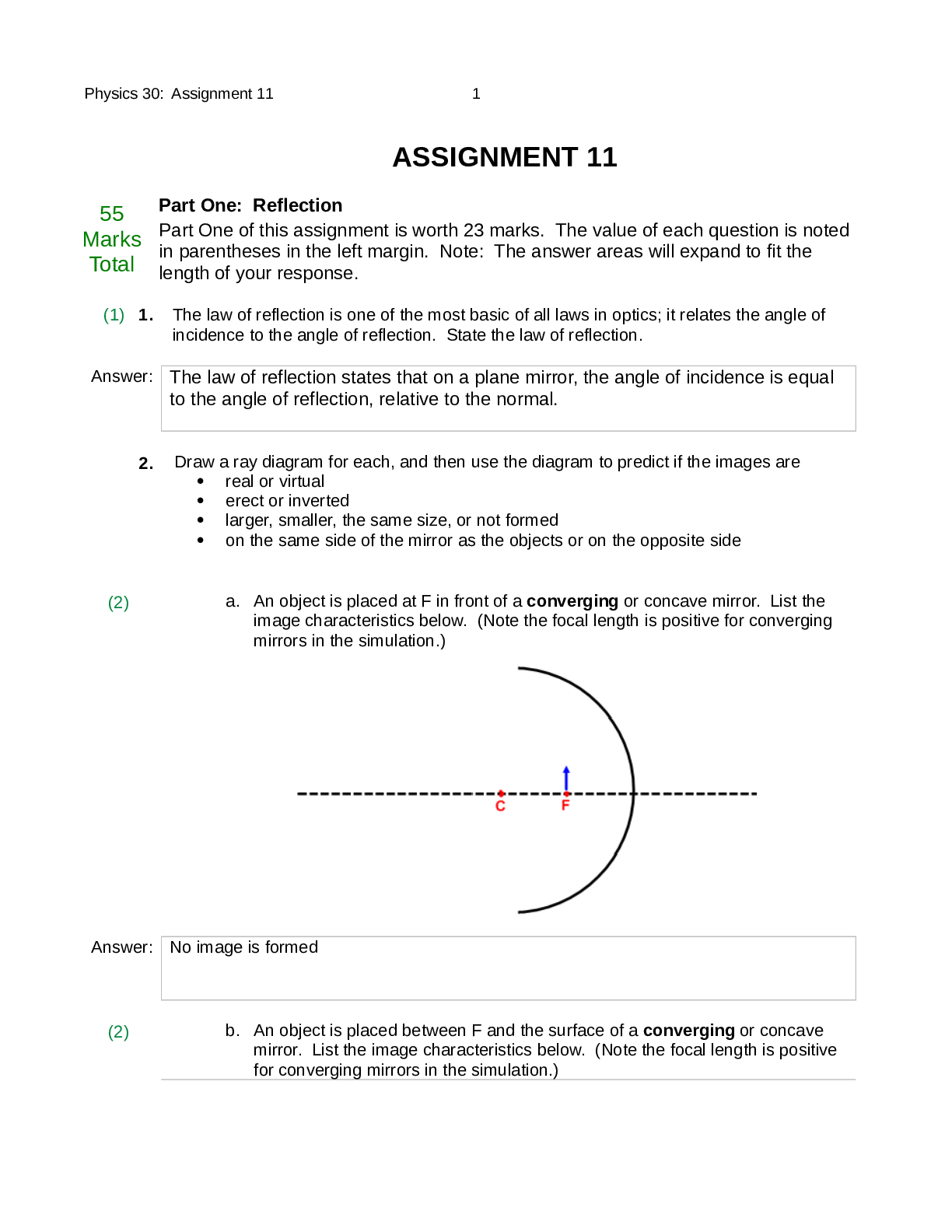
Physics 30: Assignment 11>Withs parts:Part One: Reflection and...

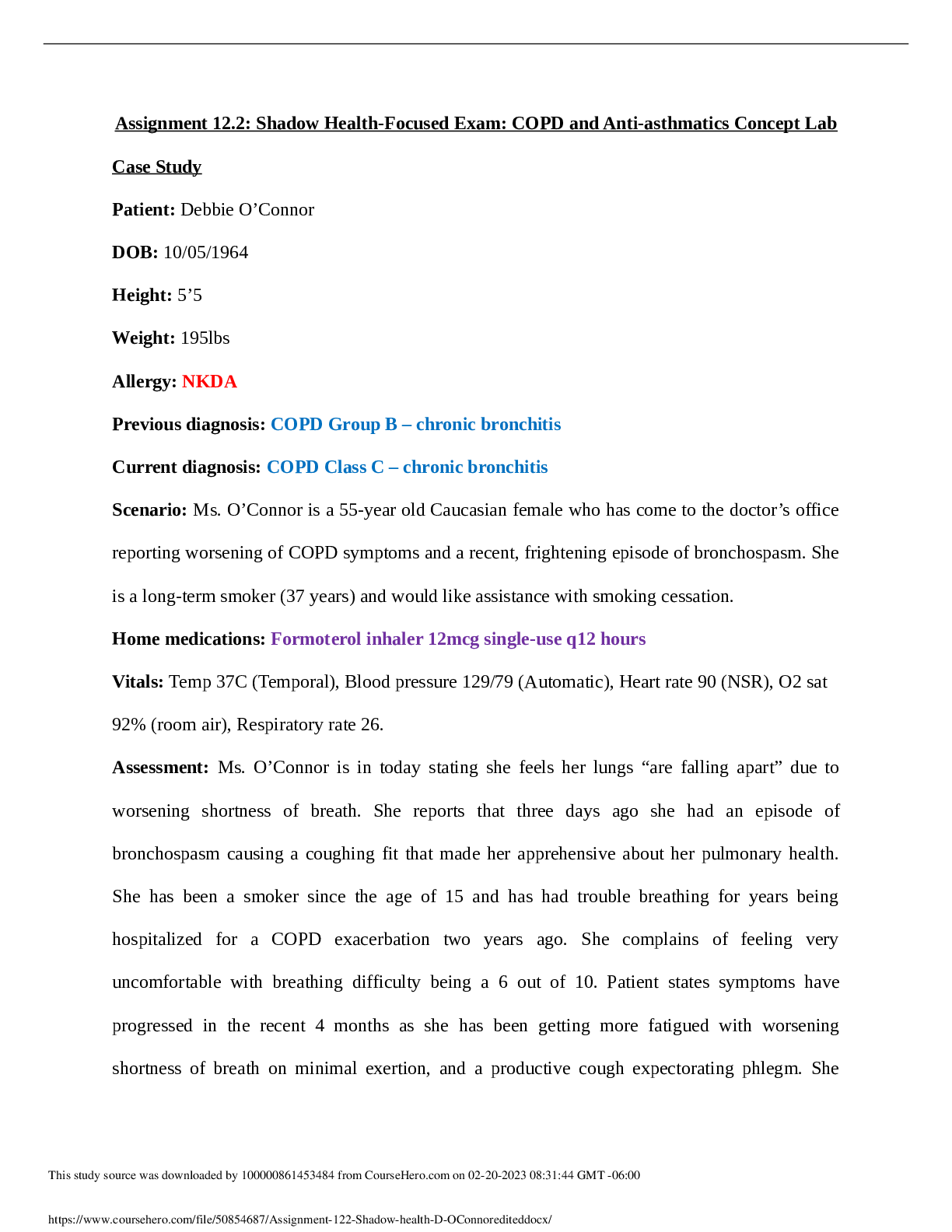
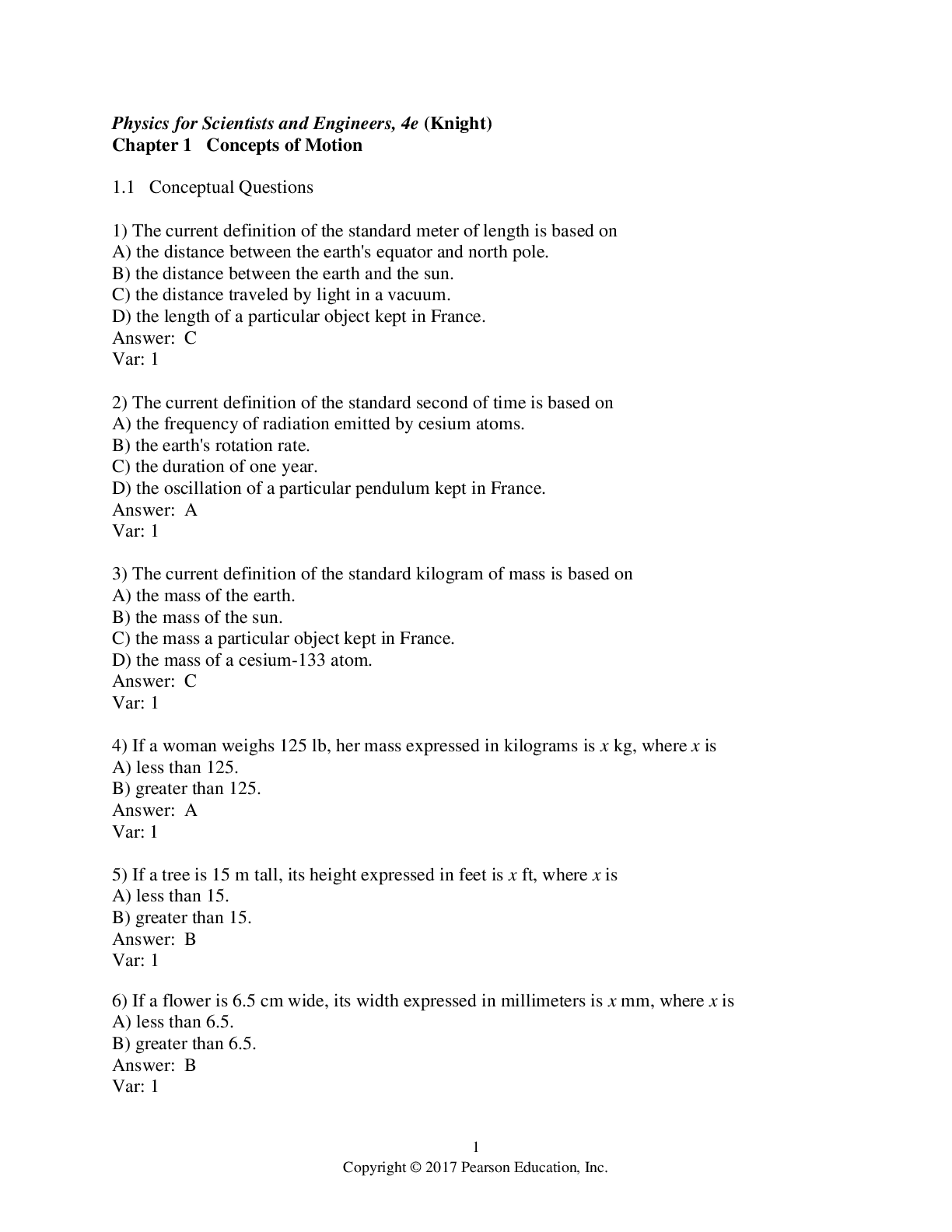
Test Bank for Physics for Scientists and Engineers A Strategic...

Plasma Physics, 2e by Richard Fitzpatrick (Solutions Manual)

College Physics, 3e Roger Freedman, Todd Ruskell, Philip Keste...

A Concise Introduction to Thermodynamics for Physicists, 1e by...