Cardiovascular Review FNP | Updated Fall 2025, Complete Solutions A 54-year-old woman presents with dyspnea on exertion. She states that it has been progressively worsening over the last few months and she is losing h
...
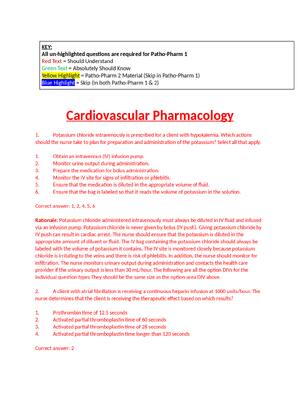
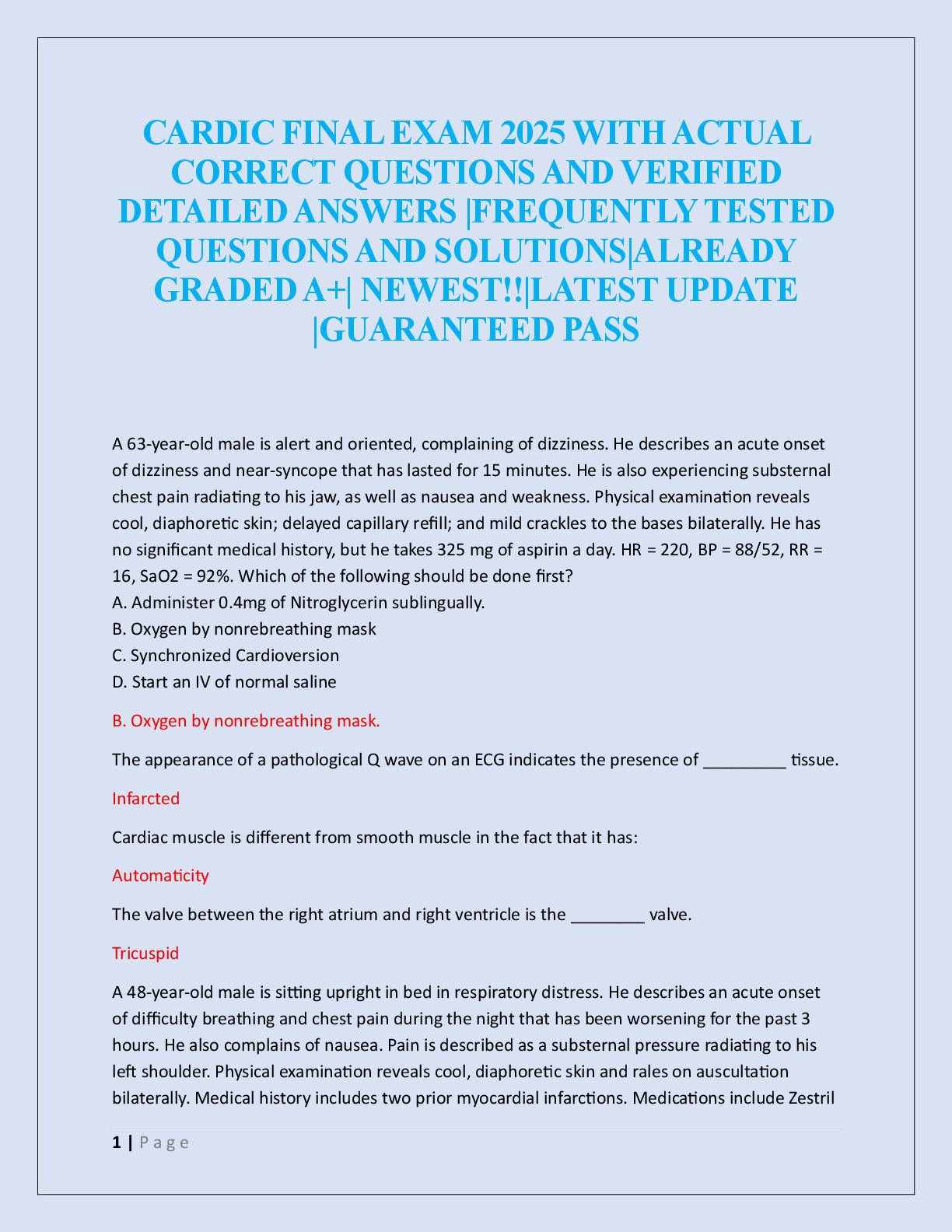
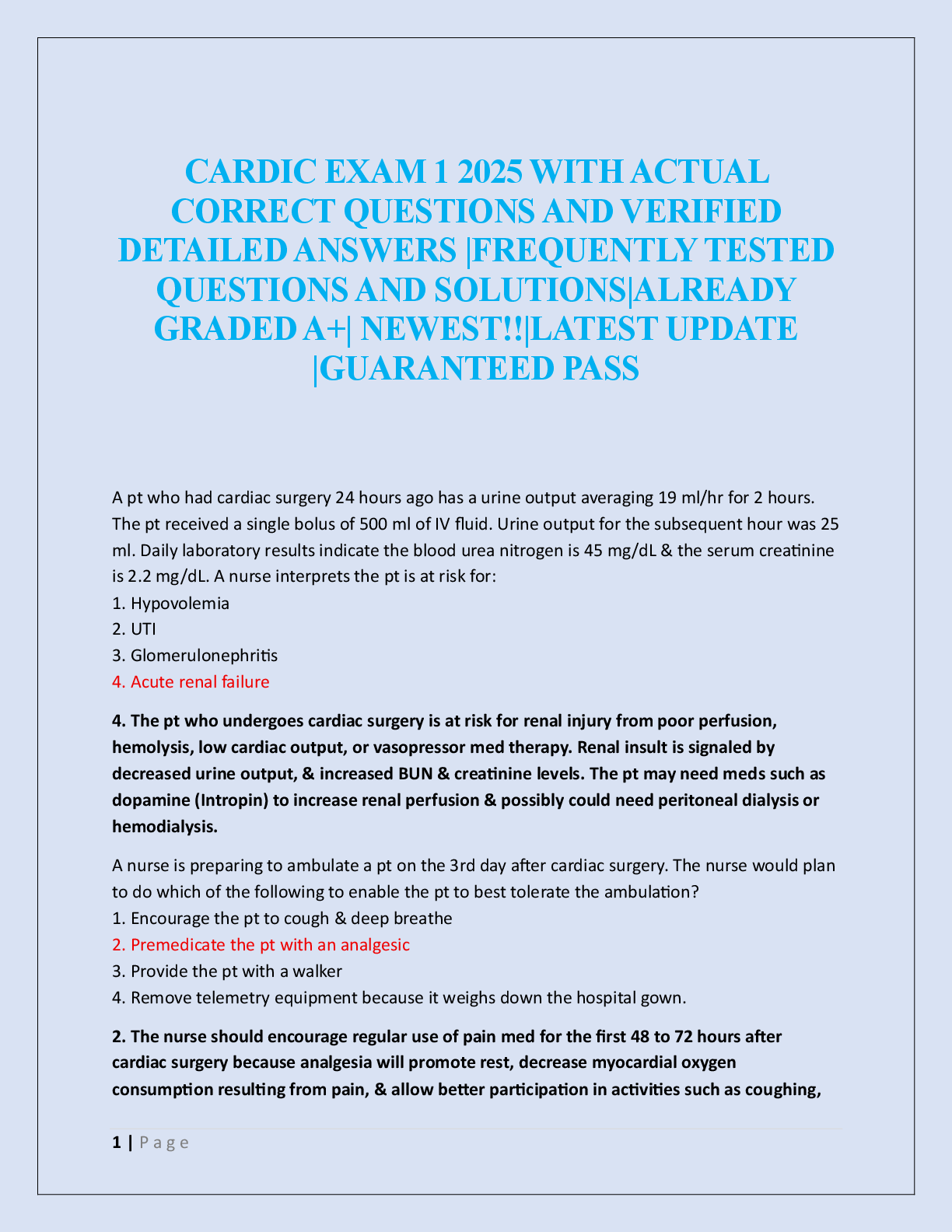
Cardiovascular Review FNP | Updated Fall 2025, Complete Solutions A 54-year-old woman presents with dyspnea on exertion. She states that it has been progressively worsening over the last few months and she is losing her ability to complete activities that she was able to do before without sitting down to "catch her breath." Cardiac auscultation over the apex reveals a low-pitched, diastolic murmur and an opening snap. Which of the following is the most likely diagnosis? Mitral stenosis Which of the following should the provider closely assess in a patient with a prosthetic heart valve? Oral health Which of the following signs or symptoms is most likely to be associated with a patient with chronic venous insufficiency? Edema An 80-year-old woman presents after a syncopal episode. Her electrocardiogram demonstrates an atrial rate of 85 bpm, a ventricular rate of 30 bpm, and a complete dissociation between the two. Which of the following is the correct diagnosis? Third degree heart block A 6-month-old infant presents to the clinic for a well-baby exam. His mother reports no symptoms and feels like her son is developing normally. On exam, you note a systolic ejection murmur. The murmur is heard best at the pulmonic area. Based on this finding, which of the following is the most likely diagnosis? Atrial septal defect You are auscultating the heart of a 75-year-old woman and hear a murmur at the 2nd intercostal space on the right sternal border. Which heart valve is most likely affected? Aortic valve A 35-year-old woman is being evaluated at her annual well woman exam. She has no complaints and generally feels healthy. She has no past medical history and takes no medications. She walks 30 minutes five days per week with no dyspnea or discomfort. On physical exam her blood pressure is 118/68, pulse 64/min and respiration rate is 13/min. Her body mass index is 22. Cardiac auscultation reveals a 2/6 mid-systolic crescendo-decrescendo murmur heard best at the left lower sternal border without radiation. She has a normal S1 and S2 and normal cardiac impulse. Lungs are clear and peripheral pulses are normal. Electrocardiogram is normal. What is the next appropriate step in management? No additional testing A 36-year-old man presents to the clinic with a chief complaint of dizziness. Which of the following aspects of the history taking and physical exam would support a diagnosis of orthostatic hypotension? Symptoms that worsen with change from sitting to standing A 73-year-old man with a history of hypertension and COPD presents with the ECG seen above. Which of the following is the correct diagnosis? Multifocal atrial tachycardia What is the most common cause of acquired aortic valve stenosis in the United States? Degenerative calcific changes A 59-year-old man presents to the clinic for a follow-up on his hypertension. During his last visit 2 weeks ago, his blood pressure was 152/96 mm Hg despite adding hydrochlorothiazide and increasing the dose of his lisinopril, so the provider ordered a CT angiogram that revealed a 75% renal artery occlusion. Which of the following steps should the provider take next? Refer to an interventional cardiologist A 62-year-old man with a history of ongoing tobacco abuse, hypertension, dyslipidemia and erectile dysfunction complains of progressive aching pain in his right buttock and hip. The pain is worse with walking and is relieved with rest. Physical exam of the lower extremities reveals slightly diminished femoral, popliteal, and dorsalis pedis pulses. Which of the following is the most likely site of this patient's peripheral arterial disease? Aortoiliac segment A cardiologist has diagnosed a 65-year-old man with stable angina. The patient presents to follow-up on hypertension and requests additional information regarding the diagnosis of stable angina. Which of the following best describes stable angina? It occurs with activity and is relieved by rest or nitroglycerin A 55-year-old African-American man presents to the clinic with a blood pressure of 150/100 mm Hg. He has no other comorbidities. His initial lab work shows normal renal function. What is the best therapy for this patient? Amlodipine 10 mg daily A 78-year-old man presents to the clinic with painful leg wounds for 2 months. On exam, the provider notes ulcers above the medial malleolus on the right leg and the lateral malleolus on the left leg. The ulcers have irregular borders with yellow exudate. The patient rates the pain as a 2 on a scale of 10. Additional findings include peripheral edema and brown discoloration of the lower extremities. Which of the following is the most likely cause of these ulcers? Venous insufficiency A 38-year-old woman presents to the clinic with complaints of fatigue and dyspnea on exertion that has been worsening over the last few hours. Auscultation reveals clear lung sounds and distant heart sounds. An electrocardiogram is completed and shows normal ST segments and electrical alternans. Which of the following diagnostic tests would be the next best test to order? Echocardiogram A 33-year-old female presents to the clinic with a history of a prosthetic valve placement. She is having a dental procedure in two weeks and needs a prophylactic antibiotic prior to this appointment. She has no drug allergies. What is the best choice of antibiotic for her? Amoxicillin 2 gm by mouth 30-60 minutes prior to procedure Which of the following circumstances requires prophylactic antibiotics for the prevention of infective endocarditis before a dental procedure? History of bacterial endocarditis You would like to conduct a study to correlate the results of a new rapid antigen testing kit with the standard culture for children with urinary tract infections. You plan to test all samples with a positive urinalysis and follow up the urine cultures within 48 hours. What method would best describe this study design? Prospective cohort study A 76-year-old man presents for his scheduled 12-week follow-up. He has a history of coronary artery disease, stable angina, hypertension, and hypercholesterolemia. He takes isosorbide mononitrate 30 mg daily, lisinopril 40 mg daily, aspirin 81 mg daily, simvastatin 40 mg daily, and nitroglycerin 0.4 mg sublingual as needed. After a complete review of systems, you perform a cardiac and respiratory exam. His pulse is 70 bpm and regular. His blood pressure is 112/ 68 mm Hg. Which of the following patient statements would lead you to determine his medication regimen may need adjustment? "The last few weeks, I have had more chest pain with activity." A 3-year-old boy presents to a provider for his yearly health examination. On exam, a grade 2 systolic murmur, best heard in the left lower sternal border, is heard. The murmur is vibratory and is loudest when the patient is supine, rather than when he is sitting. Which of the following is the most likely diagnosis? Still's murmur A woman presents with reduced exercise tolerance and dyspnea on exertion. On exam, you auscultate a diastolic murmur at the apex, heard in the audio clip above. Which of the following is the correct diagnosis Mitral stenosis A 35-year-old woman is seen in the clinic with a chief complaint of frequent palpitations associated with symptoms of pre-syncope. She experiences these episodes two to three times per day. Her resting ECG in the office is normal sinus rhythm with heart rate 65/min. Her physical exam is unremarkable. Which of the following is the most appropriate next step in management? 24-48 hour continuous ambulatory ECG monitor A 31-year-old woman presents to the clinic for a routine physical. She has a diagnosed history of mitral stenosis and associated atrial fibrillation. She has no concerns about symptoms today. Routine labs and vital signs are within expected limits. Due to the patient's history of mitral stenosis, which of the following should be cautiously considered for this patient? Surgery Which of the following is an indication for permanent pacemaker placement? Asymptomatic Mobitz type II second degree heart block A 15-year-old girl presents to your office for follow-up after a hospital admission for viral pericarditis complicated by a pericardial effusion. She complains of continued cough, shortness of breath, and chest pain. Her symptoms are intermittent. Which of the following would you order in follow-up to assure resolution of the pericardial effusion? Echocardiogram A 13-year-old girl presents with dizziness when changing position from sitting to standing and is diagnosed with orthostatic hypotension. Which of the following is the best non-pharmacologic intervention to help prevent symptoms? Moving hands and legs while sitting prior to standing You are auscultating the heart of a 60-year-old man and hear a very loud murmur which can be heard with your stethoscope partly off the chest, accompanied by an easily palpable thrill. How would you grade this murmur? Grade V A 33-year-old woman who has a peripherally inserted central catheter presents with an abrupt onset of fever and chills. The patient is hemodynamically stable. Blood culture results are obtained and empiric antibiotic treatment is initiated. Within 48 hours, the woman develops additional signs and symptoms of systemic infection. Which of the following is correlated with the development of endocarditis? Onset of a heart murmur A 57-year-old man presents to the clinic with complaints of chest pain. He reports his intermittent substernal chest pain started 2 weeks ago. The pain often radiates into his left arm, and episodes seem to be correlated with physical activity. The pain episodes last between 2 and 5 minutes and are alleviated with rest. He has a history of hypertension and hypercholesterolemia. Based on the information provided, which of the following is the most likely diagnosis? Stable angina A 15-year-old boy presents to the office for his routine wellness exam. While taking his vital signs, you assess that he is hypertensive and he had previously always had normal blood pressure readings. Which of the following should be performed to rule out an undiagnosed coarctation of the aorta? Palpate brachial and femoral pulses simultaneously A 56-year-old woman presents to your primary care office complaining of fatigue, palpitations, and headache. She reports that her fatigue occurs daily and she has fallen asleep while stopped in traffic. She has a headache upon waking the majority of mornings. She acknowledges that she has known snoring. Vital signs are heart rate 75, blood pressure 120/68 mm Hg, respiratory rate 16, and oxygen saturation 97% on room air. Body mass index is 31. Micrognathia and macroglossia is the only significant examination findings. Which of the following is most likely the cause of her symptoms? Obstructive sleep apnea A 21-year-old woman presents to the clinic for an examination to establish care. On exam, you note a systolic murmur at the apex. The murmur is associated with a midsystolic click. She reports no symptoms. She has no concerning family history of sudden cardiac death. Which of the following is the most effective management of this patient? Procedural antibiotic prophylaxis A 34-year-old man presents to the emergency department with complaints of worsening chest pain, fever, and malaise. The pain is pleuritic, worsens when he lies down and improves when he leans forward. On exam, he appears unwell, but is not in acute distress. Auscultation over the precordium reveals a scratchy, grating sound with a normal S1 and S2. Which of the following is the most likely electrocardiogram finding in this patient? ST segment diffuse elevation with reciprocal ST depression in leads aVR and V1 Which of the following is a risk factor for the development of aortic regurgitation? Marfan syndrome While performing a routine physical examination, a provider notices a distinct decrease in the strength of the patient's radial pulse during inspiration. Which of the following conditions does this patient likely have? Constrictive pericarditis A 16-year-old man presents to the clinic for a sports physical. He never experiences any chest pain or shortness of breath and exercises frequently. An ECG is performed and is shown above. What is the most likely diagnosis? First-degree atrioventricular block Which of the following interventions for patent ductus arteriosus would be recommended for an asymptomatic term infant who weighs less than 6 kilograms? Observe with frequent cardiopulmonary monitoring until they weigh over 6 kilograms A 68-year-old man with a past medical history of hypertension presents to the clinic concerned about the feeling of his heart racing. On exam, his HR is 110 beats per minute, and his pulse feels irregularly irregular. On ECG, there are no distinct P waves, and there is a narrowed QRS wave. What is this patient's most likely diagnosis? Atrial fibrillation A 70-year-old woman presents to clinic complaining of fatigue and palpitations for the last few weeks. Her medical history includes hypertension, diabetes mellitus, and hypothyroidism. You obtain an ECG which is shown above. What is her diagnosis? Atrial fibrillation A 67-year-old woman presents with headache, blurry vision, and anxiety. Physical exam reveals a blood pressure reading of 182/110 mm Hg, jugular venous distension, and pedal edema. Which of the following is the most likely diagnosis? Hypertensive emergency A 60-year-old man with intermittent claudication returns to the clinic for interpretation of the results of his ankle-brachial index. Which of the following statements is most accurate A falsely high index may indicate severely hardened, non-compressible leg vessels Which of the following is commonly the first reported symptom of aortic stenosis? Dyspnea A 34-year-old man presents to your office. He notes easy fatigability and dyspnea. On auscultation there is a widened S2 split, and a harsh, non-radiating systolic crescendo-decrescendo murmur located at the second intercostal space which is decreased after the patient performs a Valsalva maneuver. The patient also has a right ventricular precordial lift. Which of the following valvular conditions does this patient have? Pulmonic stenosis A 53-year-old man presents to the clinic with a three-month history of palpitations, fatigue, and weakness. He says he experiences these symptoms shortly after starting yard work. He has a past medical history of diabetes mellitus and hypertension. An ECG shows an irregularly irregular rhythm. Which of the following is the most likely diagnosis? Atrial fibrillation A 1-month-old infant presents to the clinic for a well-baby visit. Her mother reports she had a home birth and neither she nor baby has been evaluated since. It was an uncomplicated vaginal birth. On exam, you note a systolic ejection murmur that is best heard at the upper left sternal border and radiates to the left scapular area. You palpate decreased femoral pulses, and capillary refill is greater than 3 seconds in bilateral lower extremities. Based on the clinical presentation, what is the likely diagnosis? Coarctation of the aorta A 68-year-old man presents to the clinic for a follow-up after an emergency department visit 1 week ago for chest pain. Hospital records reveal a negative ECG and negative troponins. He currently has no chest pain but states that the pain is worse when doing yard and housework and is relieved with rest. Which of the following is the most appropriate next step in the treatment plan? Exercise tolerance testing A 65-year-old man presents to the clinic with complaints of left leg swelling. He is currently being treated for prostate cancer and has diabetes, hypercholesterolemia, and hypertension. On exam of the left leg, you note swelling, erythema, warmth, and tenderness with palpation. What is the best way to diagnose the suspected condition? Ultrasound A 45-year-old man presents to the clinic with dyspnea and decreased exercise tolerance. His past medical history is significant for rheumatic fever. Cardiac auscultation reveals an opening snap and a low-pitched diastolic rumble. Which of the following is the most likely diagnosis? Mitral stenosis An elderly patient presents to the office complaining of lower extremity skin changes and discomfort that is relieved with elevation. Which of the following would most likely be present on physical exam? Lower extremity edema Which of the following is recommended for the treatment of systolic heart failure according to New York Heart Association (NYHA) functional class? Spironolactone for NYHA class III-IV heart failure and ejection fraction < 35% A squeaking sound auscultated at the left sternal border is specific for which one of the following diagnoses? Acute pericarditis A 19-year-old woman presents to the clinic for evaluation. She reports a sudden onset of chest pain, dyspnea, and fatigue. She was seen at the clinic for an upper respiratory infection 4 weeks ago. The upper respiratory infection cleared 3 weeks ago, and she reports complete resolution of symptoms at that time. She is otherwise healthy. On exam, you note peripheral edema. The ECG reads ST elevation and T wave inversions. Based on the clinical presentation, which of the following is the most likely diagnosis? Myocarditis A 60-year-old woman presents to your office with complaints of bilateral lower extremity pain that worsens throughout the day with prolonged standing. Physical exam reveals distended veins in both legs distal to the knees. Which of the following is the most appropriate diagnostic test to confirm the suspected diagnosis? Duplex ultrasound A 58-year-old woman presents to the clinic for weakness and fever for 5 days. She has a history of a mechanical mitral valve. The provider notes a new murmur on cardiac auscultation. Which of the following should occur first in the treatment plan? Blood cultures A 52-year-old man presents to discuss his elevated blood pressure. He brings in his home blood pressure readings which have been between 150-160/90-100 for the past two weeks. The patient's past medical history includes type 2 diabetes and hyperlipidemia. Which of the following is the most appropriate treatment for this patient's hypertension? Enalapril Which of the following is primarily a measure of ventricular repolarization? QT interval Which of the following cardiac conditions results in a prolonged PR interval on ECG? First-degree atrioventricular block A patient is being evaluated for dyspnea and lower extremity swelling. On physical exam the patient has jugular venous distention with inspiration and 2 + pedal edema. Hepatojugular reflex is present. The patient has clear lung fields and no murmur is appreciated. Which of the following findings would support the diagnosis of constrictive pericarditis over restrictive cardiomyopathy? Pericardial knock A 15-year-old boy presents to the clinic with lower extremity swelling and dyspnea with exercise. He has a history of restrictive cardiomyopathy and takes captopril. Vital signs are within normal limits. Which of the following is the most appropriate next step in management? Furosemide A 50-year-old woman presents to the clinic for a physical examination. She has a history of moderate chronic aortic regurgitation. Which of the following findings would the provider anticipate? Low diastolic blood pressure A 67-year-old man with a history of sarcoidosis presents with dyspnea, fatigue, and signs of right-sided heart failure. Physical exam shows elevated jugular venous pressure and hepatomegaly. Echocardiogram shows reduced diastolic filling. Magnetic resonance imaging shows gadolinium hyperenhancement. Which of the following is the most likely diagnosis? Restrictive cardiomyopathy A 70-year-old man with a history of sulfa allergy, reduced cardiac ejection fraction, and chronic kidney disease presents to his primary care provider with a new onset of hypertension. His blood pressure at his previous appointment was 140/85 mmHg and it
[Show More]




![Preview of ALS/ACLS - Team Response Scenario - Theresa Coleman [2022] COMPLETE SOLUTION](https://scholarfriends.com/storage/shibli 1 (222).png)
![Preview of ALS/ACLS - Team Response Scenario - Javier Hernandez [2022] COMPLETE SOLUTION](https://scholarfriends.com/storage/shibli 1 (221).png)
![Preview of ALS/ACLS - Team Response Scenario - Katherine Archer [2022] COMPLETE SOLUTION](https://scholarfriends.com/storage/shibli 1 (220).png)