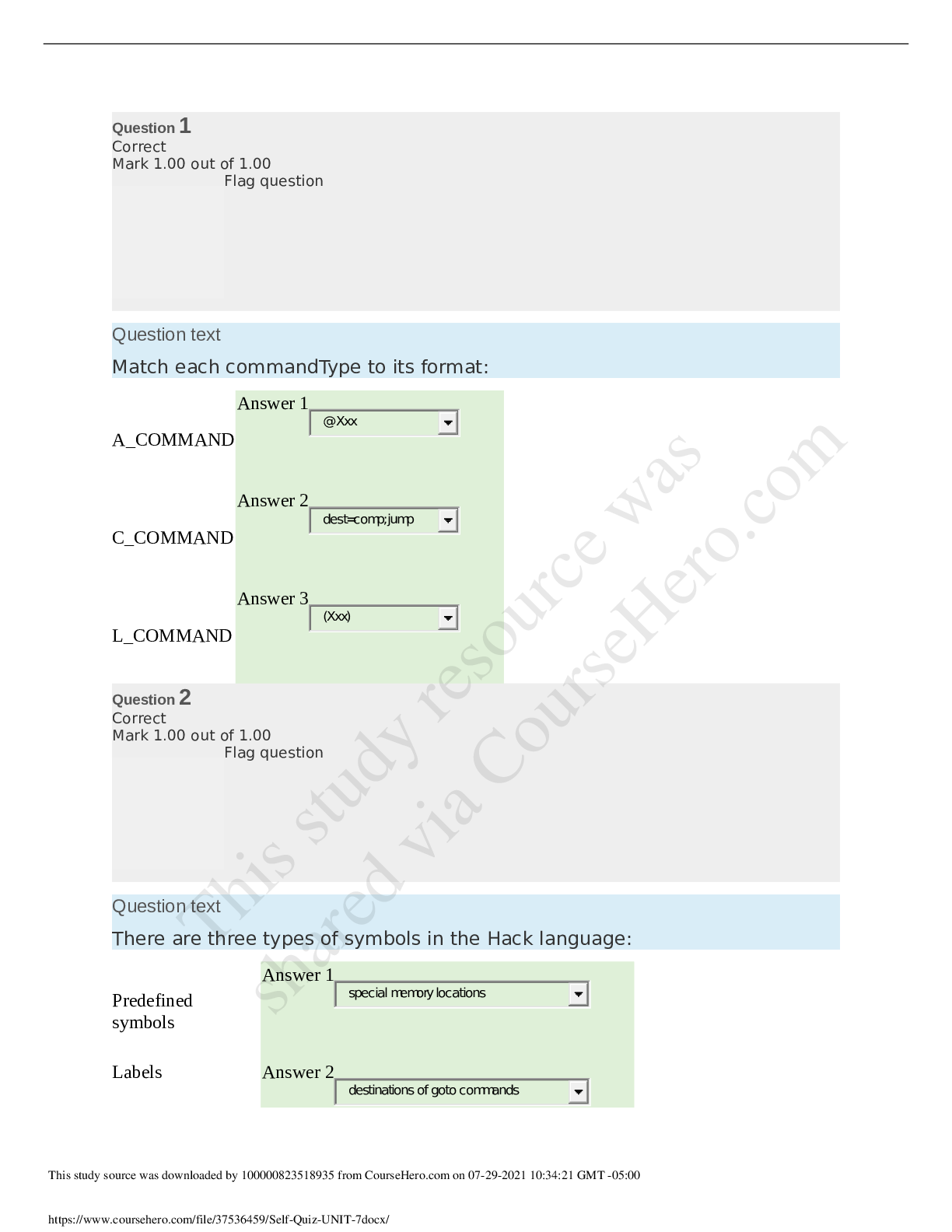
CS 11049 Self-Quiz UNIT 7 questions and answers_2020_Already Graded A
$ 7
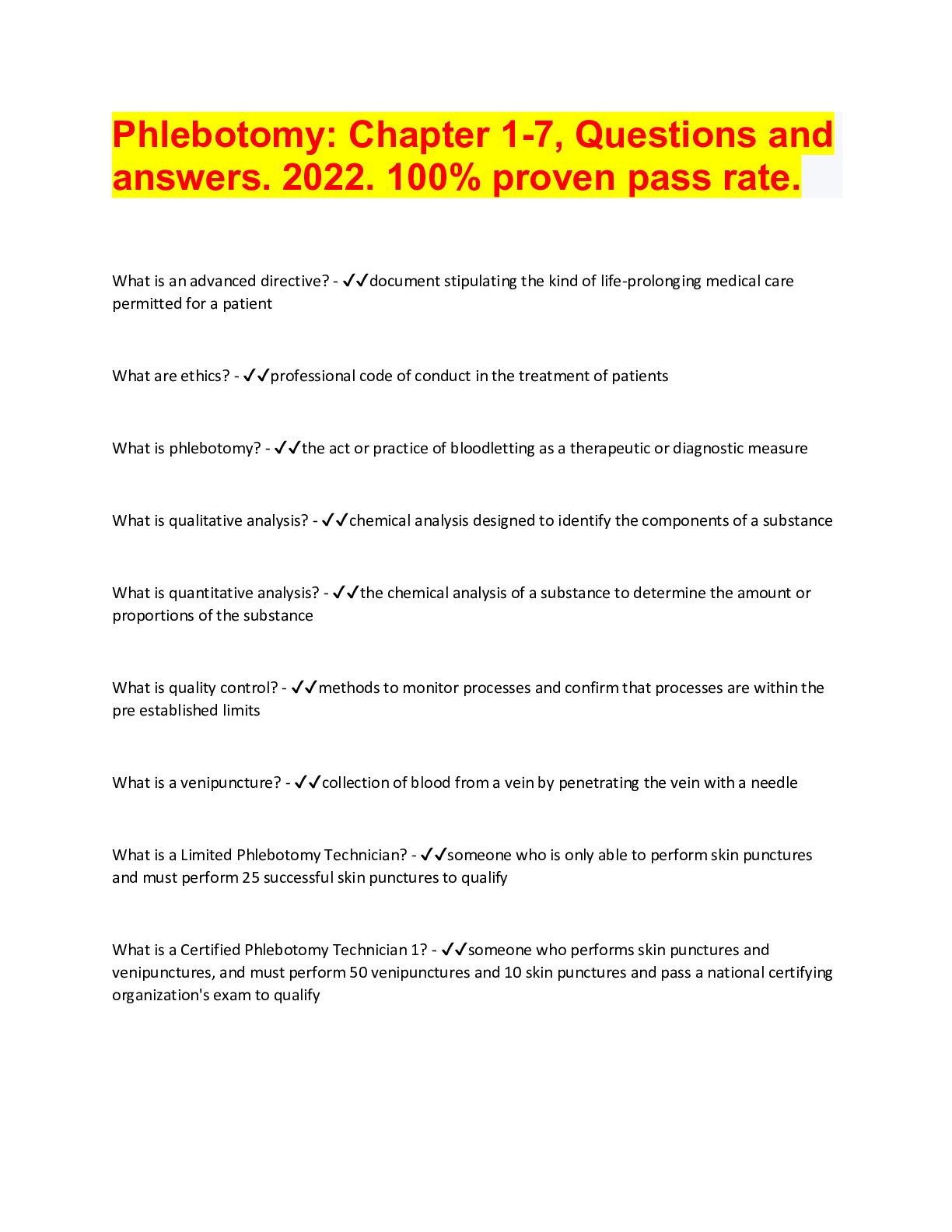
Phlebotomy: Chapter 1-7, Questions and answers. 2022. 100% proven pass rate.
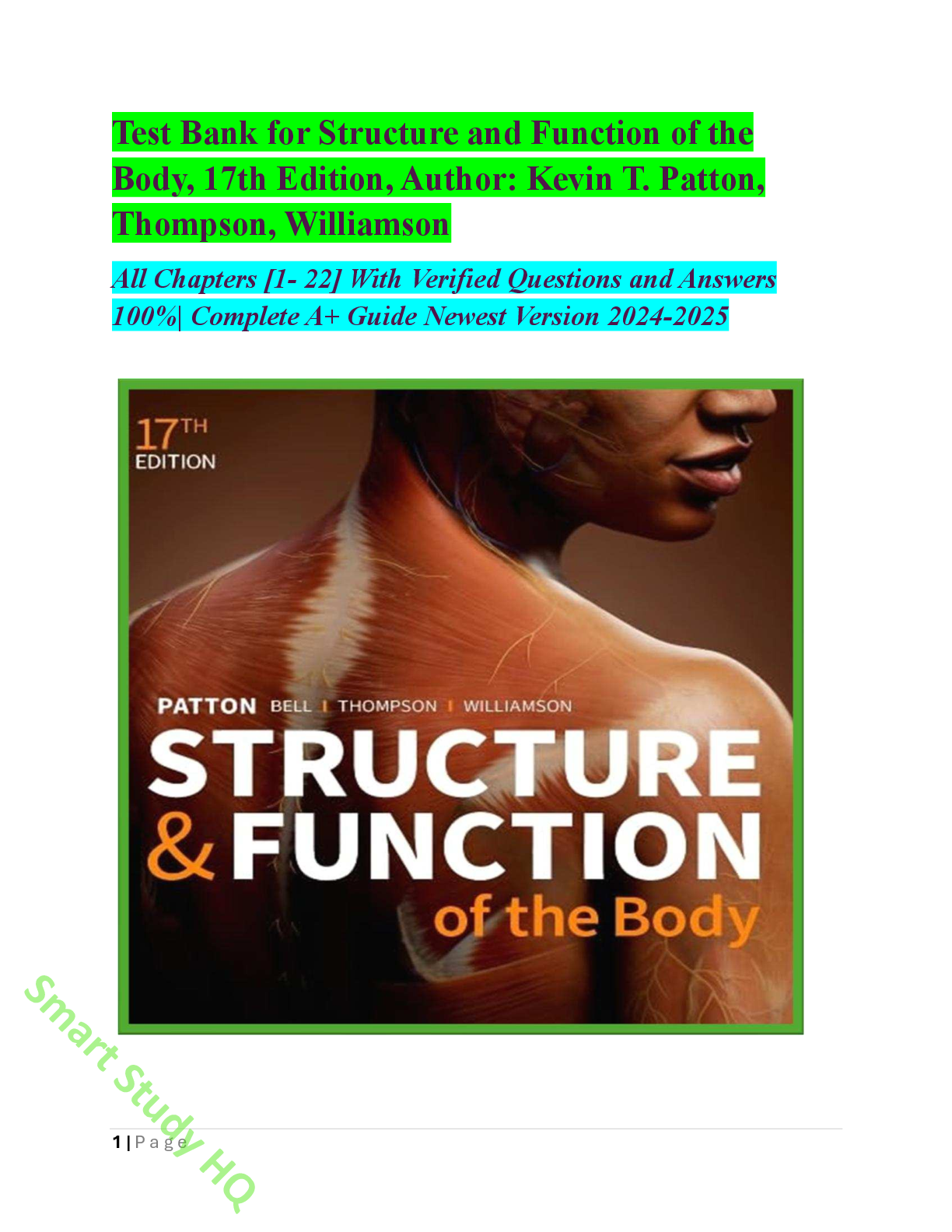
Physiology > TEST BANKS > Test Bank For Structure and Function Of The Body 17th Ed By Kevin T. Patton Thompson Williamson All (All)
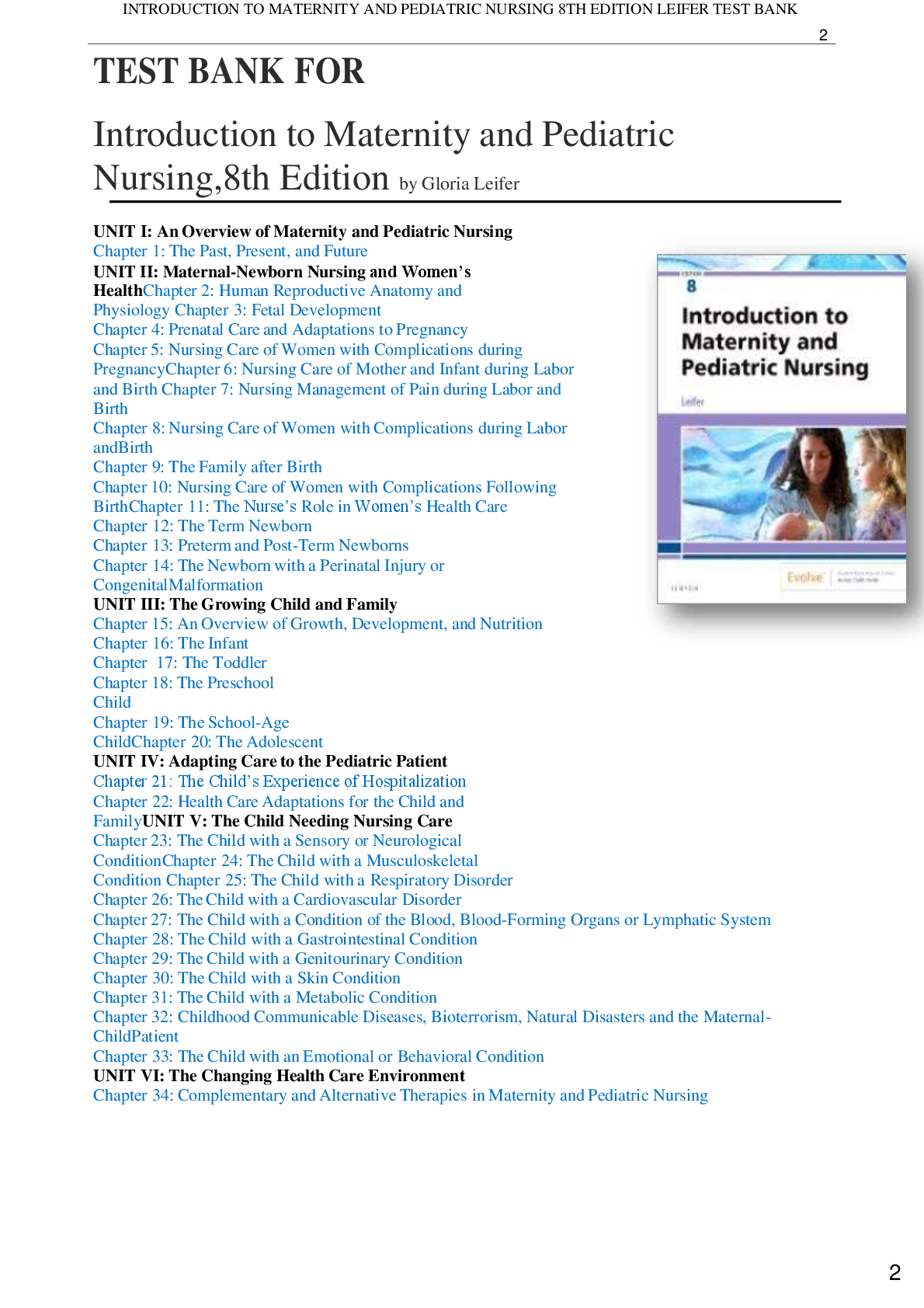
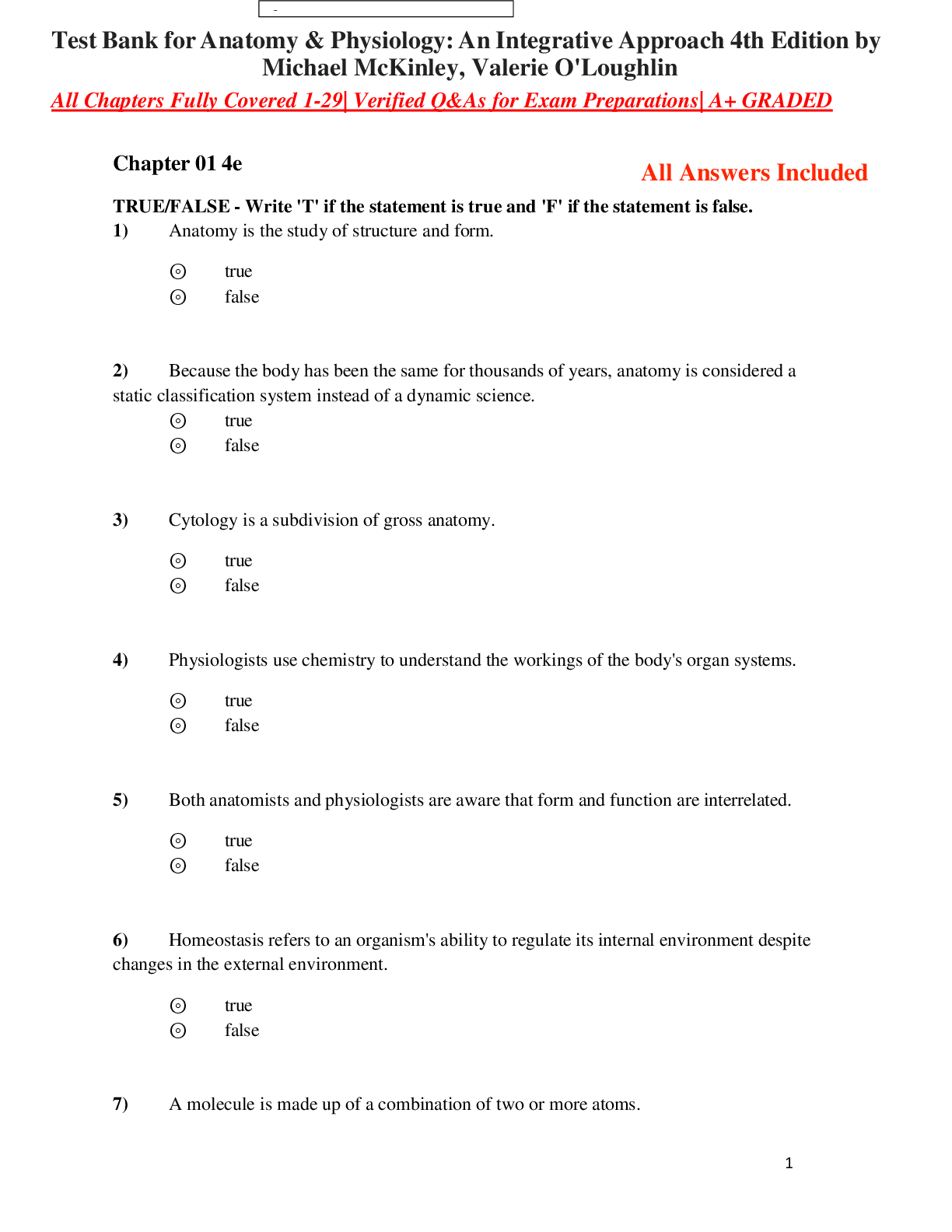
Test Bank For Structure and Function Of The Body 17th Ed By Kevin T. Patton Thompson Williamson All Chapters |Verified Questions And Answers A+ Newest Version CHAPTER 1 — ORGANIZATION OF THE HUMAN B ... ODY & HOMEOSTASIS Q1. The study of body function is called: A. Anatomy B. Physiology C. Histology D. Pathology Answer: B. Physiology Rationale: Physiology is the science of how the body and its parts function. Q2. Which level of organization is more complex than an organ but less complex than an organism? A. Cell B. Tissue C. Organ system D. Organ Answer: C. Organ system Rationale: Organ systems are groups of organs working together; they are below the whole organism level. Q3. Homeostasis is best defined as: A. Complete absence of change B. Maintenance of relatively stable internal conditions C. Rapid fluctuation of body systems D. The body’s adaptive immune response Answer: B. Maintenance of relatively stable internal conditions Rationale: Homeostasis refers to dynamic equilibrium within narrow limits, e.g., temperature, pH. Q4. A negative feedback loop: A. Amplifies the initial stimulus B. Always produces a pathological state C. Decreases deviations from a set point D. Is rare in human physiology Answer: C. Decreases deviations from a set point Rationale: Negative feedback counteracts changes to maintain stability (e.g., thermoregulation). Q5. Which body plane divides the body into right and left portions? A. Frontal (coronal) B. Transverse C. Sagittal D. Oblique Answer: C. Sagittal Rationale: Sagittal planes split left/right; midsagittal is down the midline. Q6. The anatomical term “anterior” means: A. Toward the back B. Toward the front C. Toward the midline D. Away from the head Answer: B. Toward the front Rationale: Anterior (ventral) = front of the body. Q7. Which body cavity contains the heart and lungs? A. Cranial cavity B. Abdominal cavity C. Thoracic cavity D. Pelvic cavity Answer: C. Thoracic cavity Rationale: Thoracic cavity holds the lungs (pleural) and heart (pericardial). Q8. An organ is best described as: A. A group of similar cells performing the same function B. Different tissues organized to perform a specific function C. A macromolecule required by cells D. A single specialized cell type Answer: B. Different tissues organized to perform a specific function Rationale: Organs combine tissues (epithelial, connective, muscle, nervous) for a task. Q9. Which of these is an example of positive feedback (normal physiology)? A. Insulin secretion after a meal B. Blood pressure regulation by baroreceptors C. Blood clot formation (hemostasis) D. Temperature regulation by sweating Answer: C. Blood clot formation (hemostasis) Rationale: Clotting cascades amplify until vessel sealed — a positive feedback loop. Q10. In clinical terms, the prefix “hypo-” means: A. Above or increased B. Below or decreased C. Within D. After Answer: B. Below or decreased Rationale: Hypo- denotes low/under (e.g., hypoglycemia = low blood glucose [Show More]
Last updated: 2 months ago
Preview 5 out of 65 pages

Loading document previews ...
Buy this document to get the full access instantly
Instant Download Access after purchase
Buy NowInstant download
We Accept:

Can't find what you want? Try our AI powered Search
Connected school, study & course
About the document
Uploaded On
Oct 13, 2025
Number of pages
65
Written in
All
This document has been written for:
Uploaded
Oct 13, 2025
Downloads
0
Views
41
Scholarfriends.com Online Platform by Browsegrades Inc. 651N South Broad St, Middletown DE. United States.
We're available through e-mail, Twitter, Facebook, and live chat.
FAQ
Questions? Leave a message!
Copyright © Scholarfriends · High quality services·