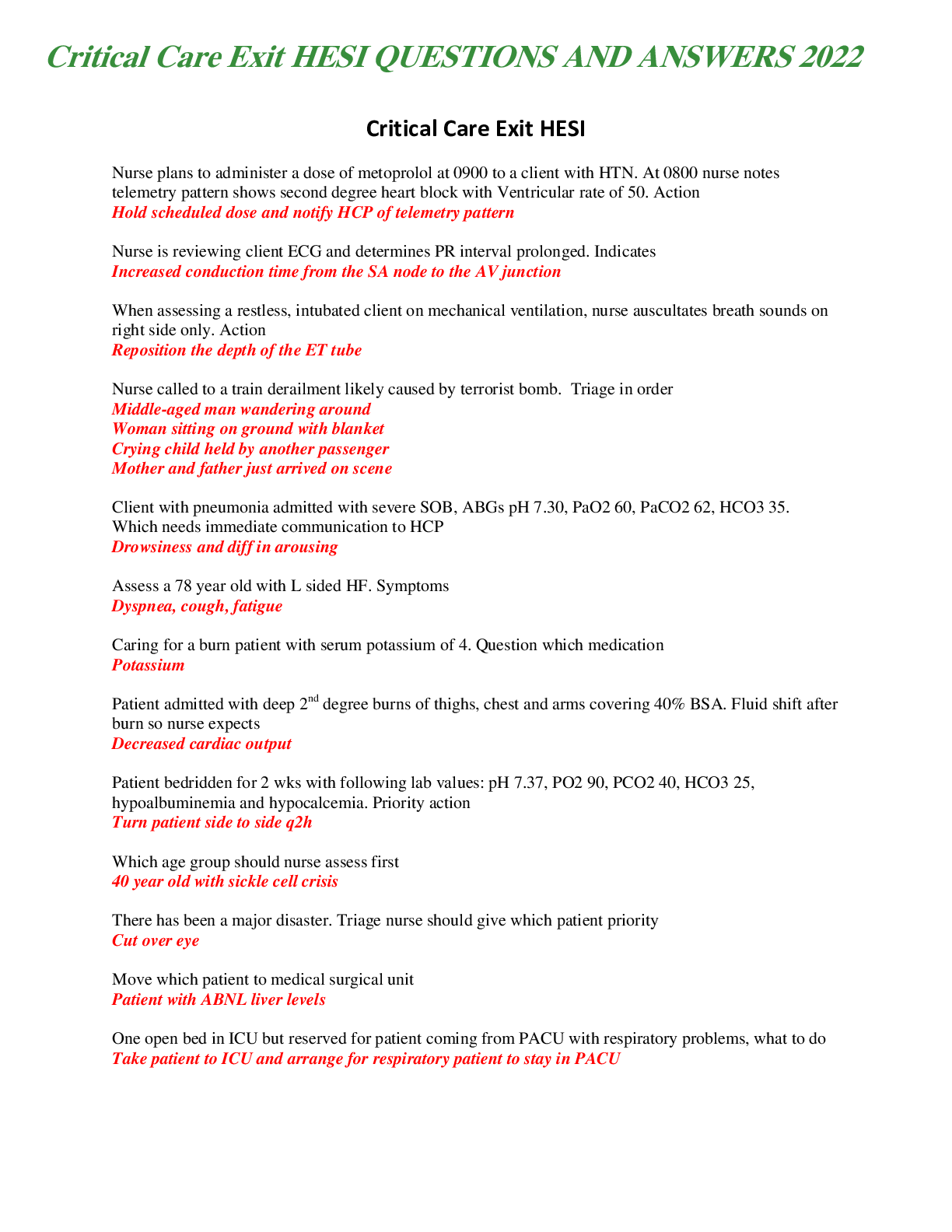
2021-Critical Care HESI Review Study Guide
Document Content and Description Below
ABGs
- a pH of 7.35-7.45 means that the body has compensated; anything outside this range is an uncompensated ABG
- if your PaCO2 is high and you have acidosis then the cause is respiratory; if your PaCO2 is low and yo
...
[Show More]
Last updated: 3 years ago
Preview 1 out of 24 pages
Instant download

Buy this Document to get the Full Access Instantly
Provided by Students Who Aced it
We Verify Document Content to Gurantee Accuracy
Reviews( 0 )
Document information
Connected school, study & course
About the document
Uploaded On
Apr 20, 2021
Number of pages
24
Written in
All

Additional information
This document has been written for:
Uploaded
Apr 20, 2021
Downloads
0
Views
142
Topic Tags
Related Subjects & Courses
Explore similar study resources and related concepts.
Recommended For You
Get more on HESI »
$17.5
44 Pages
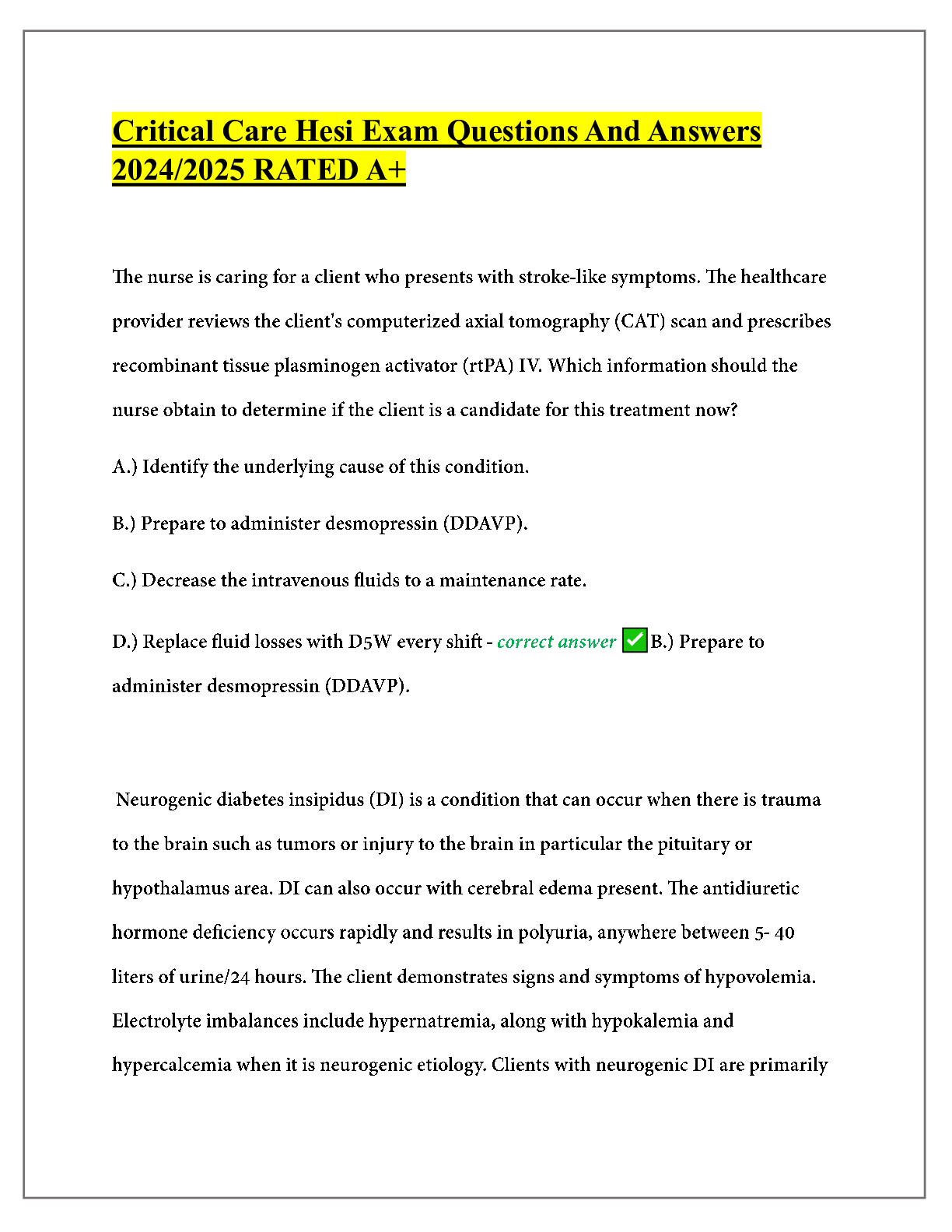
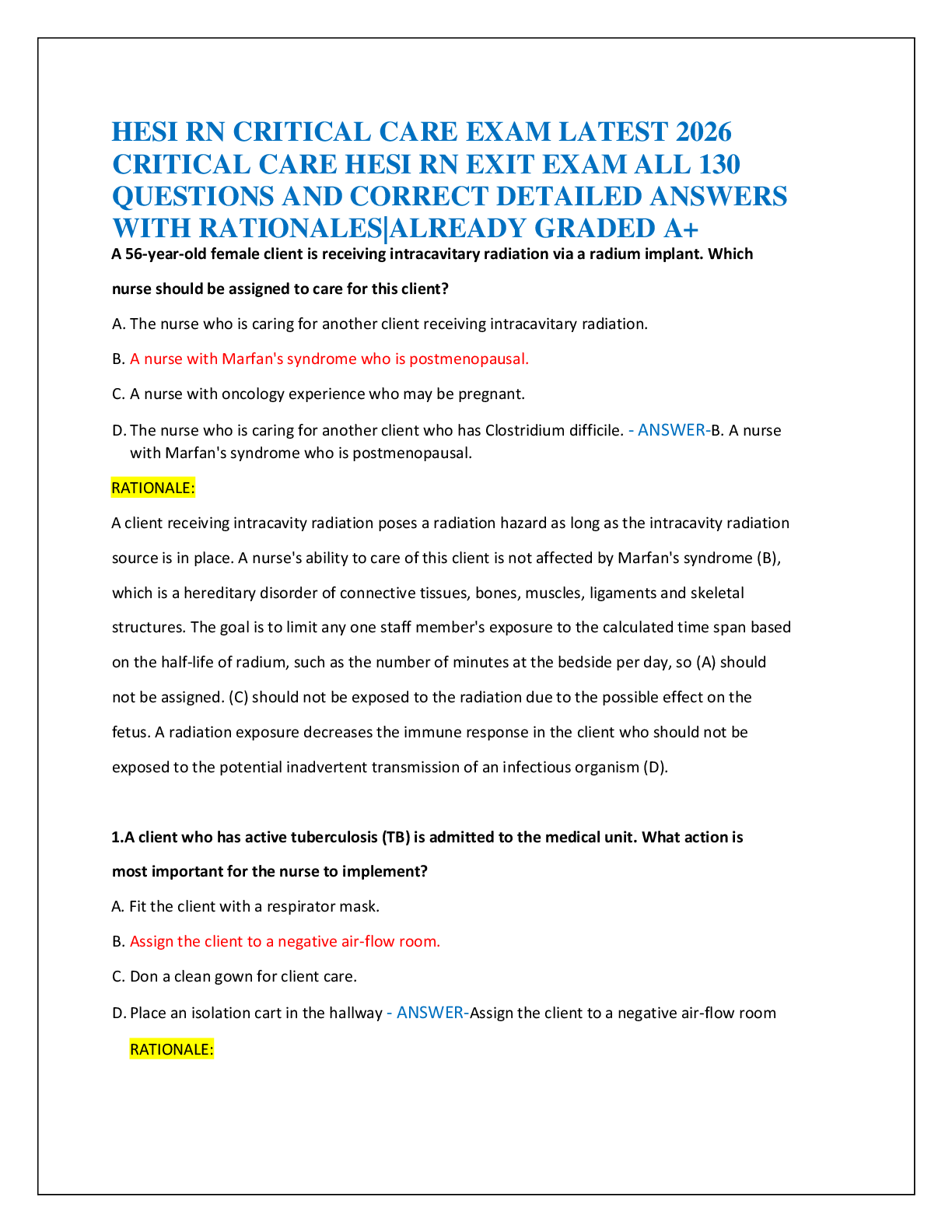
Critical Care Hesi Exam Questions And Answers 2024/2025 RATED...
.png)
$13
8 Pages
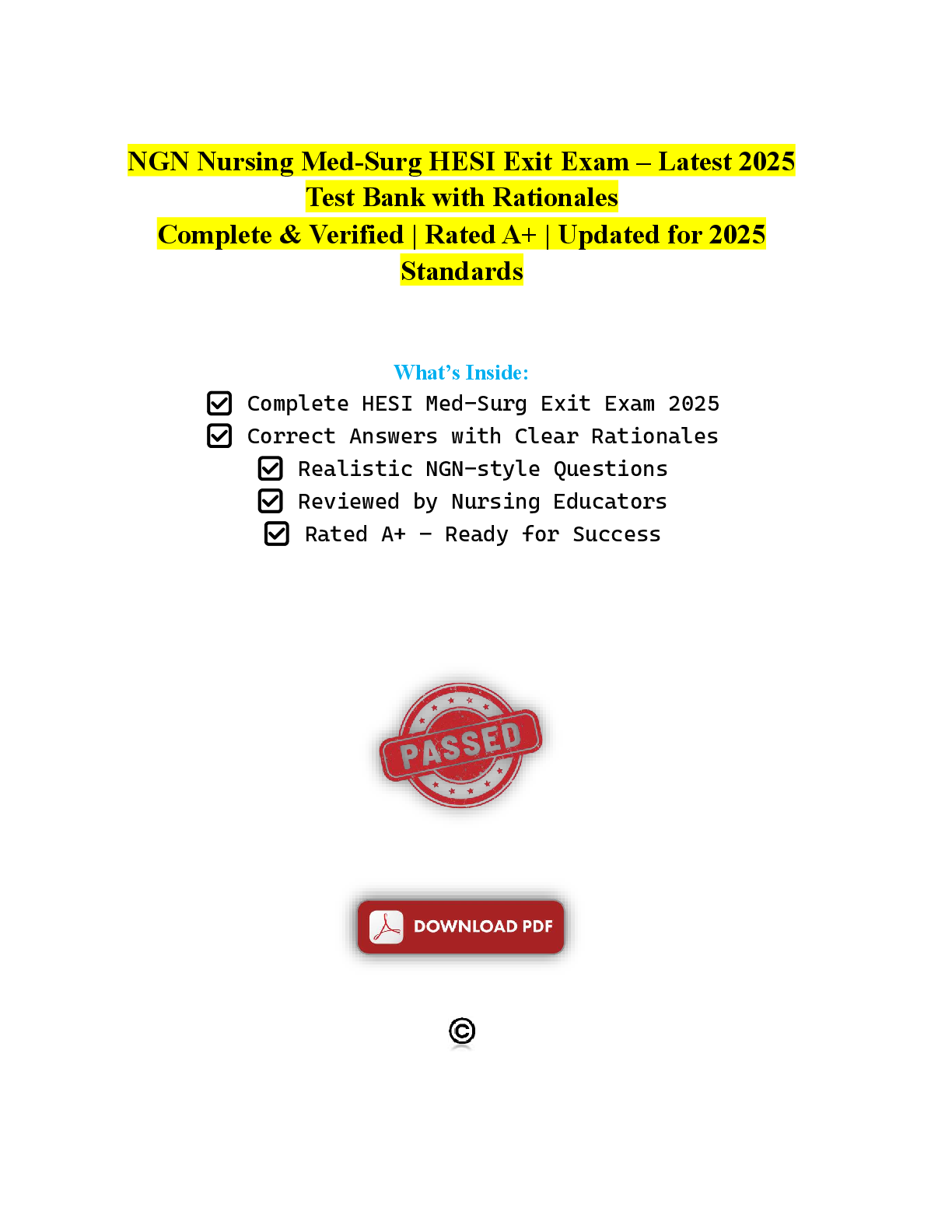
Critical Care HESI Final Study Guide | COVERING Cardiac, Endoc...

$14
8 Pages
Critical Care HESI Final Study Guide COVERING-: Cardiac, Endo...
 Questions, Answers & Rationale, A+ Guide.png)
$25.5
396 Pages
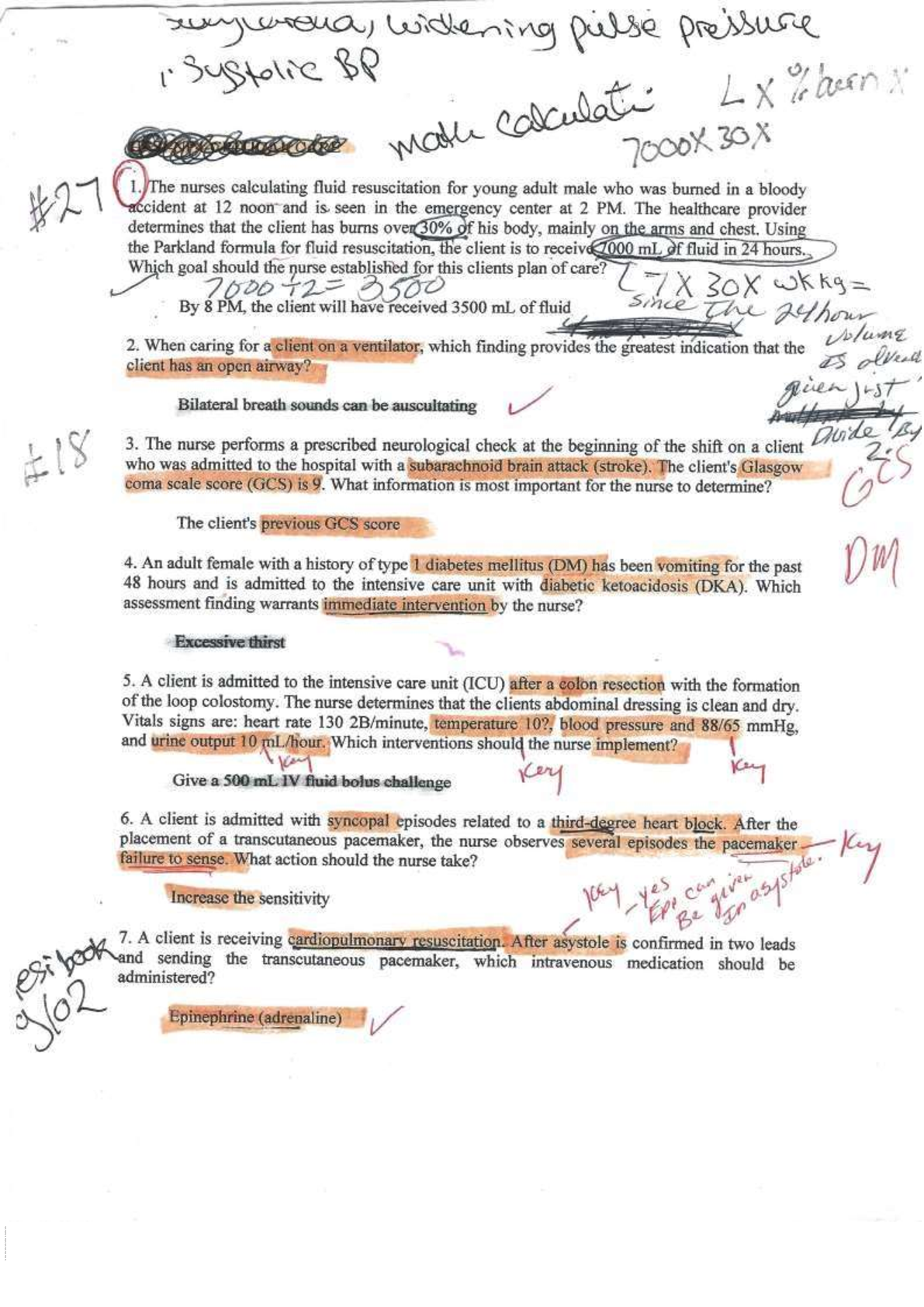
NGN Nursing Med-Surg HESI Exit Exam – Latest 2025 Test Bank wi...
$9
15 Pages
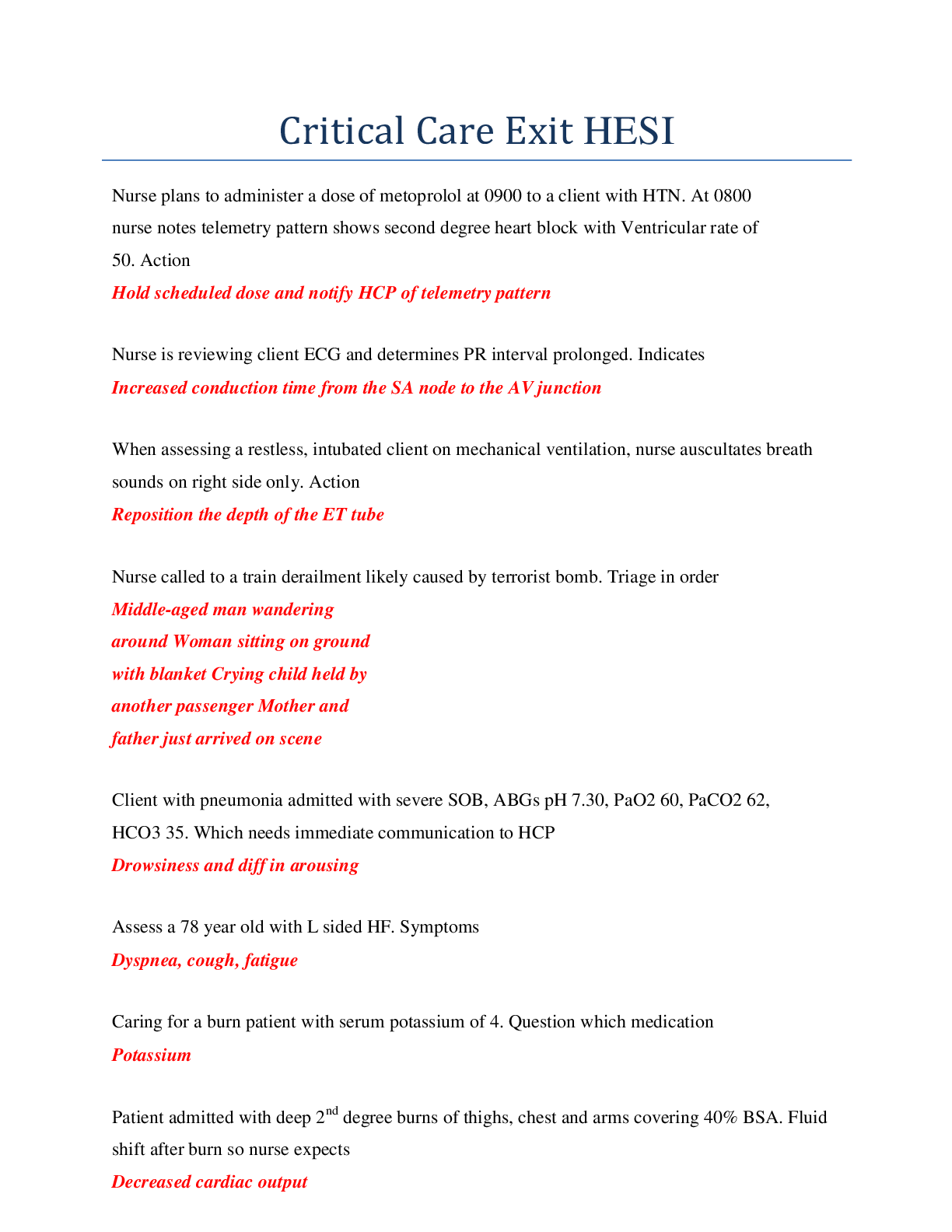
Critical Care HESI Exit Exam Notes and Q&A. Quick read on the...
$13
28 Pages
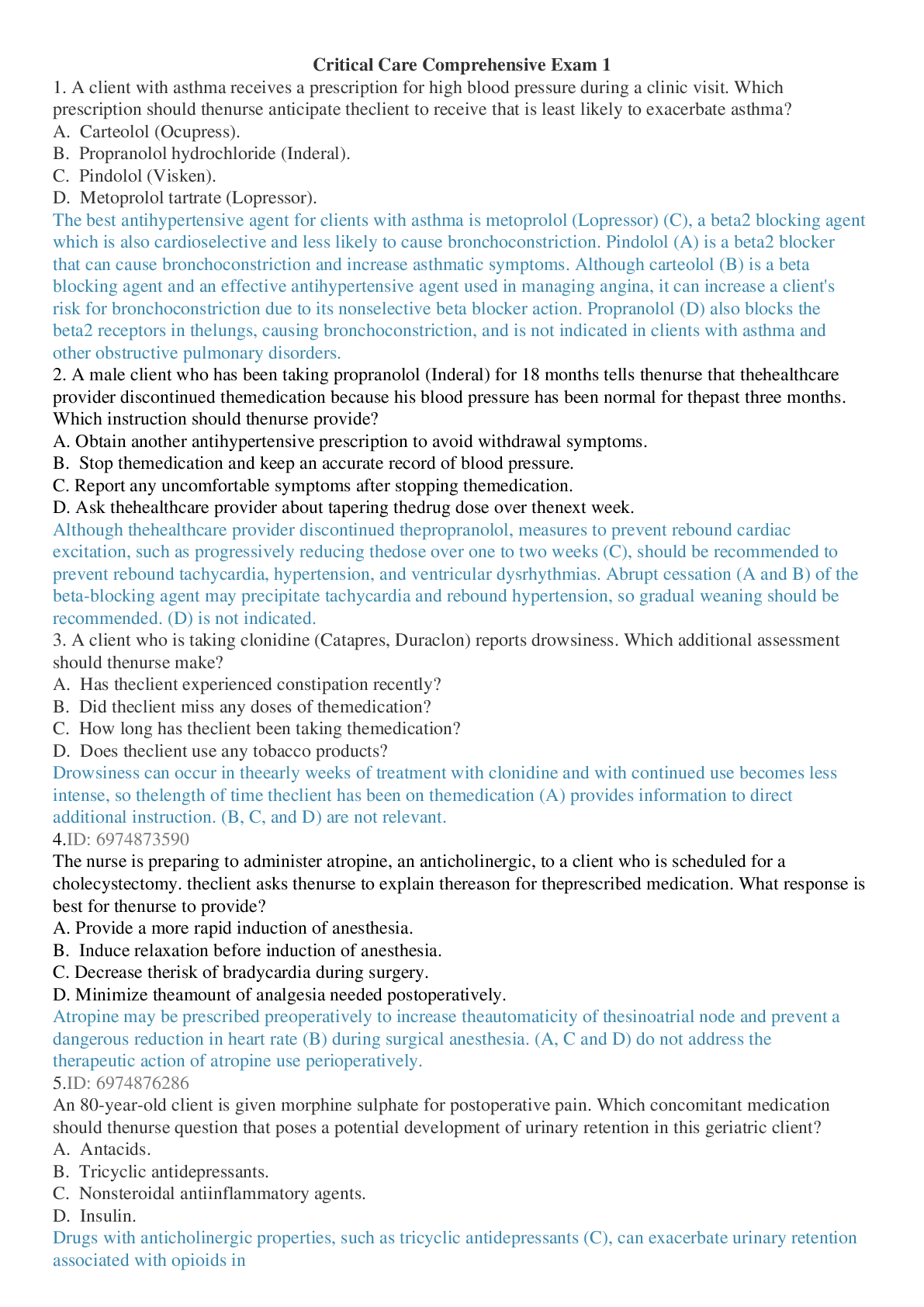
NURS 4345 HESI Critical Care Comprehensive Exam 1 Questions an...
$15
159 Pages
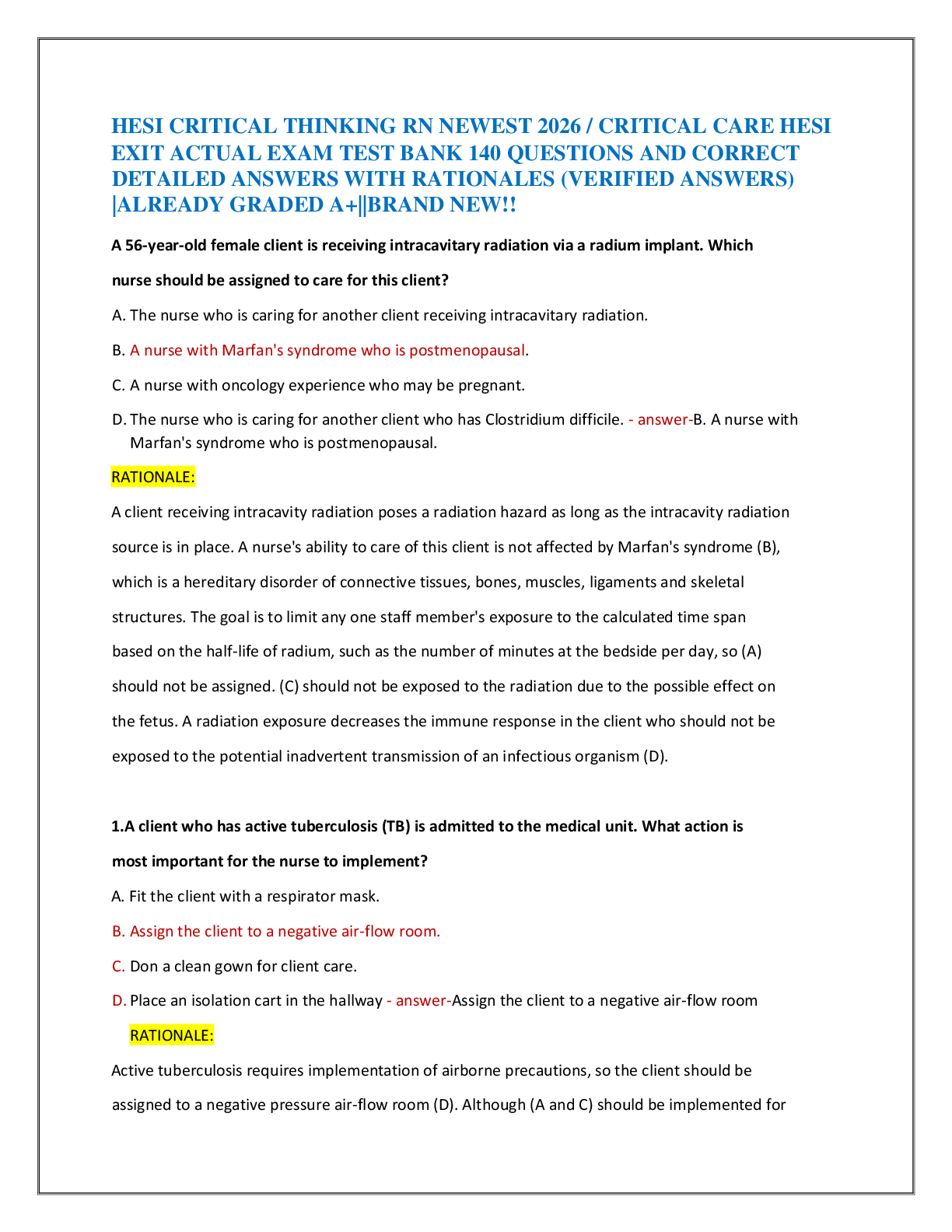
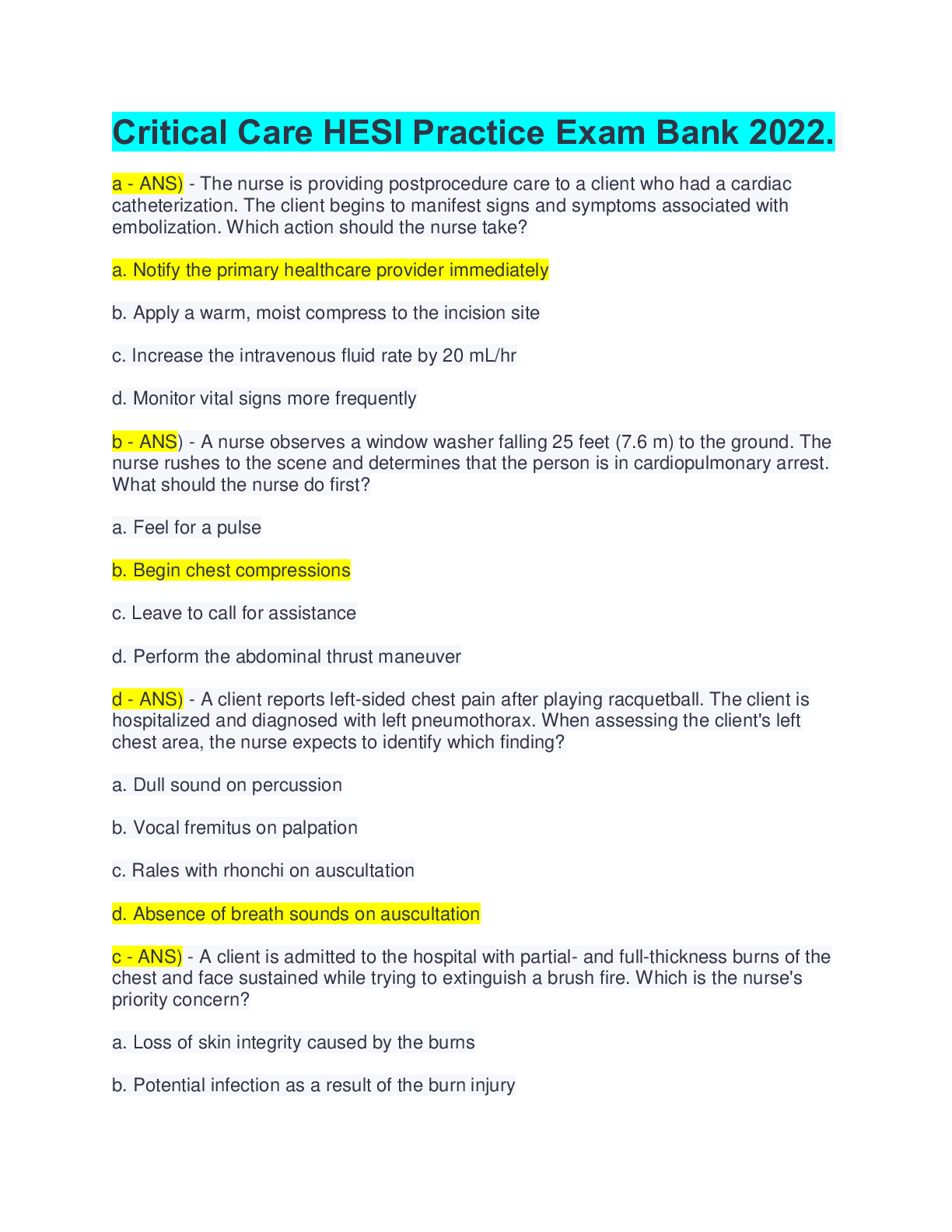
Critical Care HESI Practice Answered 100% Correctly, A+ guide...

$100.5
996 Pages
ATI TEAS 7 | 4 Versions for Reading, Math, Science, English, A...

More related documents below