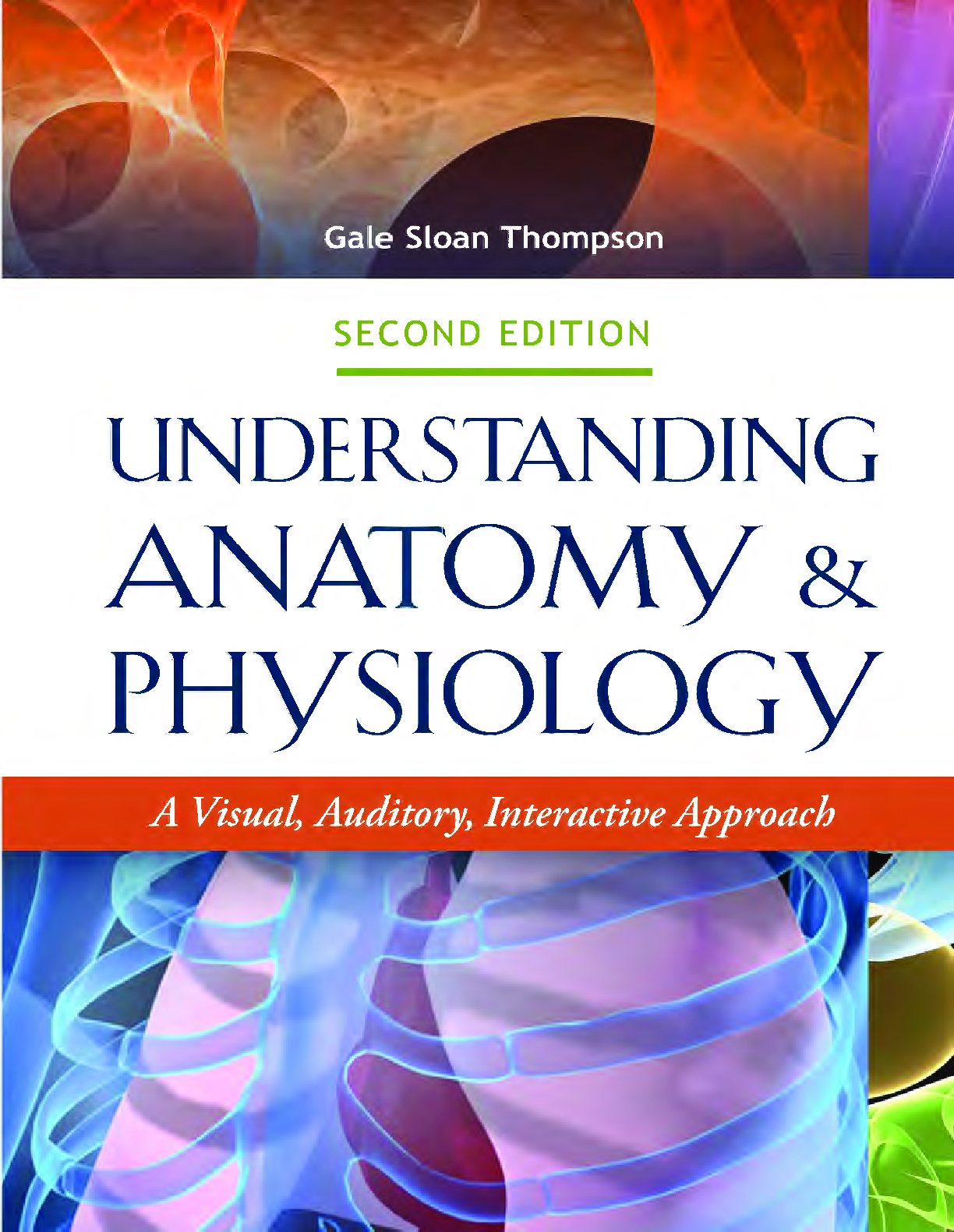
TEST BANK FOR UNDERSTANDING ANATOMY &
PHYSIOLOGY: A VISUAL, AUDITORY, INTERACTIVE
APPROACH (4TH ED.) BY GALE SLOAN THOMPSON
|ALL CHAPTERS | ANSWERS WITH RATIONALES
NEWEST VERSION
CHAPTER 1 — INTRODUCTION TO ANATOMY & PHY
...
TEST BANK FOR UNDERSTANDING ANATOMY &
PHYSIOLOGY: A VISUAL, AUDITORY, INTERACTIVE
APPROACH (4TH ED.) BY GALE SLOAN THOMPSON
|ALL CHAPTERS | ANSWERS WITH RATIONALES
NEWEST VERSION
CHAPTER 1 — INTRODUCTION TO ANATOMY & PHYSIOLOGY /
HOMEOSTASIS
1. A nurse teaches a patient about homeostasis. Which statement best describes
homeostasis?
A. The ability of the body to keep all variables at a single fixed value.
B. The process of returning the internal environment to a narrow, stable
range.
C. A mechanism that only operates during illness.
D. Rapid, unpredictable changes in body systems.
Answer: B.
Rationale: Homeostasis is the process by which the body maintains internal
stability (a narrow, stable range) despite external changes. It is not a single fixed
value for all variables (A is incorrect), it operates continuously (C incorrect), and it
is not rapid, unpredictable changes (D incorrect).
2. A patient’s blood glucose rises after a meal. Which mechanism is an
example of a negative feedback response to this change?
A. Increased glucagon secretion from alpha cells.
B. Increased insulin secretion from beta cells.
C. Activation of the sympathetic nervous system to raise blood glucose.
D. Vasodilation of peripheral blood vessels.
Answer: B.
Rationale: Negative feedback reduces the deviation from normal. Increased
insulin lowers blood glucose back toward normal. Glucagon raises glucose (A
wrong), sympathetic activation raises glucose (C wrong), vasodilation is unrelated
(D wrong).
3. A clinician explains control centers in homeostatic loops. Which structure
often acts as the control center for temperature regulation?
A. Cerebellum
B. Hypothalamus
C. Medulla oblongata
D. Pituitary gland
Answer: B.
Rationale: The hypothalamus is the primary thermoregulatory center. Cerebellum
is for coordination (A), medulla for vital reflexes (C), pituitary releases hormones
but isn't the primary temperature control center (D).
4. A patient has lost a lot of blood and their blood pressure drops. Which
immediate compensatory response is characteristic of a short-term
homeostatic mechanism?
A. Increased erythropoietin release from kidneys.
B. Baroreceptor-mediated sympathetic activation causing vasoconstriction.
C. Increased synthesis of albumin in the liver.
D. Remodeling of blood vessels.
Answer: B.
Rationale: Short-term compensation to maintain blood pressure includes
baroreceptor reflexes increasing sympathetic activity and vasoconstriction.
Erythropoietin (A) is longer-term; albumin synthesis (C) and remodeling (D) are
not immediate.
5. Which is an example of positive feedback?
A. Decrease in body temperature stimulating shivering.
B. Blood glucose rise stimulating insulin release.
C. Oxytocin release causing uterine contractions, which increase oxytocin
release.
D. Increased arterial CO₂ stimulating increased ventilation until CO₂
normalizes.
Answer: C.
Rationale: Positive feedback amplifies a change: oxytocin → contractions →
more oxytocin. The others are negative feedback examples.
6. A client receives a medication that blocks receptors in an efferent pathway
of a reflex arc. Which part of the reflex arc is affected?
A. Sensory receptor
B. Afferent neuron
C. Integrating center
D. Motor (efferent) neuron
Answer: D.
Rationale: Efferent pathways carry output from the integrating center to effectors
via motor/efferent neurons. Blocking receptors in efferent pathway affects motor
output. Afferent is sensory (B), integrating center is CNS (C).
7. A patient’s lab reports show an inability to maintain pH after a metabolic
acid load. Which organ is primarily responsible for long-term compensation
of pH?
A. Lungs
B. Liver
C. Kidneys
D. Pancreas
Answer: C.
Rationale: Kidneys handle long-term acid-base balance via H⁺ secretion and
bicarbonate reabsorption. Lungs mediate short-term compensation (A). Liver and
pancreas have metabolic roles but aren't primary long-term pH regulators.
8. A client complains of dizziness when quickly standing. Which homeostatic
failure best explains this orthostatic hypotension?
A. Failure of thermoregulation
B. Failure of baroreceptor reflex to increase heart rate and vasoconstriction
C. Excessive insulin release after standing
D. Increased urine output caused by gravity
Answer: B.
Rationale: Orthostatic hypotension commonly results from inadequate
baroreceptor reflex responses (increasing HR and vasoconstriction) upon standing.
The other choices are unrelated.
9. In an A&P lab, students learn levels of organization. Which list orders levels
from simplest to most complex?
A. Organ → Tissue → Cell → Molecule → Organism
B. Molecule → Cell → Tissue → Organ → Organ system → Organism
C. Cell → Molecule → Tissue → Organ → Organism
D. Tissue → Molecule → Cell → Organ → Organ system → Organism
Answer: B.
Rationale: Correct progression: molecule → cell → tissue → organ → organ
system → organism.
10.A patient’s homeostatic set point for body temperature shifts upward during
infection. What causes this shift?
A. Direct pathogen activity raises temperature set point.
B. Pyrogens cause hypothalamus to raise the set point.
C. Increased sweat production increases set point.
D. Blood pressure changes alter thermoregulation set point.
Answer: B.
Rationale: Pyrogens (from pathogens or immune cells) act on the hypothalamus to
raise the temperature set point, producing fever. Pathogens don’t directly change
set point (A), sweating doesn’t increase set point (C), BP changes are unrelated
(D).
[Show More]