Accounting > QUESTIONS & ANSWERS > University of Alabama - AC 389Practice quiz 5 Wenbin (All)
University of Alabama - AC 389Practice quiz 5 Wenbin
Document Content and Description Below
Last updated: 8 months ago
Preview 1 out of 7 pages
Instant download
Buy this Document to get the Full Access Instantly
Provided by Students Who Aced it
We Verify Document Content to Gurantee Accuracy
Reviews( 0 )
Document information
Connected school, study & course
About the document
Uploaded On
Apr 21, 2021
Number of pages
7
Written in
All

Additional information
This document has been written for:
Uploaded
Apr 21, 2021
Downloads
0
Views
107
Topic Tags
Recommended For You
Get more on QUESTIONS & ANSWERS »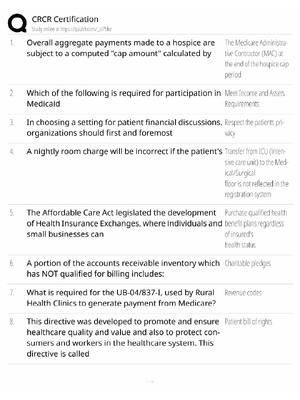
CRCR Certification Study Guide / HFMA Revenue Cycle Exam Prep...
Solution Manual for Byrd & Chen's Canadian Tax Principles, 202...
Solutions Manual for Byrd & Chen's Canadian Tax Principles, 20...
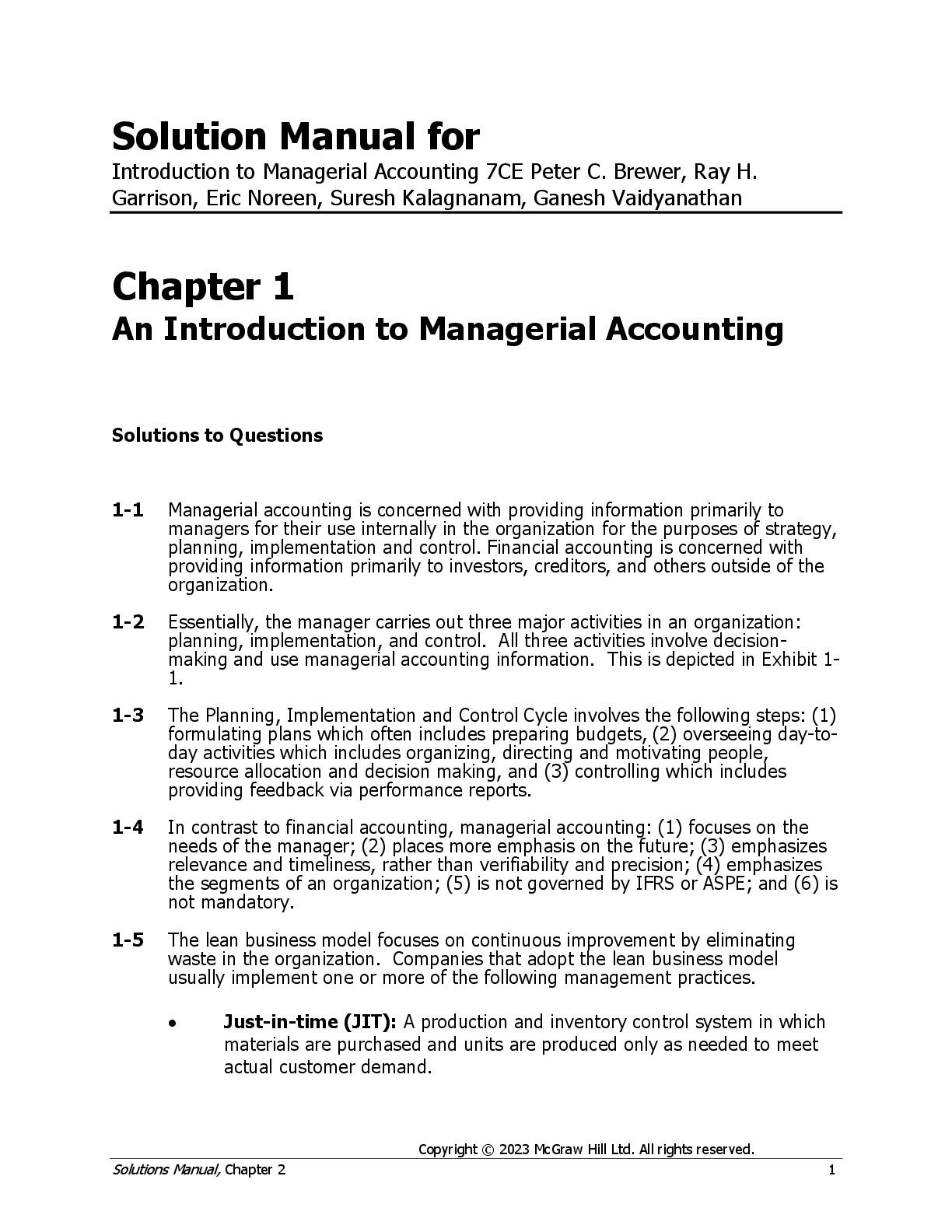
Solution Manual for Introduction to Managerial Accounting 7th...
Test Bank for Horngren's Cost Accounting A Managerial Emphasis...
Byrd & Chens Canadian Tax Principles, 2023-2024 Edition, Volum...
Byrd & Chen's Canadian Tax Principles 2024-2025 Edition (Volum...
TEST BANK for Byrd & Chen's Canadian Tax Principles, 2024-2025...
Solution Manual Byrd & Chen's Canadian Tax Principles 1+2 Volu...
Solutions Manual for Introduction to Managerial Accounting 7th...
Test Bank Managerial Accounting 7th Edition by Karen W. Braun...
Test Bank Managerial Accounting 7th Edition by Karen Braun, We...
SC 900 Microsoft Exam Updated Practice Questions in June 2026...
Solution manuals for Introduction to Managerial Accounting 7th...