Information Technology > QUESTIONS & ANSWERS > SC 900 Microsoft Exam Updated Practice Questions in June 2026 for Microsoft Certified: Security Com (All)
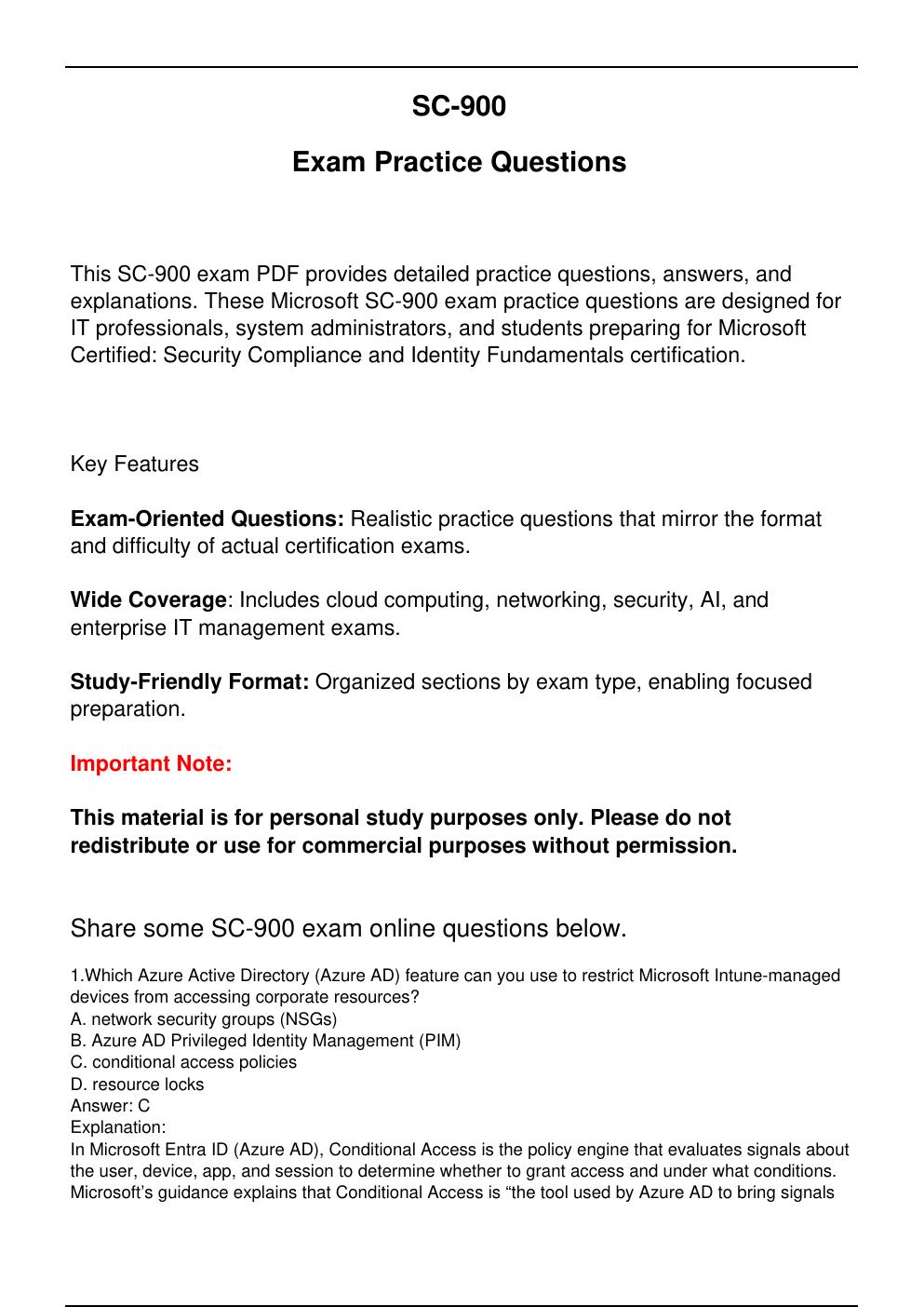
SC 900 Microsoft Exam Updated Practice Questions in June 2026 for Microsoft Certified: Security Compliance and Identity Fundamentals certification.
Document Content and Description Below
Last updated: 1 month ago
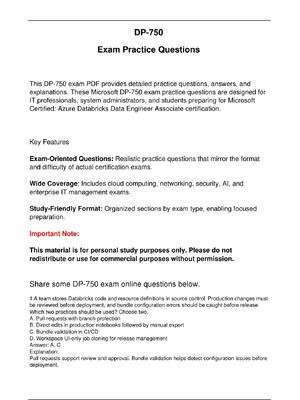
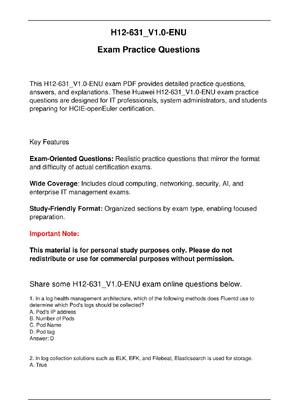
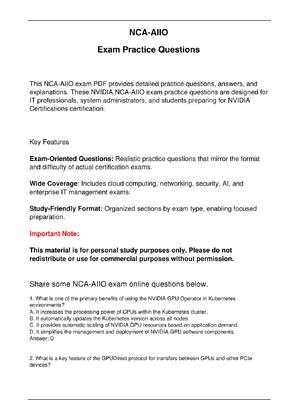
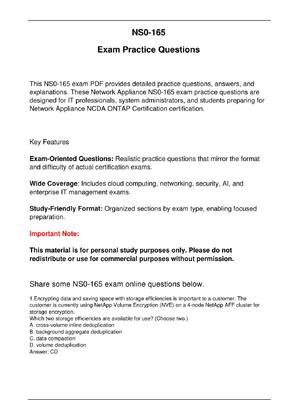
Preview 5 out of 23 pages
Instant download
Buy this Document to get the Full Access Instantly
Provided by Students Who Aced it
We Verify Document Content to Gurantee Accuracy
Reviews( 0 )
Document information
Connected school, study & course
About the document
Uploaded On
Jul 28, 2026
Number of pages
23
Written in
All

Additional information
This document has been written for:
Uploaded
Jul 28, 2026
Downloads
0
Views
18
Topic Tags
Related Subjects & Courses
Explore similar study resources and related concepts.
Recommended For You
Get more on QUESTIONS & ANSWERS »
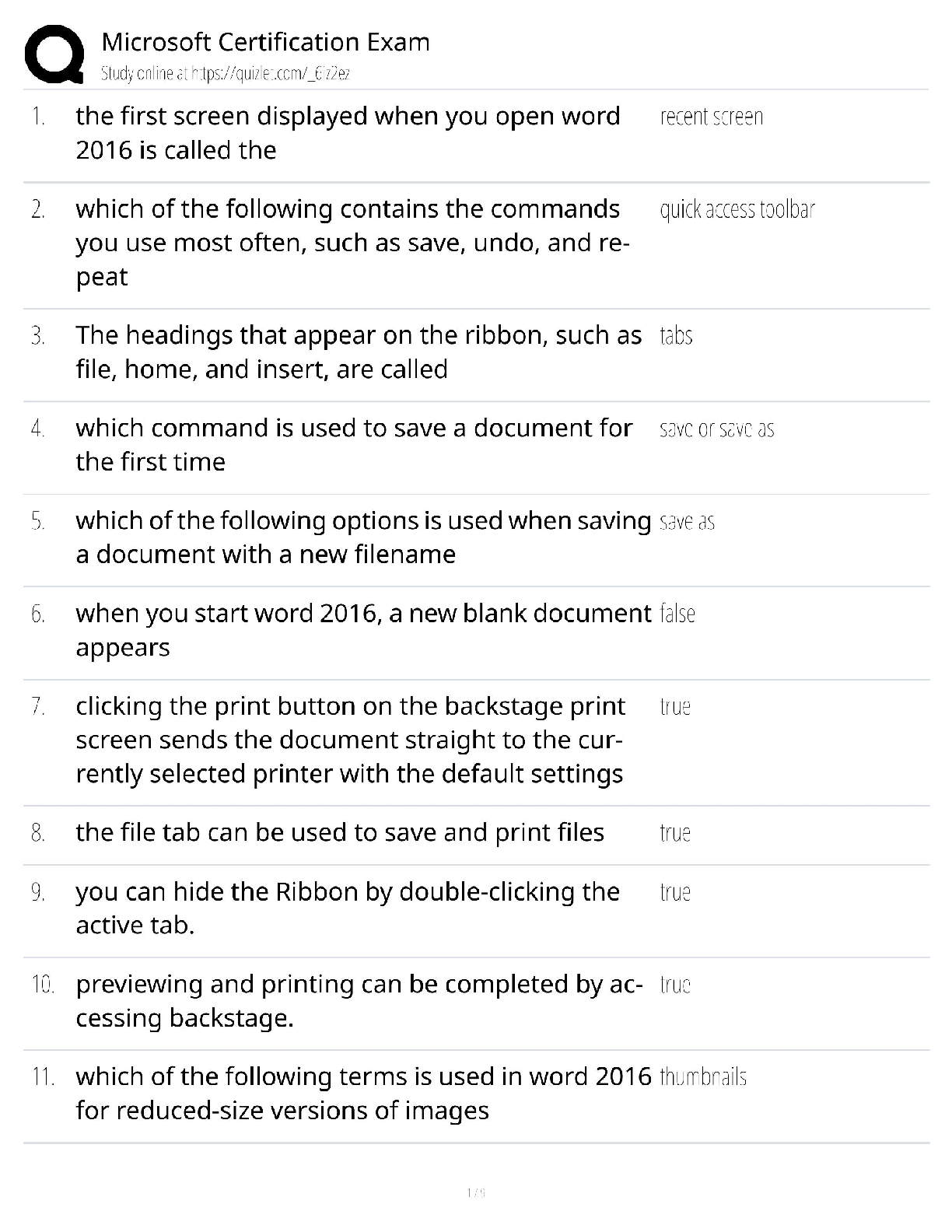
Microsoft Certification Exam / AZ-900 SC-900 Study Guide / 202...
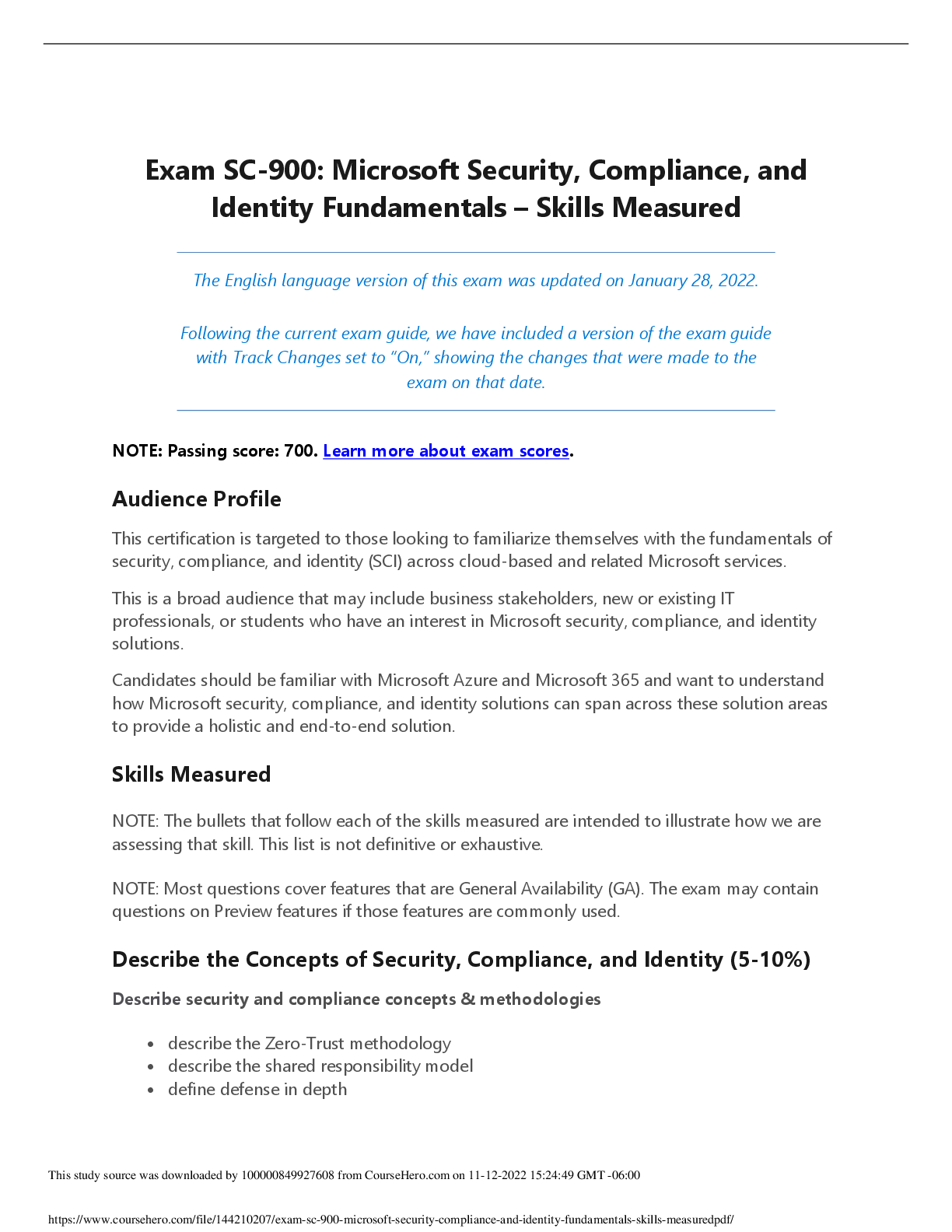
SC-900 Microsoft Security, Compliance, and Identity Fundamenta...

Exam SC-900 Microsoft Security, Compliance, and Identity Funda...

SC-900: Microsoft Security, Compliance, and Identity Fundament...
ACTUAL COMPREHENSIVE CASE BRIANNA GILL PRESENTS ;PAIN WHEN I...
![Preview of eBook [PDF] Advanced Technologies for Rechargeable Batteries Metal Ion, Hybrid, and Metal-](https://browseimages.nyc3.digitaloceanspaces.com/paper-images/2024/Aug/31/4CeOA98s2024-08-31-08-3766d2ac249f11f.png)
eBook [PDF] Advanced Technologies for Rechargeable Batteries M...
![Preview of eBook [PDF] Digital Personality A Man Forever Volume 2 Technical Aspects 1st Edition By Ku](https://browseimages.nyc3.digitaloceanspaces.com/paper-images/2024/Aug/30/t3vEGYrg2024-08-30-02-3166d1adaa38427.png)