FCP_FMG_AD-7.6 Exam Practice Questions This FCP_FMG_AD-7.6 exam PDF provides detailed practice questions, answers, and explanations. These Fortinet FCP_FMG_AD-7.6 exam practice questions are designed for IT professionals
...
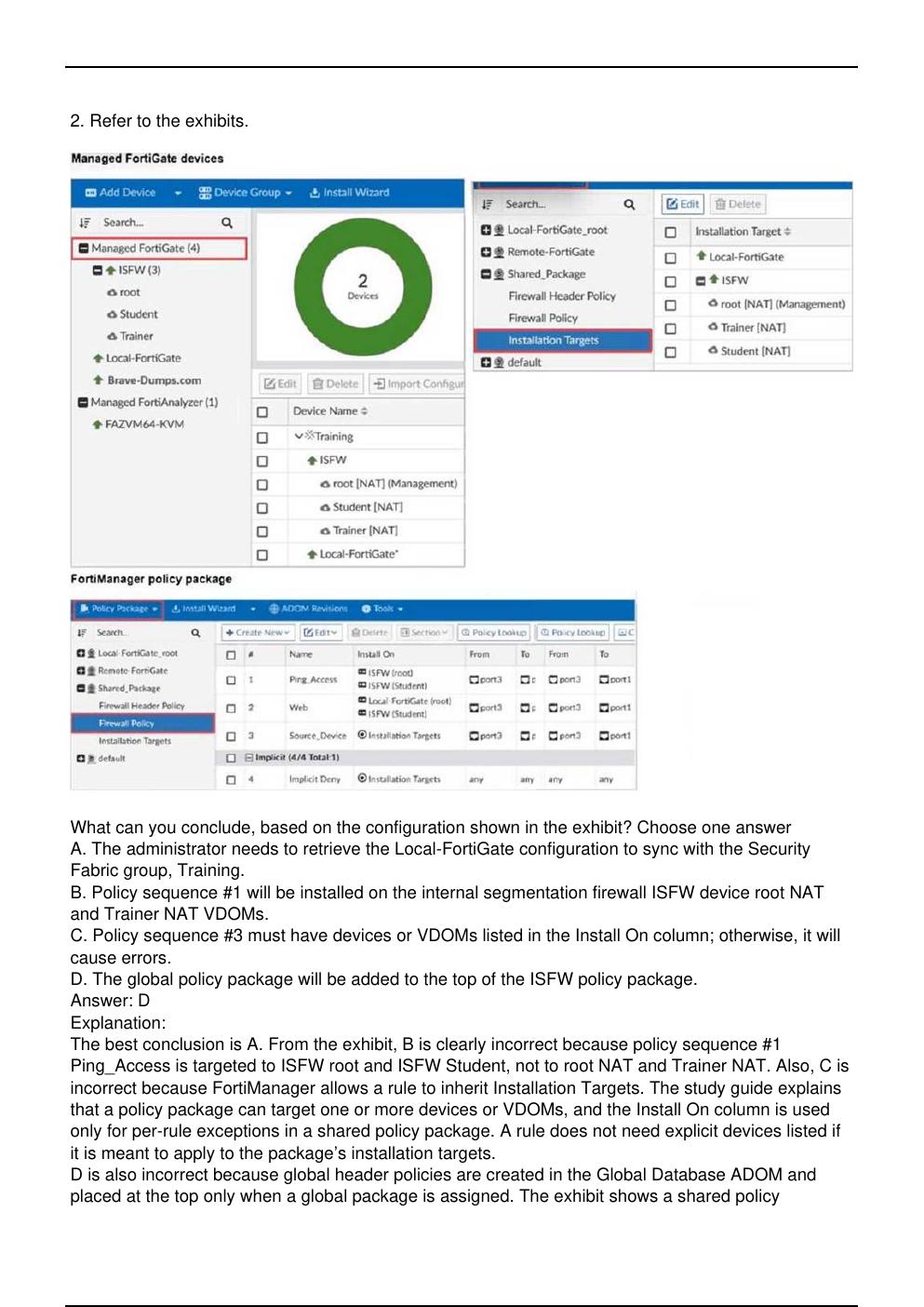
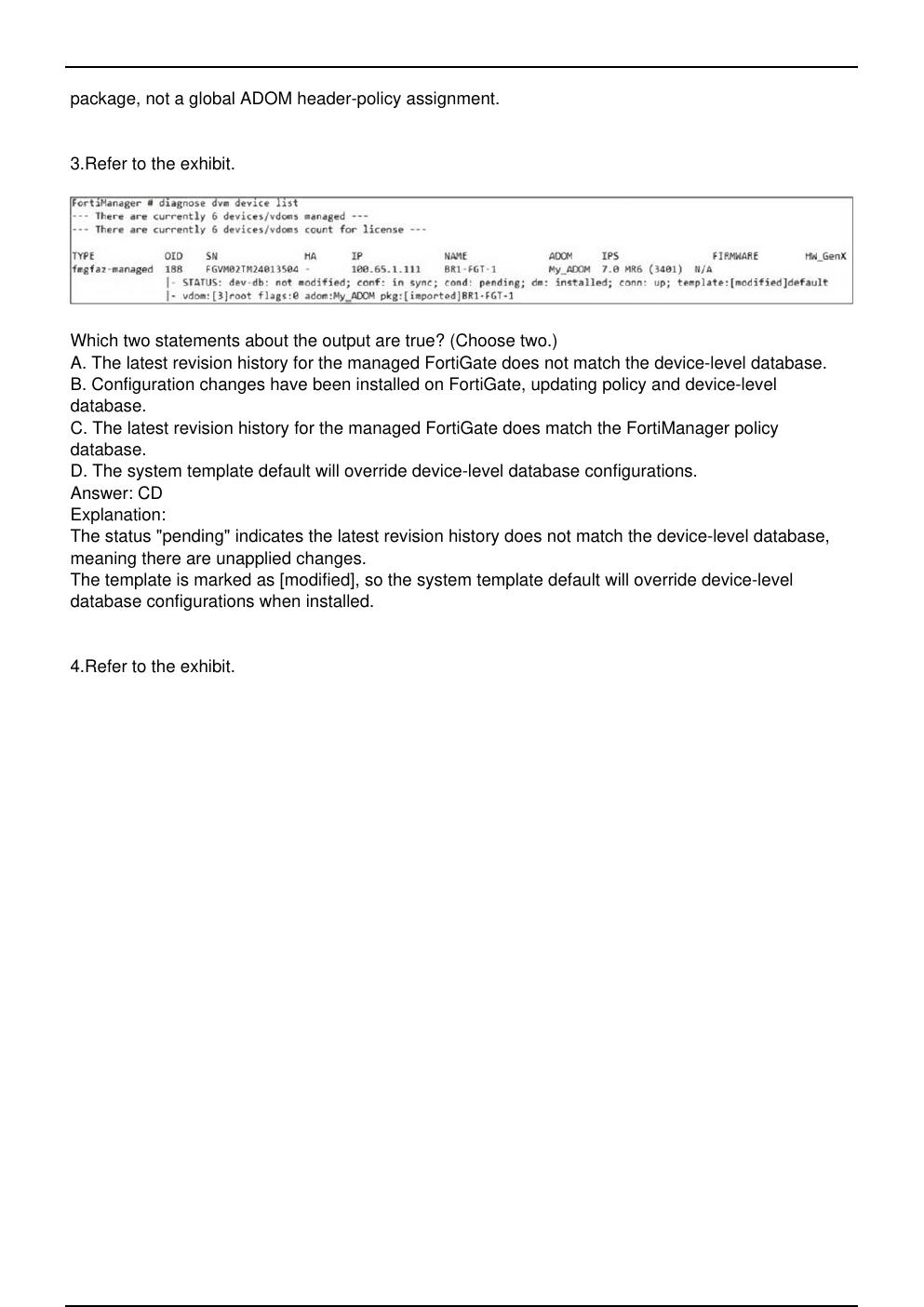
FCP_FMG_AD-7.6 Exam Practice Questions This FCP_FMG_AD-7.6 exam PDF provides detailed practice questions, answers, and explanations. These Fortinet FCP_FMG_AD-7.6 exam practice questions are designed for IT professionals, system administrators, and students preparing for FCP in Network Security certification. Key Features Exam-Oriented Questions: Realistic practice questions that mirror the format and difficulty of actual certification exams. Wide Coverage: Includes cloud computing, networking, security, AI, and enterprise IT management exams. Study-Friendly Format: Organized sections by exam type, enabling focused preparation. Important Note: This material is for personal study purposes only. Please do not redistribute or use for commercial purposes without permission. Share some FCP_FMG_AD-7.6 exam online questions below. 1.What is the purpose of ADOM revisions? A. ADOM revisions find unused, duplicate, and unnecessary firewall policies and objects. B. ADOM revisions show specific changes in a policy package when it is installed. C. ADOM revisions compare previous snapshots of the Policy Package and ADOM-level objects with the device-level database. D. ADOM revisions save the current state of all policy packages and objects for an ADOM. Answer: D Explanation: ADOM revisions save the current state of all policy packages and objects within an ADOM, allowing administrators to track changes over time and revert to previous configurations if needed. 2. Refer to the exhibits. What can you conclude, based on the configuration shown in the exhibit? Choose one answer A. The administrator needs to retrieve the Local-FortiGate configuration to sync with the Security Fabric group, Training. B. Policy sequence #1 will be installed on the internal segmentation firewall ISFW device root NAT and Trainer NAT VDOMs. C. Policy sequence #3 must have devices or VDOMs listed in the Install On column; otherwise, it will cause errors. D. The global policy package will be added to the top of the ISFW policy package. Answer: D Explanation: The best conclusion is A. From the exhibit, B is clearly incorrect because policy sequence #1 Ping_Access is targeted to ISFW root and ISFW Student, not to root NAT and Trainer NAT. Also, C is incorrect because FortiManager allows a rule to inherit Installation Targets. The study guide explains that a policy package can target one or more devices or VDOMs, and the Install On column is used only for per-rule exceptions in a shared policy package. A rule does not need explicit devices listed if it is meant to apply to the package’s installation targets. D is also incorrect because global header policies are created in the Global Database ADOM and placed at the top only when a global package is assigned. The exhibit shows a shared policy
[Show More]