Health Care > EXAM > CMN 548 MODULE 1 LATEST COMPLETE 2025/2026 STUDY QUESTIONS WITH CORRECT VERIFIED ANSWERS 100% GUARAN (All)
CMN 548 MODULE 1 LATEST COMPLETE 2025/2026 STUDY QUESTIONS WITH CORRECT VERIFIED ANSWERS 100% GUARANTEED PASS | ASSURED A+
Document Content and Description Below
Last updated: 11 months ago
Preview 5 out of 99 pages
Instant download

Loading document previews ...
Buy this Document to get the Full Access Instantly
Provided by Students Who Aced it
We Verify Document Content to Gurantee Accuracy
Reviews( 0 )
Document information
Connected school, study & course
About the document
Uploaded On
Nov 22, 2025
Number of pages
99
Written in
All

Additional information
This document has been written for:
Uploaded
Nov 22, 2025
Downloads
0
Views
136
Topic Tags
Recommended For You
Get more on EXAM »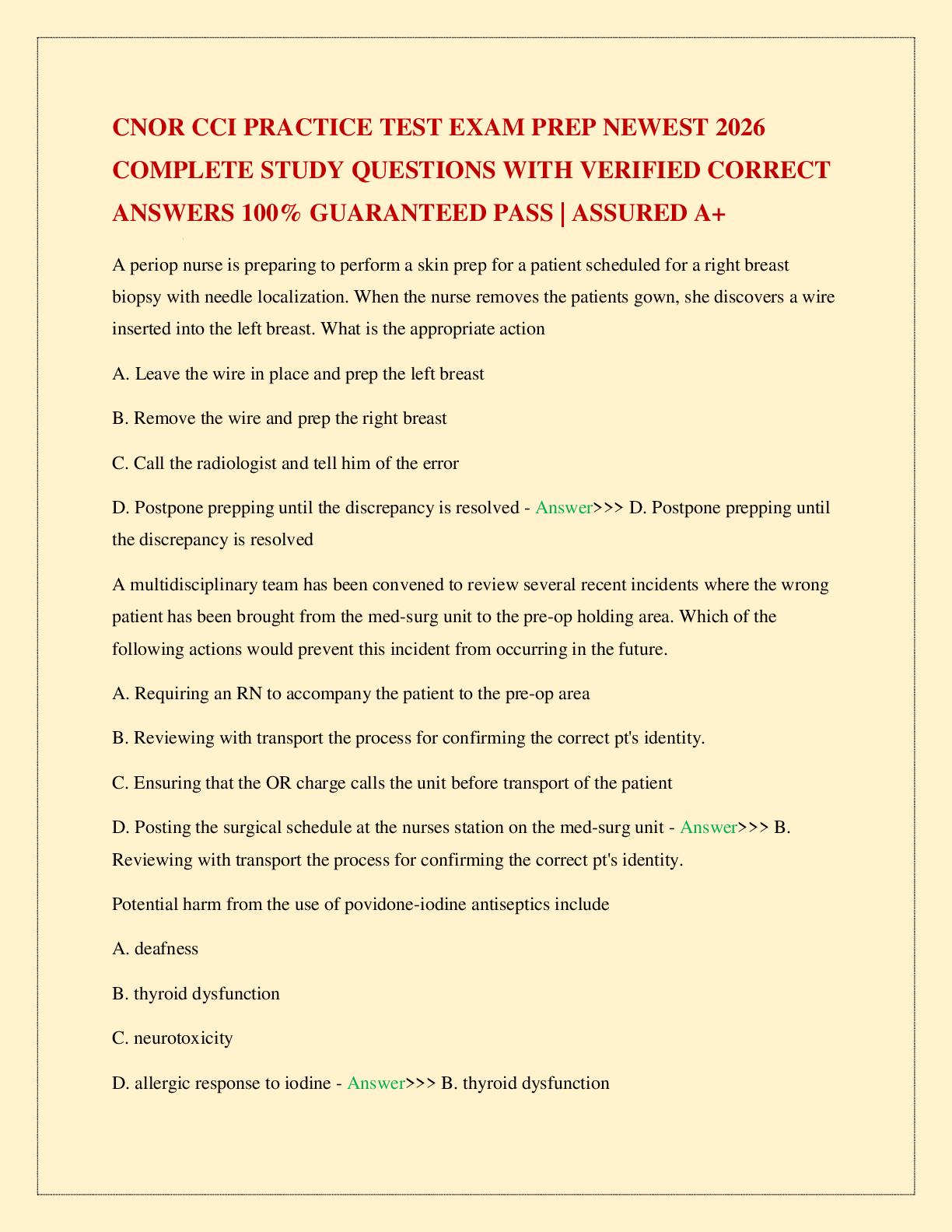



HCA100 Ultimate Mastery Guide — Your Complete 2025 Success Roa...

CMN 548 – Module 1 Study Guide | Psychiatric-Mental Health Nur...
TEST BANK Varcarolis Essentials of Psychiatric Mental Health N...
TEST BANK Varcarolis Essentials of Psychiatric Mental Health N...
TEST BANK Varcarolis Essentials of Psychiatric Mental Health N...
NORA Study Guide | Complete 2025 Certification Prep for Oilhea...
WEEK 2 I-HUMAN DERMATOLOGY CASE – 36-YEAR-OLD FEMALE WITH PROG...
Bloomberg Module 2 Notes: Analyzing Macro Events & Market Move...
Bloomberg Notes: Portfolio Management Strategies & Stock Analy...