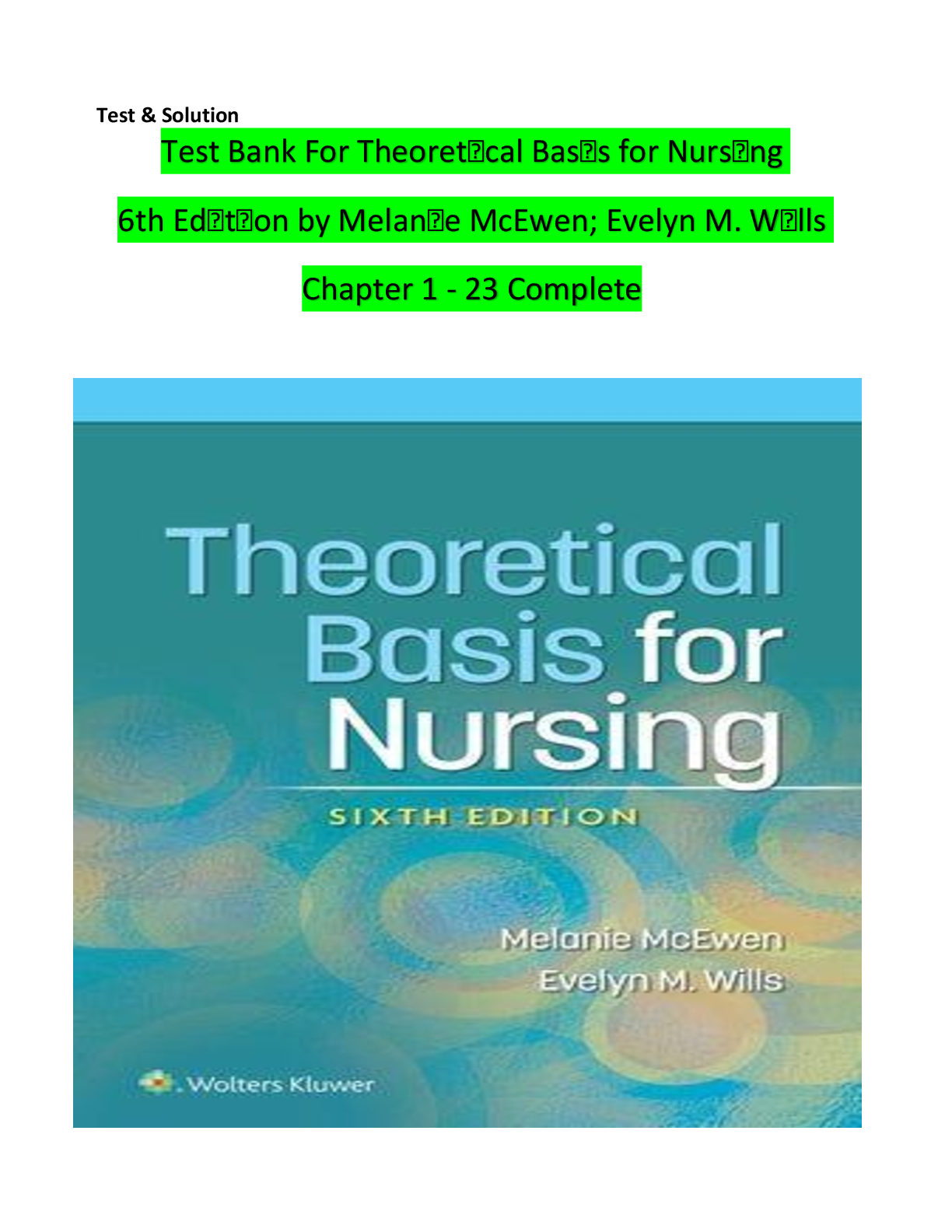
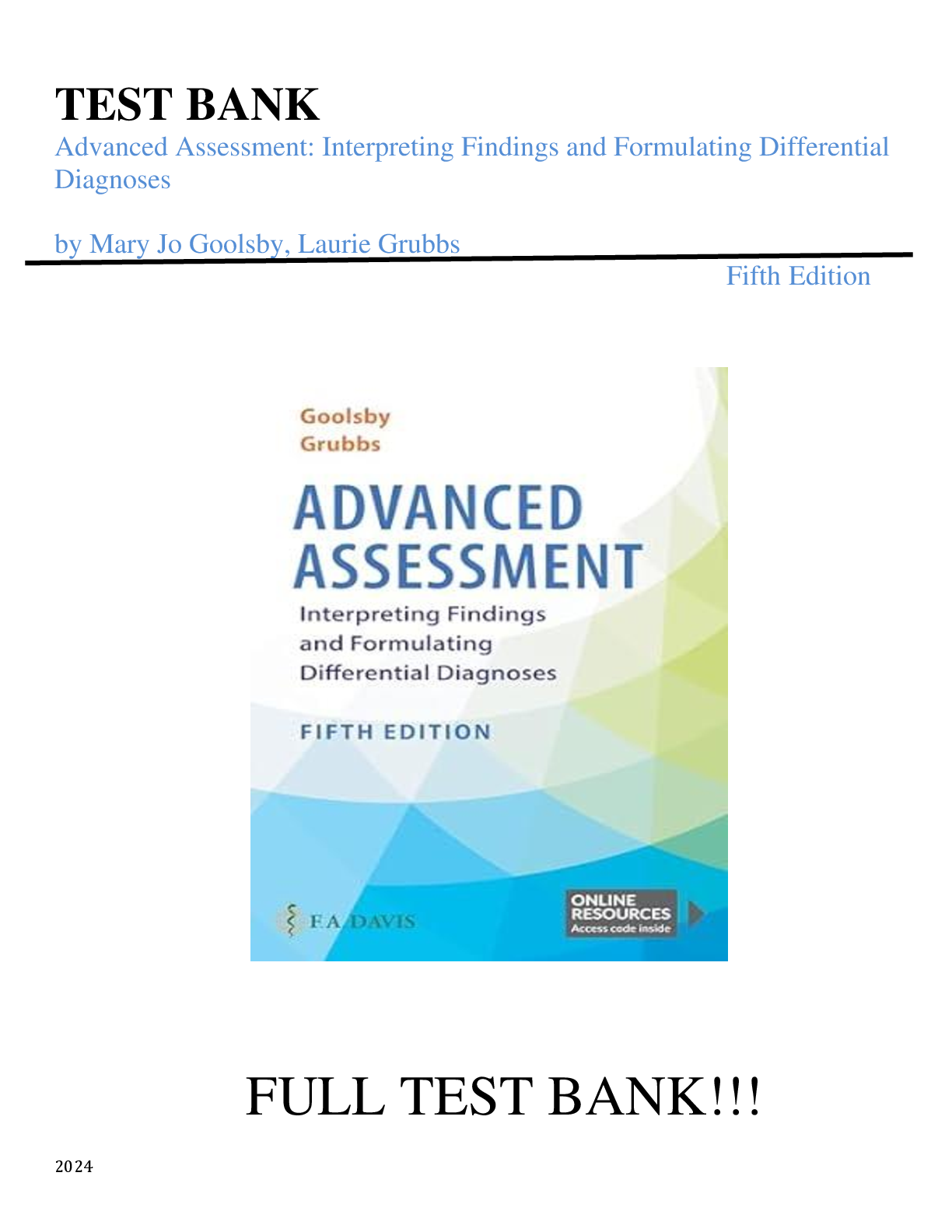
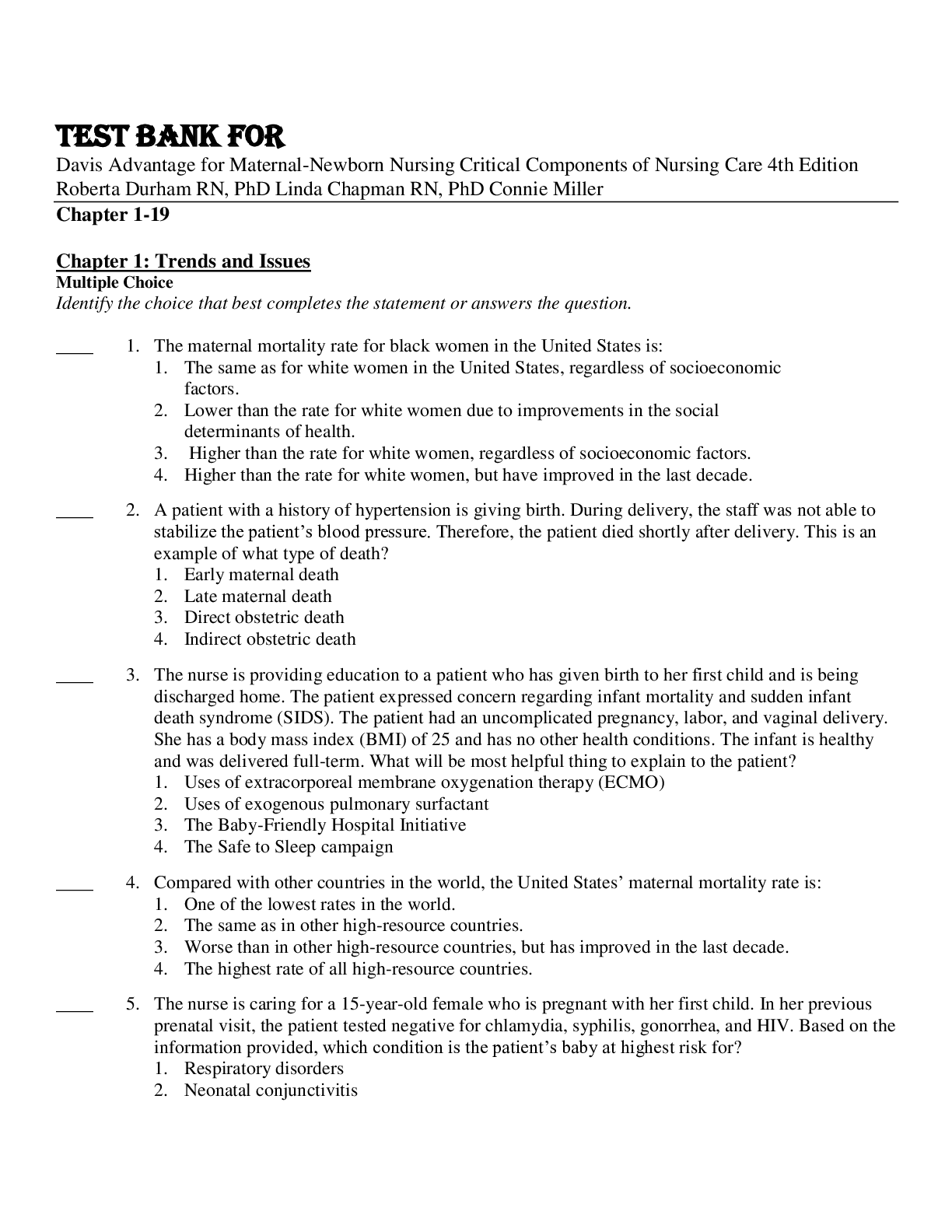
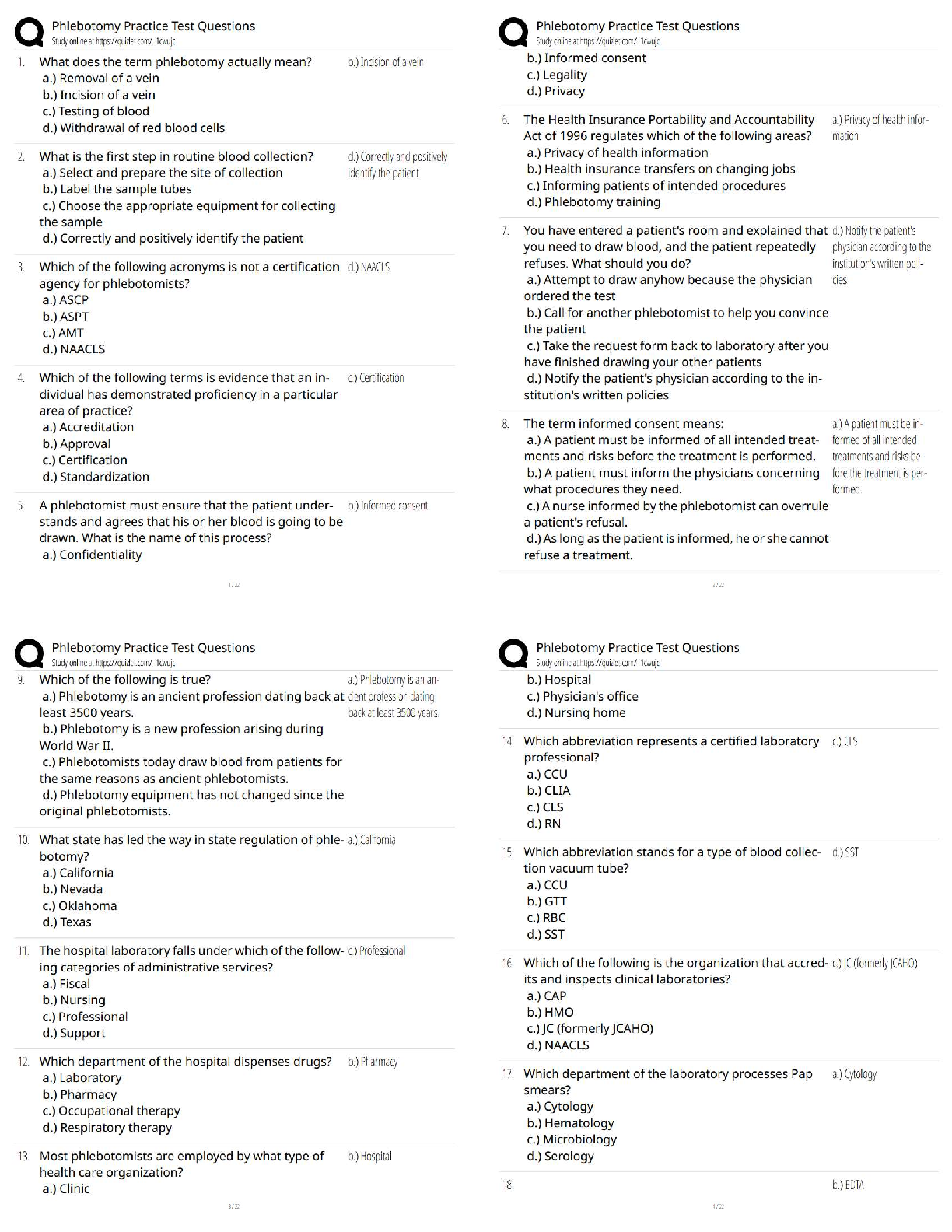
Advanced Theoretical Perspectives of Nursing > TEST BANKS > Test Bank & Solution Manual for Personality, 14th Edition By Daniel Cervone (All)
Test Bank & Solution Manual for Personality, 14th Edition By Daniel Cervone Chapter: Chapter 01: Personality Theory: From Everyday Observations to Systematic Theories Multiple Choice 1. The text empha ... sizes that a big difference between intuitive theories about people and scientific theories of personality is that the personality scientist must a) engage in scientific observation. b) interrelate concepts about people systematically. c) provide ideas that are testable. d) all of the above. Ans: d 2. A unique feature of a course in personality psychology is that, unlike other courses, the focus is on a) motivation. b) nervous system functioning. c) the whole person. d) social systems and culture. Ans: d 3. The text defines personality mainly in terms of a) consistent patterns of behavior. b) unconscious wishes. c) traits. d) all of the above. Ans: a 4. In general terms, the text suggests that the science of personality b. is the study of how individuals differ in their perceptions and how c. these differences relate to their total functioning. d. attempts to understand how people are alike while recognizing that individuals are different in some ways. e. attempts to develop strategies for further research. 2 a) all of the above. Ans: d 5. Which of the following are emphasized as central to the study of personality? a) individual differences and consistent patterns of functioning. b) individual differences and the operation of conscious processes. c) patterns of organization and the operation of conscious processes. d) all of the above. Ans: a 6. Structural concepts refer to e) stable aspects of personality. f) dynamic aspects of personality. g) parts of the body. h) all of the above. Ans: a 7. “Units of analysis” refer to i) the basic variables of a given theory. j) the original source of data for a given theory. k) the research methods employed most frequently in a given theory. l) the theoretical assumptions of a given theorist. Ans: d 8. The personality concept that refers to individual consistency and approximates the lay person’s concepts to describe people is m) response. n) habit. o) trait. p) motive. Ans: c 3 9. A clustering of traits is called a q) unit of analysis. r) type. s) factor. t) dimension. Ans: b 10. Concepts such as trait and type fall into which of the following areas? u) structure. v) process. w) growth and development. x) psychopathology. Ans: a. [Show More]
Last updated: 1 month ago
Preview 5 out of 409 pages
Loading document previews ...
Buy this document to get the full access instantly
Instant Download Access after purchase
Buy NowInstant download
We Accept:
Can't find what you want? Try our AI powered Search
Connected school, study & course
About the document
Uploaded On
Dec 01, 2025
Number of pages
409
Written in
All
This document has been written for:
Uploaded
Dec 01, 2025
Downloads
0
Views
41
Scholarfriends.com Online Platform by Browsegrades Inc. 651N South Broad St, Middletown DE. United States.
We're available through e-mail, Twitter, and live chat.
FAQ
Questions? Leave a message!
Copyright © Scholarfriends · High quality services·