Political Science > EXAM > POLI 330 Final Exam. 2021 Download for Grade A+ (All)
POLI 330 Final Exam. 2021 Download for Grade A+
Document Content and Description Below
Last updated: 3 years ago
Preview 1 out of 15 pages
Instant download
Chamberlain School of Nursing POLI 330 Final Exam.png)
Buy this Document to get the Full Access Instantly
Provided by Students Who Aced it
We Verify Document Content to Gurantee Accuracy
Reviews( 0 )
Document information
Connected school, study & course
About the document
Uploaded On
Apr 22, 2021
Number of pages
15
Written in
All

Additional information
This document has been written for:
Uploaded
Apr 22, 2021
Downloads
0
Views
99
Topic Tags
Related Subjects & Courses
Explore similar study resources and related concepts.
Recommended For You
Get more on EXAM »
POLI 330N Final Exam Set 2 – Question and Answers (2019) Lates...
POLI 330N Week 6 Quiz (2) – Question and Answers (latest 2019...
POLI 330N Week 6 Quiz – Question and Answers (Latest SG) ALl A...

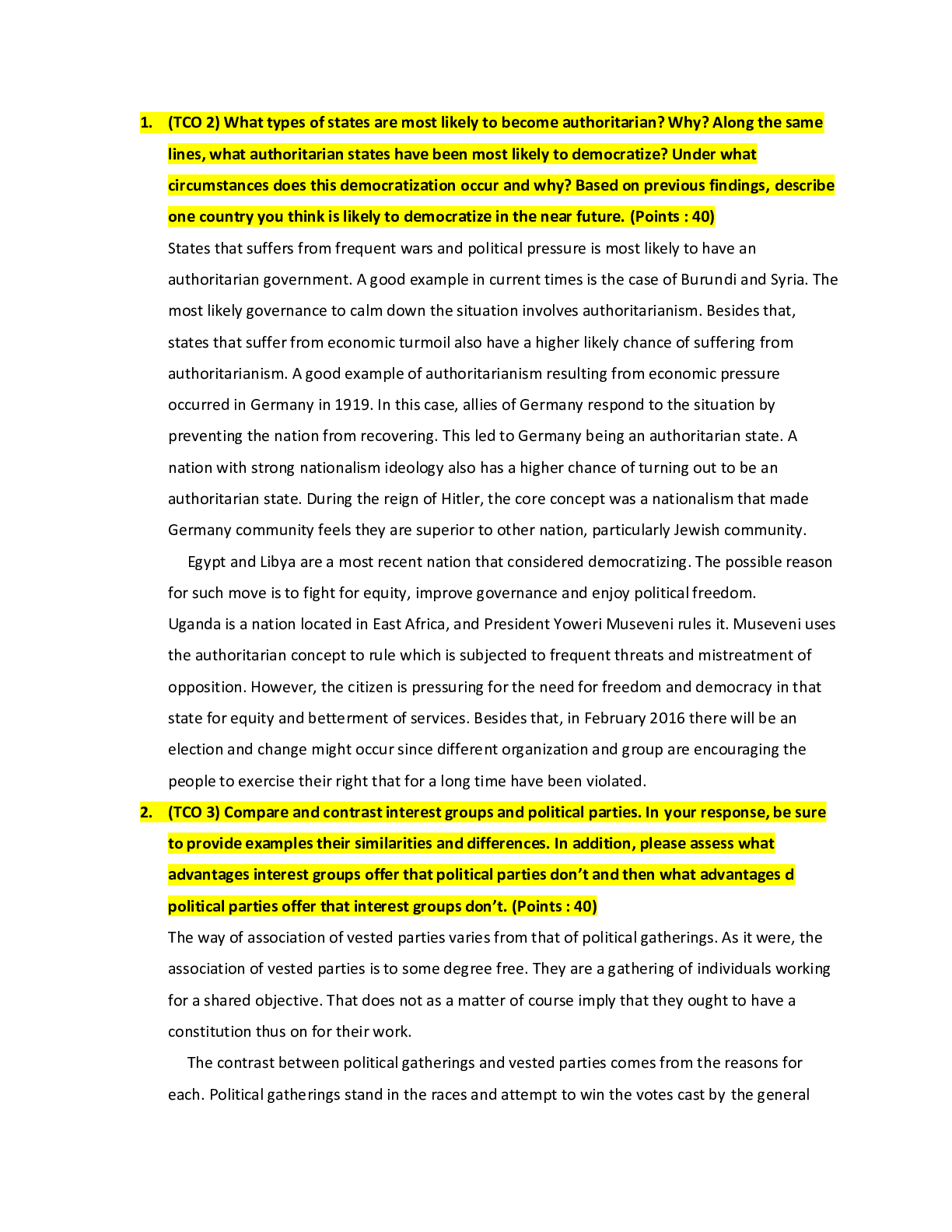


POLI 330 Week 6 TCO Assessment (Latest 2025/26), DeVry Univers...

Poli 330N Policy Issue Week 7 Assignment: Final Project. Solut...
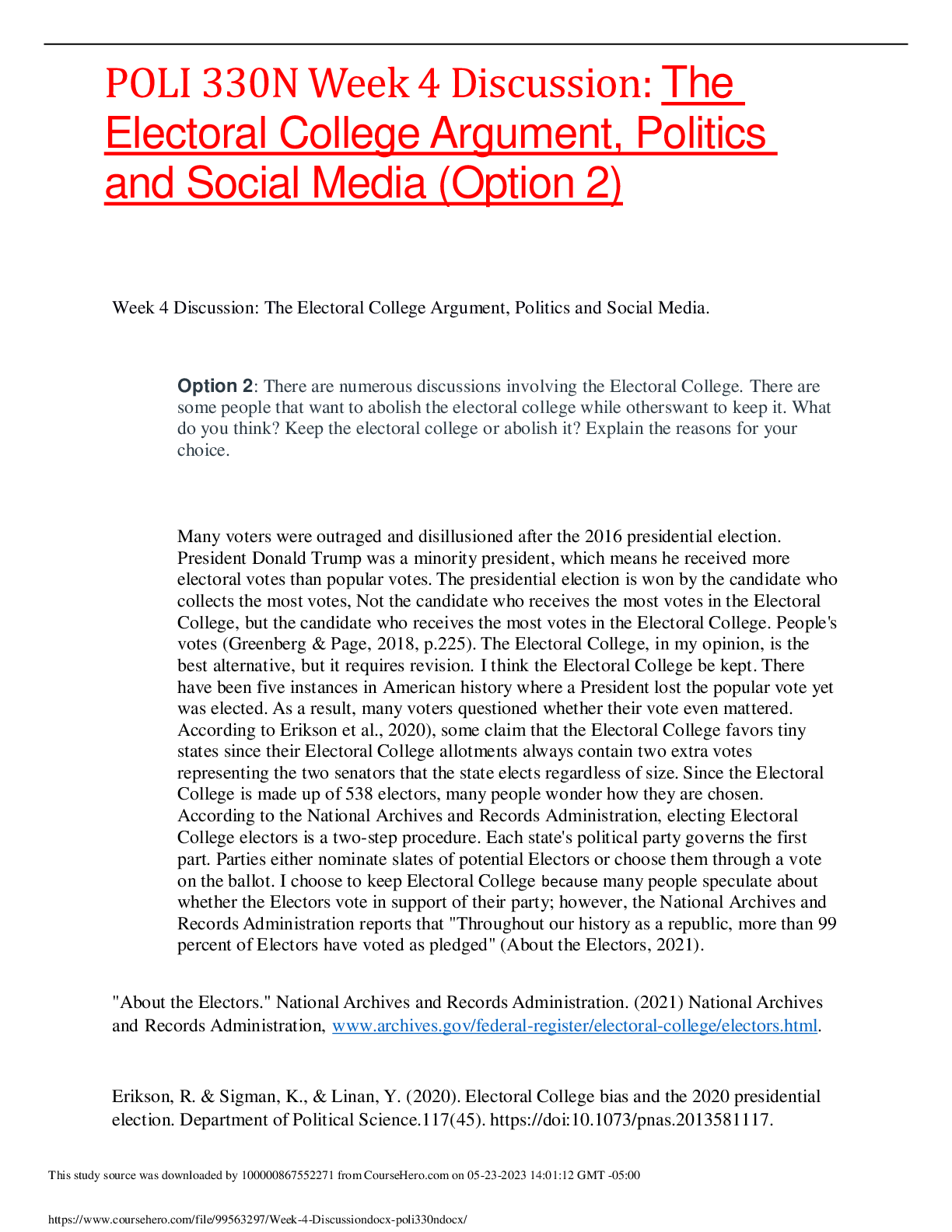
POLI-330N Week 4 Discussion: The Electoral College Argument, P...
POLI 330N Week 1 Assignment: State of Powers: Florida vs. The...

POLI-330N Week 6 Assignment: Part I: How the Courts Address or...
POLI 330N Week 5 Assignment: Representation in Congress | (GRA...

Analyzing Politics Rationality, Behavior, and Institutions, 2e...
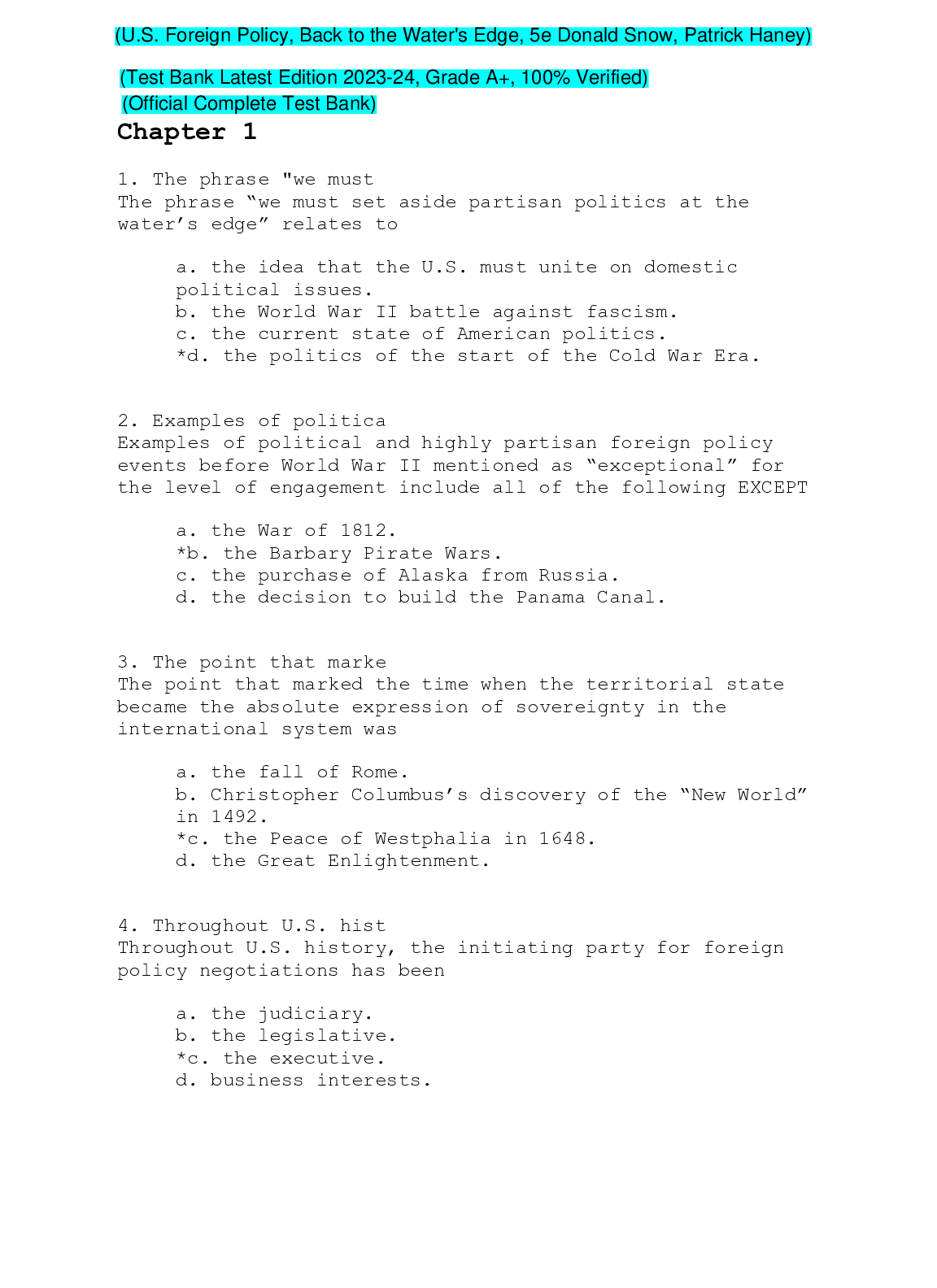
U.S. Foreign Policy, Back to the Water's Edge 5th Edition By D...

Inside Texas Politics, 3e Brandon Rottinghaus (Instructor Manu...
![Preview of eBook [PDF] The 1972 World Heritage Convention A Commentary 1st Edition By Prof Francesco](https://browseimages.nyc3.digitaloceanspaces.com/paper-images/2025/Feb/18/ozngxkbg2025-02-18-02-5167b47454c9bb2.png)

 nr451 rn Capstone Course.png)