NRNP 6552 Advanced Nurse Practice > TEST BANKS > TEST BANK Advanced Assessment: Interpreting Findings and Formulating Differential Diagnoses by Mary (All)
TEST BANK Advanced Assessment: Interpreting Findings and Formulating Differential Diagnoses by Mary Jo Goolsby, Laurie Grubbs Fourth Edition
Document Content and Description Below
Last updated: 1 month ago
Preview 10 out of 238 pages
Instant download

Loading document previews ...
Buy this Document to get the Full Access Instantly
Provided by Students Who Aced it
We Verify Document Content to Gurantee Accuracy
Reviews( 0 )
Document information
Connected school, study & course
About the document
Uploaded On
Jan 21, 2026
Number of pages
238
Written in
All

Additional information
This document has been written for:
Uploaded
Jan 21, 2026
Downloads
0
Views
124
Topic Tags
Recommended For You
Get more on TEST BANKS »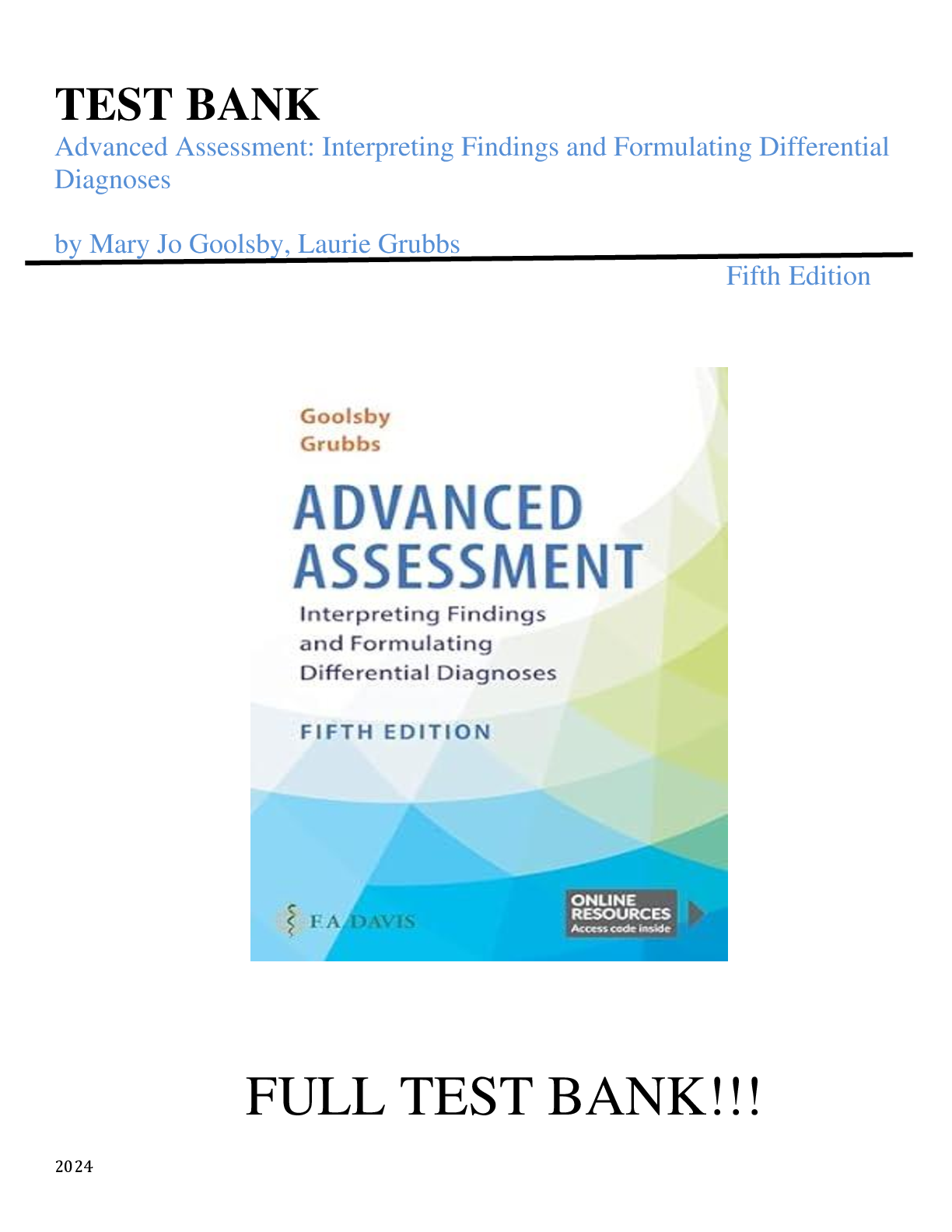
TEST BANK Advanced Assessment: Interpreting Findings and Formu...

TEST BANK FOR Advanced Practice Nursing in the Care of Older A...

Advanced Practice Nursing-Essentials for Role Development 5th...

Advanced Practice Nursing-Essentials for Role Development 5th...


The Latest Edition TestBank _ Advanced Practice Nursing in the...

The Latest Edition TestBank _ Advanced Practice Nursing in the...

Test Bank for "Primary Care: The Art and Science of Advanced P...


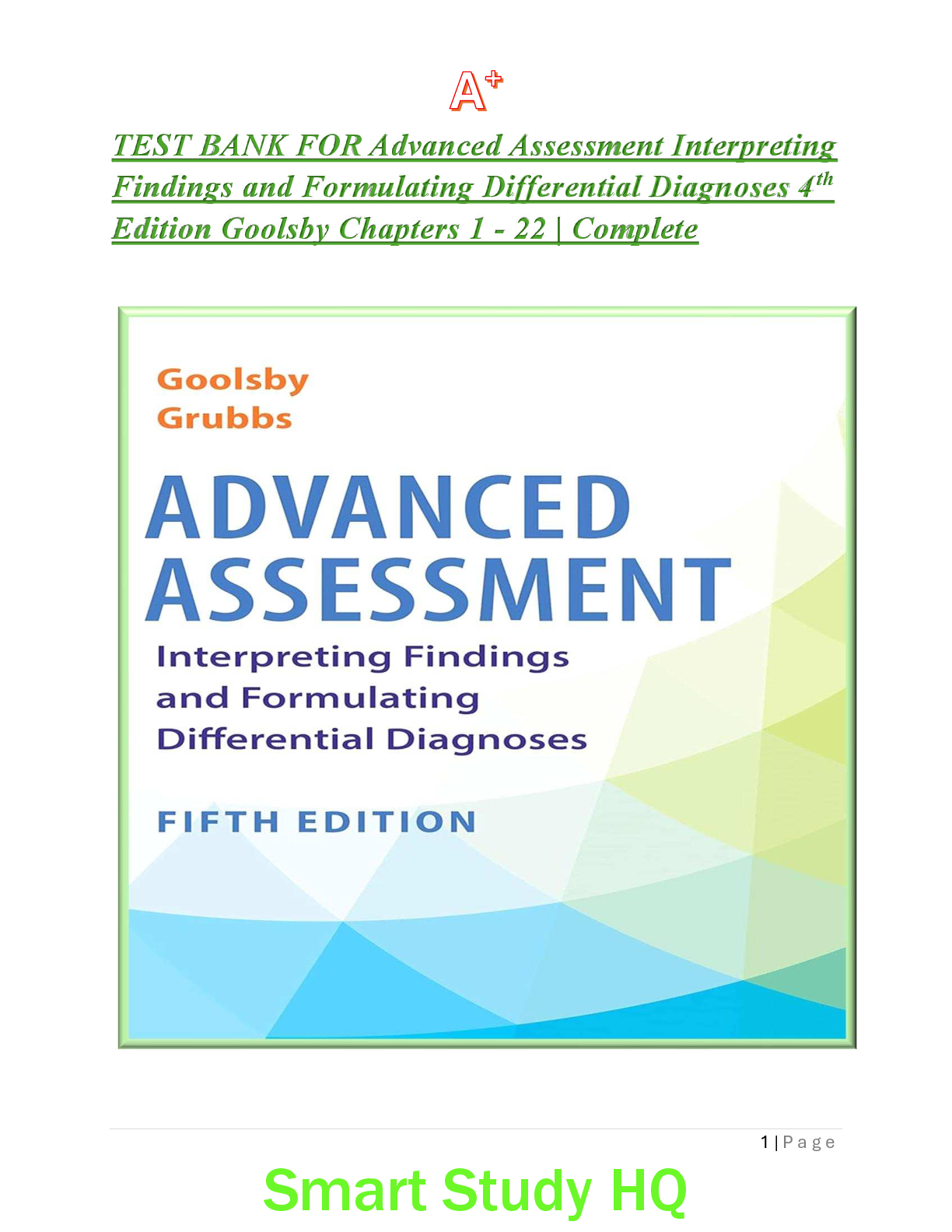
TEST BANK FOR Advanced Assessment Interpreting Findings and Fo...

Test Bank for Philosophies and Theories for Advanced Nursing P...

Test Bank For Advanced Assessment Interpreting Findings and Fo...


TEST BANK FOR Advanced Assessment Interpreting Findings and Fo...