INSTANT PDF DOWNLOAD—This comprehensive study guide is specifically designed for Chamberlain University nursing students preparing for Exam 2 in NR 326 / NR326: Mental Health Nursing for the 2026/2027 academic year. This
...
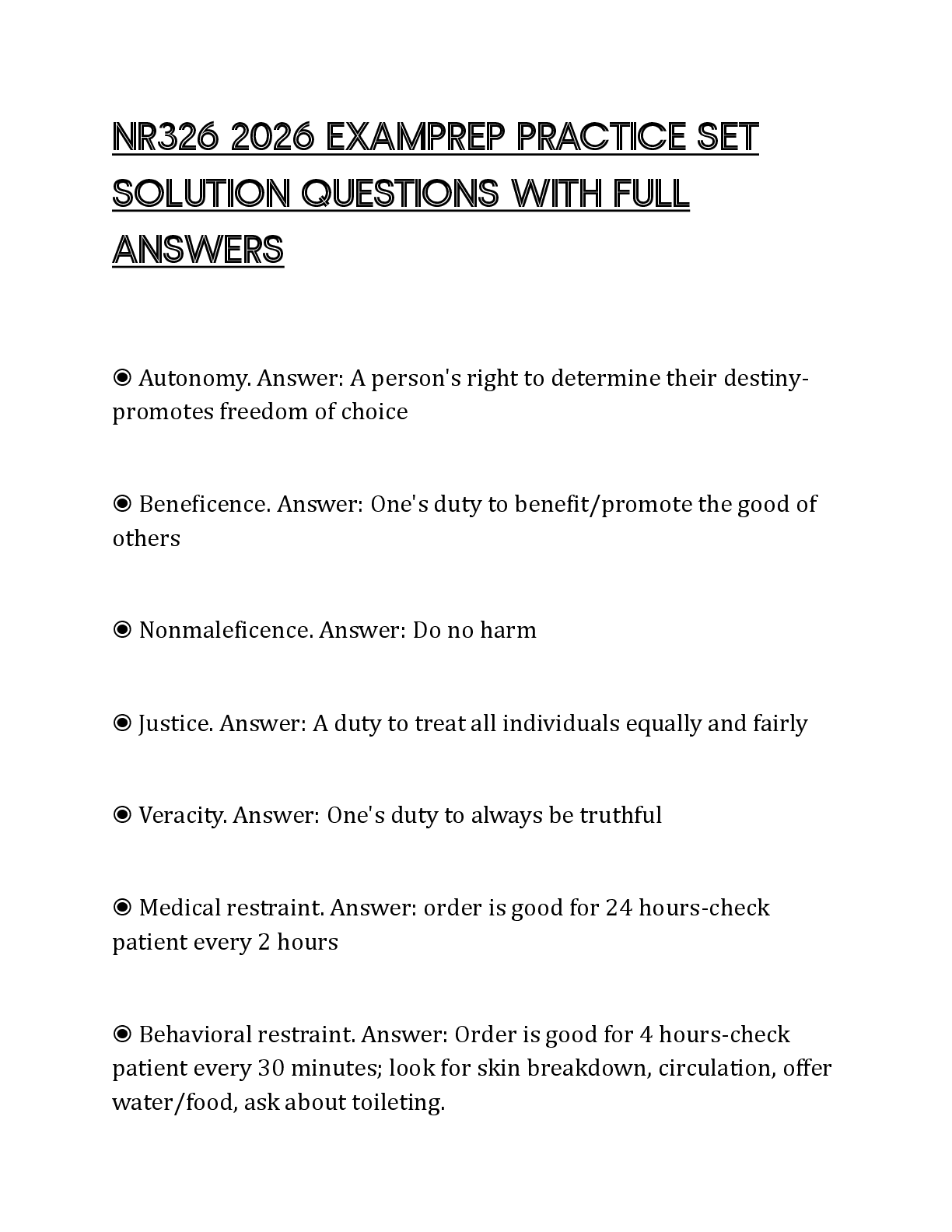
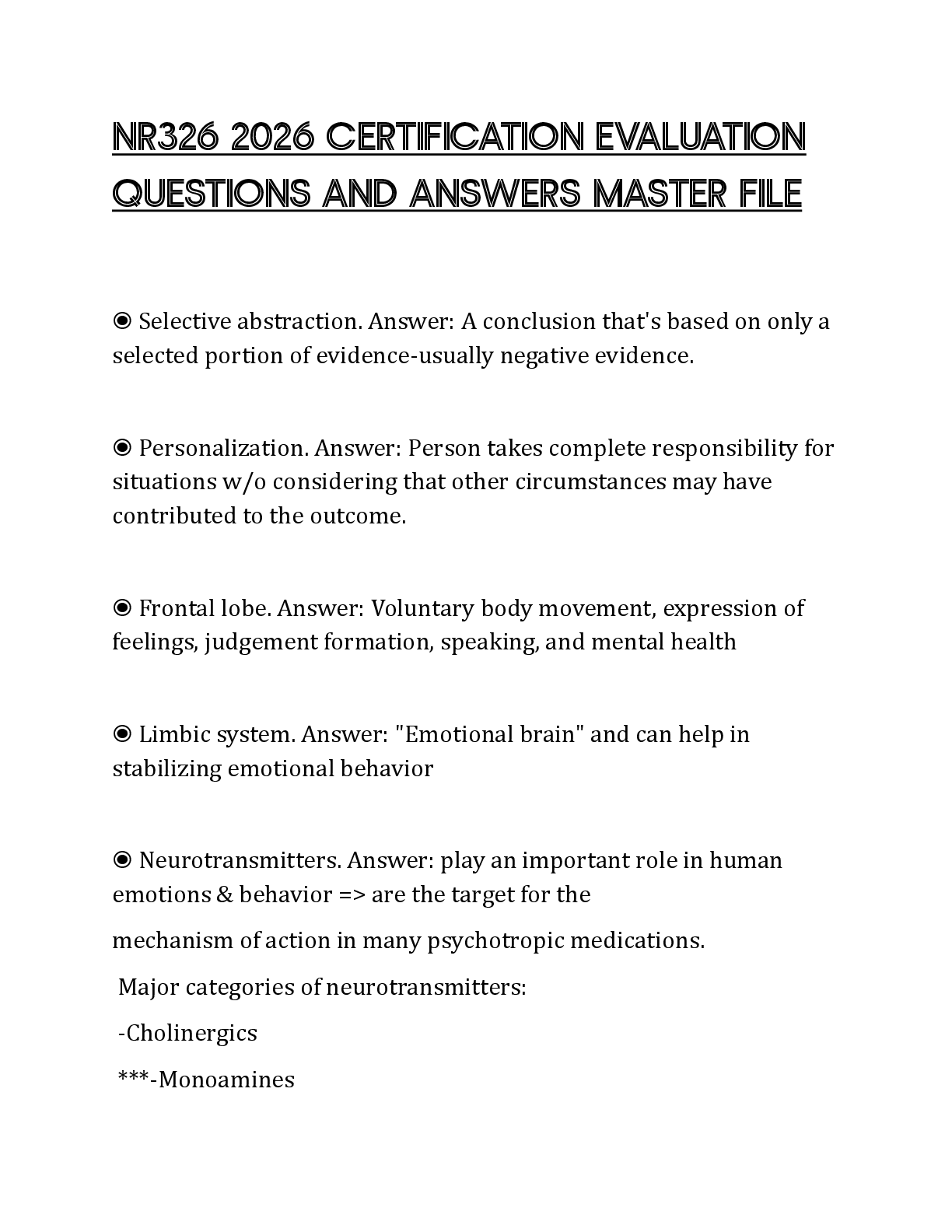
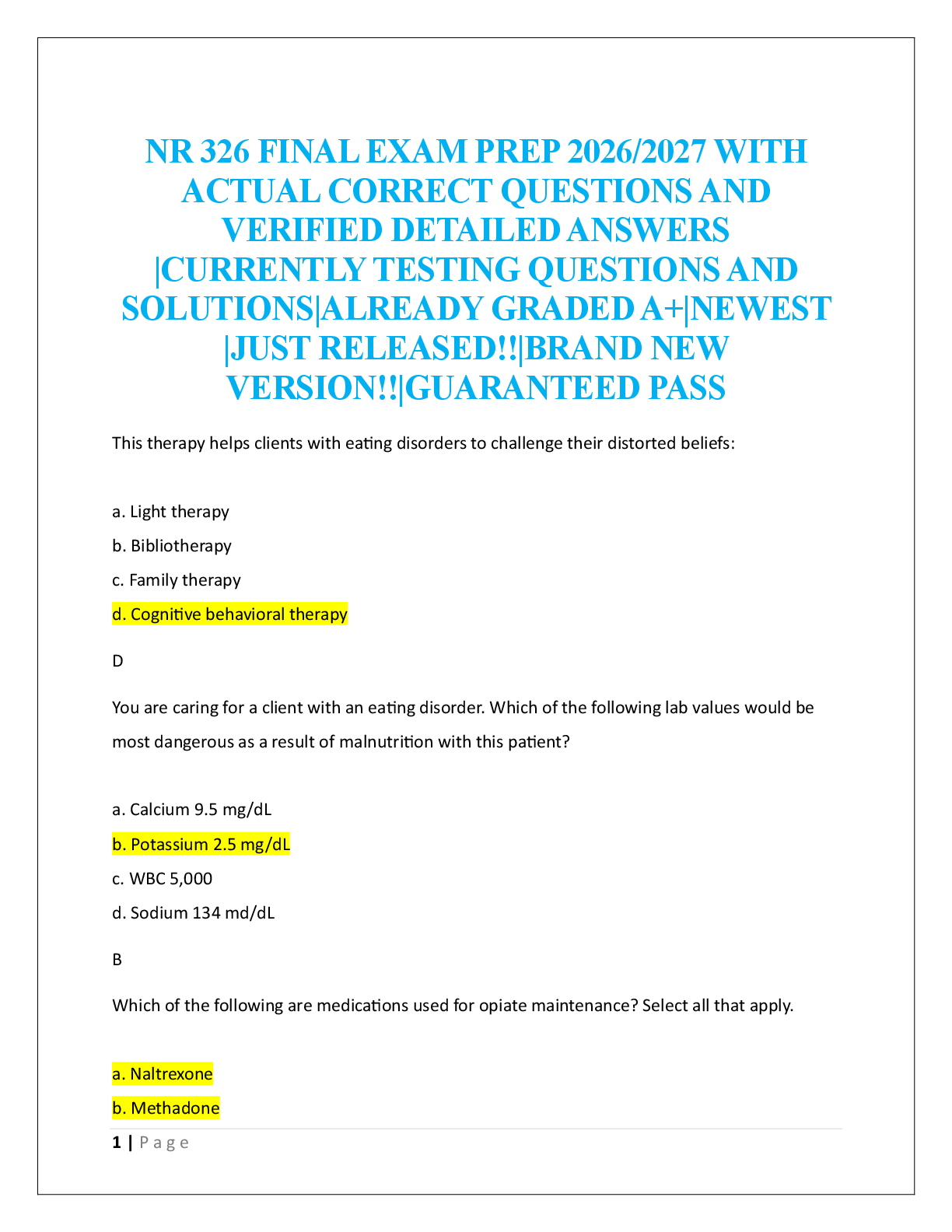
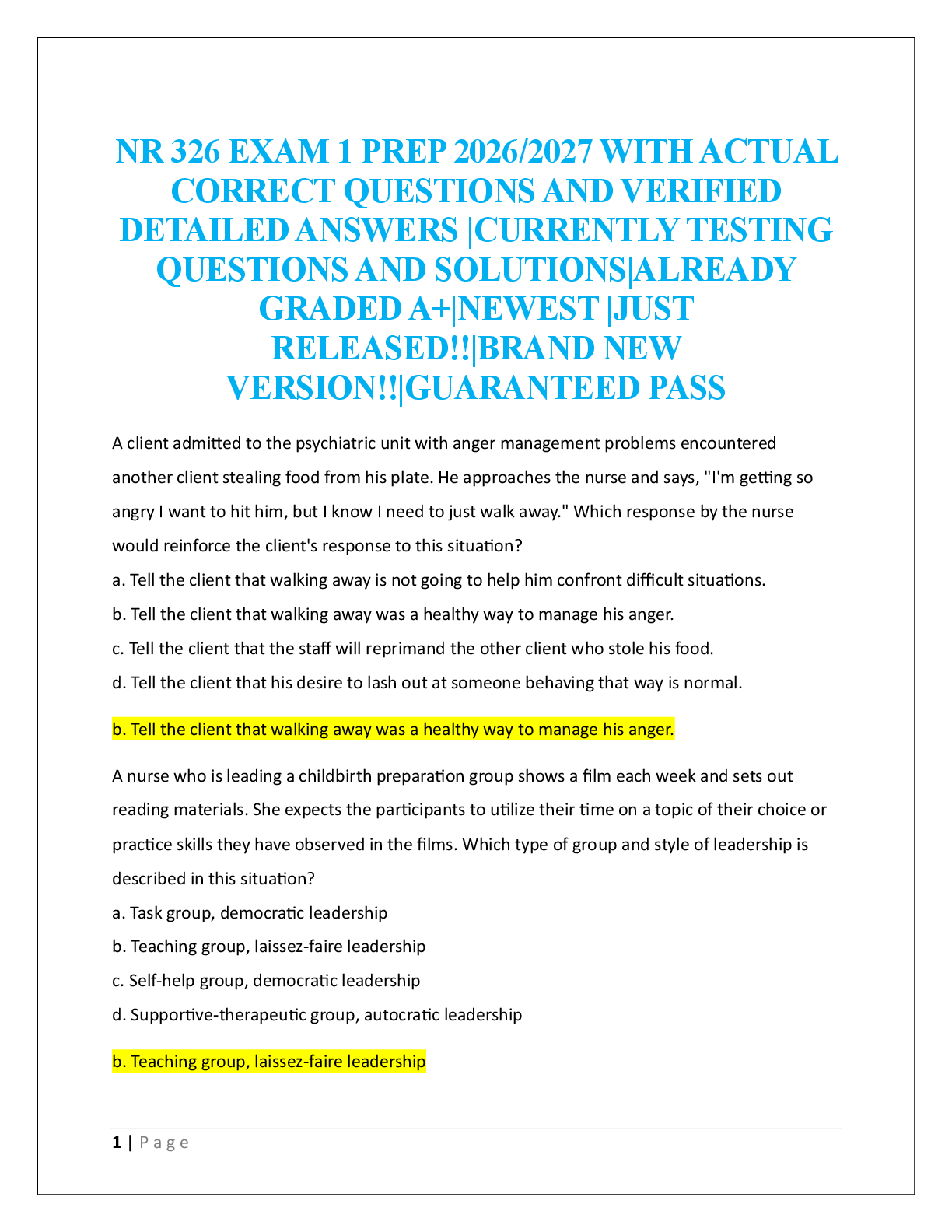
INSTANT PDF DOWNLOAD—This comprehensive study guide is specifically designed for Chamberlain University nursing students preparing for Exam 2 in NR 326 / NR326: Mental Health Nursing for the 2026/2027 academic year. This 90+ page resource contains expertly verified practice questions and 100% correct answers with detailed rationales to help you master core mental health nursing concepts and achieve a top score (Grade A+) .
This comprehensive guide covers all major topics tested on Exam 2 across 90+ pages of content :
Mood Disorders
Manic Bipolar Signs/Symptoms: Labile mood, delusions of grandeur, disorientation, VS changes, violent behaviors, elation/euphoria, pressured speech, little need for sleep, social and sexual disinhibition, medication non-compliance, flight of ideas
Hypomania vs. Acute Mania: Hypomania is mild form not severe enough to cause marked impairment in social/occupational functioning; Acute mania shows marked impairment with possible psychosis
Depression: Alteration in mood with feelings of sadness, despair, pessimism; loss of interest in usual activities; somatic complaints; changes in appetite and sleep patterns
Anhedonia: Loss of interest or pleasure in things normally enjoyed
Anergia: Lack of energy/fatigue
Dysthymia: Chronically depressed, most of the day, more days than not, for at least two years; changes in normal function but still functioning in social events
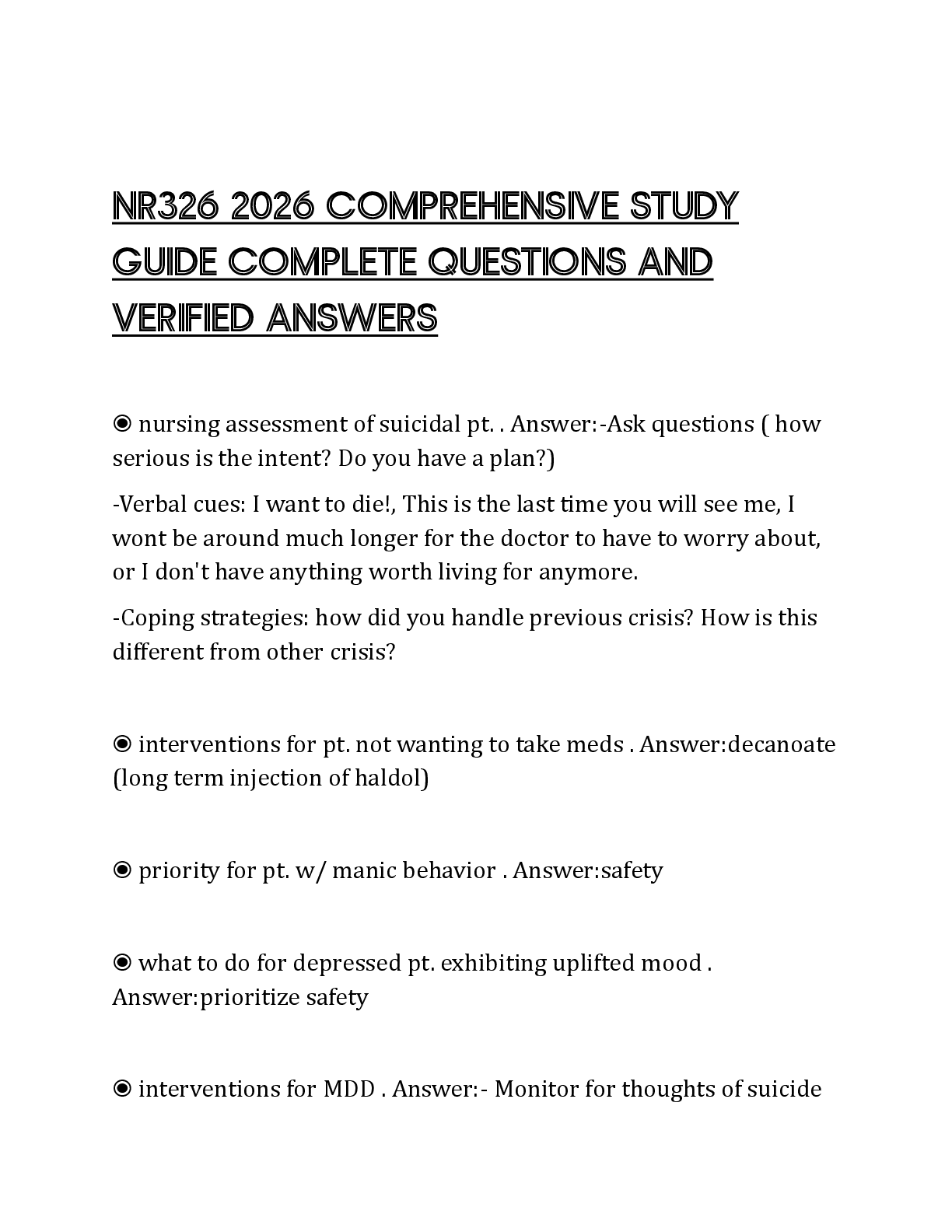
Suicide Risk Assessment & Prevention
Suicide Facts: White middle-age men (45-54) commit suicide at higher rate; men use weapons (guns, hanging); women use poison (OD on pills)
Suicide Risk Factors: Psychiatric disorder, relationships, previous attempt, loss, substance use, socioeconomic status, gender/age/culture, chronic mental illness, isolation, lack of access to mental health care; risk can increase early in treatment with antidepressants
Protective Factors Assessment: Client's support from family, spiritual beliefs, problem-solving skills
Critical Assessment Question: "Do you have a plan to hurt yourself?" is most important for assessing suicide risk
No-Suicide Contract: May reduce risk but not a guarantee
Plan of Care for Suicidal Ideation: Constant supervision, remove anything that can cause harm, ensure patient swallows meds
Anxiety Disorders & Therapeutic Techniques
Cognitive Reframing Techniques: Priority restructuring, monitoring thoughts, journal keeping
Systematic Desensitization: Gradually expose client to anxiety-provoking stimulus while practicing relaxation techniques
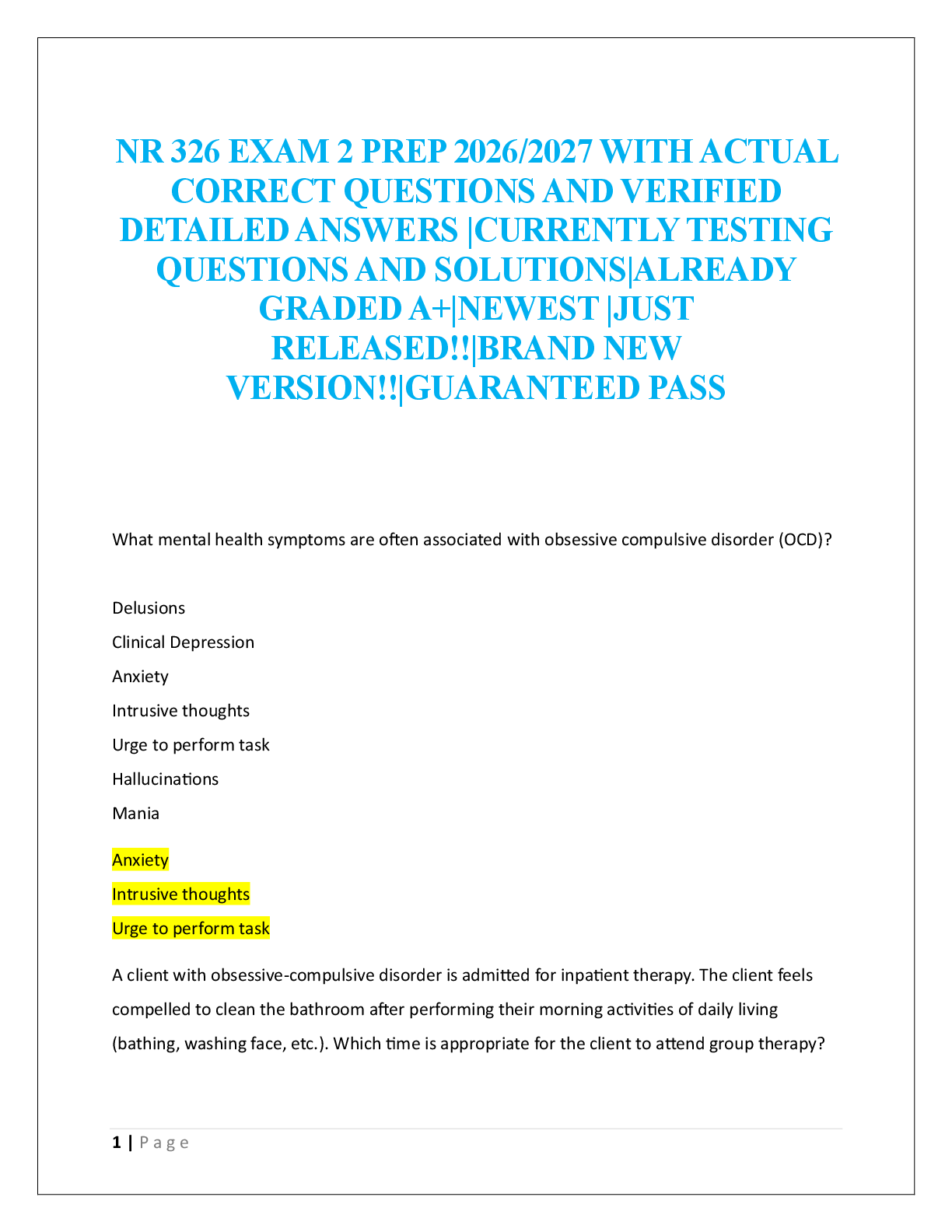
Obsessive-Compulsive Disorder Nursing Interventions: Determine situations that increase anxiety; initially allow plenty of time for rituals; support patient's effort to explore meaning of behavior; gradually limit ritual time as patient becomes more involved; give positive reinforcement for non-ritualistic behaviors; use thought-stopping/relaxation techniques
Trauma & Stress Disorders
PTSD Manifestations: Client avoids talking about traumatic event, has recurring nightmares, negative self-image
Dissociative Identity Disorder (DID) Nursing Interventions: Use grounding techniques like clapping hands, touching an object; goal is to integrate alters
Derealization: Client states furniture in room seems small and far away
Psychopharmacology
Electroconvulsive Therapy (ECT) : Pre-procedure actions include witnessing informed consent, requesting ECG, checking blood pressure; anticipate atropine administration prior to procedure; temporary memory loss and confusion as side effects
Lithium: Mood stabilizer requiring 21 days to be effective; avoid dehydration; monitor thyroid, kidneys, lithium levels; contraindicated in pregnancy; early toxicity signs: vomiting/diarrhea, mental confusion, sedation, poor coordination, fine hand tremors
Lithium Toxicity Levels: 1.5+ (blurred vision, ataxia, tinnitus, N/V); 2.0+ (excessive dilute urine, tremors, muscular irritability); 2.5+ (impaired consciousness, seizures, arrhythmias, coma, death)
MAOIs: Risk of hypertensive crisis
SSRIs/SNRIs: Risk of serotonin syndrome
Personality Disorders
Histrionic (Cluster B) : Dramatic/exaggerated attention-seeking, provocative/seductive/flirtatious, "one-upper," wild and bold
Schizotypal (Cluster A) : Magical thinking, superstitious, eccentric appearance, paranoid, lacks friends, isolates themselves, anxiety in social settings
Obsessive-Compulsive Personality Disorder: Perfectionist, rigid/unbending rules, need for control, preoccupied with details
Substance Use Disorders
Disulfiram (Antabuse) : Aversion therapy; causes nausea and vomiting if client drinks alcohol
Alcohol Withdrawal: Assess using CIWA scale; benzodiazepines as substitution therapy; thiamine to prevent Wernicke-Korsakoff syndrome
Grief & Loss
Kubler-Ross Stages of Grief: Denial, anger, bargaining, depression, acceptance
Engel's Five Stages of Grief: Shock and disbelief, developing awareness, restitution, resolution of the loss, recovery
Therapeutic Communication & Group Therapy
Group Therapy Phases: Initial phase (define purpose of group); working phase (encourage members to work toward goals, identify informal roles); termination phase (discuss termination of group)
Motivational Interviewing: Patient-centered style promoting behavior change; uses empathy and questioning to guide client to develop plan
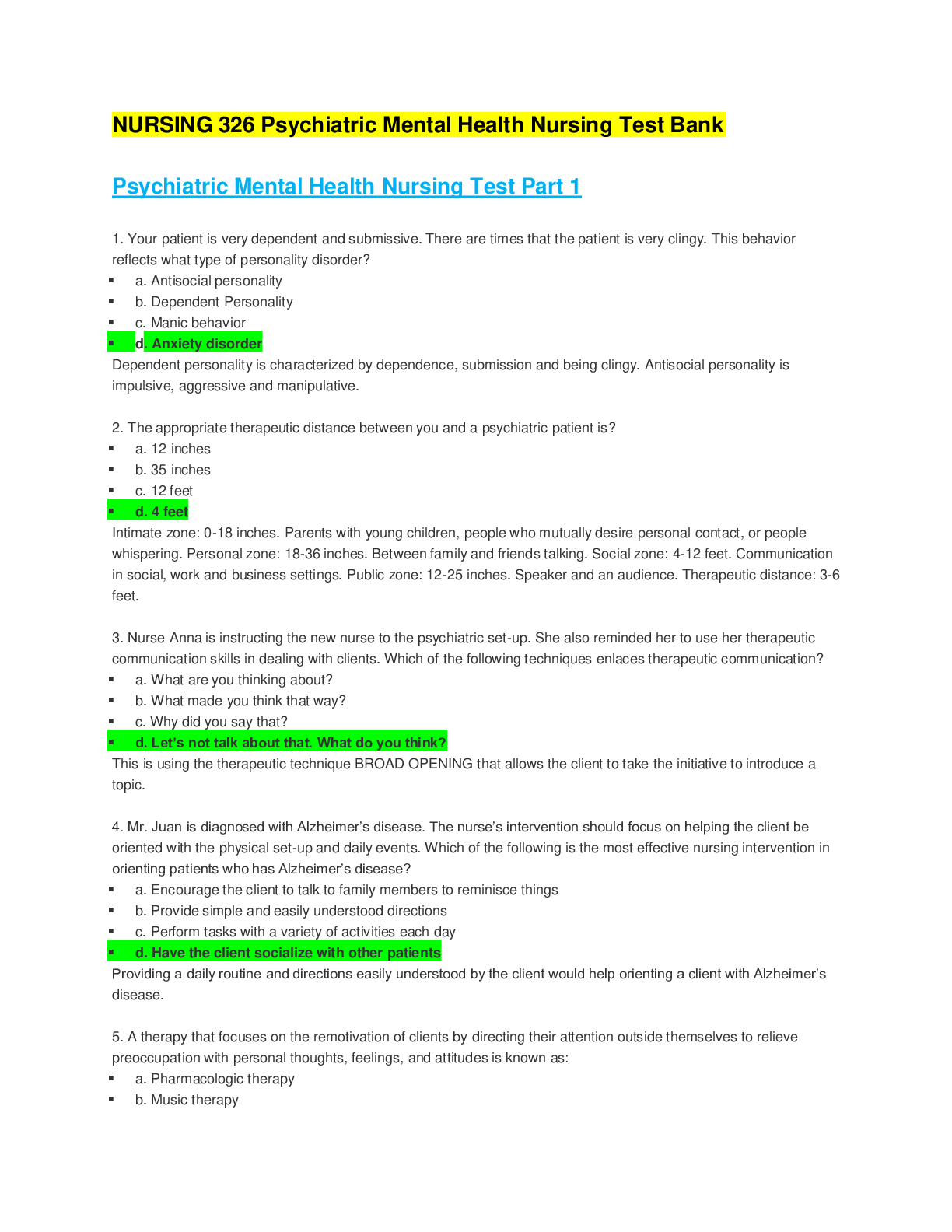
Sample Questions Include :
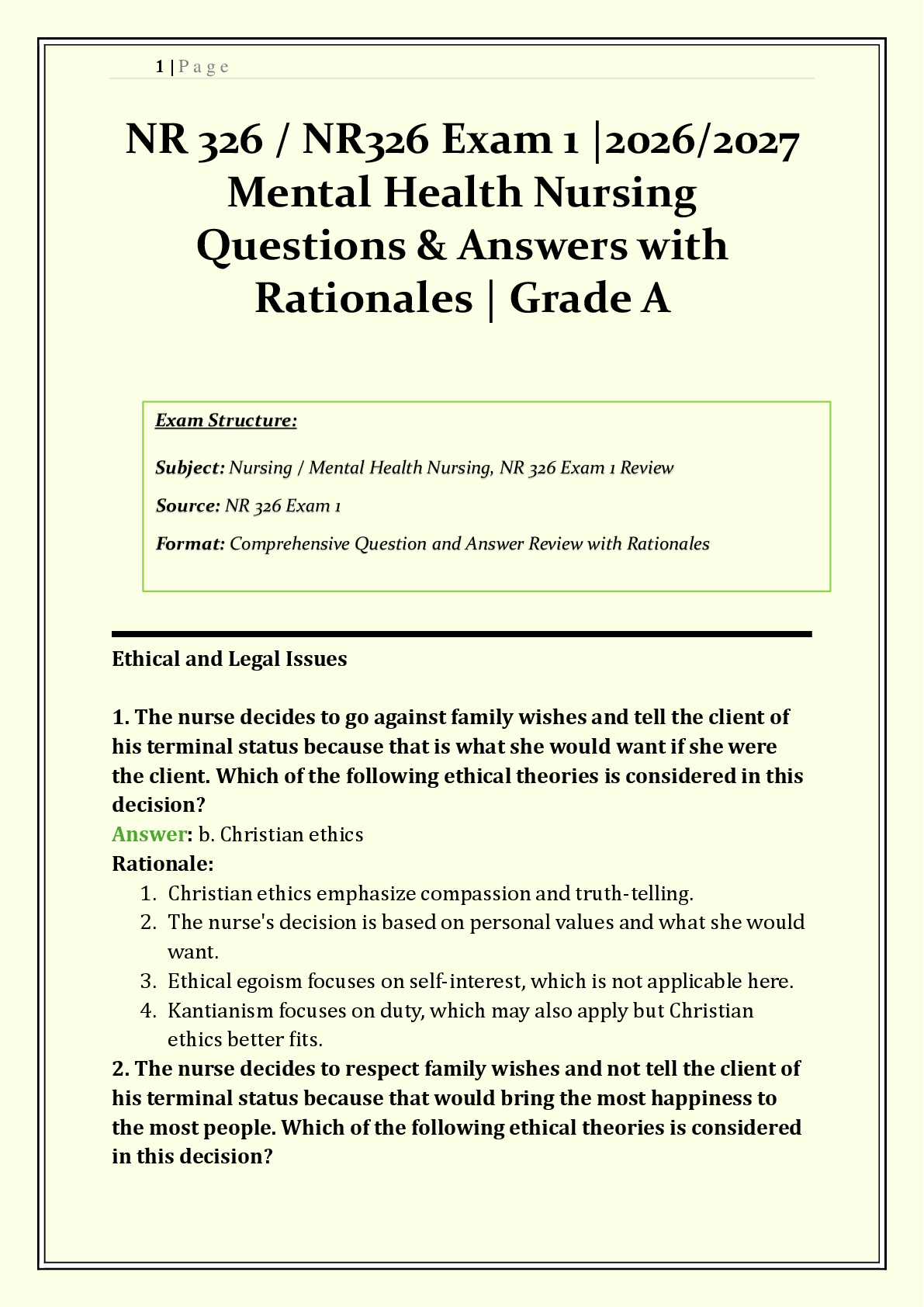
"Which of the following actions should the nurse take prior to the scheduled ECT?" → Witness the informed consent, request an ECG, check the client's BP
"Client with bipolar disorder shows the nurse fresh self-inflicted cuts along her right arm. Nursing priority:" → Inspect the cuts for debris
"Nurse uses cognitive reframing techniques for a patient with anxiety disorder. Which will the nurse choose?" → Priority restructuring and journaling
"During an admission, an assessment of the client's protective factors includes:" → Client's support from family, spiritual beliefs, problem-solving skills
"Which question is most important for the nurse to assess suicide risk in a client?" → "Do you have a plan to hurt yourself?"
"Which of the following findings should the nurse identify as an indication of Derealization?" → Client states the furniture in the room seems small and far away
"Which of the following findings should the nurse expect with PTSD?" → Client has recurring nightmares and negative self-image
"Which of the following medications should the nurse anticipate administering prior to ECT procedure?" → Atropine
"Should a patient take their lithium dose before a lab draw?" → No, hold dose until after lab is drawn
All questions include complete rationales based on current evidence-based practice, mental health nursing standards, and Chamberlain University curriculum requirements .
DOCUMENT ACCESS:
This study guide is available as an instant digital download (PDF) immediately upon purchase. Fully text-searchable, printable, and accessible anytime through your user account. 100% satisfaction guarantee. Trusted by thousands of Chamberlain nursing students for exam preparation and mastering mental health nursing competencies .
[Show More]





.png)