INSTANT PDF DOWNLOAD—This comprehensive study guide is specifically designed for nursing assistant candidates preparing for the Certified Nursing Assistant (CNA) Chapter 1 Exam for the 2026/2027 testing cycle. Based on v
...
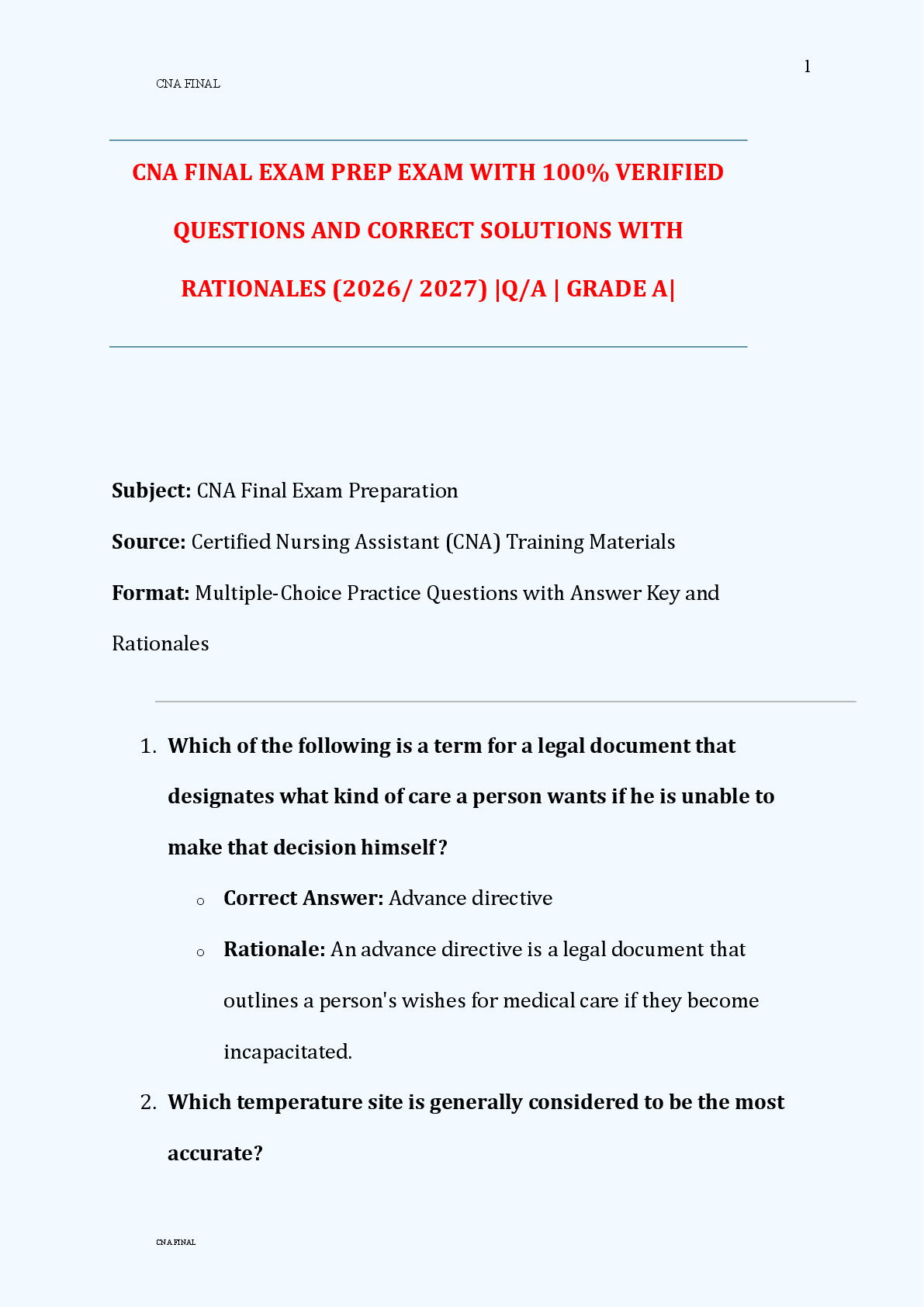
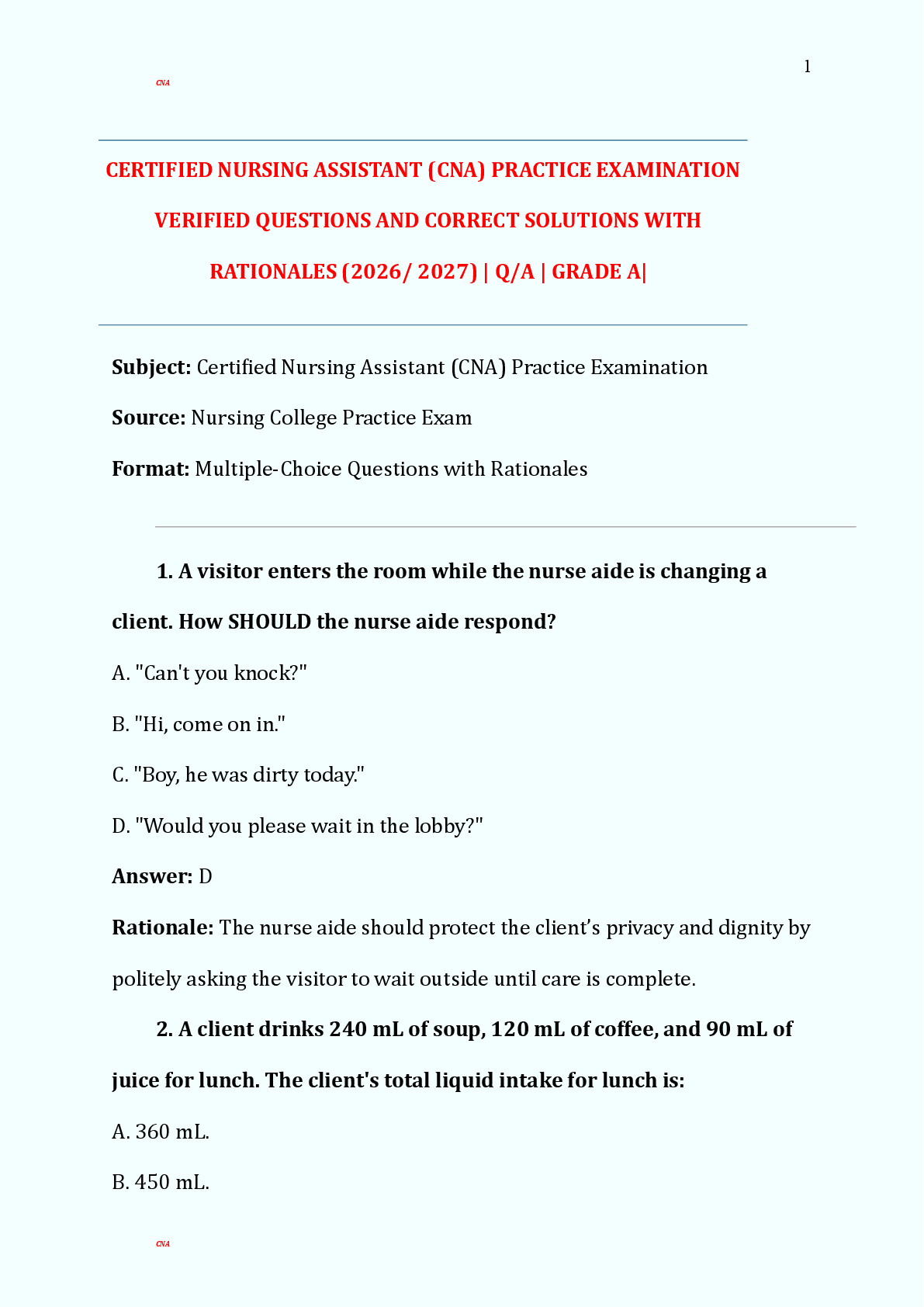
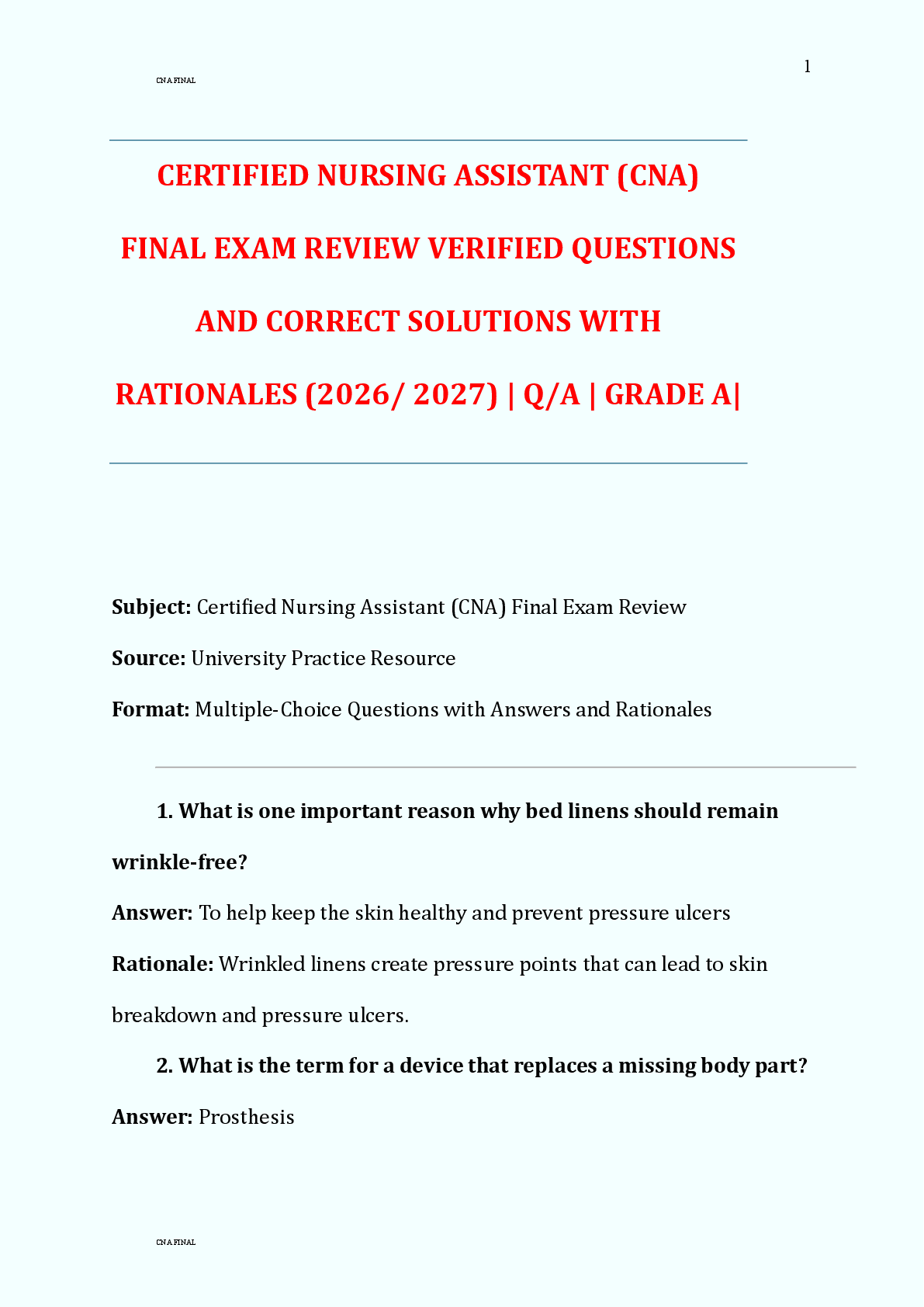
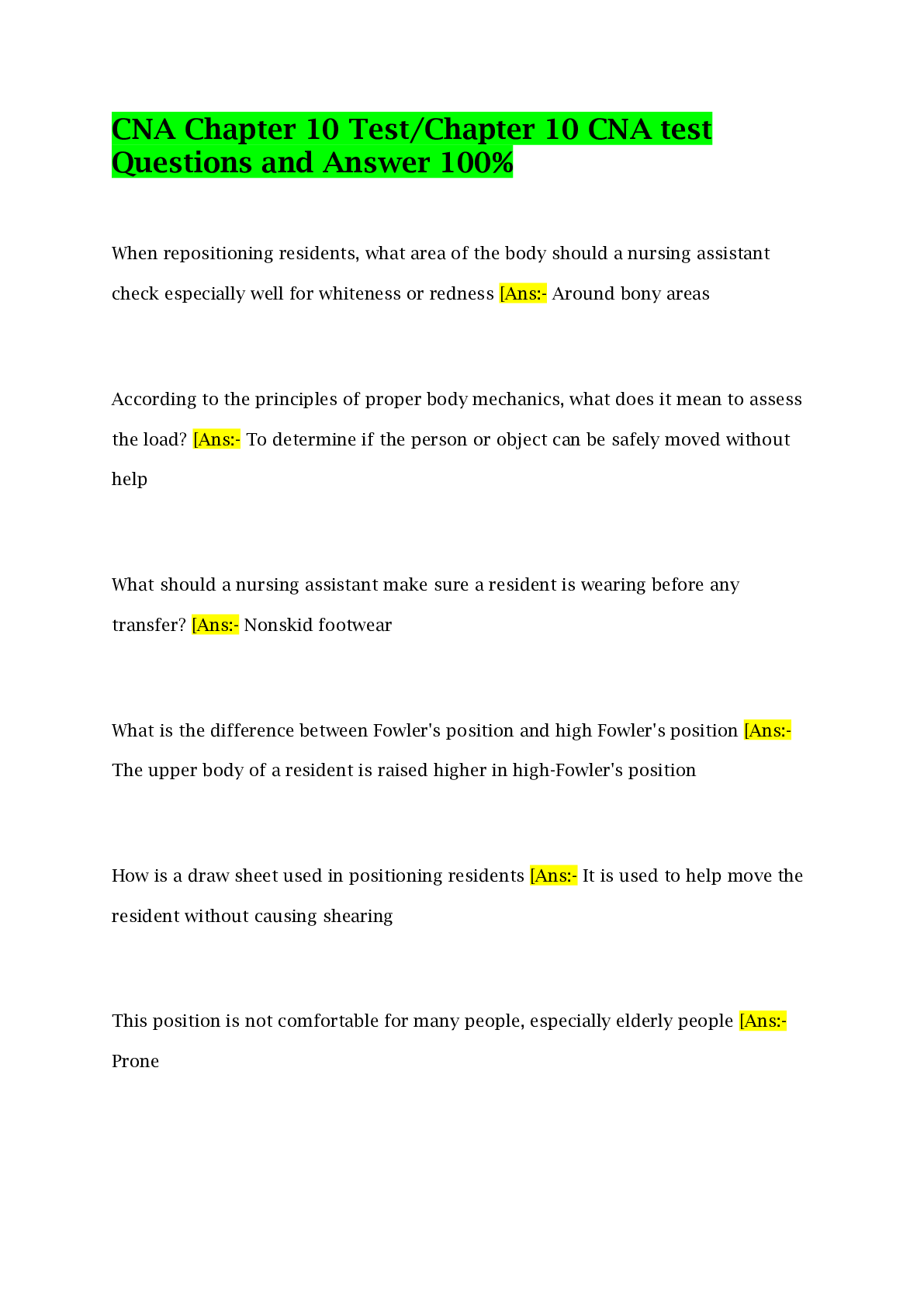
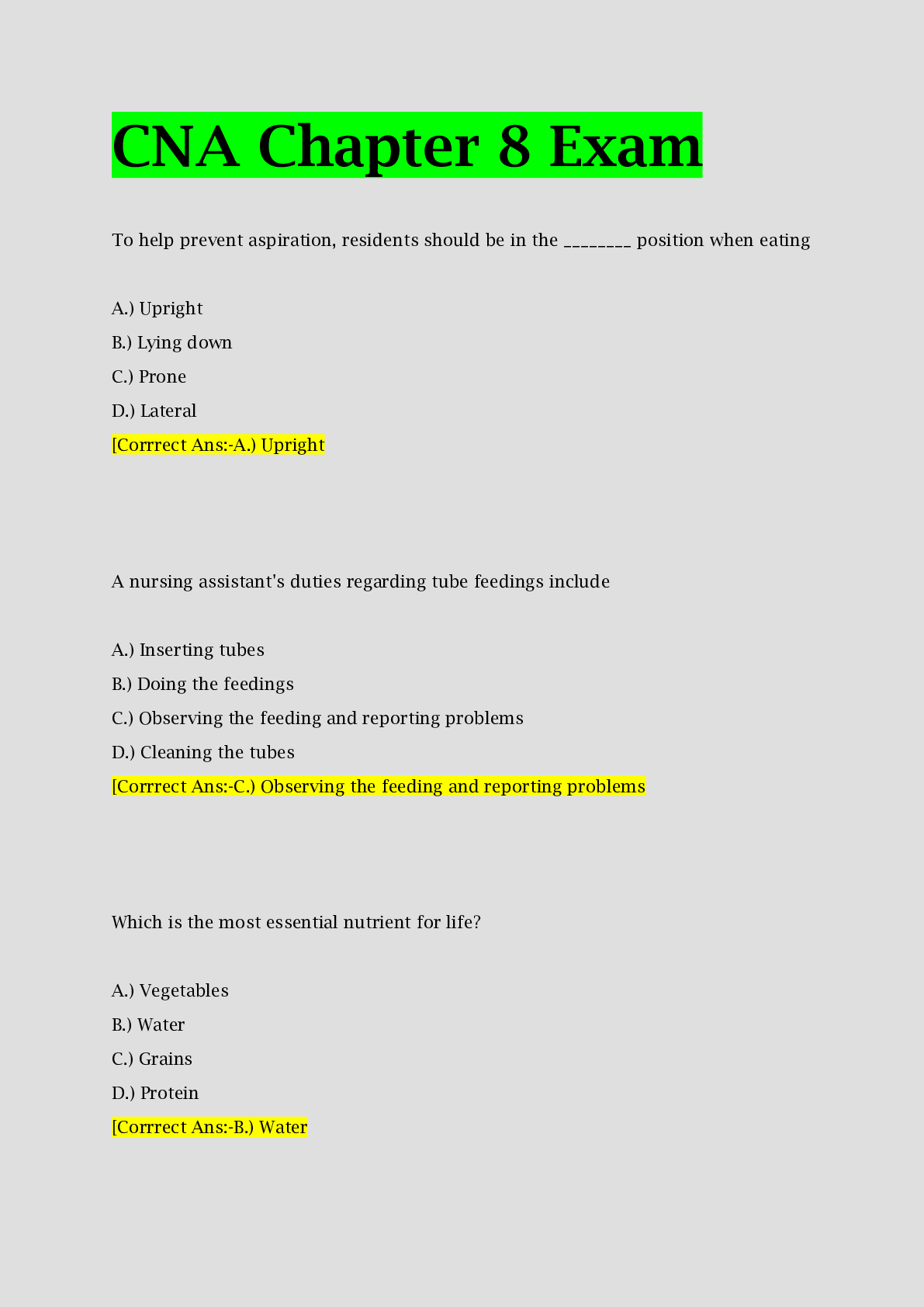
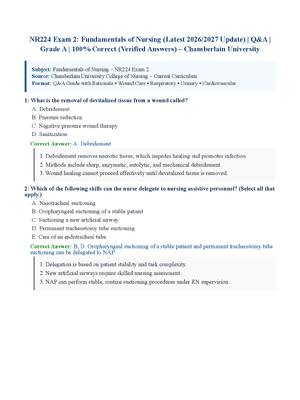
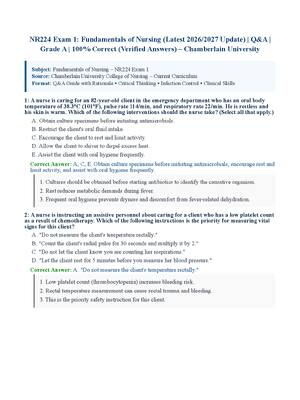
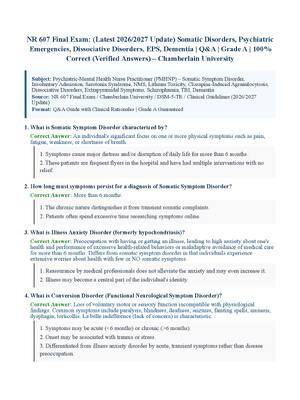
INSTANT PDF DOWNLOAD—This comprehensive study guide is specifically designed for nursing assistant candidates preparing for the Certified Nursing Assistant (CNA) Chapter 1 Exam for the 2026/2027 testing cycle. Based on verified exam materials from top-selling student resources, this resource contains expertly verified practice questions and 100% correct answers with detailed rationales to help you master core concepts and achieve a top score (Grade A+) .
This comprehensive guide covers all major topics tested on CNA Chapter 1 across 120+ questions with rationales :
Healthcare Settings & Long-Term Care: Acute care provides 24-hour skilled care for short-term illnesses/injuries, generally in hospitals. Subacute care is used for people who need less care than for acute illness but a higher level than for chronic illness . Hospice care is for people with approximately six months or less to live, available until death . Assisted living residences are for people who do not need skilled 24-hour care but require help with daily care . Home health care takes place in the person's home . Outpatient care is for people who have had treatments, procedures, or surgeries but do not need an overnight stay . Rehabilitation is a program to restore or improve function after illness or injury .
OBRA & Federal Regulations: OBRA (Omnibus Budget Reconciliation Act) was passed in 1987 in response to reports of poor care and abuse in long-term facilities . It set minimum standards for nursing assistant training (at least 75 hours) , requires 12 hours of in-service education annually , and established Residents' Rights . NATCEP (Nurse Aide Training and Competency Evaluation Program) implements OBRA requirements . The care plan must be updated as the resident's condition changes—this is why reporting changes to the nurse is a very important role of the NA .
Residents' Rights: OBRA identifies specific rights including: the right to dignity, respect, and freedom (call residents by formal name, never abuse) ; the right to participate in own care ; the right to privacy and confidentiality ; the right to security of possessions ; the right to complain without fear of punishment ; the right to visits from doctors, family, clergy, ombudsmen ; and the right to social services, counseling, and assistance in solving problems . Telling a resident her grandchildren are noisy and suggesting she leave them at home violates the right to have visitors .
Ethical & Legal Concepts: Ethics is the knowledge of right and wrong . An example of ethical behavior is protecting a resident's privacy . Negligence is failure to provide proper care resulting in unintended injury . Malpractice is professional misconduct causing injury . Abuse is purposeful mistreatment causing harm (physical, psychological, verbal, sexual, financial) . Financial abuse is stealing or improperly using another person's money, property, or other assets . Physical abuse includes shoving a resident . Psychological abuse includes threatening to harm a resident if he tells another caregiver about a problem . If abuse is suspected or observed, the NA must report it to the charge nurse immediately . The chain of command helps protect nursing assistants and their employers from liability .
Healthcare Laws & Documents: HIPAA (Health Insurance Portability and Accountability Act) is a federal law that protects the privacy of patients' health information . Advance directives allow people to decide what medical care they wish to have if they become unable to make those decisions . A durable power of attorney for health care appoints someone to make medical decisions for a person in the event they become unable to do so . A living will states the medical care a person wants, or does not want . A DNR (Do Not Resuscitate) order tells medical professionals not to perform CPR if the person's lungs and/or heart have stopped working . The Patient Self-Determination Act (PSDA) requires healthcare agencies to give adults information about their rights relating to advance directives .
CNA Training & Certification: OBRA requires at least 75 hours of training for nursing assistants . OBRA requires at least 12 hours of in-service education annually . To maintain CNA certification, a NA must work at least one 8-hour shift every 24 months . The Joint Commission is a not-for-profit organization that evaluates and accredits different types of healthcare facilities .
The Nursing Assistant Role: The care team is the group of people with different kinds of education and experience who provide resident care . The chain of command is the order of authority within the facility . The charge nurse is responsible for a team of healthcare workers . Delegation is transferring responsibility for a specific task—nursing assistants do NOT delegate . The scope of practice defines the tasks healthcare providers are legally permitted to perform .
Sample Questions Include :
"Which of the following statements is true of long-term care?" → Most conditions in long-term care facilities are chronic (Long-term care is for ongoing conditions requiring extended care)
"Which is a core value associated with culture change?" → Promoting self-determination and personal choice (Culture change emphasizes person-centered care and resident autonomy)
"What is one reason why reporting a resident's changes to the nurse is a very important role of the nursing assistant?" → The care plan must be updated as the resident's condition changes (The care plan requires accurate, current information to provide appropriate care)
"How many hours of in-service education does OBRA require for nursing assistants every year?" → At least 12 hours (OBRA mandates annual continuing education for CNAs)
"What does OBRA stand for?" → Omnibus Budget Reconciliation Act (Passed in 1987 to set standards for nursing assistant training and resident rights)
"How many hours of training does OBRA require for nursing assistants?" → At least 75 hours (Minimum training hours required for CNA certification)
"If an NA makes mistakes when documenting care by hand, she should:" → Draw one line through it and write the correct information (Never erase or use correction fluid in medical records)
"What does HIPAA stand for?" → Health Insurance Portability and Accountability Act (Federal law protecting patient health information privacy)
"Which of the following behaviors promotes residents' rights?" → Encouraging a resident to participate in care planning (Residents have the right to participate in their own care)
"What is required of a nursing assistant if he suspects that a resident is being abused?" → The NA should report it to the charge nurse immediately (Mandated reporters must report suspected abuse promptly)
"Which of the following terms means harming a person physically, mentally, or emotionally by failing to provide needed care?" → Neglect (Active neglect is purposeful; passive neglect is unintentional)
"Which of the following is an example of sexual abuse?" → Rubbing up against a resident inappropriately (Sexual abuse includes any unwanted sexual contact)
"What is one function of the chain of command?" → It helps protect nursing assistants and their employers from liability (Clear reporting lines help ensure proper care and documentation)
All questions include complete rationales based on current OBRA standards, NNAAP guidelines, and CNA curriculum requirements .
DOCUMENT ACCESS:
This study guide is available as an instant digital download (PDF) immediately upon purchase. Fully text-searchable, printable, and accessible anytime through your user account. 100% satisfaction guarantee. Trusted by thousands of nursing assistant candidates for CNA certification exam preparation and mastering fundamental concepts .
[Show More]