Fibromyalgia, Pain Mechanisms,
and Adrenal Gland Function
Fibromyalgia: Mechanisms, Diagnosis, and
Management
Definition and Terminology
Fibromyalgia is a chronic disorder characterized by widespread pain and
tende
...
Fibromyalgia, Pain Mechanisms,
and Adrenal Gland Function
Fibromyalgia: Mechanisms, Diagnosis, and
Management
Definition and Terminology
Fibromyalgia is a chronic disorder characterized by widespread pain and
tenderness in muscles and fibrous tissue. The term itself is derived from
“fibro-” for fibrous tissue, “-my-” for muscle, and “-algia” for pain. This
condition often causes sleep disturbances and is more commonly observed
in women.
Pain Pathways and Mechanisms
When an injury occurs, such as a cut to the finger, specialized sensory
neurons known as nociceptors sense the stimulus and convert it into an
electrical signal. These neurons are found in the skin, joints, and the walls
of organs. The signal travels via the nociceptor’s axon toward the cell body,
which is located in the dorsal root ganglion—a cluster of nerve cell bodies in
the dorsal root of the spinal nerve. This ganglion is responsible for receiving
and relaying sensory information.
If the signal is strong enough, the cell body releases substance P, a chemical
involved in pain perception. Substance P is then transmitted down the
neuron’s axon and released at the terminal, where it binds to receptors on a
second neuron in the dorsal horn of the spinal cord. Within the spinal cord,
inhibitory neurons release neurotransmitters like serotonin and
norepinephrine, which serve to dampen the pain signal. When the strength
of the nociceptor’s signal exceeds that of the inhibitory neurons, the second
neuron fires, sending the electrical impulse up the spinal cord to the brain,
where pain is finally perceived.
Response to Local Injury
At the site of injury, epithelial cells release nerve growth factor, which
attracts mast cells and increases its production. Elevated levels of nerve
growth factor heighten the sensitivity and growth of nociceptors, leading to
greater production of substance P and intensified pain perception.Pathophysiology of Fibromyalgia
The underlying mechanism of fibromyalgia is not fully understood. However,
it appears to involve altered pain processing in the brain. Affected
individuals often have low serotonin levels, which reduces the inhibition of
pain signals, and high levels of substance P and nerve growth factor, which
amplify pain signals. This imbalance contributes to central sensitization,
resulting in increased pain sensitivity and a lower threshold for pain. Those
with fibromyalgia may experience a broad range of sensitivities that affect
sleep, mood, and cognitive function. Genetic factors and environmental
influences, such as childhood trauma, also play a role in the development of
fibromyalgia.
Clinical Diagnosis
Diagnosing fibromyalgia is based on persistent pain in at least seven or
more areas of the body, along with a symptom severity score of five or more
out of twelve. The severity scale includes symptoms like cognitive
difficulties (“fibro fog”), fatigue, poor sleep, and headaches. Alternatively,
pain in at least five areas, combined with a severity score of nine or higher,
can also fulfill the diagnostic criteria. Symptoms must be present for at least
three months, and other possible disorders must be ruled out.
Treatment Approaches
Management of fibromyalgia is holistic and aims to relieve symptoms and
improve quality of life. Regular cardiovascular exercise—such as brisk
walking, cycling, swimming, or water aerobics—can help reduce pain and
fatigue. Relaxation techniques and good sleep habits are also important. If
these non-pharmacological strategies are not sufficient, medications such as
amitriptyline and serotonin-norepinephrine reuptake inhibitors (SNRIs) may
be used to increase serotonin and norepinephrine levels. Anticonvulsant
medications, like pregabalin and gabapentin, can help manage sleep
disturbances by slowing nerve impulses.
Pain: Types, Assessment, and Individual
Experience
Types of Pain
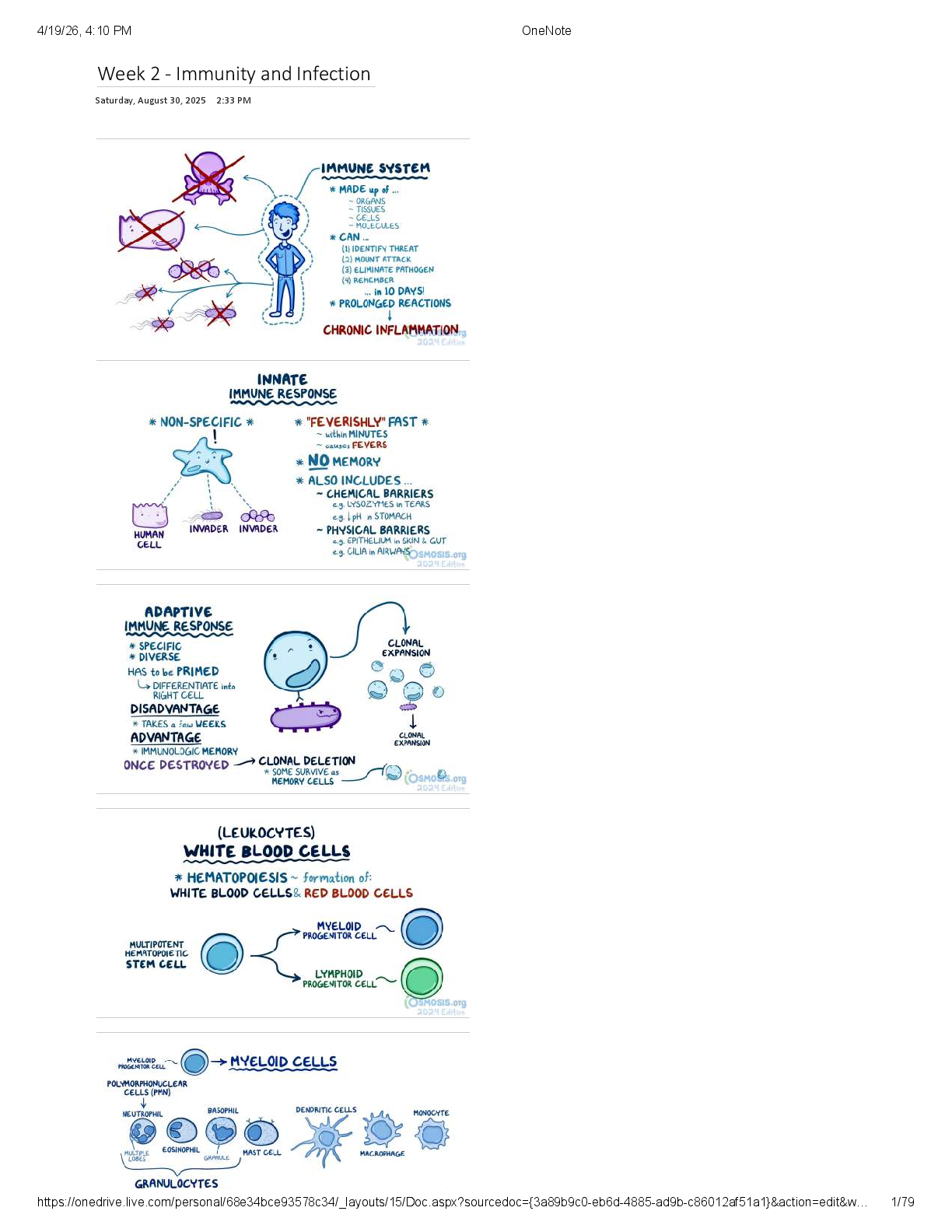
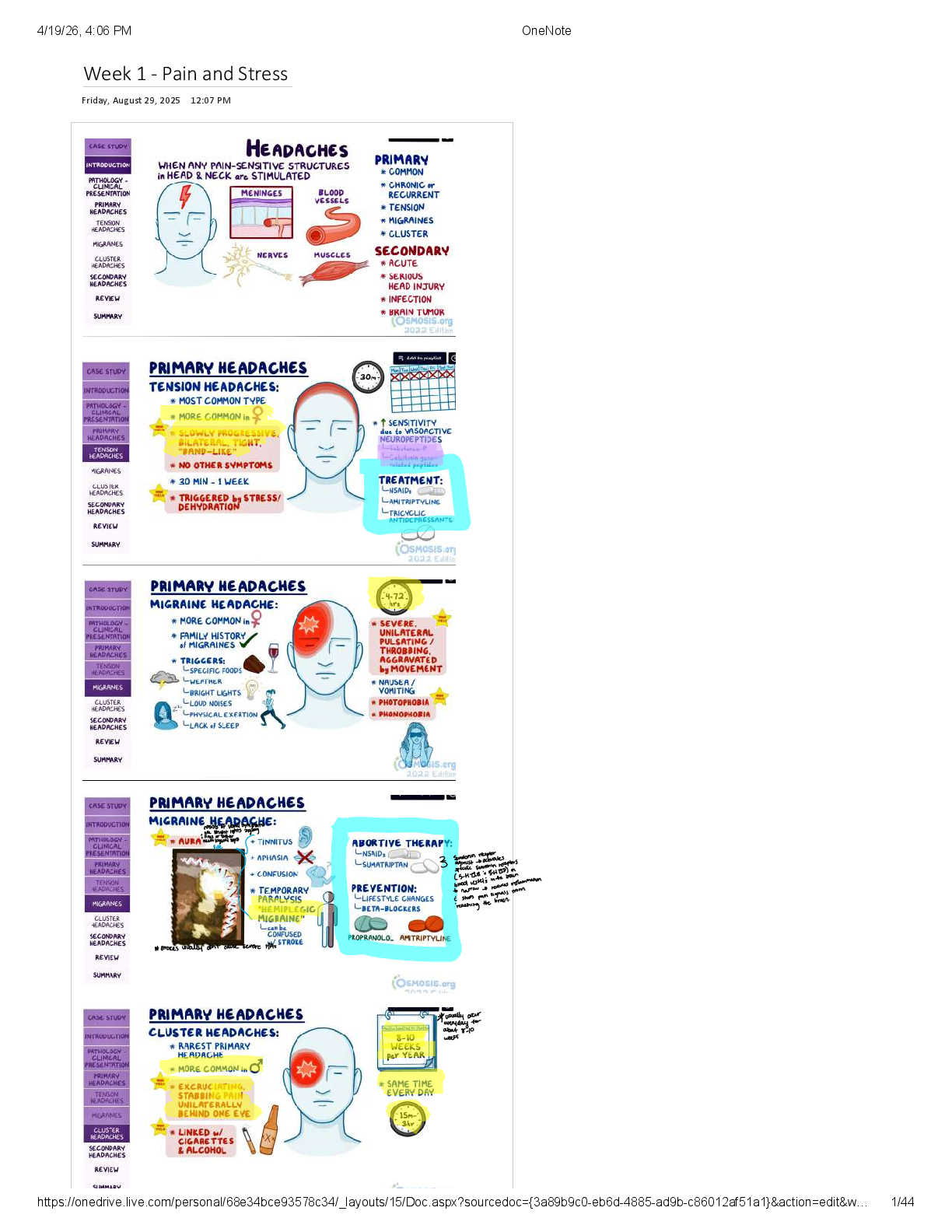
Pain is a sensation of discomfort ranging from mild to severe, usually
caused by an underlying condition and never considered normal. Acute painis sudden and severe, often subsiding as the cause resolves, and is typically
associated with trauma, surgery, or conditions like appendicitis. Chronic
pain lasts longer, often several months, and is linked to headaches, back
pain, arthritis, nerve pain, and more.
Individual Experience of Pain
Pain is a uniquely individual experience, varying due to differences in pain
threshold (the point at which pain is first noticed) and pain tolerance (the
maximum pain one can endure). Factors such as anxiety, energy level, rest,
hunger, culture, and past experiences with pain can also influence
perception.
Recognizing and Reporting Pain
Clients may verbally report pain, but sometimes nonverbal signs must be
observed. These include irritability, restlessness, mood changes, insomnia,
facial tension, moaning, avoidance of movement, redness, and changes in
vital signs (temperature, pulse, blood pressure, breathing rate). Pain
severity is often assessed with scales:
Visual scale: Ranges from no pain to worst pain, without words.
Verbal scale: Uses descriptors such as “mild,” “moderate,” and
“severe.”
Numeric scale: Rates pain from zero (no pain) to ten (worst pain).
Wong-Baker scale: Uses faces to represent pain intensity, useful for
children or clients with language barriers.
A client’s self-report of pain should always be respected and trusted. In
some situations, vital signs—temperature, pulse, heart rate, blood pressure,
and breathing rate—should be taken and reported to a nurse.
Summary
Fibromyalgia is a persistent condition that causes widespread pain,
heightened sensitivity, and sleep disturbances. Diagnosis is based on clinical
history and symptom criteria, while treatment focuses on symptom
management through exercise, sleep strategies, and medications. Pain
assessment is individualized, and both verbal and nonverbal cues should
guide care and intervention.Adrenal Glands: Structure and Hormone
Production
Anatomy of the Adrenal Glands
The adrenal glands are a pair of organs located on top of each kidney. Each
gland consists of an inner medulla and an outer cortex. The adrenal cortex
itself has three layers: the zona glomerulosa, zona fasciculata, and zona
reticularis, each producing specific steroid hormones under the control of
adrenocorticotropic hormone (ACTH).
Aldosterone Production
ACTH from the anterior pituitary stimulates adrenal cortex cells to absorb
cholesterol from the blood. Cholesterol is converted to pregnenolone, the
precursor to all adrenal cortex hormones. In the zona glomerulosa,
pregnenolone is transformed through a series of enzymatic steps into
aldosterone, a hormone that regulates sodium balance. Aldosterone acts on
the kidney’s distal tubules and collecting ducts, enhancing sodium
reabsorption and potassium excretion, which in turn increases blood volume
and blood pressure.
Cortisol Production
The zona fasciculata produces cortisol, especially during physical or
emotional stress. The hypothalamus releases corticotropin-releasing
hormone, prompting the pituitary gland to release ACTH, which stimulates
cortisol release. Cortisol raises blood glucose by promoting gluconeogenesis
in the liver and breaking down protein and fat for energy.
Androgen and Estrogen Production
The innermost layer, the zona reticularis, manufactures androgens
(including testosterone) and, to a lesser degree, estrogens. Although the
adrenal glands contribute to sex hormone production in both men and
women, their role is minor compared to the testes and ovaries.
Summary
The adrenal cortex consists of three layers: zona glomerulosa, zona
fasciculata, and zona reticularis, each producing steroid hormones.
Cholesterol is converted to pregnenolone, which is then metabolized to
[Show More]