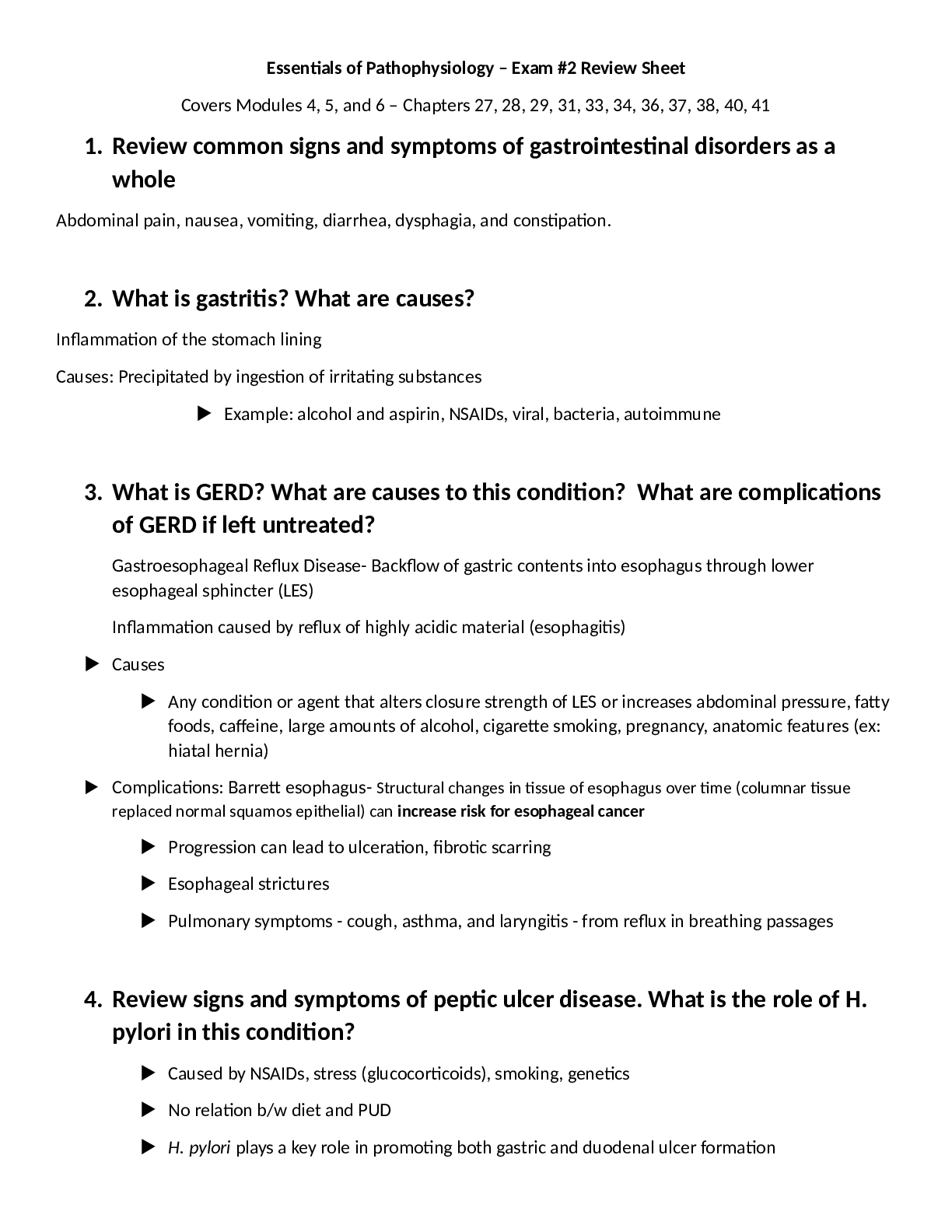
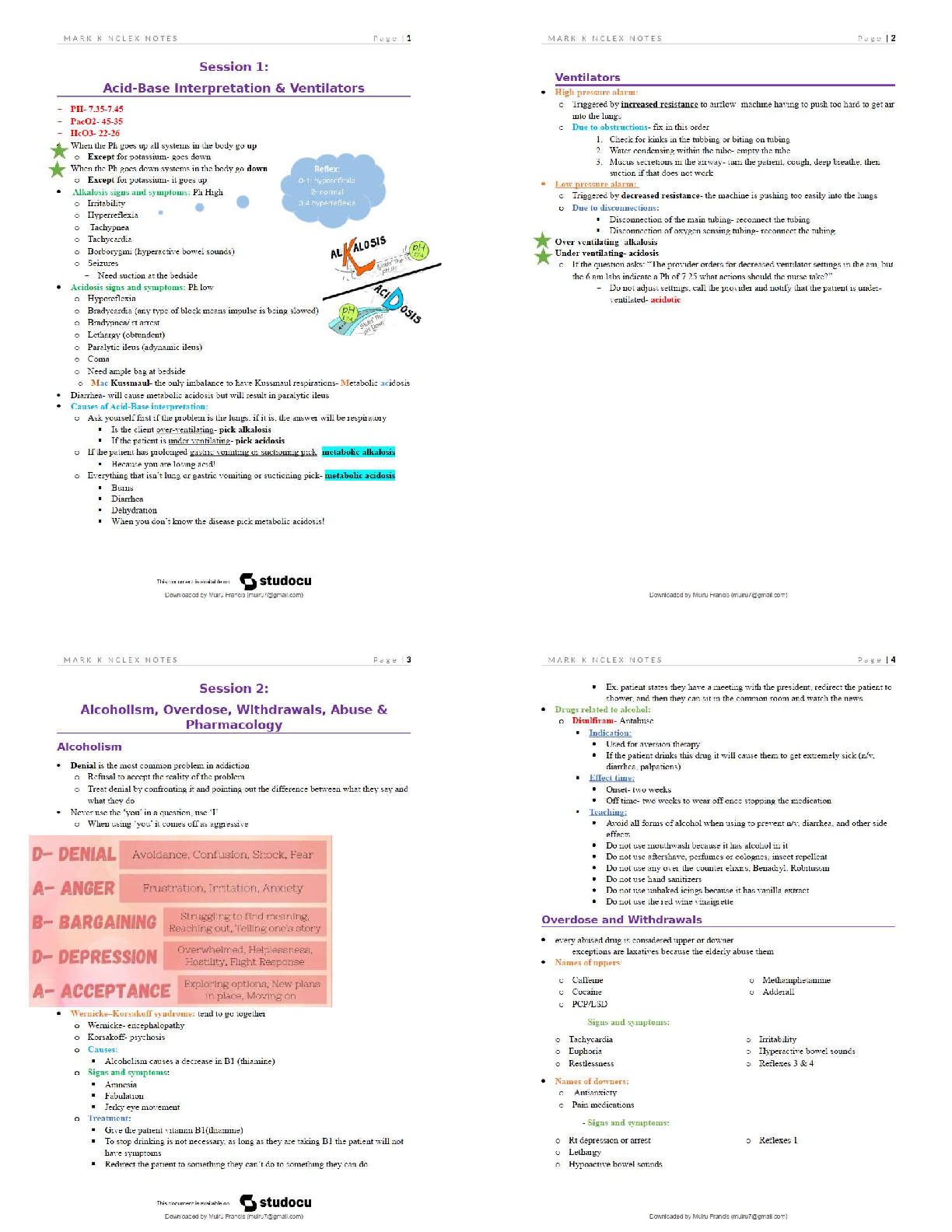
Biology > LECTURE SLIDES/NOTES > Strayer University - BIOLOGY MISC;NCLEX-1-DAY-Review (All)
Strayer University - BIOLOGY MISC;NCLEX-1-DAY-Review
Document Content and Description Below
Last updated: 3 years ago
Preview 1 out of 57 pages
Instant download

Buy this Document to get the Full Access Instantly
Provided by Students Who Aced it
We Verify Document Content to Gurantee Accuracy
Also available in bundle (1)
Click Below to Access Bundle(s)

THIS BUNDLE CONTAINS: All the Mark Klimek NCLEX Lecture materials and Guides plus the Audio Lectures you will ever need for Quick NCLEX Test Readiness . Please see the description below for full details.SUMMER 2021.Best Rated,All together.
Mark Klimek Audio Lectures Lecture 10 Maternal health and newborn health: Calculating Due-Dates. Lecture 6 Drug toxicity’s, Dumping Syndrome vs. Hiatal Hernia, Electrolytes Drug Toxicity’s Mark Klimek...
By Hannington 5 years ago
$25
14
Reviews( 0 )
Document information
Connected school, study & course
About the document
Uploaded On
May 03, 2021
Number of pages
57
Written in
All

Additional information
This document has been written for:
Uploaded
May 03, 2021
Downloads
0
Views
299
Topic Tags
Recommended For You
Get more on LECTURE SLIDES/NOTES »

.png)
University of TexasBIO 322Lecture 6 - Leaf initiation-developm...
University of California, Davis - PLP 120Bacteria 1 Lecture 20...

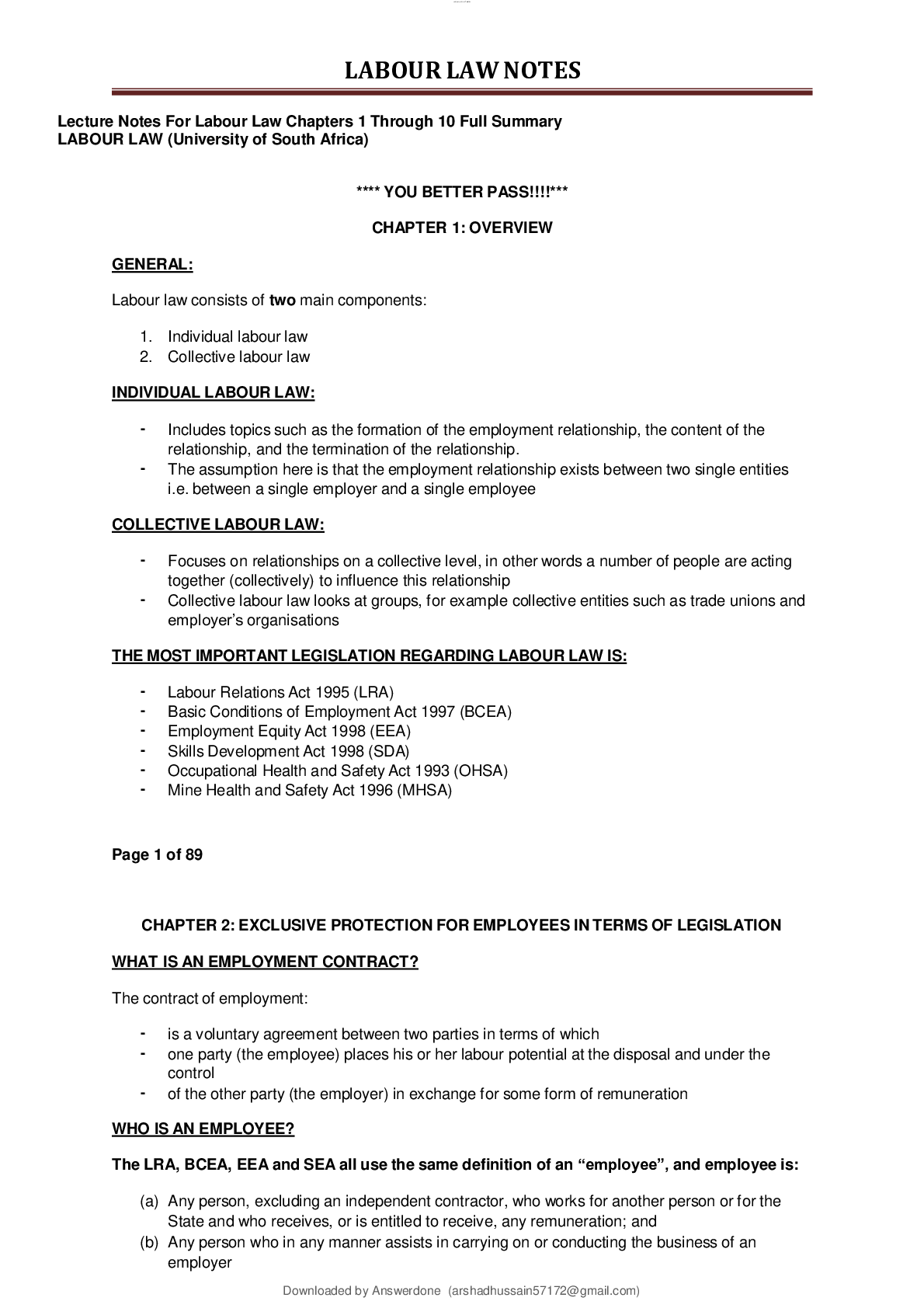
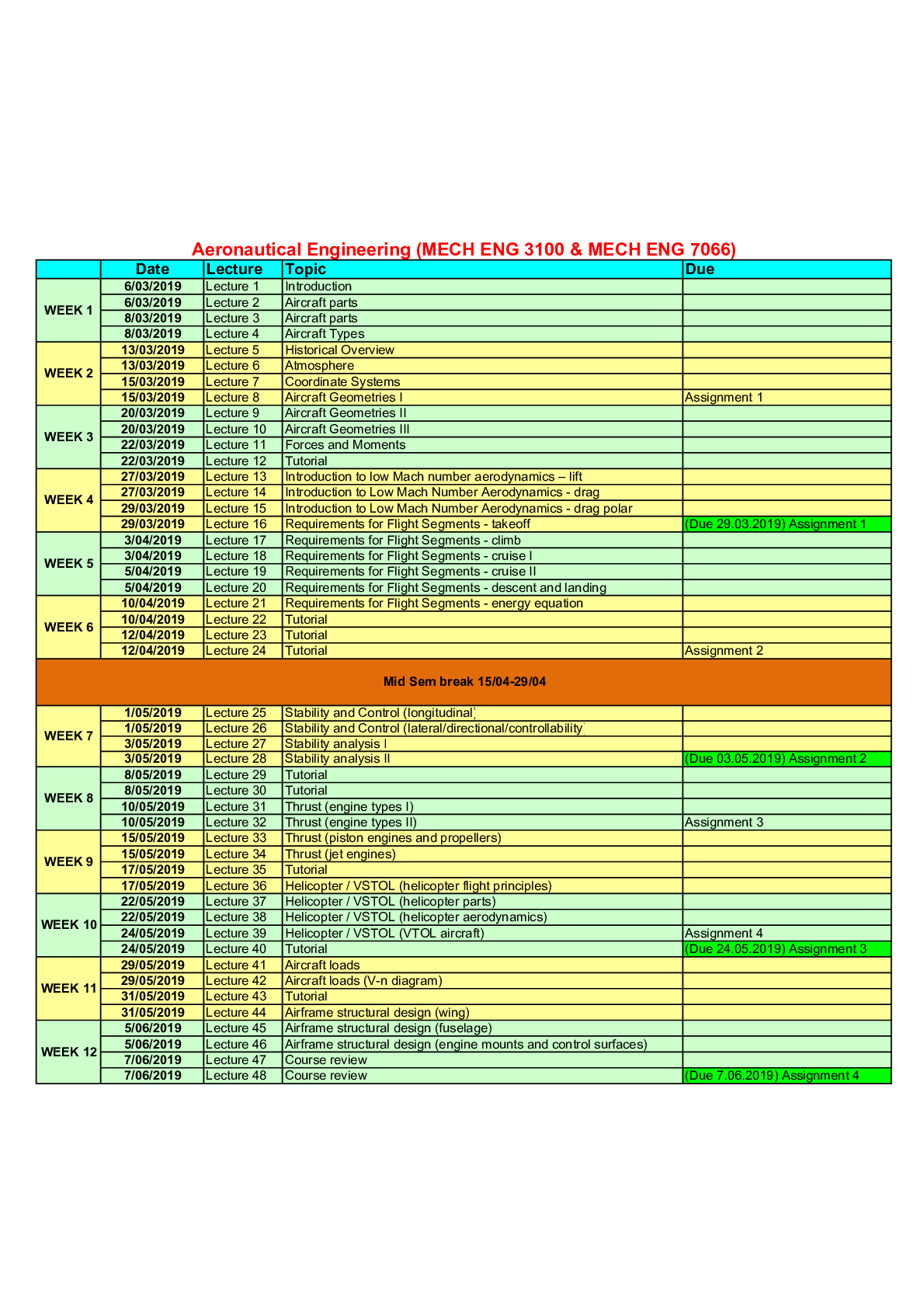
Aeronautical Engineering (MECH ENG 3100 & MECH ENG 7066) Lectu...

Lecture Notes on “Computer and Network Security” Purdue Univer...



.png)
.png)
.png)